🐾 Animal Kingdom
Discover domestic dogs, cats & birds
337
Dogs
171
Chickens
78
Cats
6
Birds
592
Total
Aarschoter Huhn
🐔 ChickensGallus gallus domesticus
Aarschoter Huhn (Poule d'Aarschot)
A rare Belgian dual-purpose breed originating from the town of Aarschot in Flemish Brabant. The Aarschoter Huhn is a traditional farmyard chicken developed for both meat and egg production on small Belgian farms during the 19th century. It is a well-muscled, medium-large bird with a calm disposition and good foraging ability, making it ideal for free-range smallholdings. The breed was nearly lost during the mid-20th century as commercial hybrids replaced traditional farm breeds, but dedicated Belgian conservation breeders have worked to preserve it. Recognised by the EE Europastandard and maintained by BDRG and Belgian poultry associations, the Aarschoter Huhn represents an important part of Belgian agricultural heritage. Its eggs are tinted to light brown, and the breed matures at a moderate rate, producing excellent table birds.
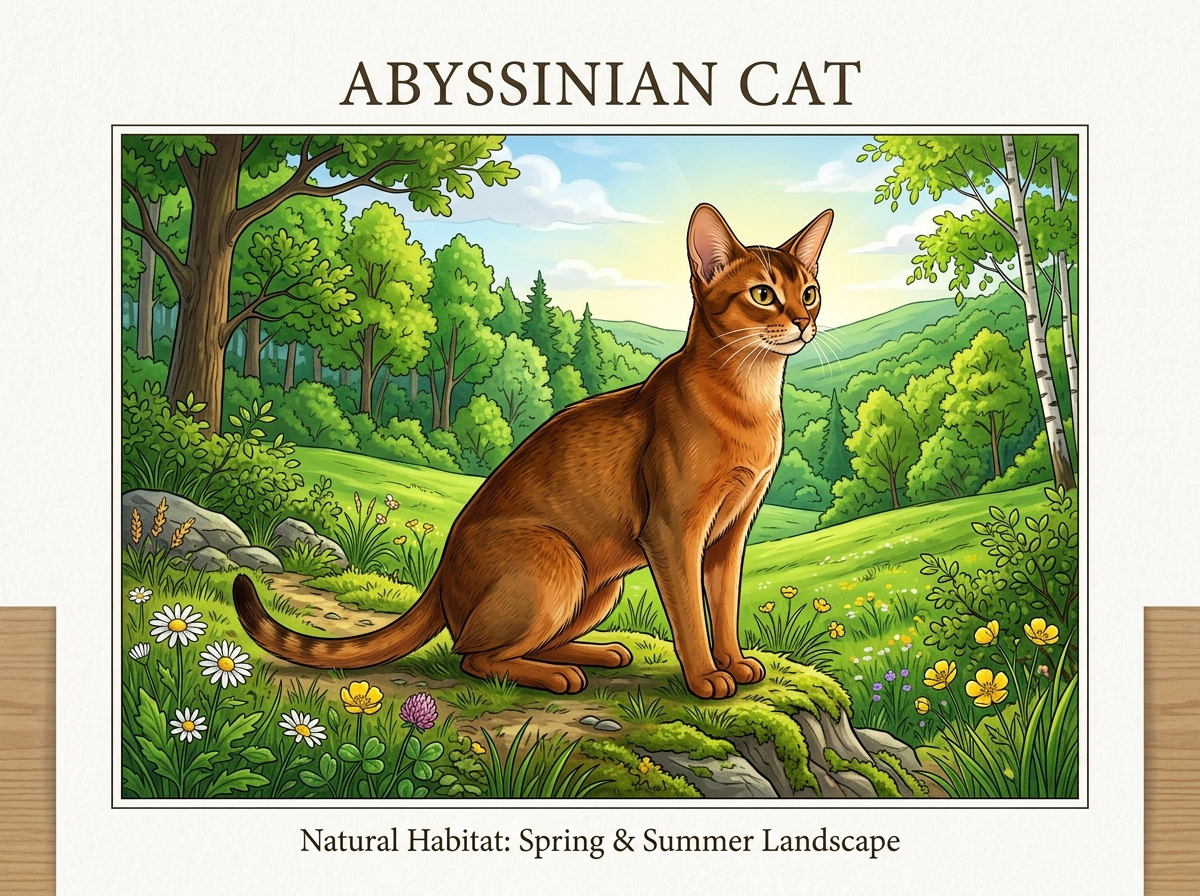
Abyssinian
🐈 CatsFelis catus
Abyssinian
A strikingly elegant, medium-sized cat with a ticked coat that gives a wild, cougar-like appearance. One of the oldest known breeds, Abyssinians are curious, playful, and deeply people-oriented. Their agouti ticking produces a shimmering, multi-banded effect on each hair shaft.
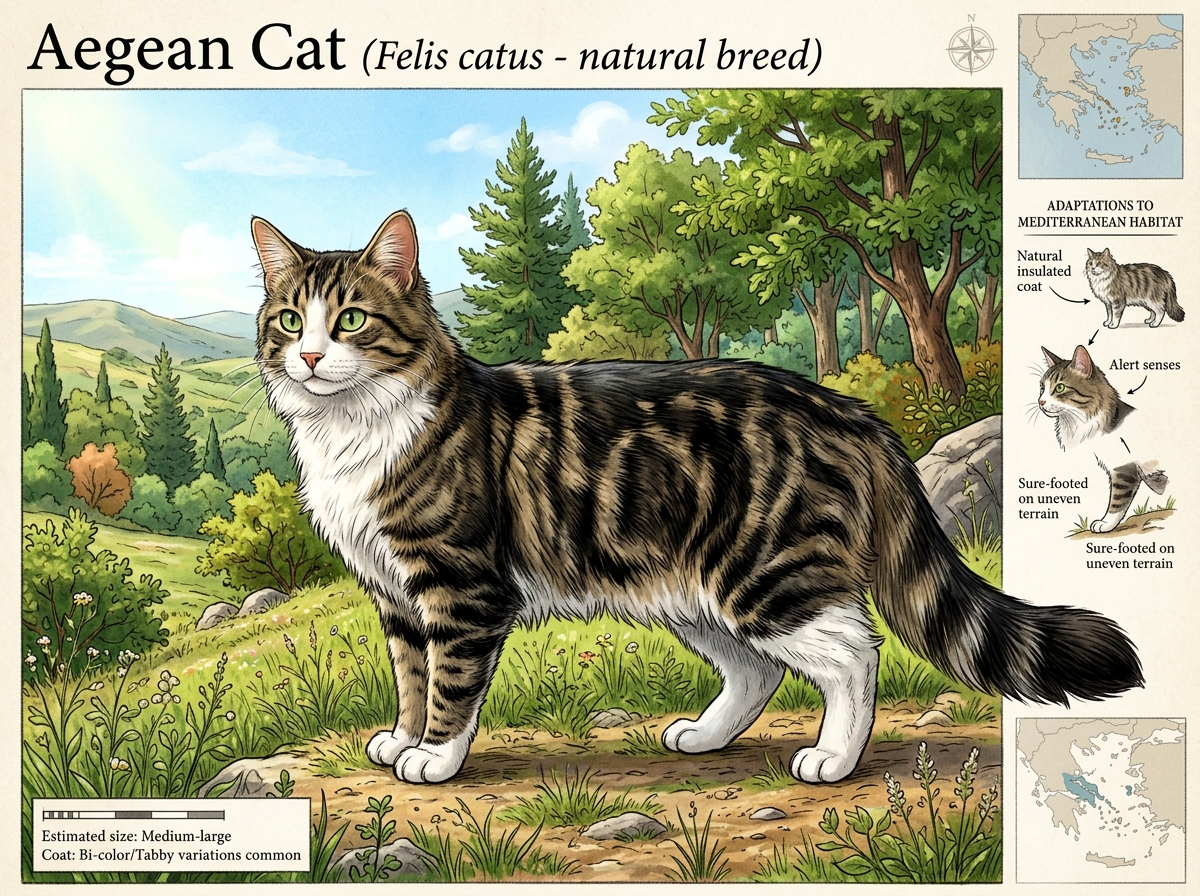
Aegean
🐈 CatsFelis catus
Aegean
A natural breed originating from the Greek Cycladic islands. Medium-sized with a semi-longhaired coat, the Aegean is an excellent mouser and a friendly, adaptable companion. They are among the oldest naturally occurring domestic cat populations in Europe.
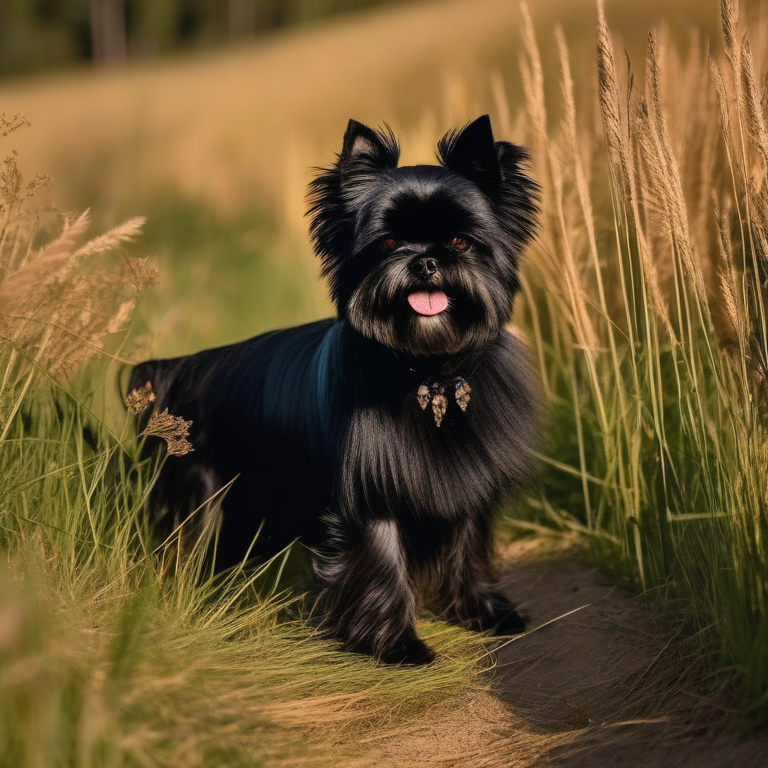
Affenpinscher
🐕 DogsCanis lupus familiaris
Affenpinscher
Small, wiry-coated terrier-like dog with monkey-like expression. Fearless, curious, and loyal companion.
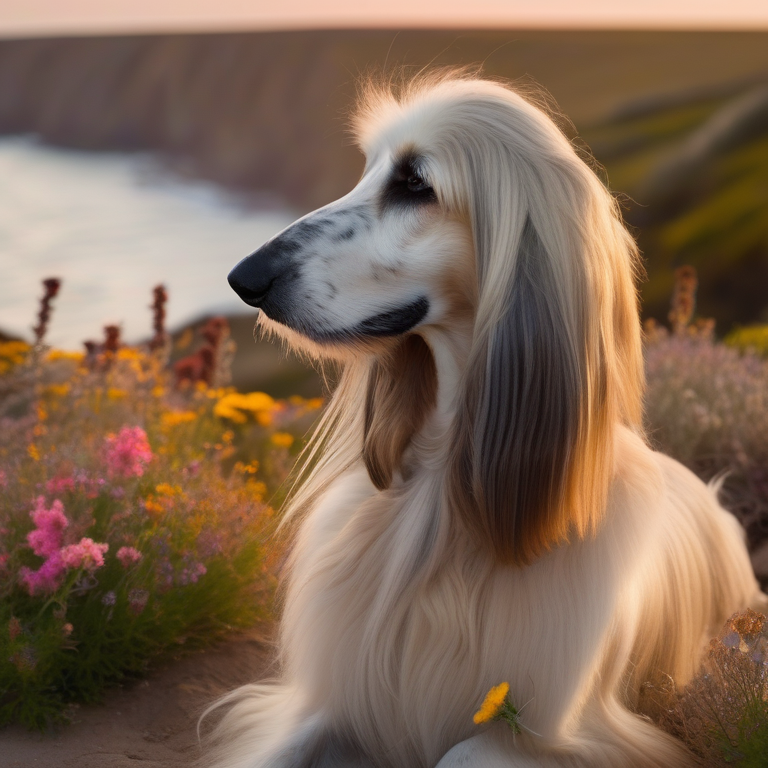
Afghan Hound
🐕 DogsCanis lupus familiaris
Afghan Hound
Tall, elegant sighthound with long, silky coat. Independent, dignified, and aloof with a regal bearing.
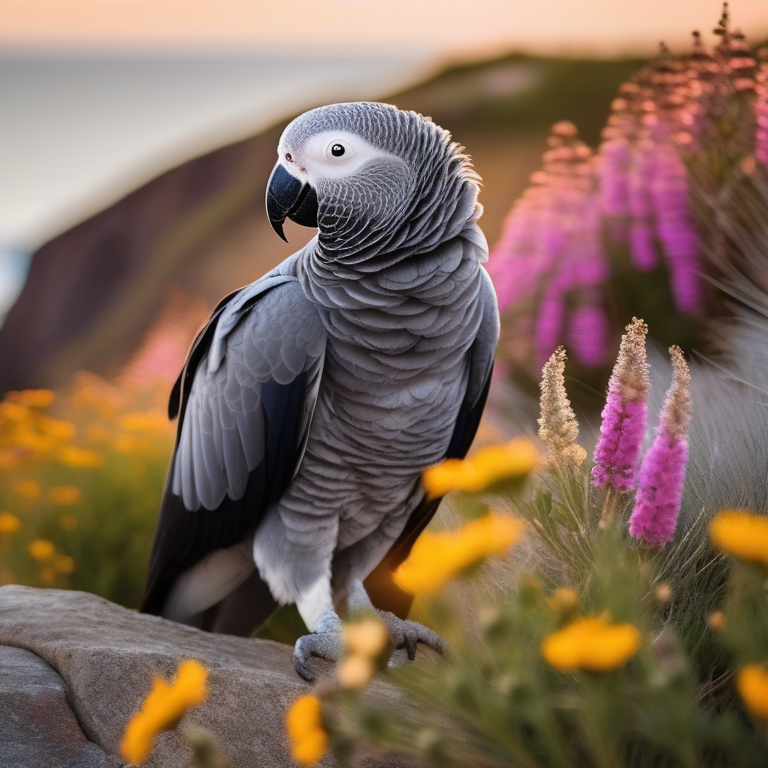
African Grey Parrot
🐦 BirdsPsittacus erithacus
African Grey Parrot
Widely regarded as the most intelligent bird species. Famous for extraordinary cognitive abilities and speech mimicry.

Airedale Terrier
🐕 DogsCanis lupus familiaris
Airedale Terrier
Large terrier breed known as 'King of Terriers.' Intelligent, confident, and energetic with strong prey drive.
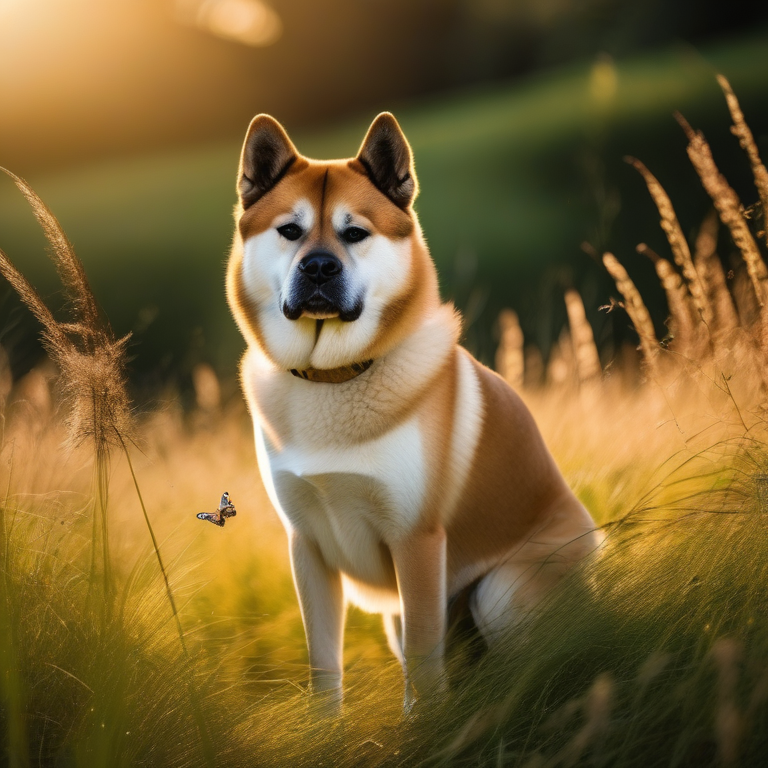
Akita
🐕 DogsCanis lupus familiaris
Akita
Large, powerful Japanese dog with distinctive curled tail. Courageous, loyal, and independent companion.
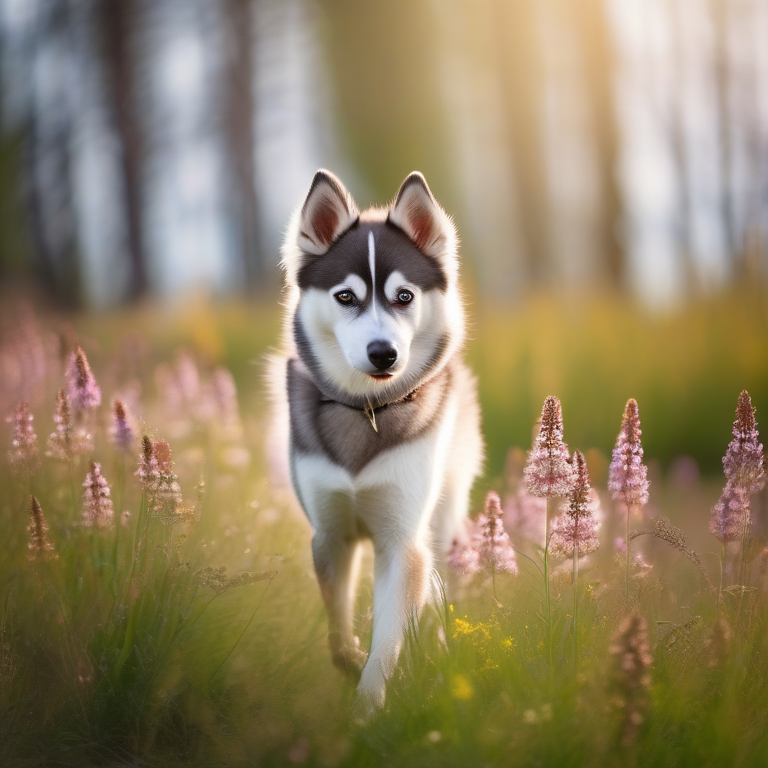
Alaskan Klee Kai
🐕 DogsCanis lupus familiaris
Alaskan Klee Kai
Small Spitz-type dog bred to resemble a miniature Husky. Intelligent, energetic, and alert companion.
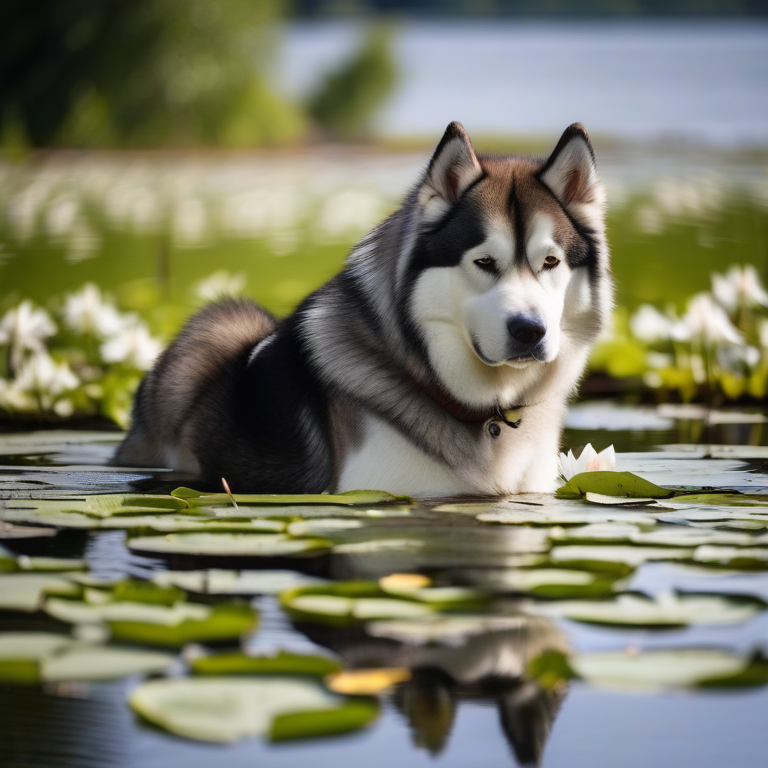
Alaskan Malamute
🐕 DogsCanis lupus familiaris
Alaskan Malamute
Large, powerful sled dog with exceptional strength. Affectionate, loyal, and playful family companion.
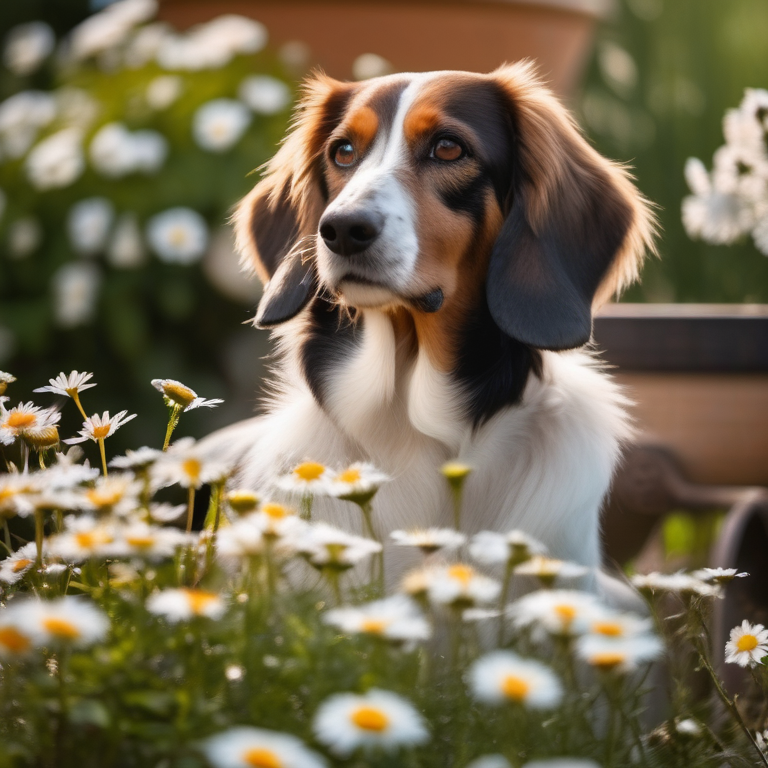
Alpine Dachsbracke
🐕 DogsCanis lupus familiaris
Alpine Dachsbracke
Small scent hound from the Austrian Alps with short legs and a sturdy build. Intelligent and determined, they excel at tracking wounded game.
Altenglischer Kämpfer
🐔 ChickensGallus gallus domesticus
Altenglischer Kämpfer
The German name for Old English Game, standardised by the BDRG and recognised by the EE Europastandard. The Altenglischer Kämpfer is the German standardisation of the Old English Game breed, maintained by German fanciers who have their own slightly different standard from the British PCGB versions. Like the British OEG, the Altenglischer Kämpfer is a tall, upright gamefowl with a single comb, clean legs, hard feathering, and the characteristic proud, fierce bearing. It is kept purely as an exhibition and conservation breed, as cockfighting has been illegal in Germany for over a century. The German standard encompasses multiple colour varieties and maintains its own breed club separate from PCGB. The Altenglischer Kämpfer is important as an alternative European standardisation of one of the world's most historically significant chicken breeds, and German-bred lines are valued by international OEG breeders for their quality.
Altsteirer
🐔 ChickensGallus gallus domesticus
Altsteirer
One of Austria's oldest and most distinctive chicken breeds, the Altsteirer (Old Styrian) originates from the Styria region of south-east Austria — the same landscape that produced the Sulmtaler. Unlike the heavy-set Sulmtaler, the Altsteirer is a medium-bodied, active dual-purpose bird with a characteristic small beard, pronounced muffs, and a small flat cushion comb. Its plumage comes in several varieties including partridge and wheaten. Recognised by the EE Europastandard, the Altsteirer was once widespread across rural Styrian farmsteads and is now a protected national genetic heritage breed in Austria.
Ameraucana
🐔 ChickensGallus gallus domesticus
Ameraucana
An American breed developed in the 1970s from Araucana stock, specifically bred to retain the blue-egg gene while eliminating the lethal gene combination associated with the Araucana's ear tufts and rumplessness. The Ameraucana has a pea comb, a full beard and muffs (rather than ear tufts), and a normal tail — making it a more robust, practical bird than its rumpless Araucana ancestor. It lays blue to blue-green eggs reliably and comes in many colour varieties recognised by the American Poultry Association (APA). The Ameraucana is now recognised by the EE Europastandard as a distinct breed, separate from the Araucana, reflecting the growing international consensus that these are two different breeds. Exceptionally popular with American and European backyard keepers, the Ameraucana combines novelty egg colour with hardiness and a calm, friendly disposition.
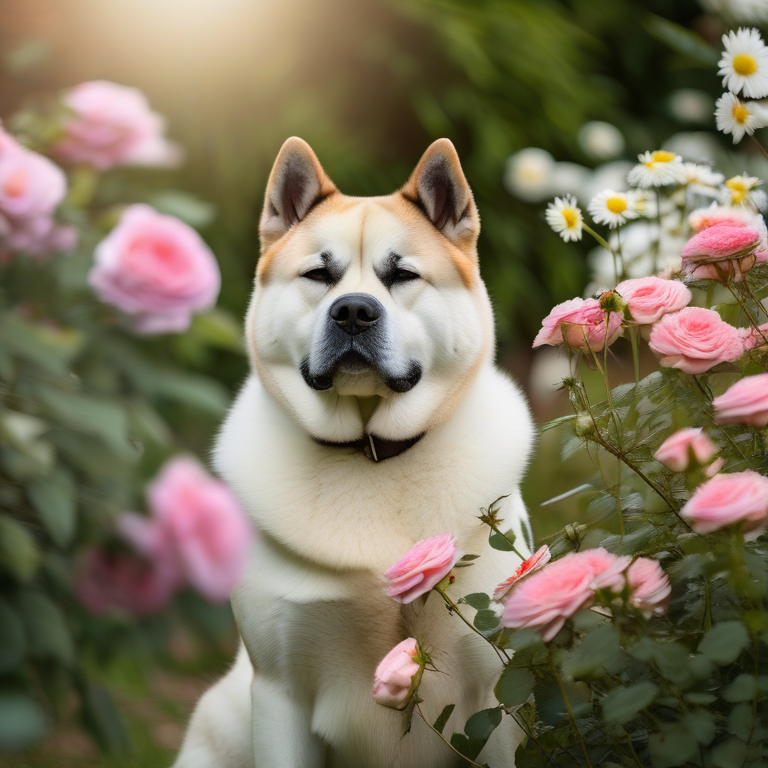
American Akita
🐕 DogsCanis lupus familiaris
American Akita
Large, powerful Japanese dog breed. Courageous, loyal, and independent with a dignified presence.
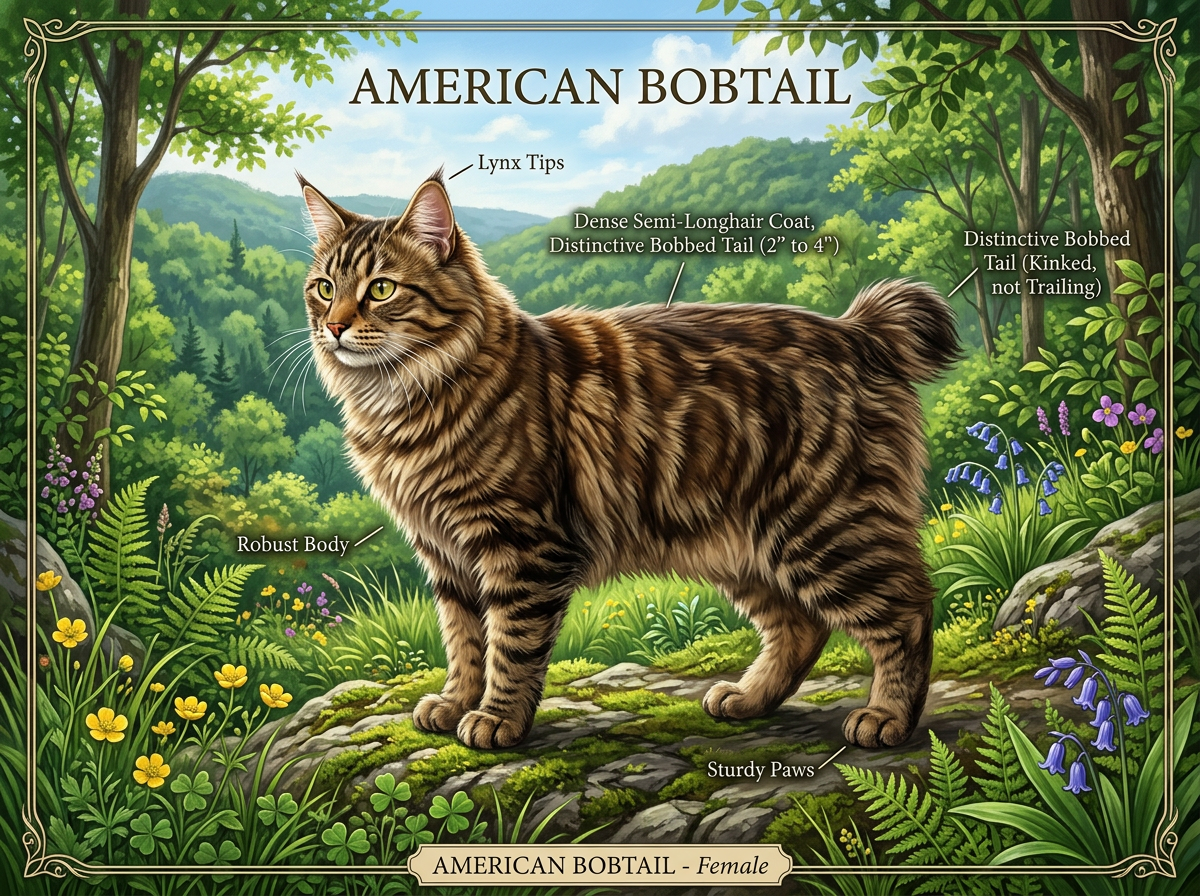
American Bobtail
🐈 CatsFelis catus
American Bobtail
A naturally occurring, medium to large cat with a distinctive short, bobbed tail (one-third to one-half normal length). Athletic, intelligent, and dog-like in devotion. They adapt well to travel and are often used as therapy cats.
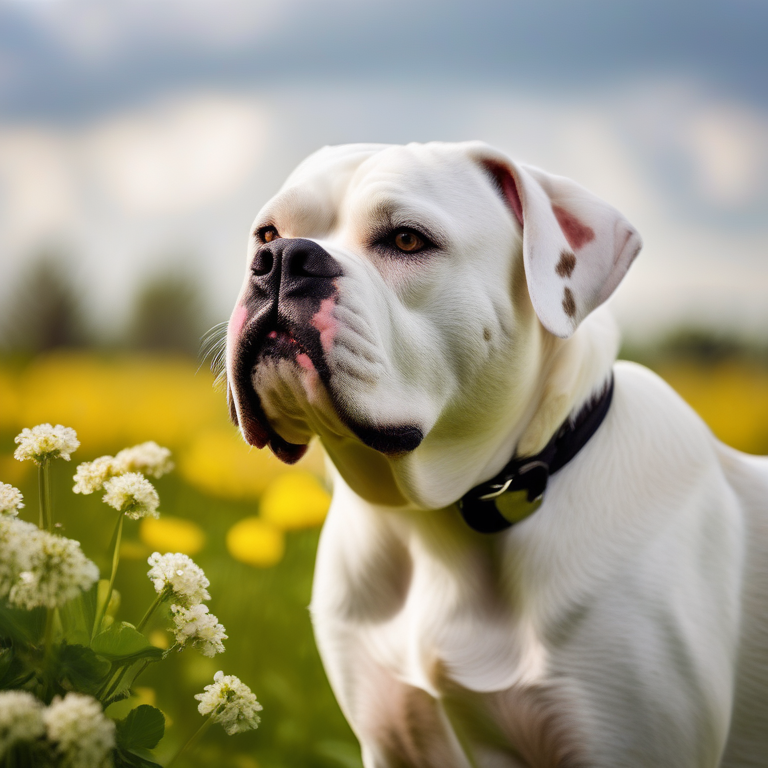
American Bulldog
🐕 DogsCanis lupus familiaris
American Bulldog
Large, muscular working dog with powerful build. Confident, loyal, and protective family companion.
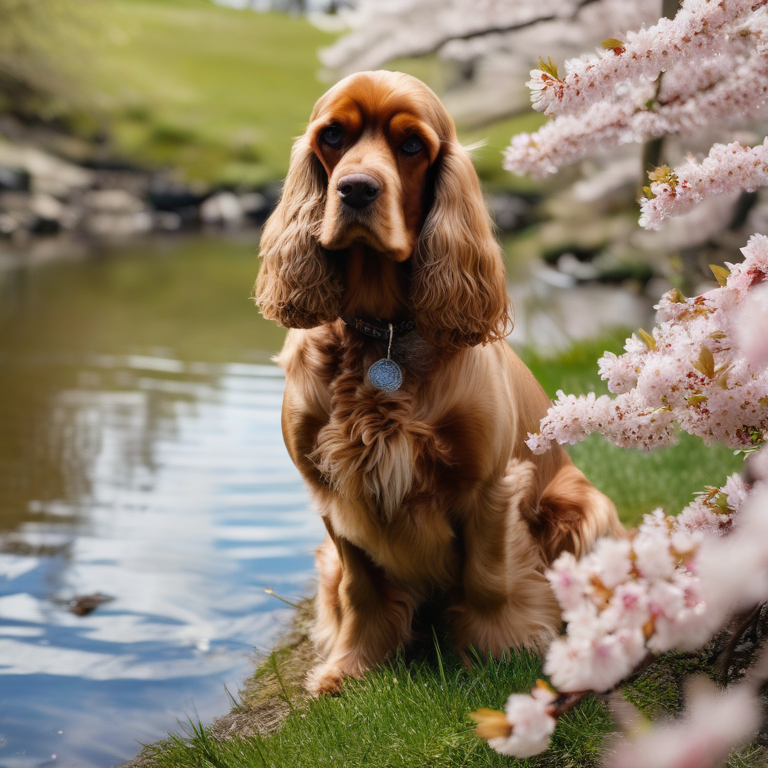
American Cocker Spaniel
🐕 DogsCanis lupus familiaris
American Cocker Spaniel
Small, elegant sporting dog with long, silky coat and feathered ears. Happy, affectionate, and playful.
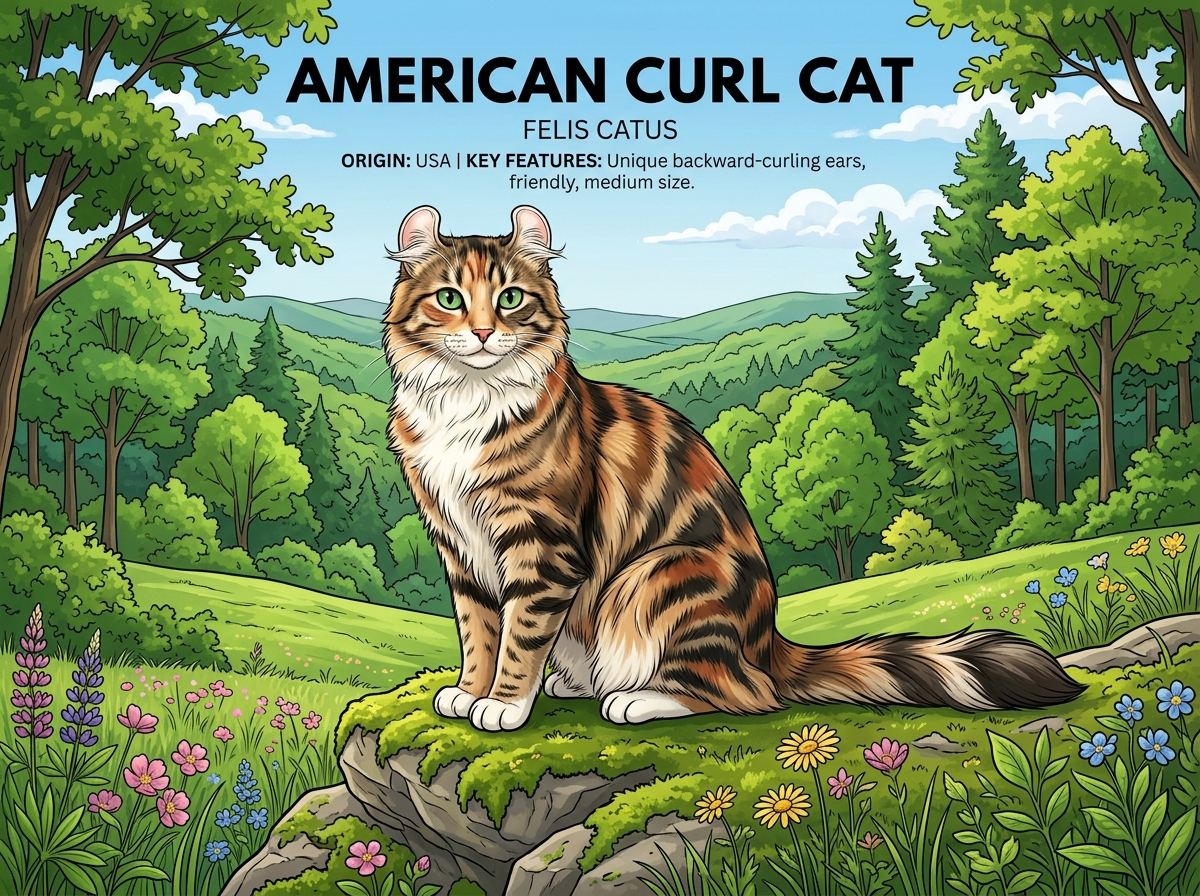
American Curl
🐈 CatsFelis catus
American Curl
Distinguished by uniquely curled ears that arc backward in a graceful curve. Medium-sized with a silky coat (longhair or shorthair). Known for their kitten-like playfulness that persists well into old age. The curling degree varies per individual.
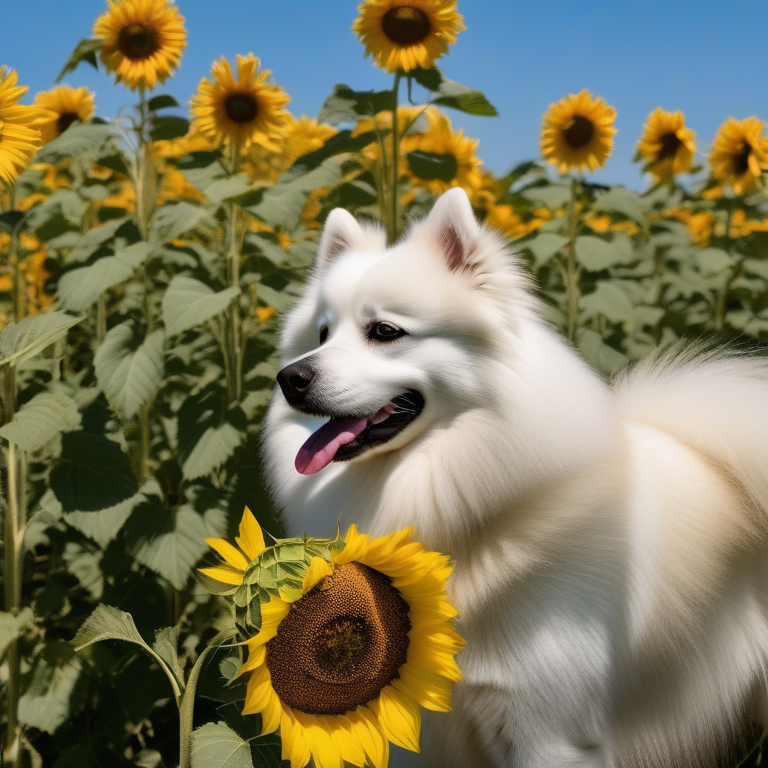
American Eskimo Dog
🐕 DogsCanis lupus familiaris
American Eskimo Dog
Small to medium spitz-type dog with a thick white coat and cheerful expression. Intelligent and alert, they are friendly family companions with a playful nature.
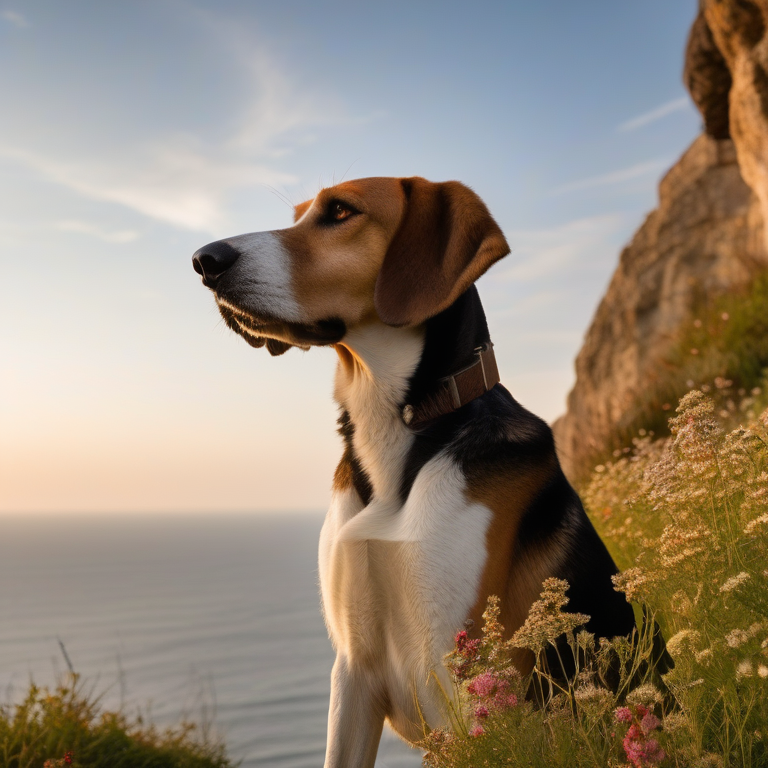
American Foxhound
🐕 DogsCanis lupus familiaris
American Foxhound
Medium to large scent hound with long legs and deep chest. Friendly, independent, and excellent pack hunter.
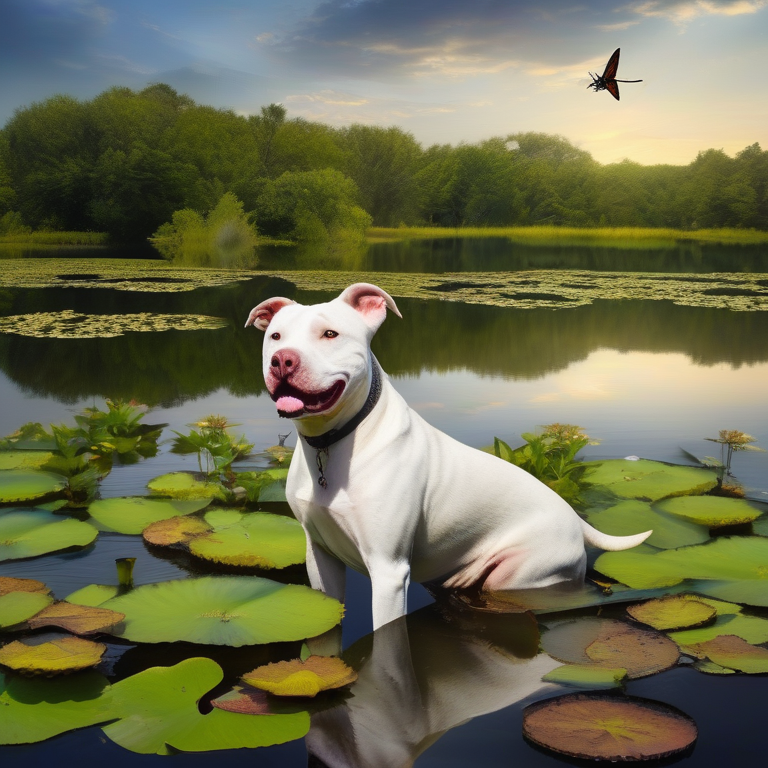
American Pit Bull Terrier
🐕 DogsCanis lupus familiaris
American Pit Bull Terrier
Medium-sized, muscular dog with powerful jaw. Loyal, affectionate, and courageous — often misunderstood breed.
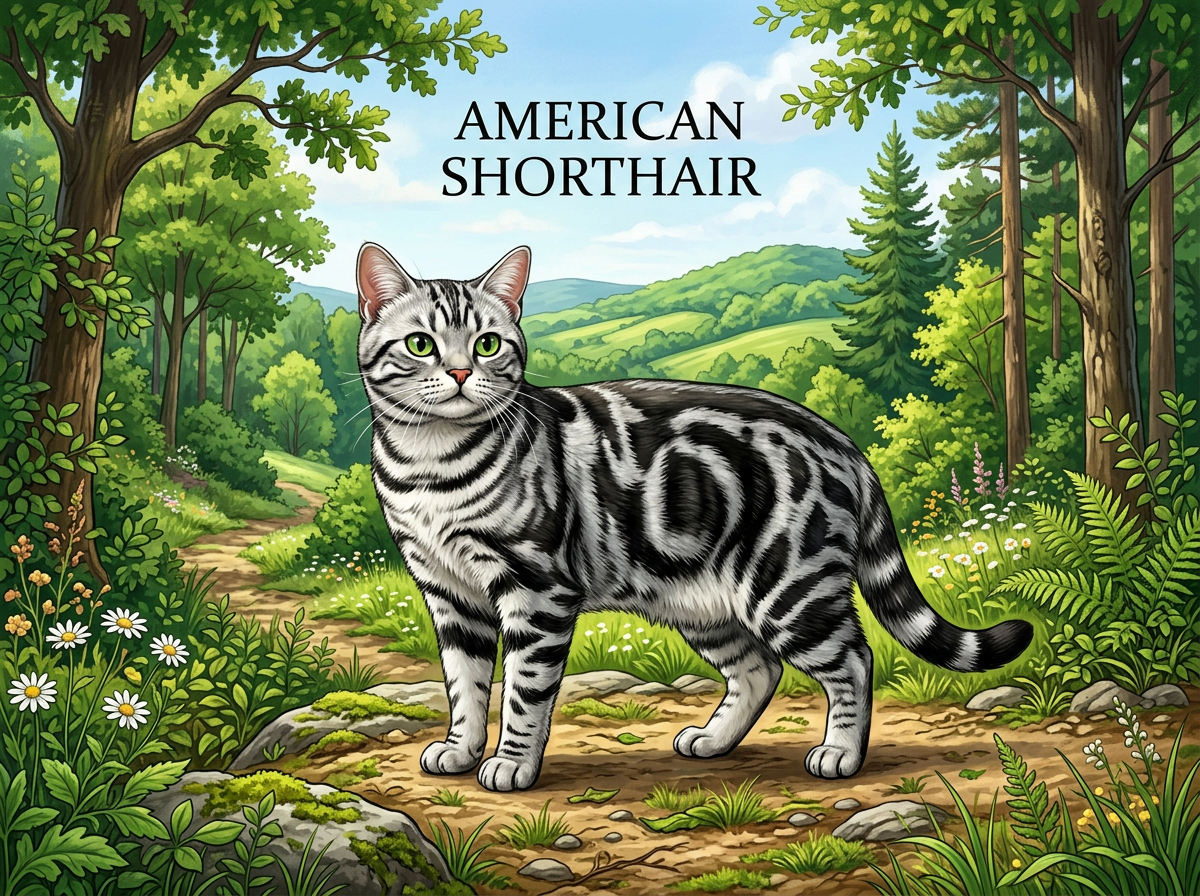
American Shorthair
🐈 CatsFelis catus
American Shorthair
A sturdy, muscular working breed descended from cats brought by European settlers. Known for health, longevity, and an easygoing temperament. Excellent mousers with a dense, plush coat that requires minimal grooming.
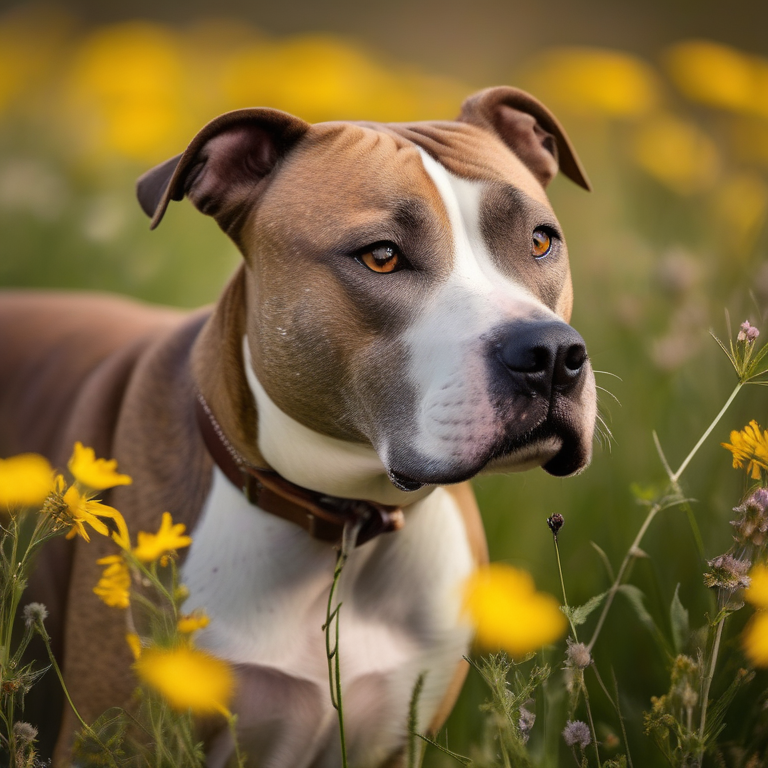
American Staffordshire Terrier
🐕 DogsCanis lupus familiaris
American Staffordshire Terrier
Medium-sized, muscular terrier with powerful build. Confident, loyal, and good-natured family companion.
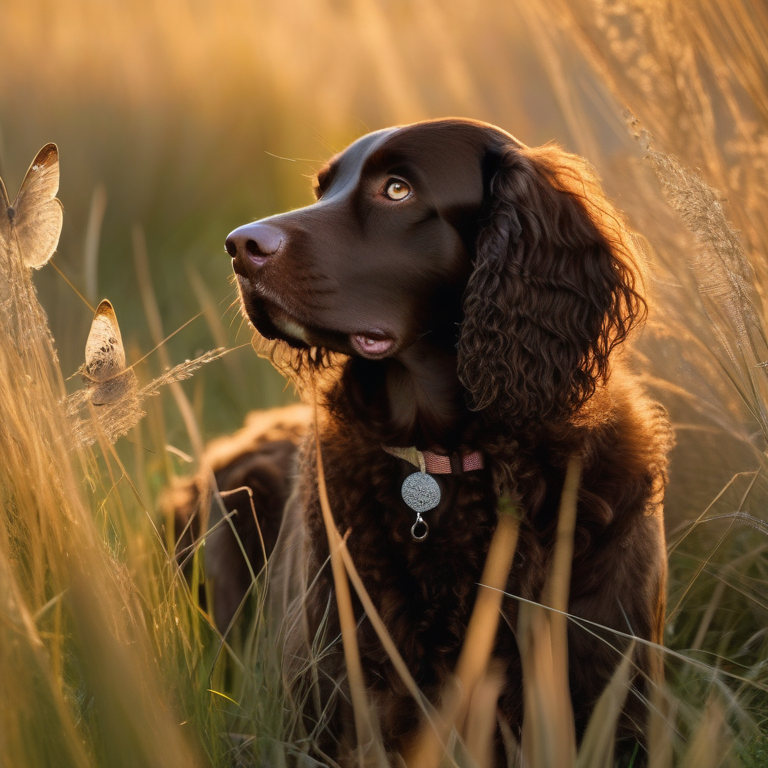
American Water Spaniel
🐕 DogsCanis lupus familiaris
American Water Spaniel
Medium-sized spaniel with curly brown coat. Intelligent, energetic, and excellent waterfowl retriever.
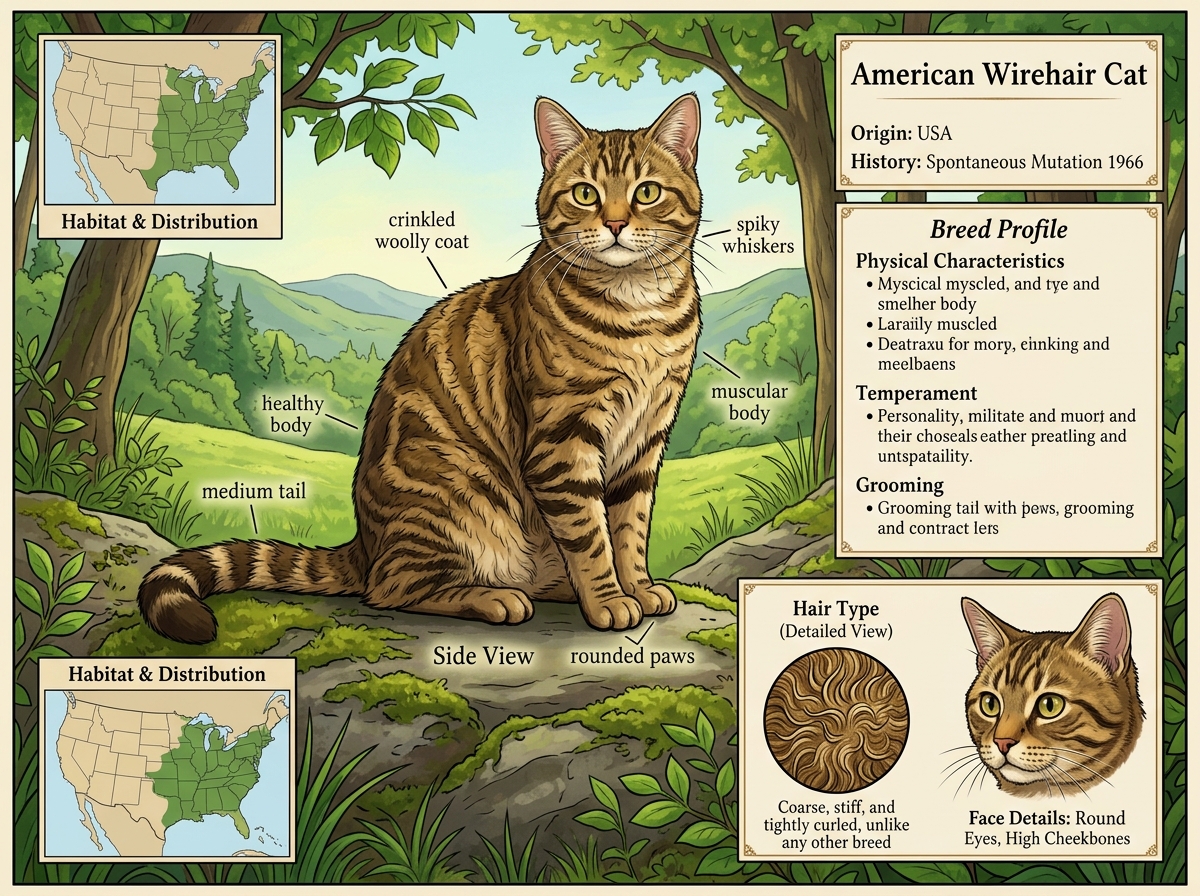
American Wirehair
🐈 CatsFelis catus
American Wirehair
A spontaneous mutation of the American Shorthair with a distinctive crimped, springy, wiry coat. Medium to large body with a pleasant, even disposition. The coat texture is unique among cat breeds — each hair is bent, crimped, or hooked.
Amrock
🐔 ChickensGallus gallus domesticus
Amrock
A German-developed dual-purpose breed derived from the American Barred Plymouth Rock, standardised separately by the BDRG and recognised by the EE Europastandard as a distinct breed. The Amrock was developed from Plymouth Rock imports that arrived in Germany in the late 19th century, where German breeders selectively bred the barred variety into a heavier, more productive bird with slightly different conformation — broader, deeper-bodied, and with more tightly defined barring. The breed's name is a German portmanteau: 'Am' from American, 'Rock' from Plymouth Rock. Amrocks are exceptionally calm, reliable layers of brown eggs, and their barred plumage makes them one of the most recognisable farm breeds. Unlike the Plymouth Rock, which has multiple colour varieties, the Amrock standard focuses almost exclusively on the barred pattern. The breed is popular among German and Dutch smallholders for its uncomplicated, productive nature.
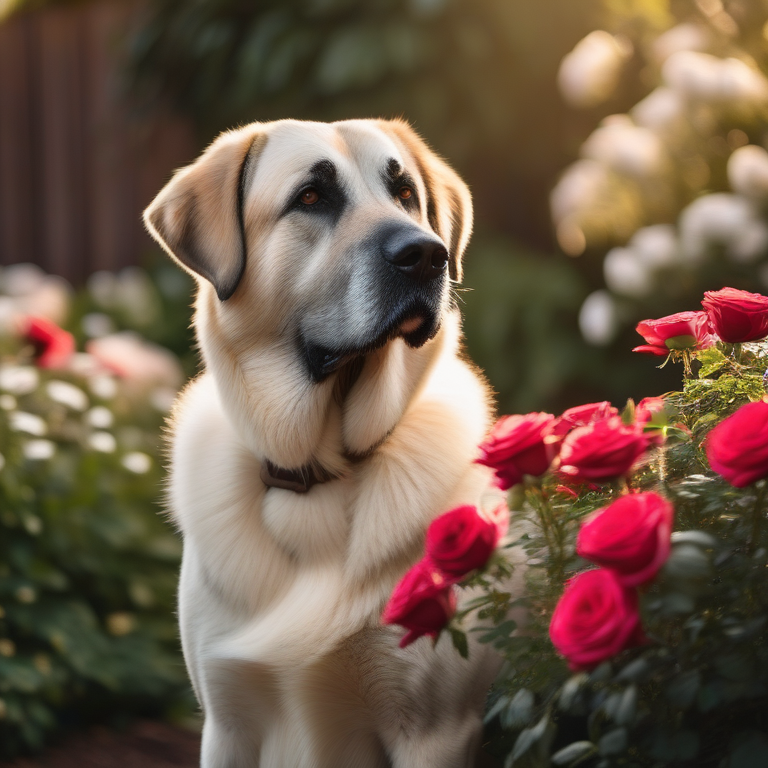
Anatolian Shepherd Dog
🐕 DogsCanis lupus familiaris
Anatolian Shepherd Dog
Large, powerful livestock guardian dog from Turkey. Independent, intelligent, and protective with strong instinct to guard livestock.
Ancona
🐔 ChickensGallus gallus domesticus
Ancona
A lively Mediterranean laying breed from the Marche region of Italy, named after the coastal city of Ancona. The Ancona is recognised by its striking mottled black plumage with distinctive white V-shaped tips on each feather, giving it a speckled, beetle-green sheen in sunlight. An excellent forager and reliable white-egg layer, it is hardy, self-sufficient, and alert — qualities prized long before commercial breeds existed.
Andalusian
🐔 ChickensGallus gallus domesticus
Blue Andalusian
An elegant Spanish breed famous for its unique blue-laced plumage — a colour that results from a single gene heterozygous state. Mating two blues produces 50% blue, 25% black, and 25% splash offspring, making consistent colour breeding a genetic puzzle. Andalusians are graceful, active Mediterranean layers producing large white eggs, and they carry themselves with an aristocratic bearing that makes them a favourite at poultry shows.
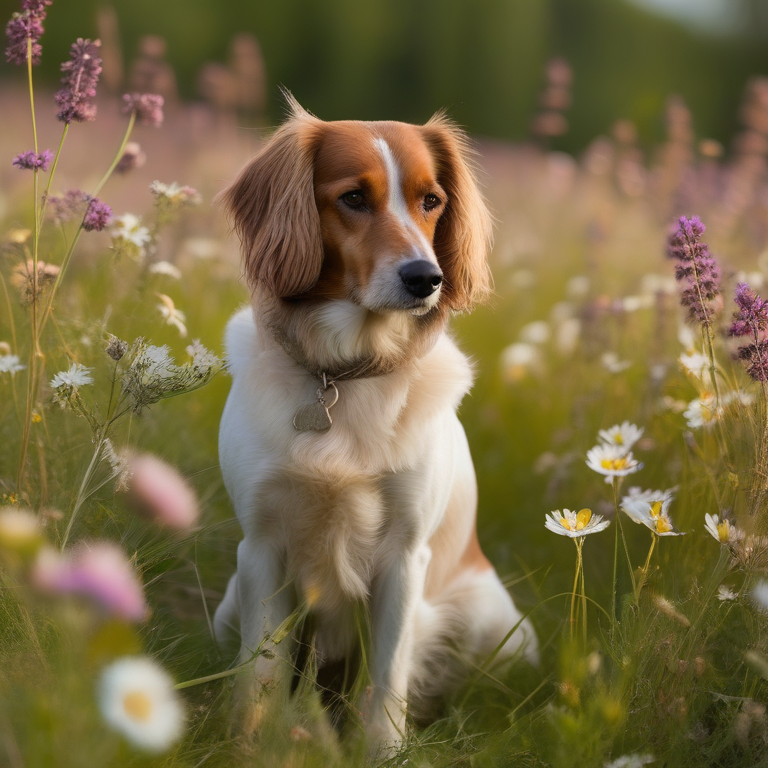
Anglo-Français de Petite Vénerie
🐕 DogsCanis lupus familiaris
Anglo-Français de Petite Vénerie
Medium-sized French-English hound bred for small game hunting. Energetic and intelligent, they are persistent hunters with a friendly nature.
Annaberger Haubenstrupphuhn
🐔 ChickensGallus gallus domesticus
Annaberger Haubenstrupphuhn
A rare German ornamental breed from the Annaberg region of the Erzgebirge (Ore Mountains) in Saxony, developed in the early 20th century. The Annaberger Haubenstrupphuhn is a crested breed — its name translates roughly to 'Annaberg crested ruffled chicken' — with a distinctive full crest of feathers on the head, a single comb, and feathers that have a slightly frizzled or ruffled texture, though it is not a true Frizzle. The breed is purely ornamental and was developed by Saxon poultry fanciers who wanted a distinctive local breed for exhibition. After World War II, when Saxony became part of East Germany, the breed declined severely as private poultry fancying was politically discouraged under the GDR regime. After reunification in 1990, German conservation breeders began recovering the Annaberger Haubenstrupphuhn. Recognised by the EE Europastandard and maintained by BDRG.
Appenzeller Barthühner
🐔 ChickensGallus gallus domesticus
Appenzeller Barthühner
The lesser-known sibling of the Spitzhauben, the Barthühner (Bearded Hen) is a compact, bearded Swiss breed from Appenzell with a rose comb rather than the Spitzhauben's V-comb and crest. Barthühners are calm and cold-hardy, better suited to enclosed keeping than the flighty Spitzhauben. An ancient conservation breed maintained almost exclusively in Switzerland and Germany, they are considered critically rare and efforts are ongoing to establish a stable breeding population.
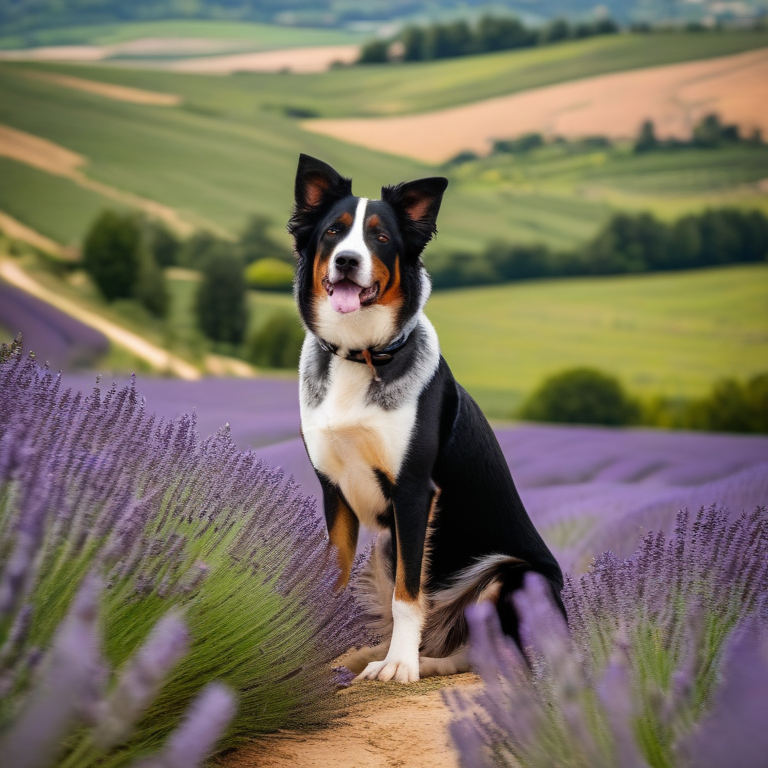
Appenzeller Sennenhund
🐕 DogsCanis lupus familiaris
Appenzeller Sennenhund
Medium-sized Swiss mountain dog with tri-color coat. Energetic, intelligent, and loyal, they excel as farm dogs and active family companions.
Appenzeller Spitzhauben
🐔 ChickensGallus gallus domesticus
Appenzeller Spitzhauben
Switzerland's national chicken breed, originating from the Appenzell canton and named for the pointed lace bonnets (Spitzhauben) traditionally worn by women there — the breed's forward-pointing crest resembling the bonnet shape. Spitzhaubens are agile, active mountain birds adapted to foraging in alpine terrain, with a V-comb that resists frostbite better than single combs at altitude. They lay white eggs reliably and are energetic, sometimes roost in trees, and are one of the rarest Swiss breeds.
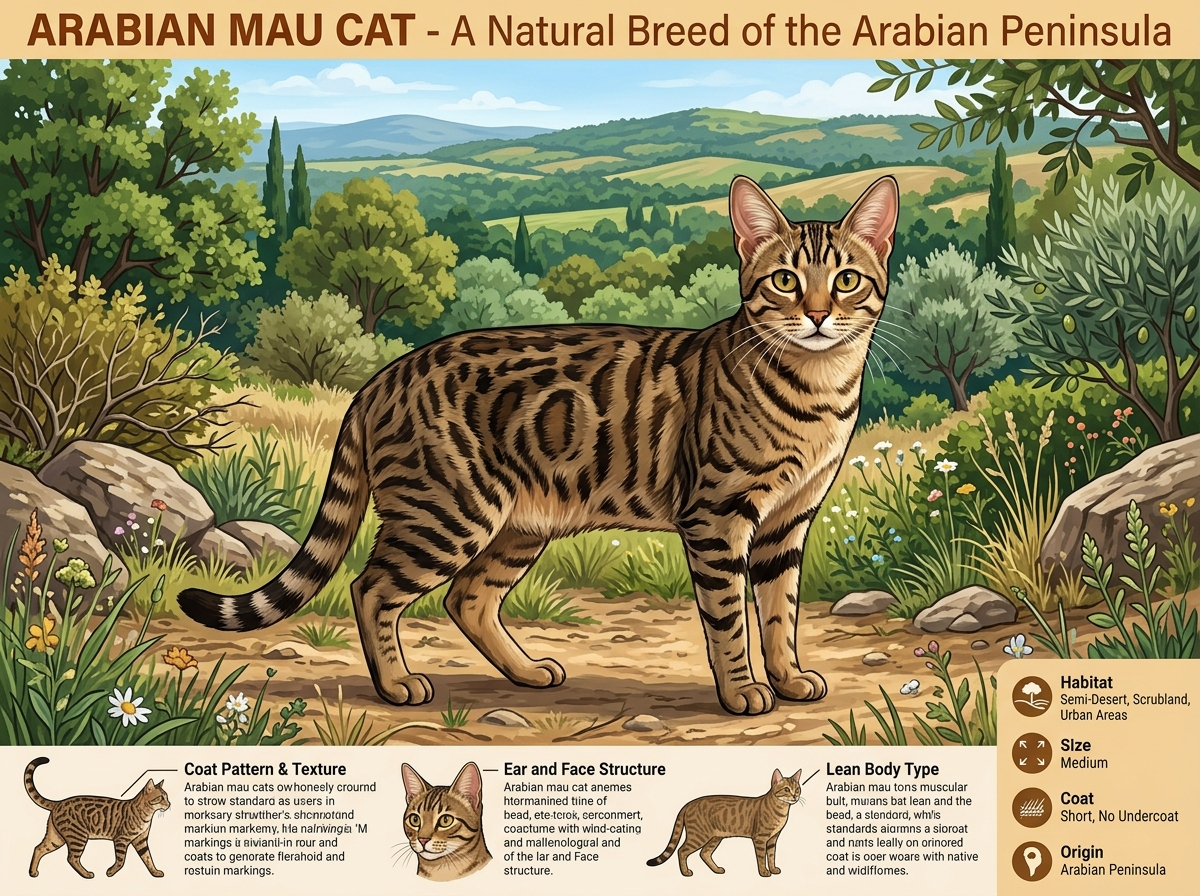
Arabian Mau
🐈 CatsFelis catus
Arabian Mau
A natural desert breed from the Arabian Peninsula, thriving in hot climates for over 1,000 years. Medium to large with long legs, large pointed ears, and a lean, muscular build. Excellent hunters adapted to extreme temperatures.
Araucana
🐔 ChickensGallus gallus domesticus
Araucana
A fascinating South American breed originating from the Araucanía region of Chile, famous worldwide for laying blue-shelled eggs — a trait caused by a retrovirus that inserted into the genome thousands of years ago and became heritable. True Araucanas are rumpless (no tail) and have distinctive ear tufts rather than a beard, setting them apart from the similar Ameraucana. Their blue eggs contain the same pigment (oocyanin) throughout the shell, not just on the surface.
Ardennaise
🐔 ChickensGallus gallus domesticus
Ardennaise (Ardenner)
An ancient dual-purpose breed from the Ardennes region straddling Belgium and France, the Ardennaise is one of Europe's oldest surviving landrace chickens. Hardy, active, and extremely self-sufficient, these birds were shaped by the harsh climate of the Ardennes highlands, where they foraged extensively in woodland and pasture. The Ardennaise is a medium-sized bird with a single comb and clean legs, available in several colour varieties including black, cuckoo, white, and blue. Historically it was the standard farm chicken across the Ardennes, supplying both eggs and meat to rural communities. The breed declined sharply after World War II but has been recovered through conservation programmes by SCAF in France and BDRG in Germany. The EE recognises the Ardennaise as a distinct standardized breed, separate from the similar Brabanconne.
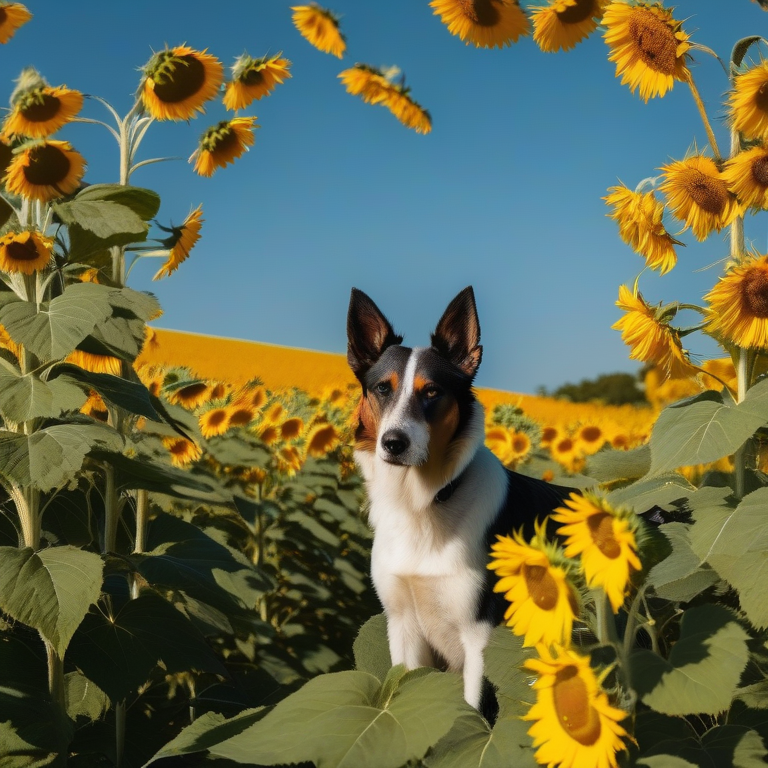
Ariegeois
🐕 DogsCanis lupus familiaris
Ariegeois
Medium-sized French hound from the Ariège region of the Pyrenees. Intelligent and energetic, they are fast and agile hunters.
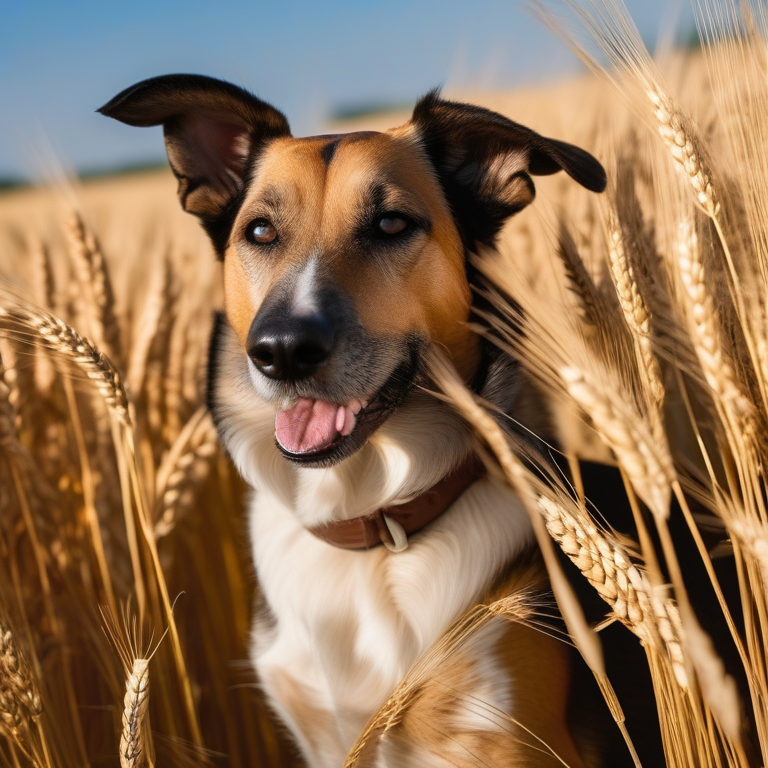
Artois Hound (Chien d'Artois)
🐕 DogsCanis lupus familiaris
Artois Hound (Chien d'Artois)
Medium-sized French scent hound from the Artois region with a short, dense coat. Intelligent and persistent, they are friendly and sociable hunting dogs.
Aseel
🐔 ChickensGallus gallus domesticus
Aseel (Asil)
One of the world's oldest and most ancient breeds, the Aseel (also spelled Asil) is the original fighting fowl of the Indian subcontinent, with a documented history stretching back over 2,000 years in India and Pakistan. Aseel are massively muscled for their size with extremely tight, hard feathering, strong hooked beaks, and pea combs that sit close to the head — all adaptations to combat. They are among the most intelligent and independent of all chicken breeds, with hens noted for their strong maternal instinct and outstanding broodiness. Despite their fighting heritage, Aseel cocks kept with adequate space can be managed, though males are intensely aggressive toward each other and must be kept separately. Recognised by the EE and many national standards.
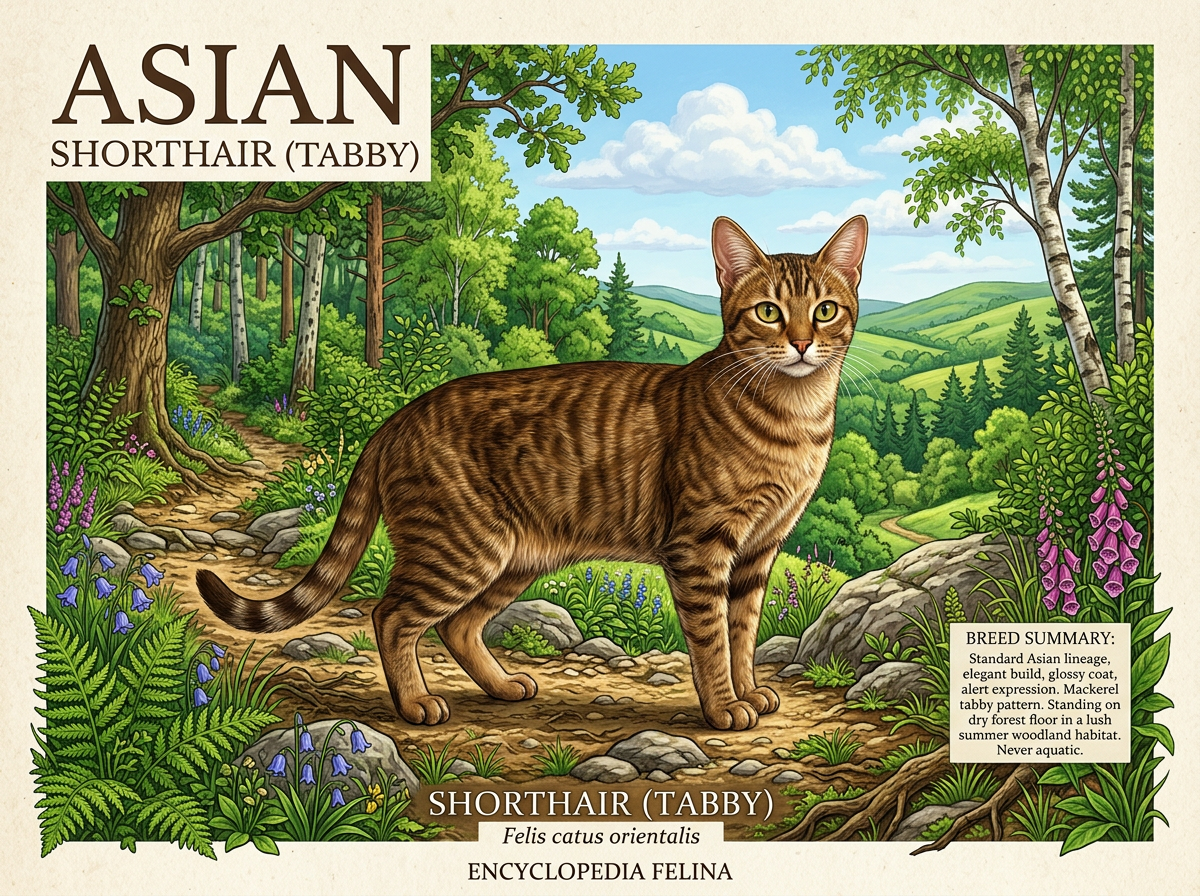
Asian
🐈 CatsFelis catus
Asian
A breed group developed from Burmese foundation stock, encompassing several varieties including the Bombay (UK), Burmilla, and ticked Asian tabbies. Medium-sized, muscular, with a rich coat and expressive eyes.
Assendelfter Huhn
🐔 ChickensGallus gallus domesticus
Assendelfter Huhn
A rare Dutch egg-laying breed from the village of Assendelft in North Holland province, west of Amsterdam. The Assendelfter Huhn is a medium-sized, active white-egg layer developed in the early 20th century from local North Holland farm chickens likely crossed with Leghorn and Minorca bloodlines. Its distinctive feature is its predominantly white plumage with occasional black markings, and its single comb and clean legs give it a classic Mediterranean profile despite its thoroughly Dutch origin. Assendelft was once a poultry-keeping stronghold in the Zaanstreek region, and this breed was a point of local pride at Dutch poultry shows. Like many regional Dutch breeds, it nearly disappeared with farm consolidation after World War II but has been recovered by Dutch conservation breeders. Recognised by the EE Europastandard and maintained by the Dutch Rare Poultry Society.
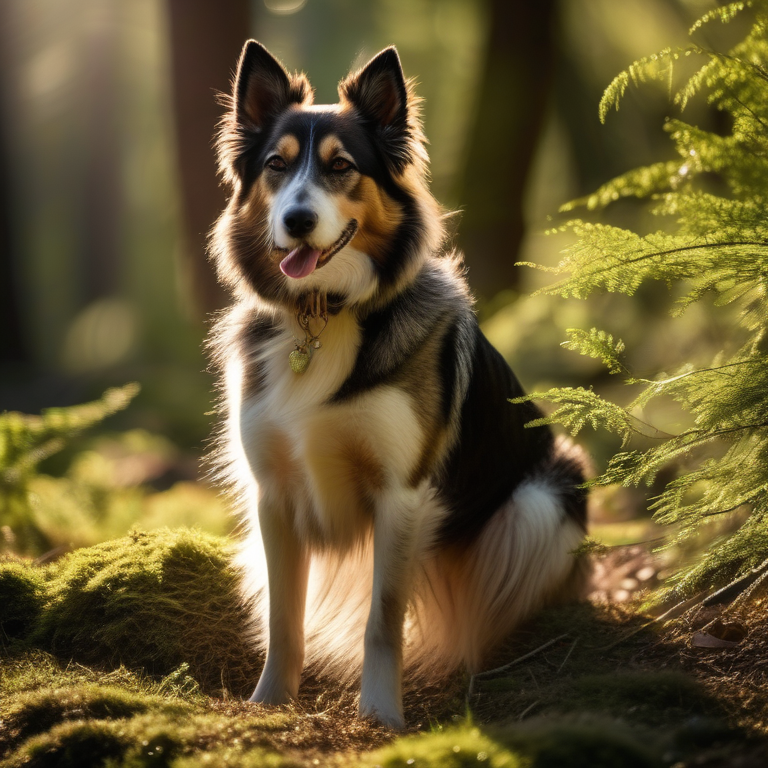
Atlas Mountain Dog (Aidi)
🐕 DogsCanis lupus familiaris
Atlas Mountain Dog (Aidi)
Large Moroccan livestock guardian dog from the Atlas Mountains. Loyal and protective, they are courageous guardians with a strong independent streak.
Augsburger
🐔 ChickensGallus gallus domesticus
Augsburger
A rare and historically important German breed from the city of Augsburg in Bavaria, distinguished above all by its unique cup comb — a flat, bowl-shaped comb that lies horizontally on the head like a shallow dish, found in absolutely no other breed in the world. The Augsburger was developed in Augsburg during the 19th century and recognised by the BDRG (Bund Deutscher Rassegeflügelzüchter) and subsequently the EE Europastandard. A practical dual-purpose bird, it nearly vanished in the 20th century and is now maintained by dedicated German conservation breeders as a living example of unique poultry genetics.
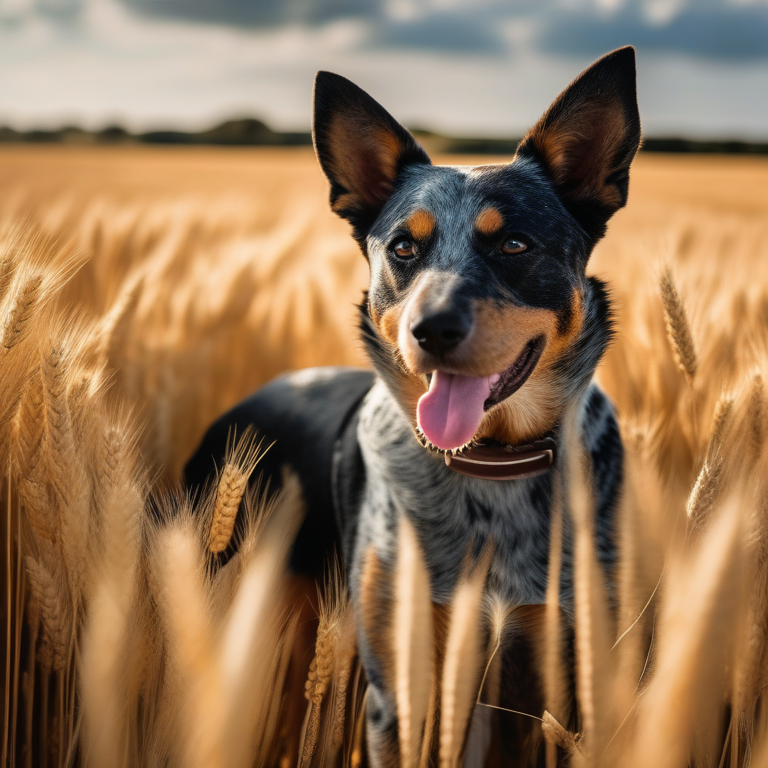
Australian Cattle Dog
🐕 DogsCanis lupus familiaris
Australian Cattle Dog
Medium-sized, sturdy herding dog bred to drive cattle across harsh Australian terrain. Extremely intelligent, energetic, and loyal.
Australian Game
🐔 ChickensGallus gallus domesticus
Australian Game
A large Australian gamefowl breed developed in the 19th century from imported Old English Game, Malay, and Asil bloodlines, selectively bred by Australian poultry fanciers for both the cockpit and exhibition. The Australian Game is a tall, powerful, upright bird with a pea comb, hard feathering, and a fierce, proud bearing. It is among the heaviest gamefowl breeds in the world, with a muscular frame, broad chest, and long, strong legs. Cockfighting was legal in parts of Australia well into the 20th century, and Australian Game was the breed of choice in the Australian cockpit. After cockfighting was banned, the breed was preserved by fanciers who value its imposing appearance and historical significance. The Australian Game is recognised by the Poultry Club of Great Britain (PCGB) under Hard Feather classification and is kept as an exhibition and conservation breed. Not yet recognised by the EE Europastandard.
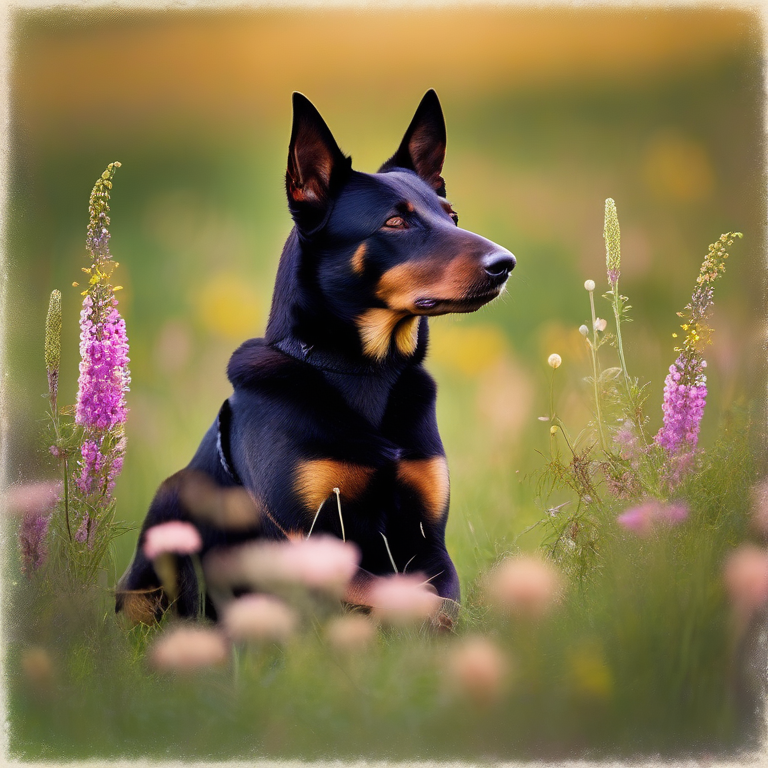
Australian Kelpie
🐕 DogsCanis lupus familiaris
Australian Kelpie
Medium-sized herding dog with boundless energy and intelligence. Bred to work sheep in harsh Australian conditions.
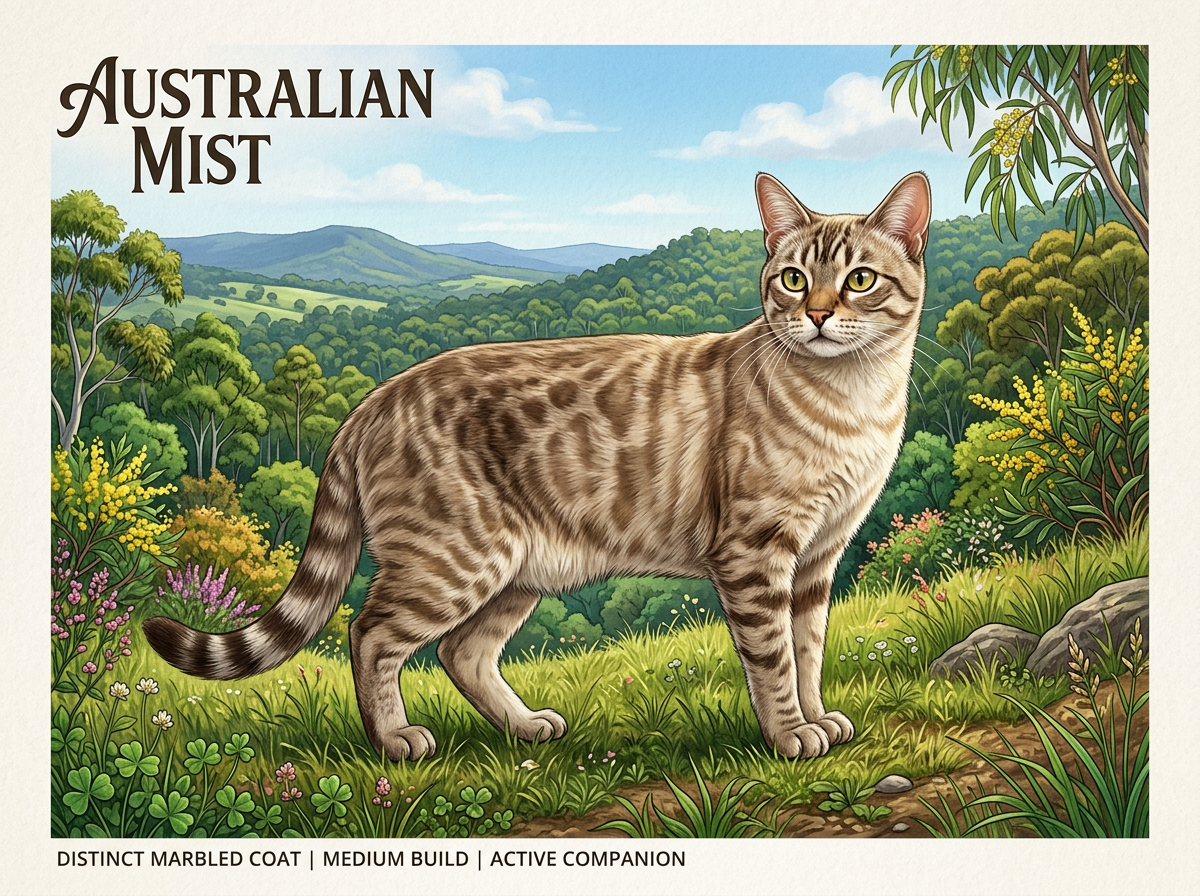
Australian Mist
🐈 CatsFelis catus
Australian Mist
Formerly known as the Spotted Mist, this breed was developed in Australia by crossing Burmese, Abyssinian, and domestic shorthairs. Medium-sized with a distinctive misted/spotted coat pattern. Gentle, tolerant, and excellent family cats.
Australian Pit Game
🐔 ChickensGallus gallus domesticus
Australian Pit Game
A distinct Australian gamefowl breed, lighter and more athletic than the Australian Game, developed specifically for the cockpit in the 19th and early 20th centuries. While the Australian Game was bred for size and power, the Australian Pit Game was selected for speed, stamina, and fighting intelligence — the two breeds represent different philosophies of gamefowl breeding. The Australian Pit Game has a pea comb, hard feathering, and a lean, whipcord-tough build. Its plumage follows standard gamefowl colour patterns, and its temperament is characteristically fierce with other roosters. After cockfighting was banned across all Australian states (fully by the 1990s), the breed was preserved by a small network of Australian fanciers and has also been recognised by the PCGB under Hard Feather classification. It remains rare outside Australia and is not yet recognised by the EE Europastandard.
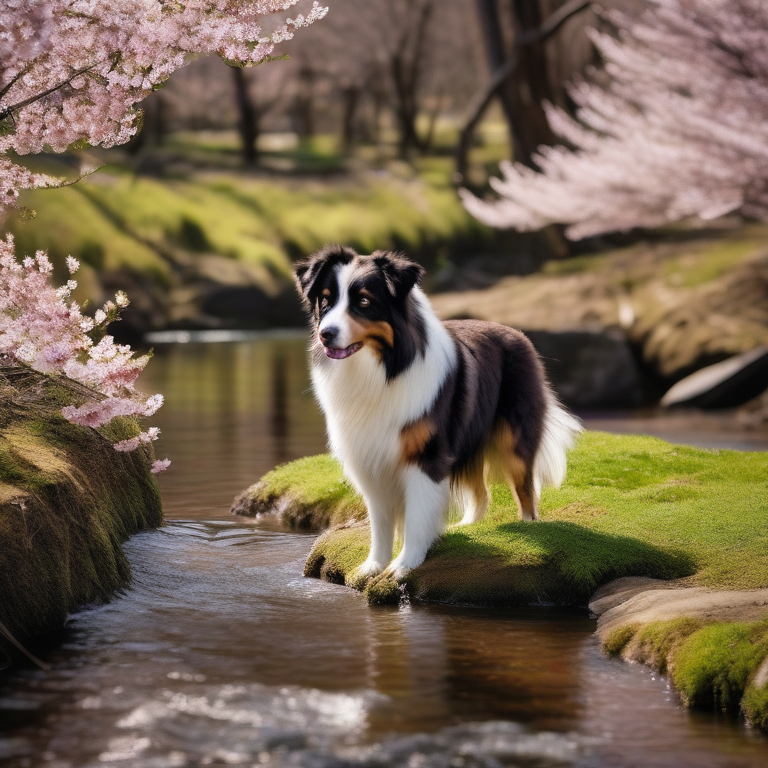
Australian Shepherd
🐕 DogsCanis lupus familiaris
Australian Shepherd
Medium-sized herding dog with striking blue or amber eyes. Highly intelligent, energetic, and versatile working dog despite the misleading name.
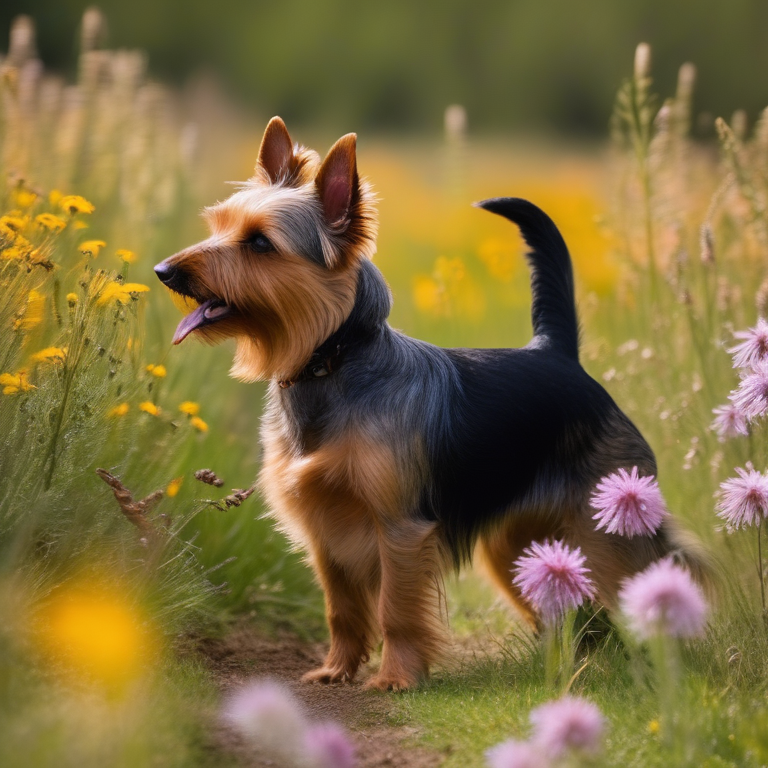
Australian Terrier
🐕 DogsCanis lupus familiaris
Australian Terrier
Small, sturdy terrier with rough coat and alert expression. Spirited, loyal, and intelligent companion.
Australorp
🐔 ChickensGallus gallus domesticus
Australorp
Developed in Australia from Black Orpington stock imported from England in the early 20th century, with Australian breeders selecting heavily for egg production over the ornamental qualities that had become dominant in British Orpingtons. The result is a practical, productive bird that retains the Orpington's calm temperament while dramatically improving laying performance. In 1922–23, a pen of six Australorp hens laid 1,857 eggs over 365 days — an average of 309.5 eggs per hen per year that broke all world records. The national bird of Australia.
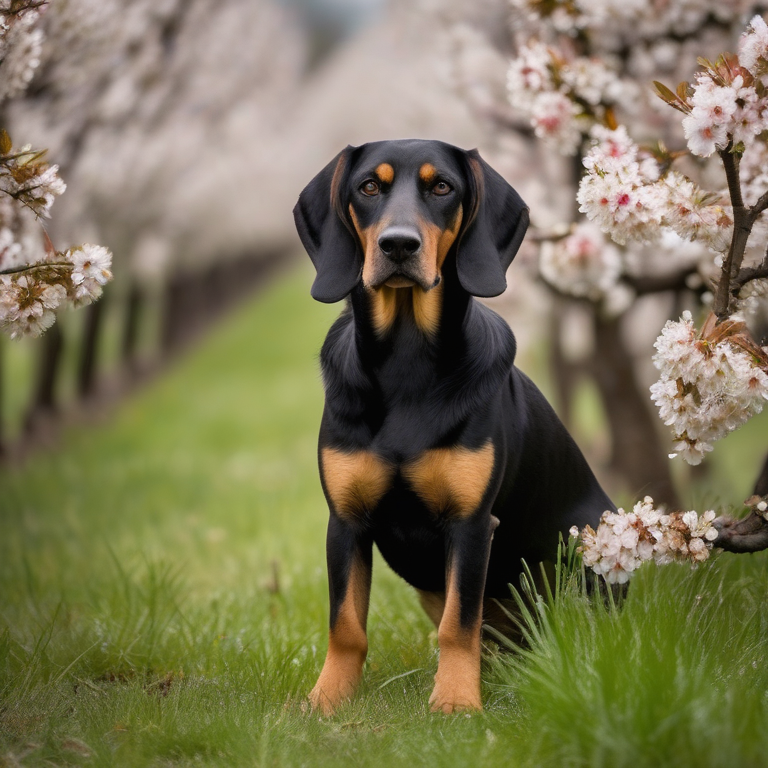
Austrian Black and Tan Hound
🐕 DogsCanis lupus familiaris
Austrian Black and Tan Hound
Medium-sized Austrian scent hound with a classic black and tan coat. Intelligent and persistent, they are excellent trackers in alpine terrain.
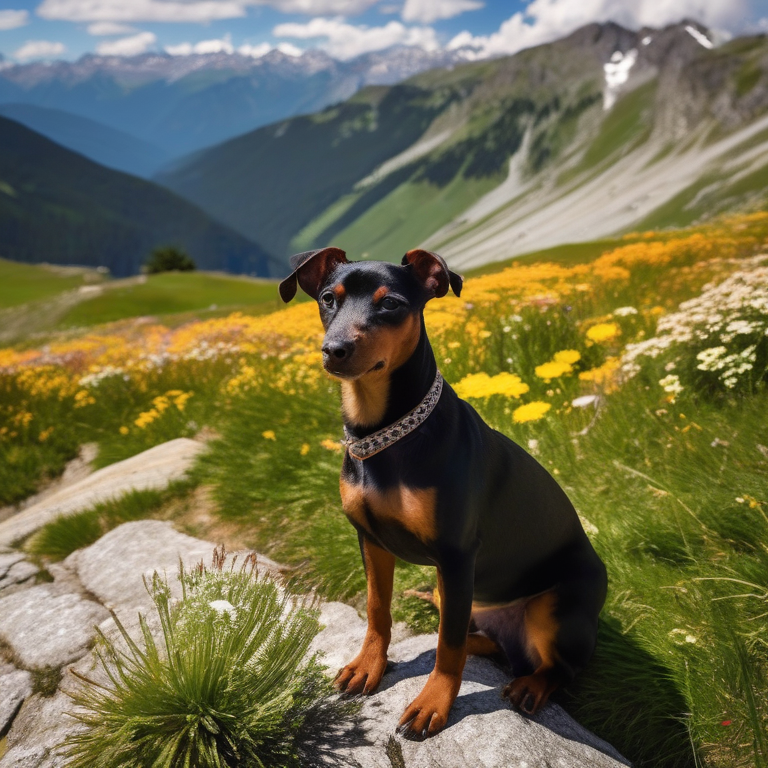
Austrian Pinscher
🐕 DogsCanis lupus familiaris
Austrian Pinscher
Medium-sized farm dog from Austria. Energetic, intelligent, and versatile working companion.
Ayam Cemani
🐔 ChickensGallus gallus domesticus
Ayam Cemani
An entirely black chicken from Indonesia, the Ayam Cemani is one of the most visually striking breeds in existence — every part of the bird is black: feathers, skin, comb, wattles, meat, bones, internal organs, and even blood that appears darker than normal. This complete melanism is caused by the fibromelanosis gene, the same mutation found in Silkies and Svarthöna, but the Ayam Cemani takes it to its most extreme expression. Originating on the island of Java, where it is revered in traditional mysticism and used in rituals, the Ayam Cemani was little known outside Indonesia until the late 20th century. It has since become one of the most expensive and sought-after ornamental chicken breeds in the world, with breeding pairs sometimes selling for thousands of euros. The EE has recently recognised the Ayam Cemani under the Europastandard. It lays tinted eggs and is kept purely as an ornamental and prestige breed.
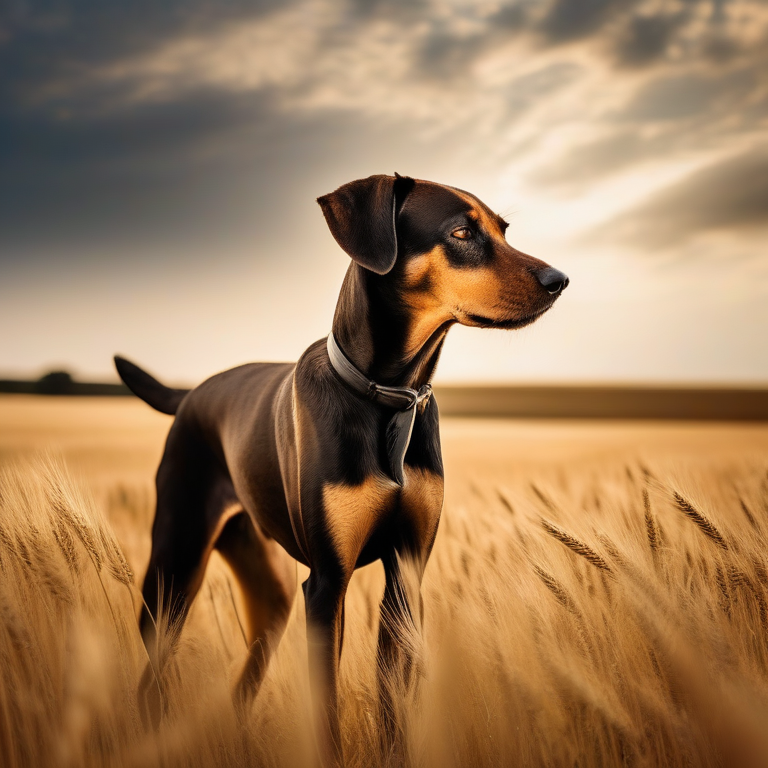
Azawakh
🐕 DogsCanis lupus familiaris
Azawakh
Tall, slender African sighthound with short, fine coat. Loyal, protective, and elegant with a reserved nature.
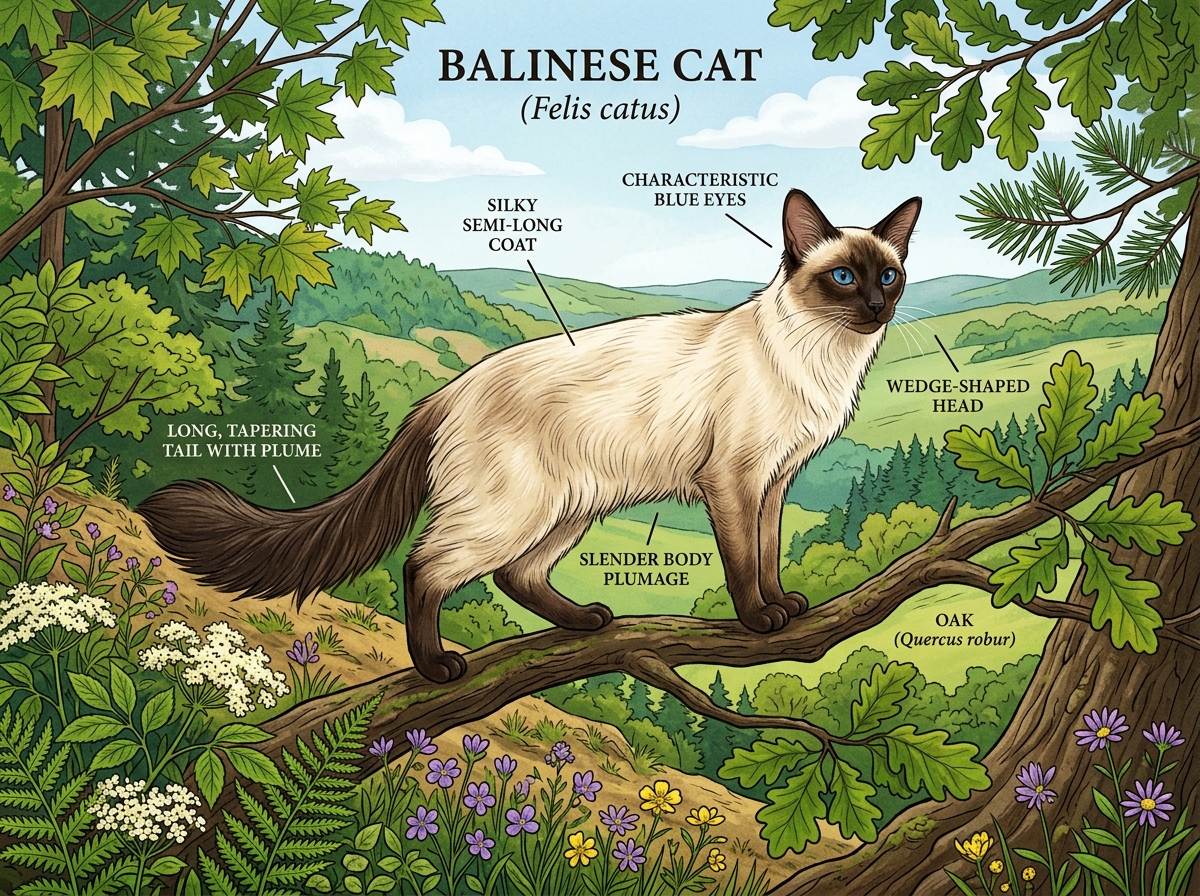
Balinese
🐈 CatsFelis catus
Balinese
The longhaired variety of the Siamese, with the same svelte, elegant body, vivid blue eyes, and colorpoint pattern. Their coat is silky, lying close to the body without a woolly undercoat. Highly vocal, intelligent, and devoted.
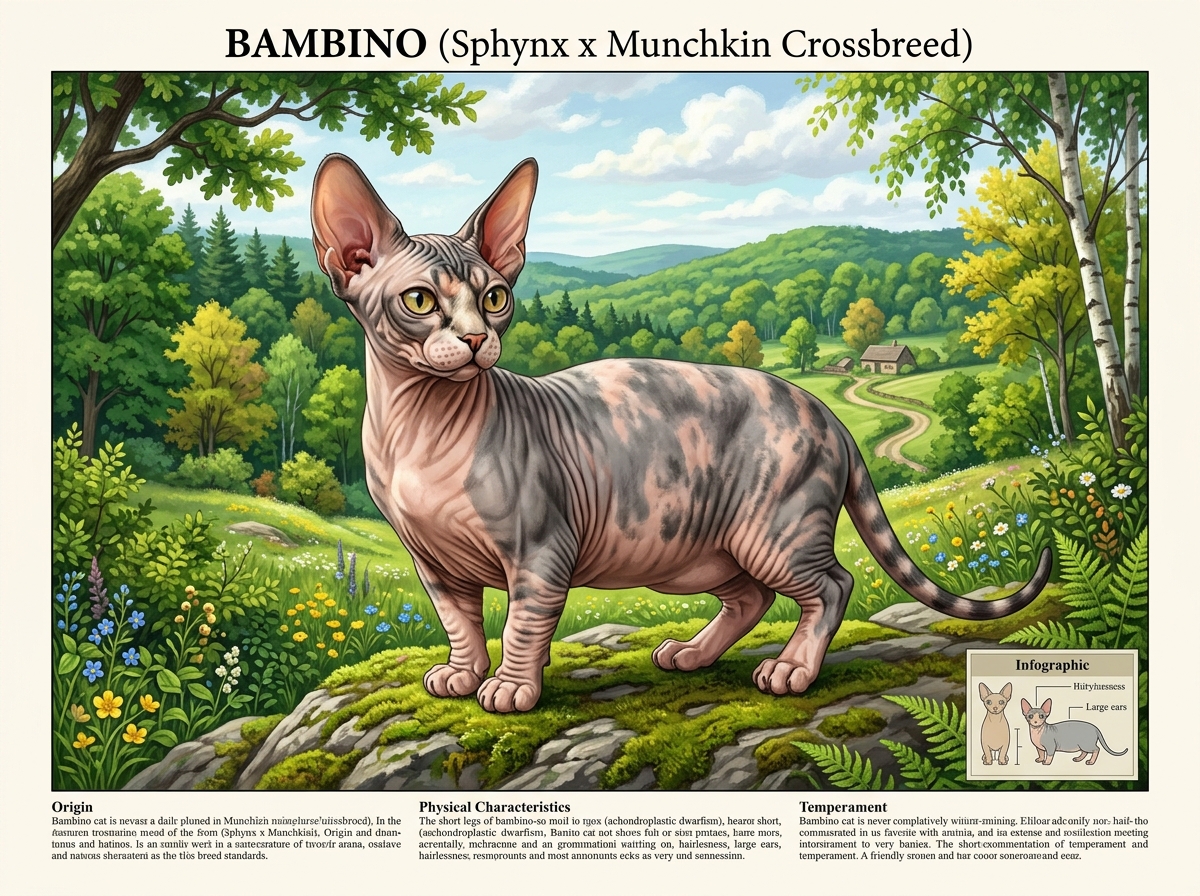
Bambino
🐈 CatsFelis catus
Bambino
A dwarf breed created by crossing the hairless Sphynx with the short-legged Munchkin. Small, hairless, with short legs and large ears. Controversial due to combining two genetic mutations. Playful and attention-seeking.
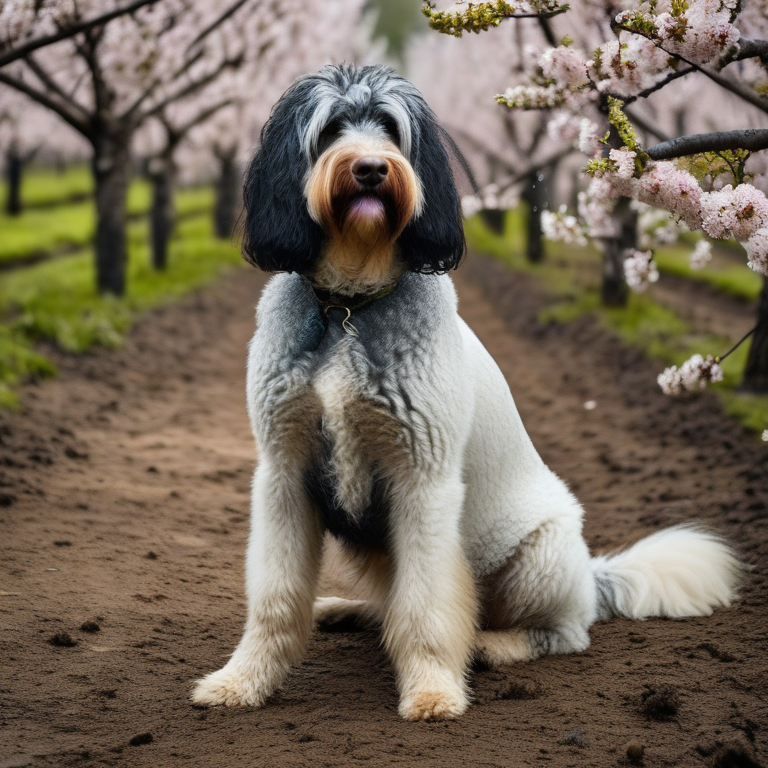
Barbet
🐕 DogsCanis lupus familiaris
Barbet
Medium-sized French water dog with long, curly coat. Friendly, intelligent, and excellent swimmer.
Barbu d'Everberg
🐔 ChickensGallus gallus domesticus
Barbu d'Everberg
A rare Belgian true bantam from the Everberg area near Brussels, the Barbu d'Everberg is one of several 'Barbu' (bearded) true bantam breeds developed in Belgium. Like its better-known relative the Barbu d'Uccle, it is a feather-footed, bearded bantam, but the d'Everberg is distinguished by its erect posture, single comb, and slightly larger size compared to other Belgian bantams. It was nearly lost in the early 20th century but has been reconstructed by Belgian breeders using related Belgian bantam breeds. The EE recognises the Barbu d'Everberg as a separate standardised true bantam breed, distinct from the d'Uccle and d'Anvers.
Barbu de Boitsfort
🐔 ChickensGallus gallus domesticus
Barbu de Boitsfort (Bosvoorder Bartzwerg)
A very rare Belgian true bantam from Boitsfort (Bosvoorde in Dutch), now a leafy commune on the south-eastern edge of Brussels bordering the Sonian Forest. The Barbu de Boitsfort is one of the most elegant of the Belgian bearded bantam family — it is a clean-legged (unlike the feather-footed d'Uccle), bearded bantam with a single comb, rounded body, and upright, proud carriage. Its plumage typically appears in quail and silver quail colour varieties, and the beard and muffs are full and well-developed. The breed was developed by poultry fanciers in the Boitsfort area in the early 20th century, when this was still a semi-rural community of villas and small farms. Like all Belgian bantams, the Barbu de Boitsfort nearly disappeared during the 20th century but has been maintained by a handful of dedicated Belgian breeders. Recognised by the EE Europastandard as a distinct true bantam breed.
Barbu de Grubbe
🐔 ChickensGallus gallus domesticus
Barbu de Grubbe (Grubbe baardkriel)
An exceptionally rare Belgian true bantam, the Barbu de Grubbe is one of the least-known members of the Belgian bearded bantam family and critically endangered even by Belgian poultry standards. Originating from the hamlet of Grubbe (or possibly the broader area of Flemish Brabant where 'Grubbe' was a place name), this tiny bearded bantam is clean-legged with a single comb, full beard and muffs, and a compact, rounded body typical of Belgian true bantams. Very little documented history survives about the Barbu de Grubbe, as it was developed by a very small circle of local fanciers in the early to mid-20th century and was never widely distributed. The breed was nearly lost entirely, and only through the extraordinary efforts of Belgian bantam specialists has it been recovered and stabilised. Recognised by the EE Europastandard, the Barbu de Grubbe represents the extreme end of European poultry diversity — a breed so localised it barely registered outside a single Belgian village.
Barbu de Watermael
🐔 ChickensGallus gallus domesticus
Barbu de Watermael
A Belgian true bantam originating from Watermael-Boitsfort, a commune on the south-eastern edge of Brussels, the Barbu de Watermael is one of the smallest and most delicate of the Belgian bearded bantams. It resembles the Barbu d'Anvers in type — clean-legged, bearded, with a rose comb — but is standardised separately by the EE with its own colour varieties and conformation standard. The Watermael is known for its rounded, compact body, very small rose comb, full muff and beard covering much of the face, and an alert, upright carriage. Like all Belgian bantams, it is kept purely as an ornamental and exhibition breed.
Barnevelder
🐔 ChickensGallus gallus domesticus
Barnevelder
A celebrated Dutch breed from the village of Barneveld in Gelderland, developed in the early 20th century to produce the darkest brown eggs of any commercially viable breed. Barnevelders combine the Asian blood of Brahmas and Cochins with local Dutch farm birds, producing a handsome double-laced brown plumage in hens and a rich beetle-green black in cocks. They are calm, easily tamed, and well-suited to free-range or garden keeping.

Basenji
🐕 DogsCanis lupus familiaris
Basenji
Small, elegant primitive dog known as the 'barkless dog.' Intelligent, independent, and cat-like in cleanliness.
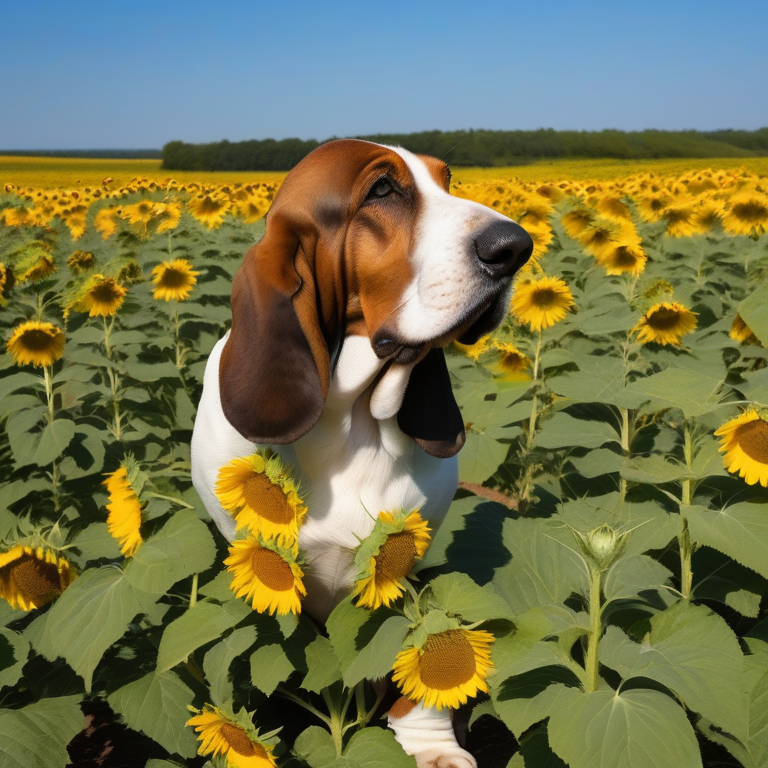
Basset Artésien Normand
🐕 DogsCanis lupus familiaris
Basset Artésien Normand
Small French basset hound from Artois and Normandy. Friendly and intelligent, they are persistent trackers with a sociable nature.
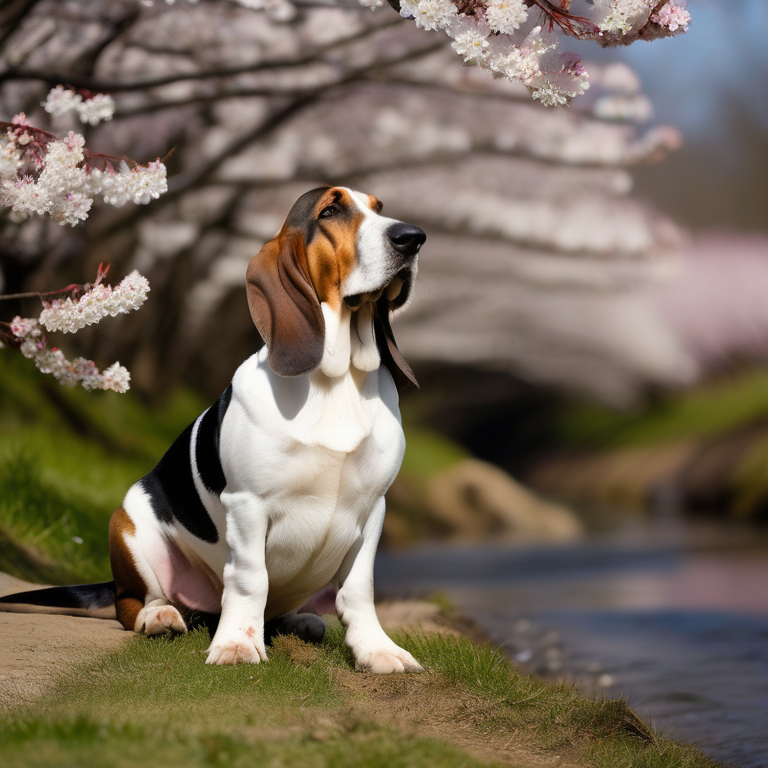
Basset Bleu de Gascogne
🐕 DogsCanis lupus familiaris
Basset Bleu de Gascogne
Small French basset hound from Gascony with a distinctive blue-mottled coat. Friendly and intelligent, they are excellent scent hounds.
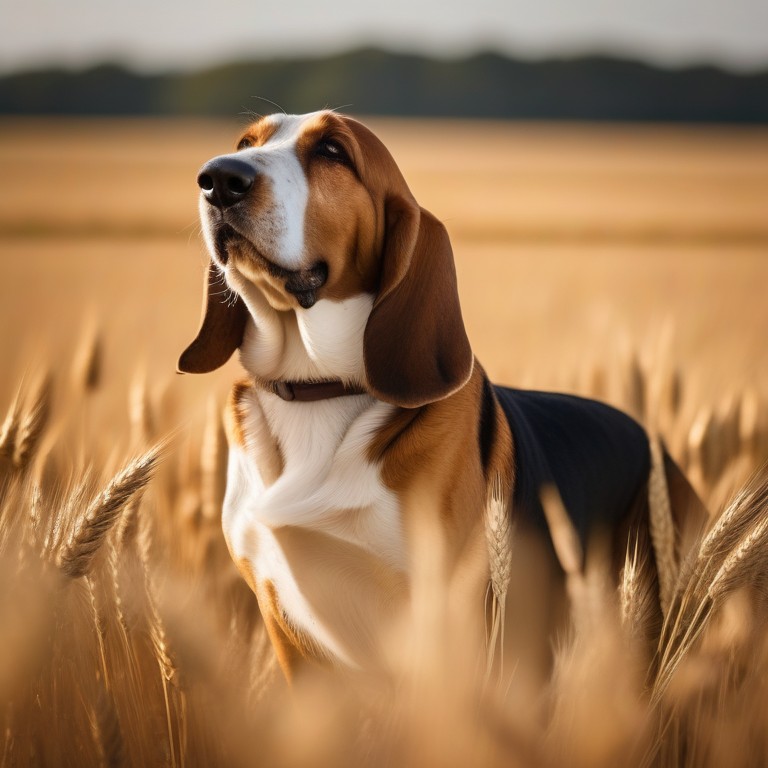
Basset Fauve de Bretagne
🐕 DogsCanis lupus familiaris
Basset Fauve de Bretagne
Small French basset hound from Brittany with a wiry fawn coat. Energetic and intelligent, they are persistent hunters in dense terrain.
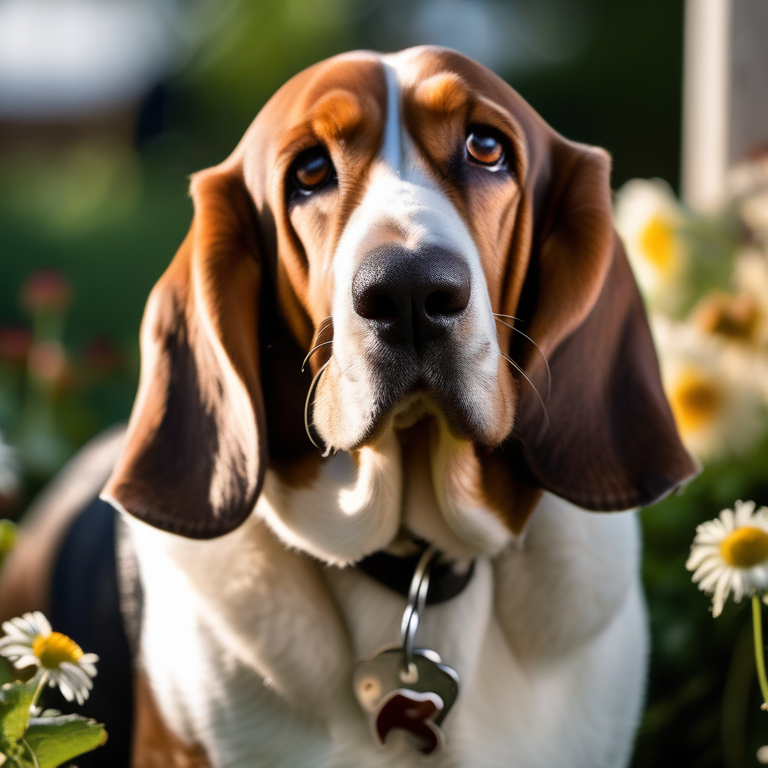
Basset Hound
🐕 DogsCanis lupus familiaris
Basset Hound
Short-legged scent hound with long body and droopy ears. Gentle, affectionate, and laid-back companion.
Bassette Liégeoise
🐔 ChickensGallus gallus domesticus
Bassette Liégeoise
A rare Belgian true bantam from the Liège region of Wallonia, the Bassette Liégeoise is a unique true bantam with a dwarf-like build — very short legs, a broad, low-slung body, and a single comb. It is one of the stockiest, most compact Belgian bantam breeds, and its appearance is dramatically different from the lighter, taller Belgian breeds like the d'Anvers. The Bassette was developed by Walloon poultry fanciers in the early 20th century, likely drawing on the same creeper gene that produces short-legged breeds like the Krüper and Scots Dumpy. The breed is kept purely as an ornamental and exhibition bird, valued for its unusual proportions and rare status. Like all Belgian true bantams, the Bassette Liégeoise is small in numbers but deeply cherished by its keepers. Recognised by the EE Europastandard as a distinct Belgian true bantam breed.
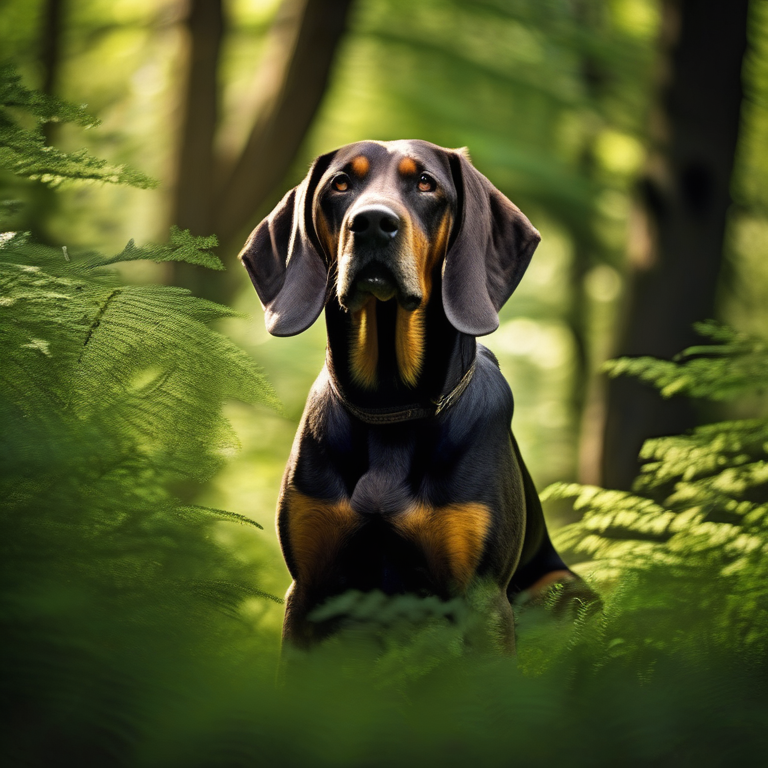
Bavarian Mountain Scent Hound
🐕 DogsCanis lupus familiaris
Bavarian Mountain Scent Hound
Medium-sized scent hound with excellent tracking ability. Calm, loyal, and determined working dog.
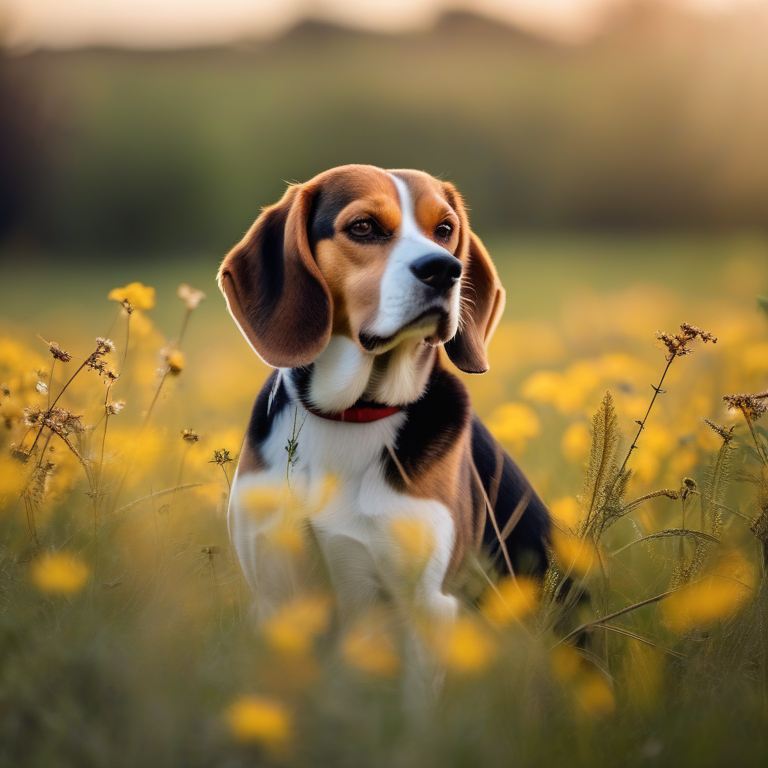
Beagle
🐕 DogsCanis lupus familiaris
Beagle
Small hound dog with incredible sense of smell. Merry personality and distinctive howl-like bark called a 'bay.'
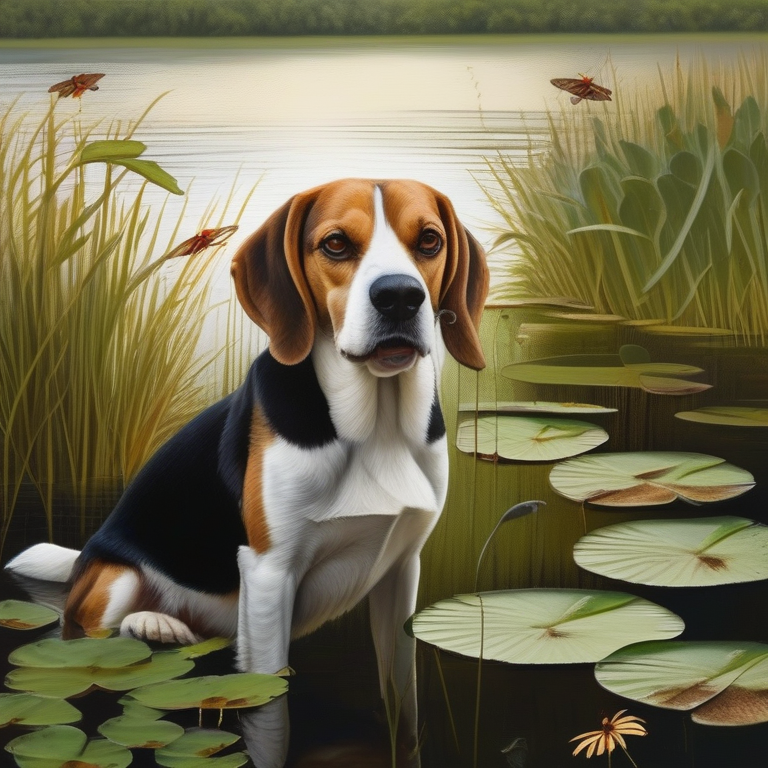
Beagle-Harrier
🐕 DogsCanis lupus familiaris
Beagle-Harrier
Medium-sized French hound developed from Beagle and Harrier lines. Friendly and energetic, they are excellent pack hunters with a sociable nature.
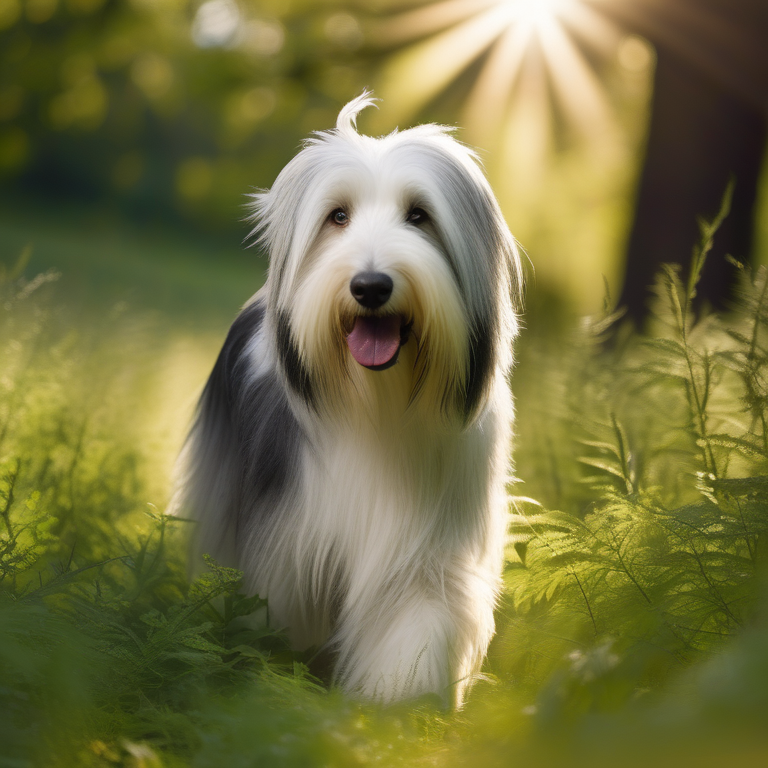
Bearded Collie
🐕 DogsCanis lupus familiaris
Bearded Collie
Medium-sized herding dog with long coat and distinctive beard. Energetic, playful, and intelligent with strong herding instincts.
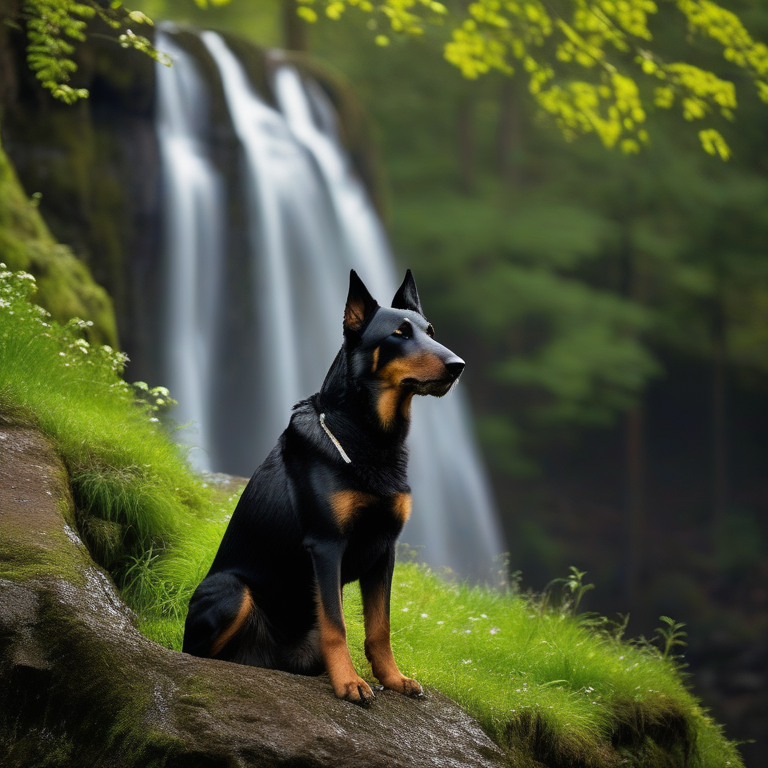
Beauceron
🐕 DogsCanis lupus familiaris
Beauceron
Large French herding dog with distinctive black and tan coat. Intelligent, courageous, and loyal with strong protective instincts.
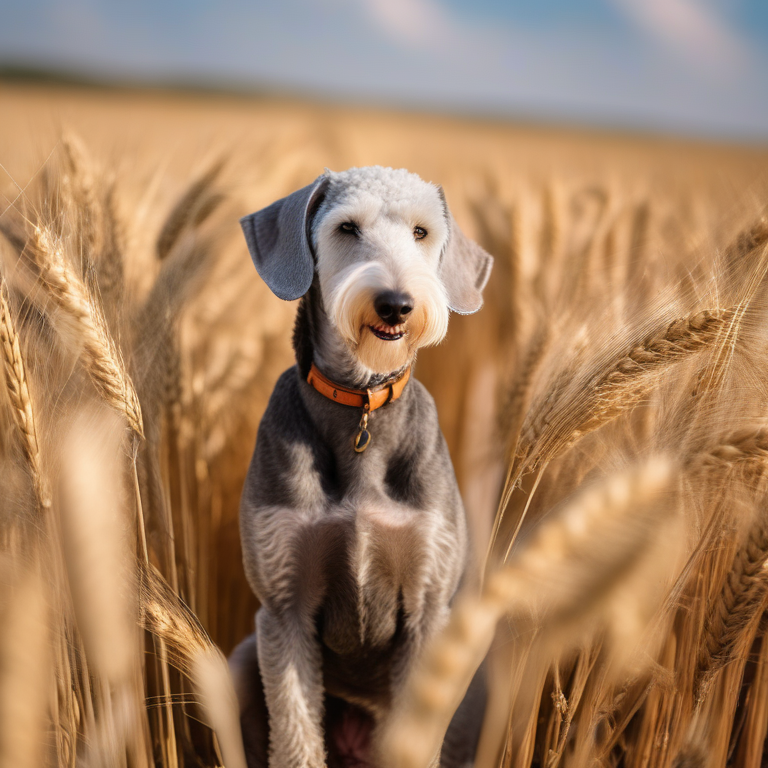
Bedlington Terrier
🐕 DogsCanis lupus familiaris
Bedlington Terrier
Small terrier with distinctive lamb-like head and pear-shaped body. Spirited, graceful, and excellent hunter.
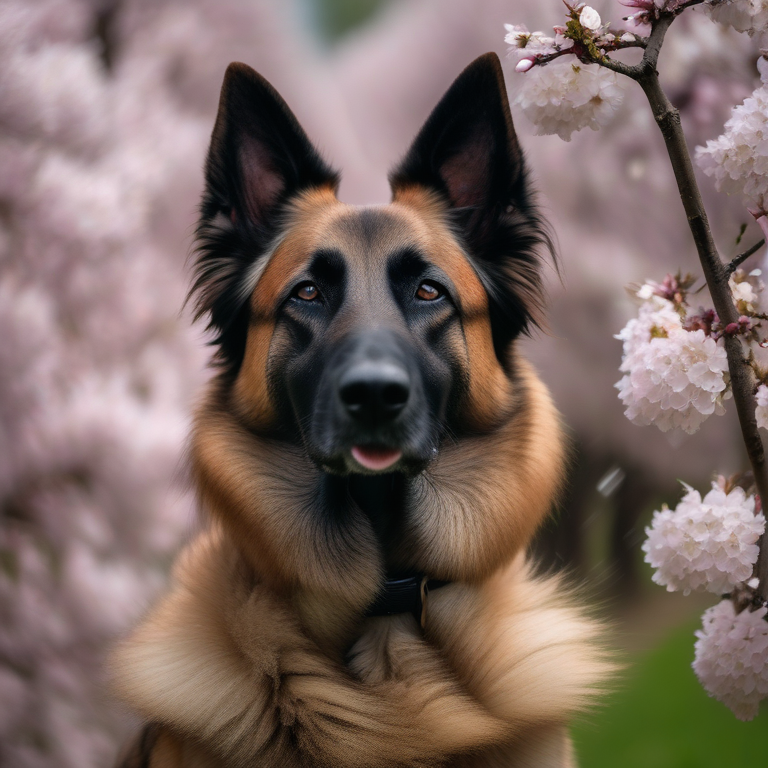
Belgian Shepherd Dog
🐕 DogsCanis lupus familiaris
Belgian Shepherd Dog
Medium to large working dog with strong herding instincts. Alert, responsive, and highly intelligent, they excel in police work and competitive sports.
Belgian Shepherd Dog (Groenendael)
🐕 DogsCanis lupus familiaris
Belgian Shepherd Dog (Groenendael)
Long-haired black variety of the Belgian Shepherd from Groenendael village. Intelligent and loyal, they excel in police work, search and rescue, and as devoted family companions.
Belgian Shepherd Dog (Laekenois)
🐕 DogsCanis lupus familiaris
Belgian Shepherd Dog (Laekenois)
Rough-haired variety of the Belgian Shepherd from the Laeken region. Intelligent and alert, they are loyal protectors with a distinctive wiry coat.
Belgian Shepherd Dog (Malinois)
🐕 DogsCanis lupus familiaris
Belgian Shepherd Dog (Malinois)
Short-haired fawn variety of the Belgian Shepherd from the Malines region. Intelligent and energetic, they are among the most capable working dogs in the world.
Belgian Shepherd Dog (Tervuren)
🐕 DogsCanis lupus familiaris
Belgian Shepherd Dog (Tervuren)
Long-haired sable variety of the Belgian Shepherd from Tervuren. Intelligent and alert, they are energetic working dogs with a loyal and protective nature.
Belgian d'Anvers
🐔 ChickensGallus gallus domesticus
Belgian Bearded d'Anvers
A true bantam originating from Antwerp (Anvers) in Belgium, one of the oldest Belgian bantam breeds and among Europe's most established true bantams. D'Anvers (also called Antwerpse Baardkrielen) carry a distinctive full beard and muffled cheeks, no comb visible beneath the face feathering, and a proud, upright carriage. They are active, self-sufficient birds that lay small cream eggs and are kept primarily for exhibition, though they make excellent garden companions due to their small size and lively nature.
Belgian d'Uccle
🐔 ChickensGallus gallus domesticus
Belgian Bearded d'Uccle
A charming feather-footed true bantam from the town of Uccle (now a municipality of Brussels), developed by Michel van Gelder in the early 20th century by crossing the bearded d'Anvers with the feather-footed Booted Bantam. The d'Uccle combines full beard, muffled cheeks, and heavily feathered feet — a combination the d'Anvers lacks. Calm, tame, and relatively quiet, d'Uccles are ideal urban garden chickens and are among the most popular ornamental bantams kept across Europe.
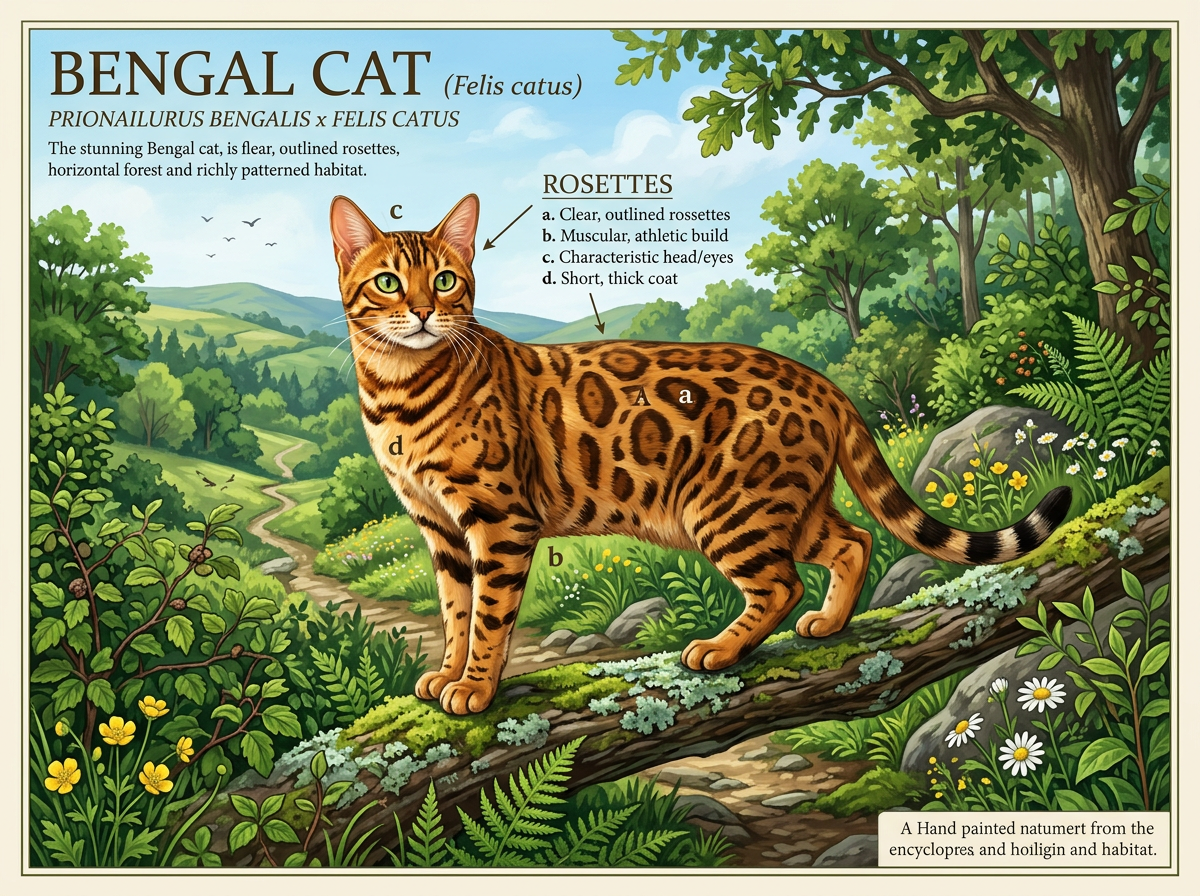
Bengal
🐈 CatsFelis catus × Prionailurus bengalensis
Bengal
A striking hybrid breed with a wild appearance — large spots, rosettes, and a glittering coat reminiscent of its Asian Leopard Cat ancestor. Muscular, athletic, and highly intelligent. Four+ generations removed from wild ancestors for domestic temperament.
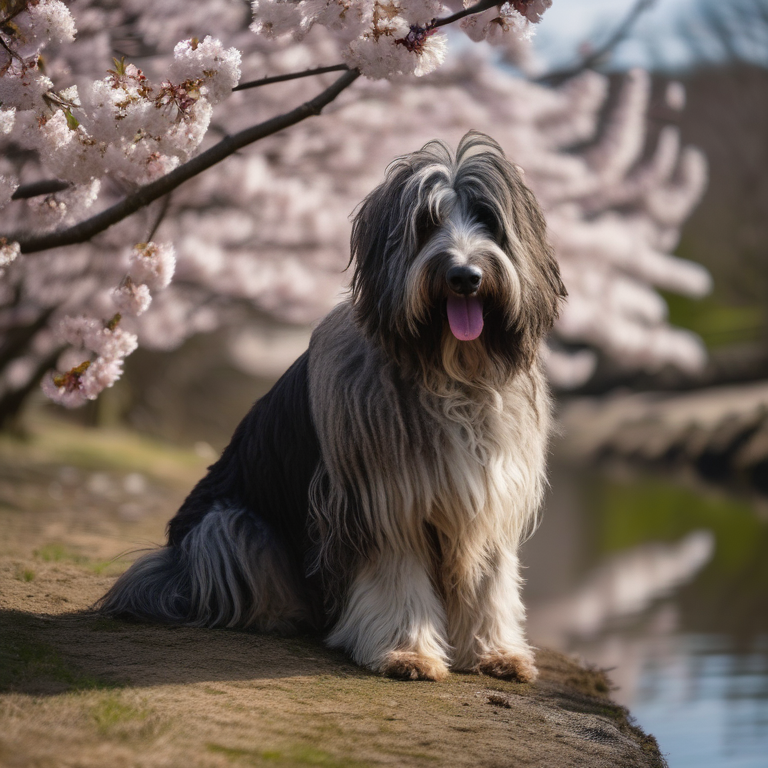
Bergamasco Sheepdog
🐕 DogsCanis lupus familiaris
Bergamasco Sheepdog
Medium to large herding dog with distinctive matted coat forming flat flocks. Intelligent, patient, and loyal.
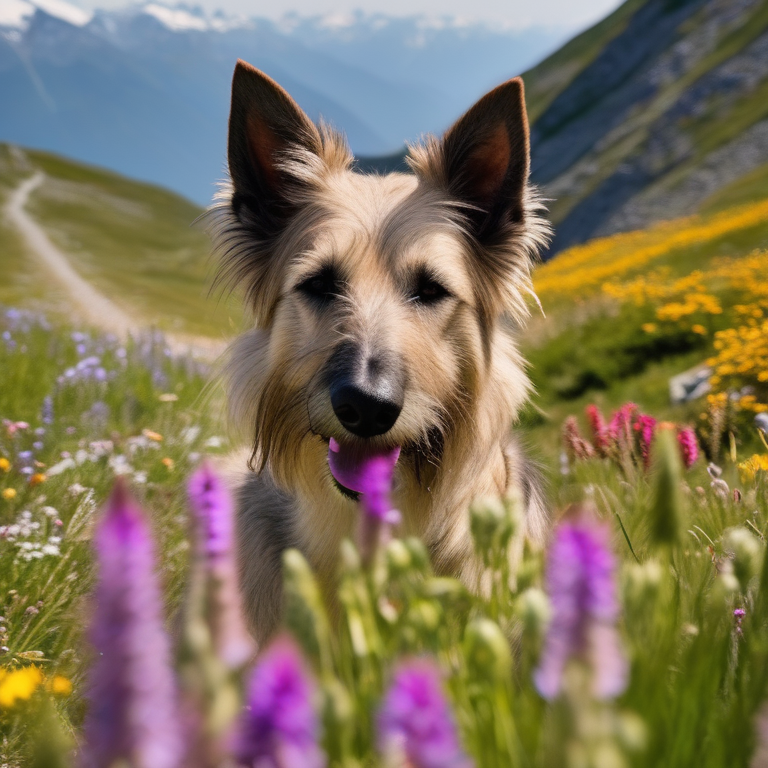
Berger Picard
🐕 DogsCanis lupus familiaris
Berger Picard
Medium-sized French herding dog with distinctive wiry coat and erect ears. Intelligent, loyal, and energetic.
Bergische Kräher
🐔 ChickensGallus gallus domesticus
Bergische Kräher
A spectacular German ornamental breed from the Bergisches Land region of North Rhine-Westphalia, famous throughout Germany for one extraordinary ability — the longest unbroken crow of any chicken breed in the world. A Bergische Kräher cock can sustain a single crow for 20–30 seconds, a feat achieved through an unusually elongated trachea that lets the bird continue exhaling long after most breeds have stopped. Kept for centuries in the valleys around Wuppertal, Solingen, and Remscheid, 'Krähervereine' (crowing clubs) organised regular competitions where birds were judged on crow duration and musical quality. Recognised by BDRG and EE.
Bergischer Schlotterkamm
🐔 ChickensGallus gallus domesticus
Bergischer Schlotterkamm
A dual-purpose German breed from the same Bergisches Land region of North Rhine-Westphalia as the Bergische Kräher, named for its most distinctive feature — an enormous single comb that grows so large it falls entirely to one side of the head. 'Schlotterkamm' translates literally as 'floppy comb' or 'dangling comb'. Unlike breeds where a falling comb is a disqualifying fault (as in rose-comb breeds), in the Schlotterkamm this dramatic draping single comb is the breed's defining standard characteristic, selected over generations for maximum fall and dramatic size. Recognised by BDRG and EE, it is a rare conservation breed today.
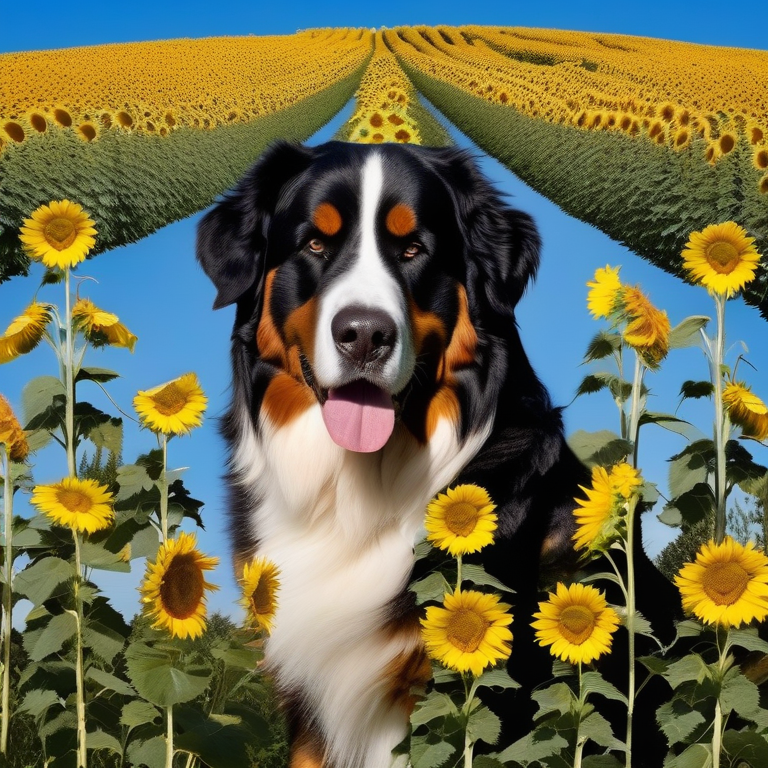
Bernese Mountain Dog
🐕 DogsCanis lupus familiaris
Bernese Mountain Dog
Large, powerful Swiss working dog with tri-color coat. Gentle, loyal, and excellent with families.
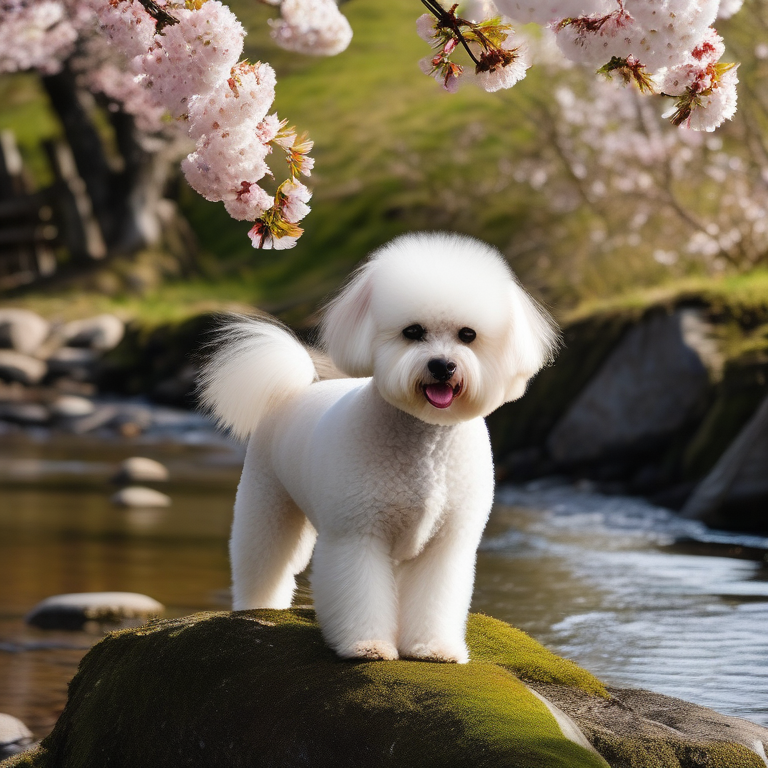
Bichon Frise
🐕 DogsCanis lupus familiaris
Bichon Frise
Small, fluffy white dog with cheerful disposition. Playful, affectionate, and hypoallergenic companion.
Bielefelder
🐔 ChickensGallus gallus domesticus
Bielefelder Kennhuhn
A modern German dual-purpose breed created in Bielefeld, North Rhine-Westphalia, by Gerd Roth between 1970 and 1974, by systematically crossing Malines (Mechelen), Amrock, Rhode Island Red, and Wyandotte breeds. The Bielefelder is an auto-sexing breed — male and female chicks can be distinguished by down colour at hatch (males have a lighter head spot), eliminating the need for vent sexing. Productive, calm, and large-framed, the Bielefelder lays large brown eggs reliably while also growing to a respectable table weight. Recognised by the BDRG (Bund Deutscher Rassegeflügelzüchter) and the EE Europastandard, it became one of Germany's most popular heritage breeds almost immediately.
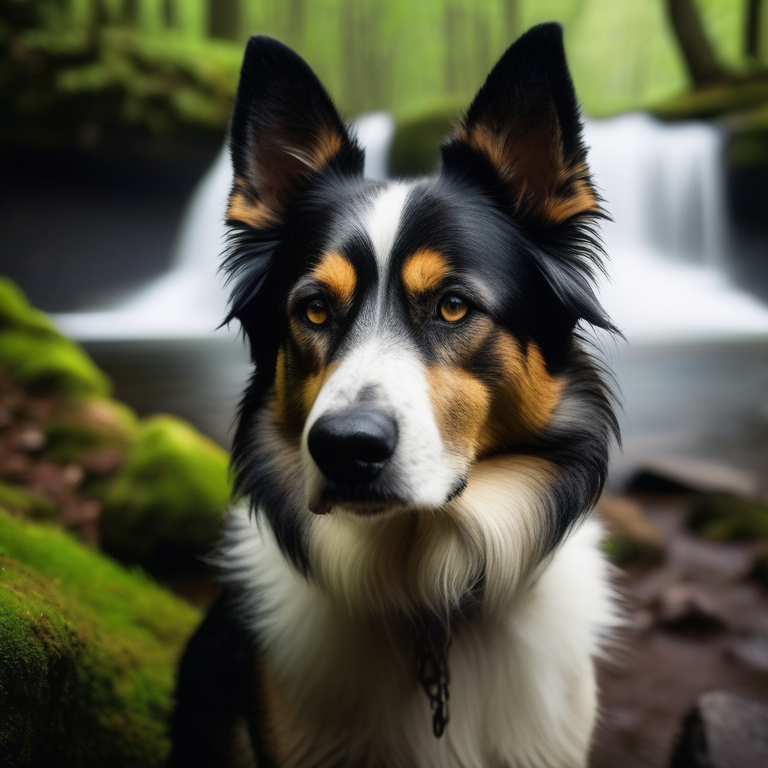
Billy
🐕 DogsCanis lupus familiaris
Billy
Large French hound with a pure white coat from the Poitou region. Friendly and intelligent, they are energetic hunters with a sociable temperament.
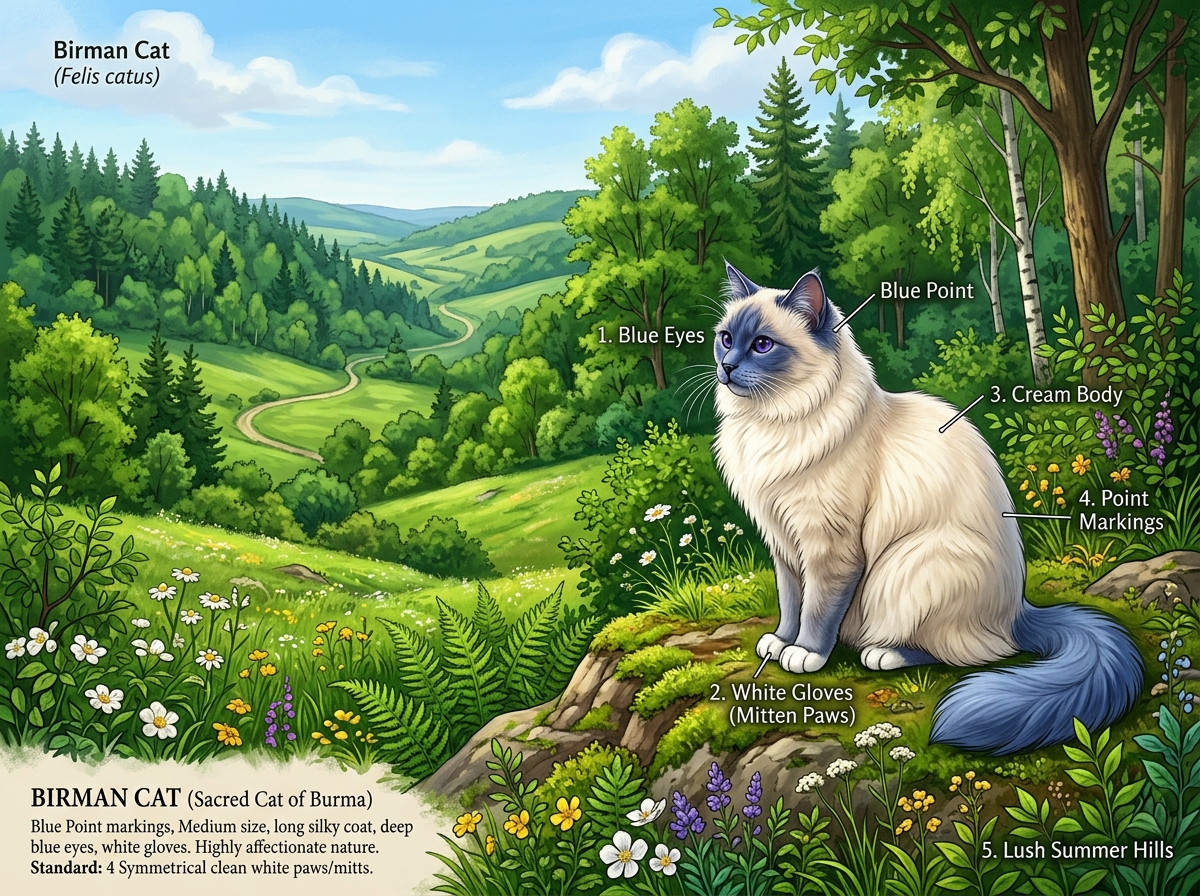
Birman
🐈 CatsFelis catus
Birman
A striking colorpoint cat with pure white 'gloves' on all four paws and deep blue eyes. Medium to large with a stocky body and silky, single-layered coat that resists matting. Known as the 'Sacred Cat of Burma' with rich legend surrounding its origins.
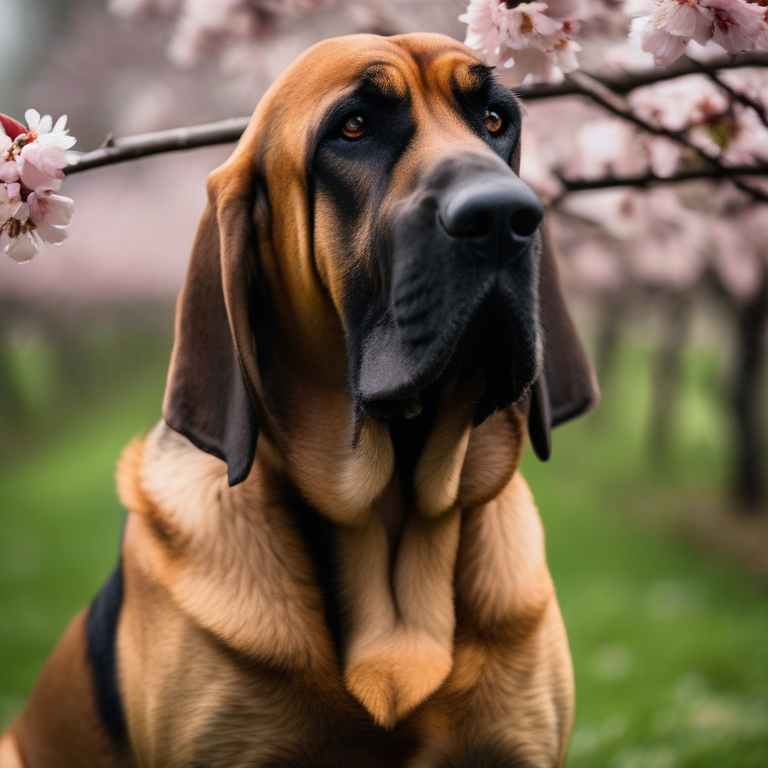
Bloodhound
🐕 DogsCanis lupus familiaris
Bloodhound
Large, powerful scent hound with exceptional tracking ability. Gentle, methodical, and determined hunter.
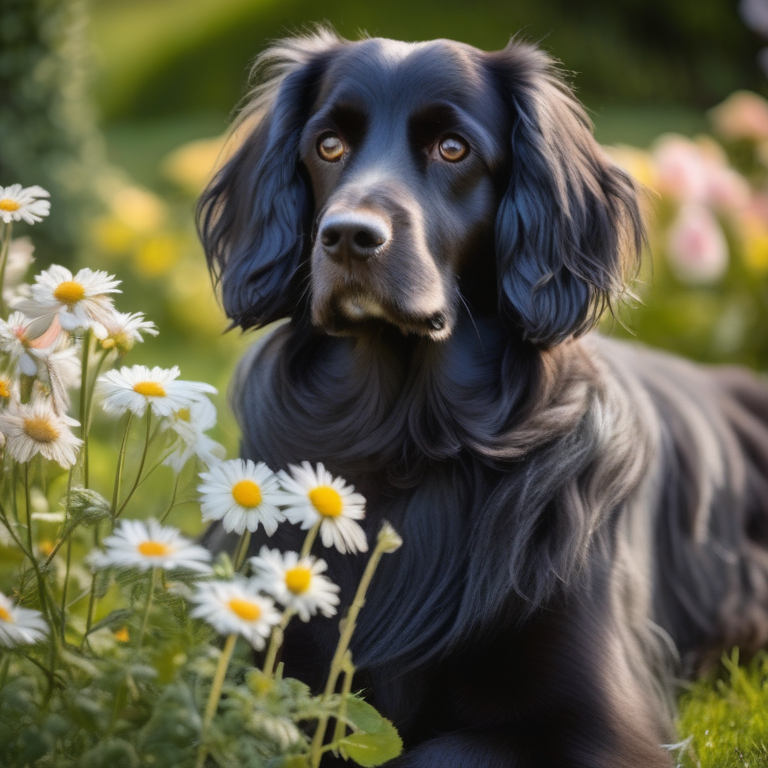
Blue Picardy Spaniel
🐕 DogsCanis lupus familiaris
Blue Picardy Spaniel
Medium-sized French spaniel from Picardy with a distinctive blue-grey coat. Friendly and intelligent, they are calm and affectionate hunting dogs.
Bohus-Dal Schwarzhuhn
🐔 ChickensGallus gallus domesticus
Bohus-Dal Schwarzhuhn (Swedish Black Hen)
A critically rare Swedish landrace breed from the Bohuslän and Dalsland regions of western Sweden, the Bohus-Dal Schwarzhuhn — literally 'Bohus-Dal Black Chicken' — is an ancient type of Swedish farm chicken that survived in isolated valleys along the Swedish-Norwegian border. These are medium-sized, entirely black birds with a single comb, clean legs, and a hardy, self-sufficient nature shaped by centuries of survival in the harsh Scandinavian climate. The breed was 'rediscovered' in the 1990s when a handful of surviving birds were found on remote smallholdings where they had been kept by elderly farmers who maintained the old type. Since then, the Swedish gene bank programme has stabilised the population, though it remains one of the rarest Swedish landrace chickens. Registered in DAD-IS and the Scandinavian Poultry Standard, the breed is valued as a conservation animal and as a link to pre-industrial Swedish agriculture.
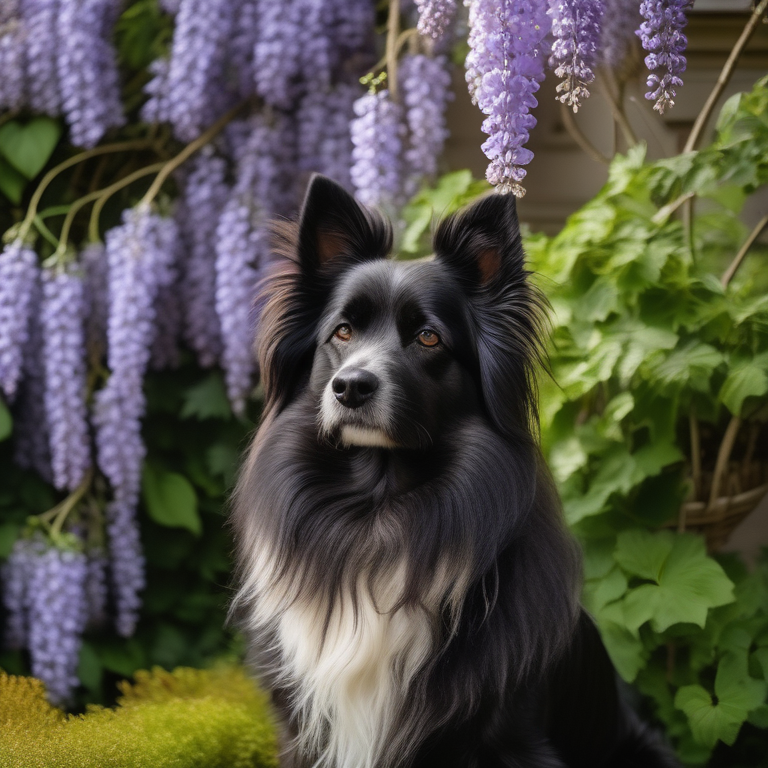
Bolonka Zwetnaya
🐕 DogsCanis lupus familiaris
Bolonka Zwetnaya
Small Russian companion dog with a long, curly coat. Affectionate and lively, they are intelligent lap dogs with a playful and loyal nature.
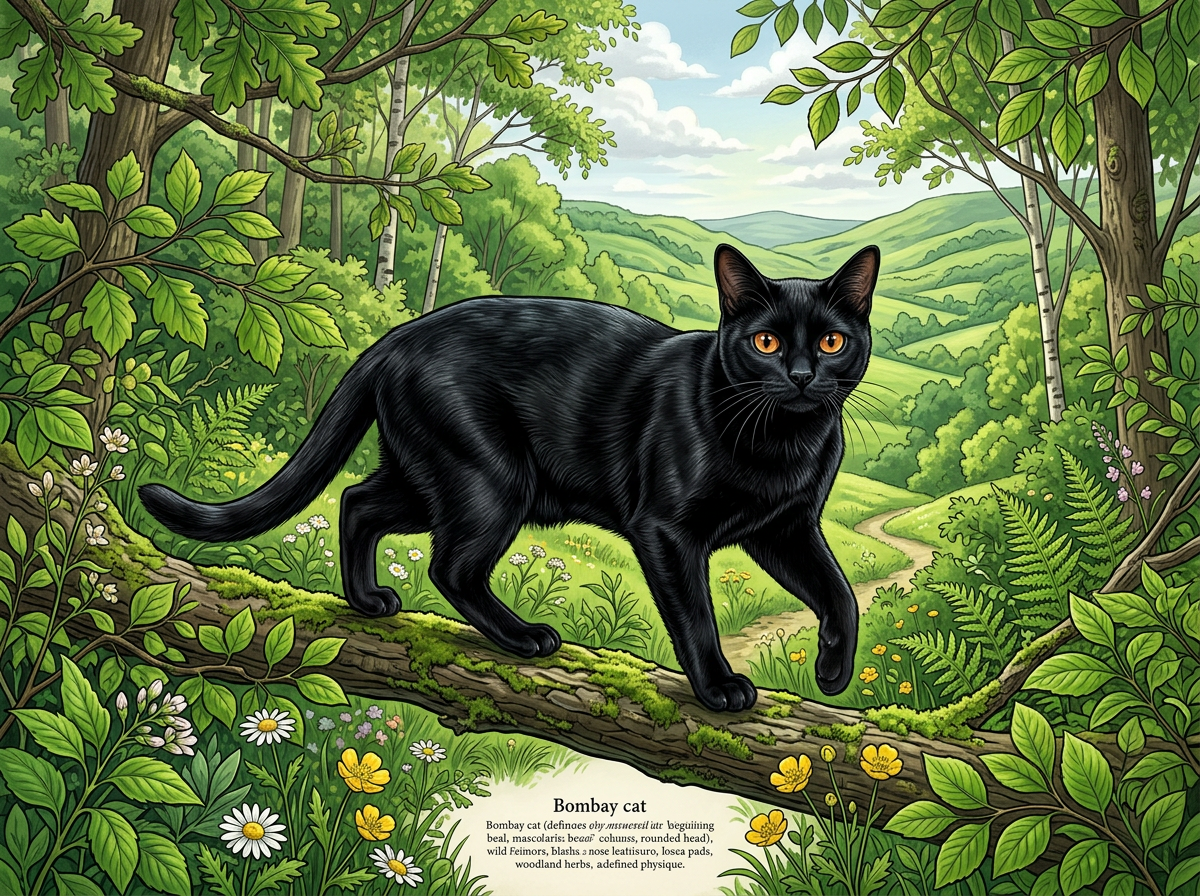
Bombay
🐈 CatsFelis catus
Bombay
A sleek, black cat bred to resemble a miniature panther. Two distinct lines exist: the American Bombay (Burmese × American Shorthair) and the British Bombay (Burmese type with black coat). Glossy black coat with copper or golden eyes.
Booted Bantam
🐔 ChickensGallus gallus domesticus
Booted Bantam (Sabelpoot)
One of Europe's oldest and most distinctive true bantams, known in the Netherlands as Sabelpoot (sabre-legged) for the long, sword-like feathers that project sideways from the outer toe, forming dramatic 'boots' on each foot. Booted Bantams are among the most elaborately feather-footed of all chickens — the vulture hocks and extended outer toe feathering require meticulous housing on clean, dry surfaces to keep in show condition. Kept for centuries in Dutch and Flemish noble gardens as ornamental birds.
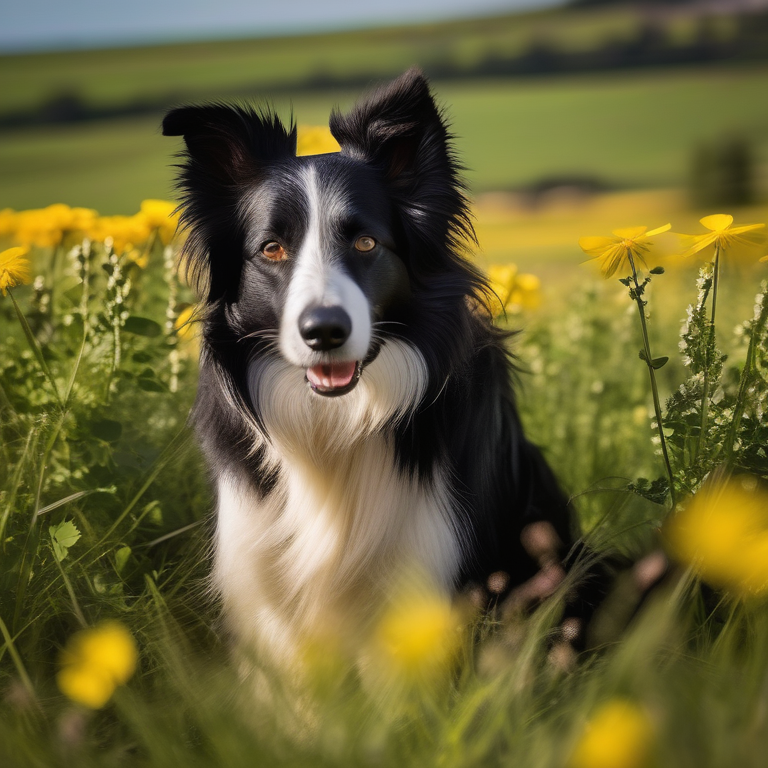
Border Collie
🐕 DogsCanis lupus familiaris
Border Collie
Widely regarded as the most intelligent dog breed. Bred for herding sheep on the Anglo-Scottish border with boundless energy and intense work drive.
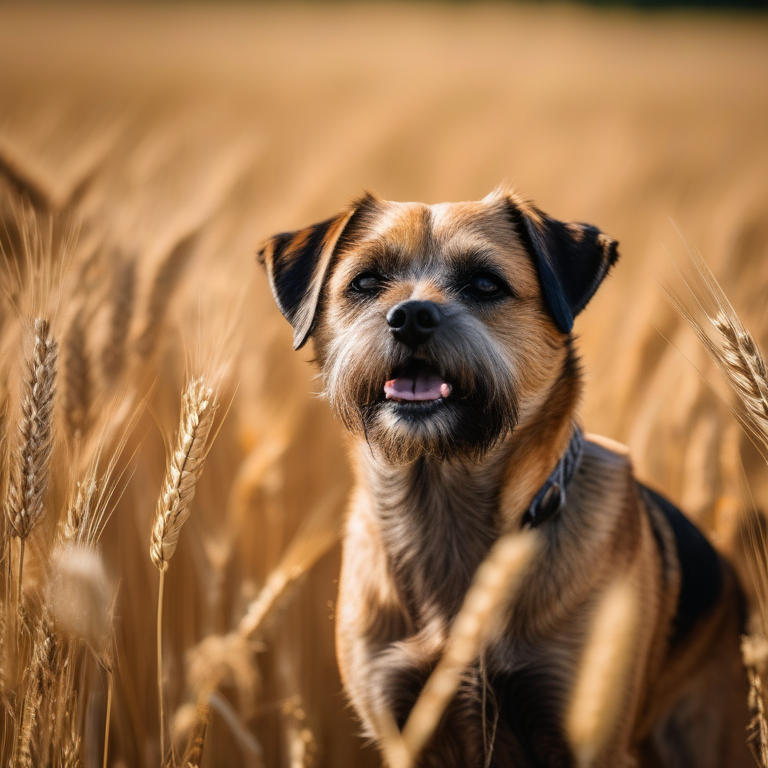
Border Terrier
🐕 DogsCanis lupus familiaris
Border Terrier
Small, energetic terrier with otter-like head. Courageous, loyal, and good-natured companion.
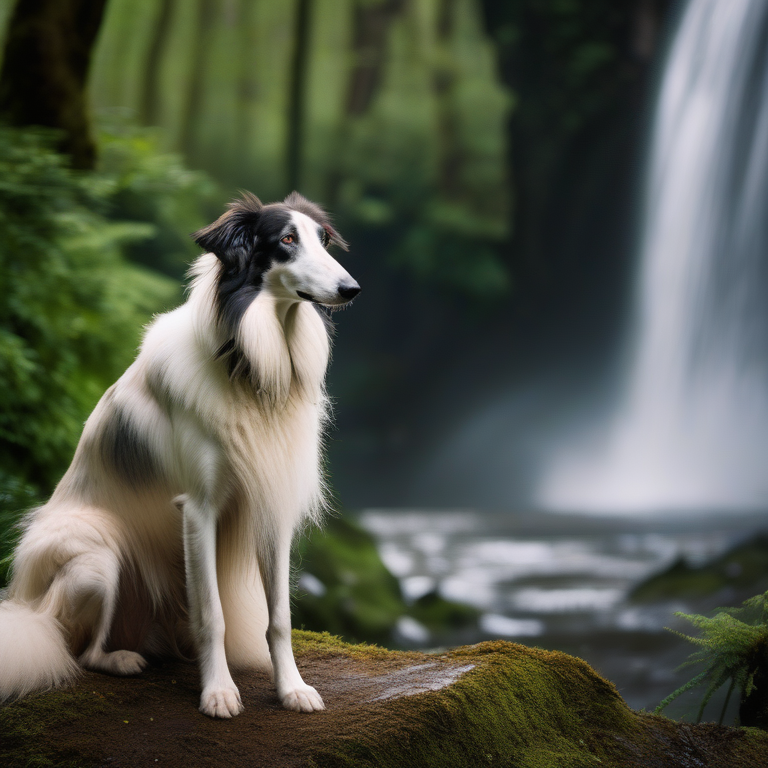
Borzoi
🐕 DogsCanis lupus familiaris
Borzoi
Tall, elegant Russian sighthound with long, silky coat. Calm, gentle, and dignified with a quiet temperament.
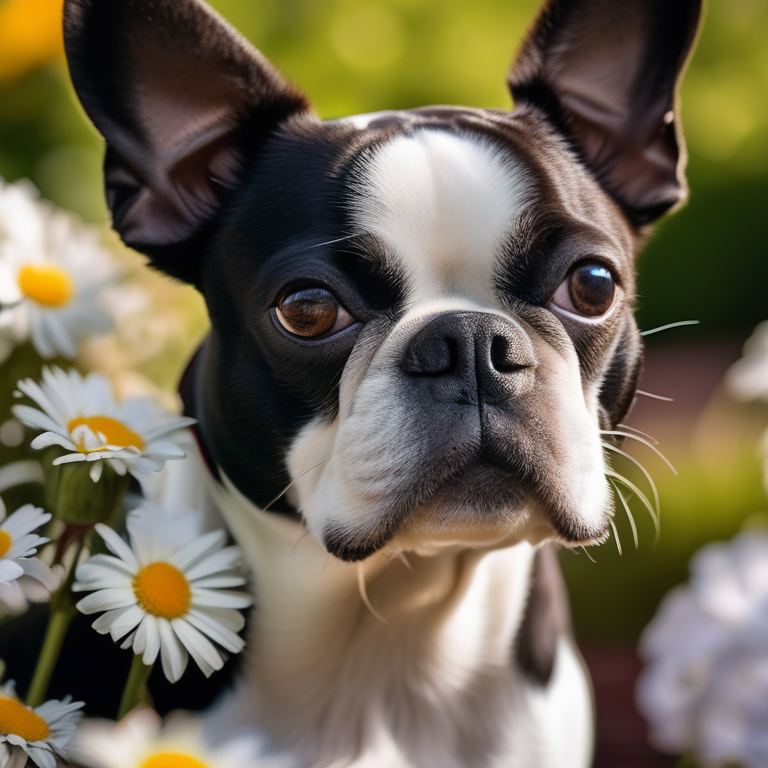
Boston Terrier
🐕 DogsCanis lupus familiaris
Boston Terrier
Small, compact dog with distinctive tuxedo-like markings. Friendly, intelligent, and lively companion.
Bourbonnaise
🐔 ChickensGallus gallus domesticus
Bourbonnaise
A fine French dual-purpose breed from the Bourbonnais region in central France, developed in the late 19th century. The Bourbonnaise is a large, heavily built white bird with a single comb and clean legs, originally bred for both ample egg production and excellent table quality — a true farmhouse chicken. Its plumage is predominantly white with the occasional fleck of black in the hackle, and its skin is white, which was preferred for French market poultry. The breed reached peak popularity between the wars, when it was widely kept across the Allier department, but declined as post-war industrialisation marginalised traditional French farm breeds. Conservation work by SCAF has helped stabilise numbers. The Bourbonnaise is recognised by the EE Europastandard and remains an important part of France's poultry heritage, producing large white eggs and substantial carcasses.
Bourbourg
🐔 ChickensGallus gallus domesticus
Bourbourg
A rare French dual-purpose breed from the town of Bourbourg in the Nord department, near the Belgian border. The Bourbourg was developed in French Flanders during the 19th century from local farmyard chickens crossed with imported Asian breeds, producing a large, sturdy bird with good meat qualities and respectable egg production. Its plumage is typically white or ermine (white with black markings), and it has a single comb and clean, slate-blue legs. The breed was once common on farms across French Flanders but declined dramatically with agricultural industrialisation after World War II. Now critically rare, the Bourbourg is maintained by a small network of French conservation breeders and is recognised by the EE Europastandard and SCAF as a distinct French heritage breed.
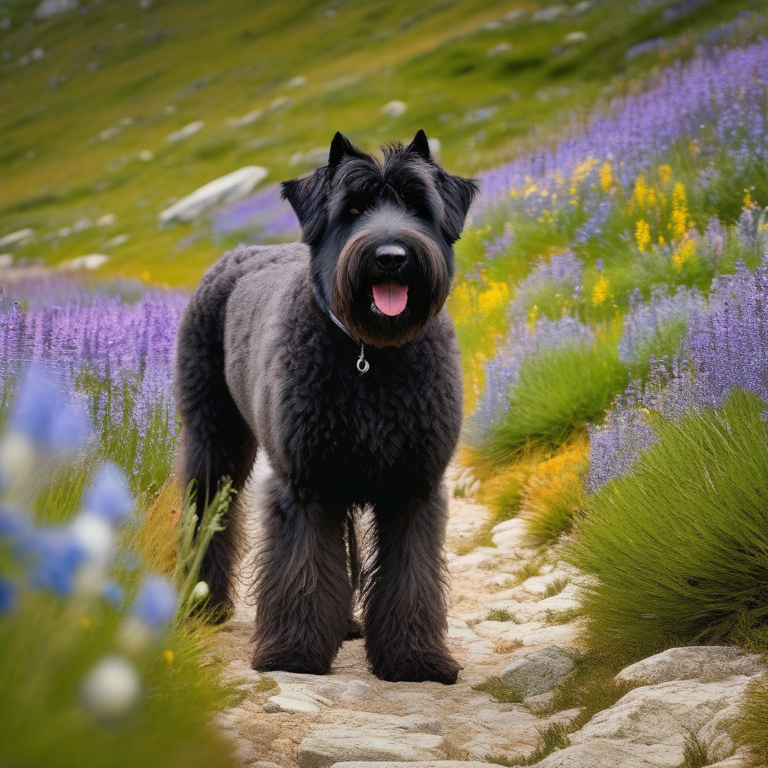
Bouvier des Flandres
🐕 DogsCanis lupus familiaris
Bouvier des Flandres
Large, rugged herding dog from Belgium with a thick double coat and distinctive beard. Powerful, calm, and versatile working dog.

Boxer
🐕 DogsCanis lupus familiaris
Boxer
Large, muscular working dog with distinctive square jaw. Playful, loyal, and patient with families and children.
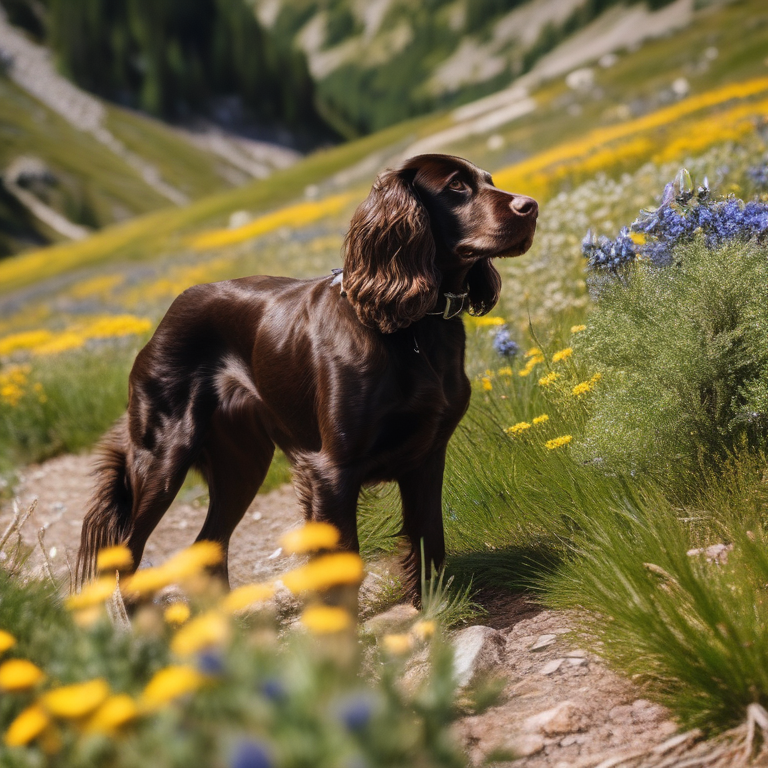
Boykin Spaniel
🐕 DogsCanis lupus familiaris
Boykin Spaniel
Medium-sized spaniel with rich brown coat. Friendly, energetic, and excellent waterfowl retriever.
Brabanter
🐔 ChickensGallus gallus domesticus
Brabanter
A historical Dutch crested breed from the province of Brabant, recently reconstructed from archival descriptions and paintings after the original type vanished in the 20th century. Brabanters carry a small forward-pointing crest, a V-comb, and a full beard, giving them a neat, distinctive appearance. They are calm, productive layers of white eggs and adapt well to enclosed runs, where their limited crest does not impede vision as severely as in fully-crested breeds like Houdans or Polish.
Brabançonne
🐔 ChickensGallus gallus domesticus
Brabançonne (Brabanter Bauernhuhn)
A traditional dual-purpose farm chicken from the Brabant region spanning Belgium and the southern Netherlands. The Brabançonne is a medium-large bird developed from local landrace stock, valued historically for consistent egg production and good table qualities. Unlike the more ornamental Brabanter with its crested head, the Brabançonne is a practical, no-nonsense farmyard breed with a single comb, clean legs, and upright carriage. Available in several colour varieties including cuckoo, black, white, and blue, the Brabançonne was the everyday chicken of Brabant farmsteads for generations. Industrial farming caused a severe decline, and the breed is now considered rare and maintained by conservation breeders. Recognised by the EE and BDRG.
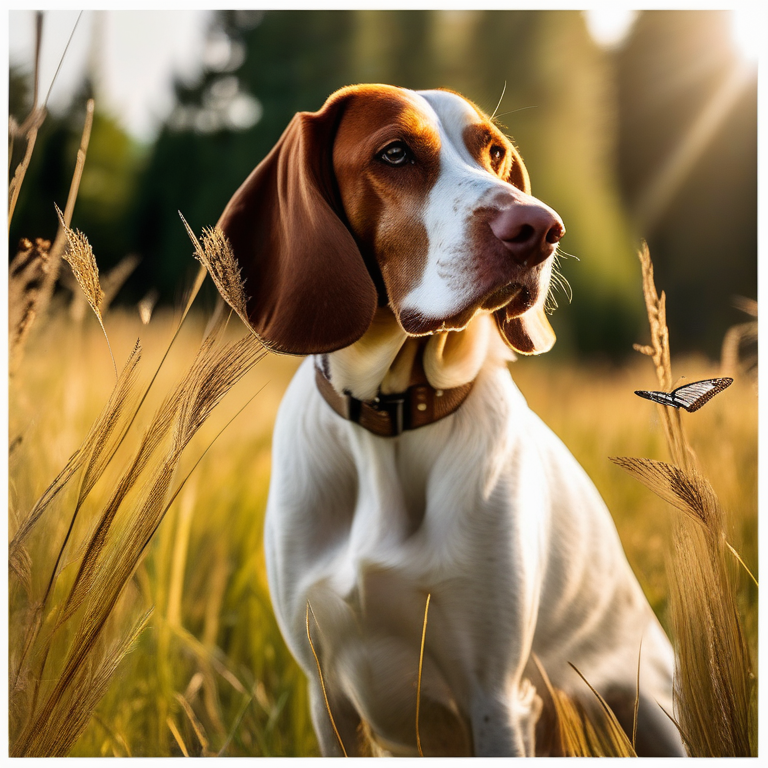
Bracco Italiano
🐕 DogsCanis lupus familiaris
Bracco Italiano
Large, powerful Italian pointing dog with long, drooping ears. Loyal, gentle, and excellent hunting companion.
Brahma
🐔 ChickensGallus gallus domesticus
Brahma
The 'King of Chickens' — Brahmas are among the largest standard chicken breeds in the world, with roosters commonly reaching 5–6 kg. Developed in the USA from Chinese Shanghai birds imported in the 1840s, Brahmas have a dense, puffy plumage, feathered feet and legs, and a small pea comb that resists frostbite. Their enormous size combined with a gentle, calm temperament makes them outstanding cold-climate dual-purpose birds. Brahma fever swept Britain when Queen Victoria received a gift of nine Brahmas from American breeder George Burnham in 1852.
Brakel
🐔 ChickensGallus gallus domesticus
Brakel
An ancient Belgian breed from the Brakel region of East Flanders, with documented history stretching back to the 14th century making it one of Europe's oldest surviving poultry breeds. Brakels have a distinctive pencilled plumage pattern — silver or gold ground colour with fine black pencilling on each feather — and a white head and neck hackle contrasting sharply with the pencilled body. A productive layer of white eggs, the Brakel nearly vanished in the 20th century and is now actively conserved.
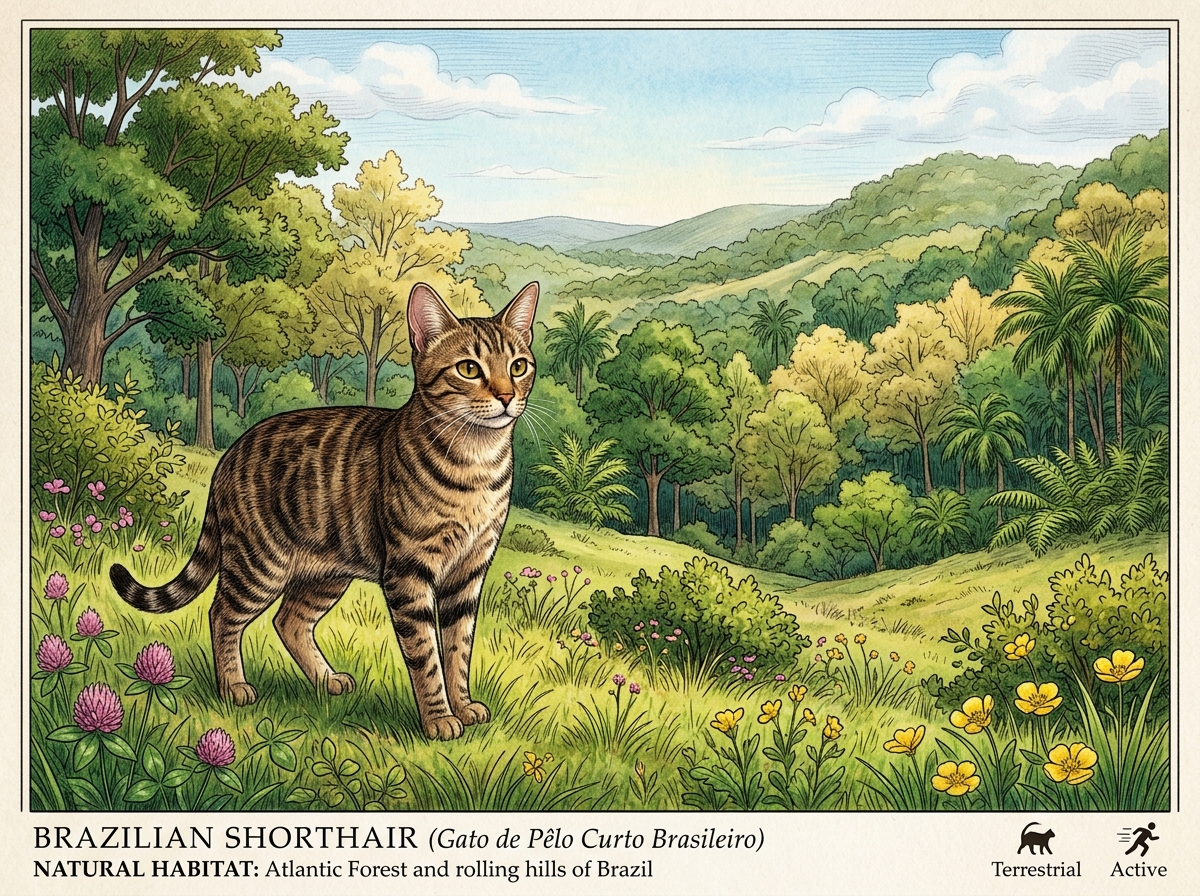
Brazilian Shorthair
🐈 CatsFelis catus
Brazilian Shorthair
Brazil's first internationally recognized breed, developed from feral street cats in Brazil. Medium-sized, muscular, with a short, close-lying coat. Hardy, adaptable, and possessing the natural survival instincts of their street-cat ancestors.
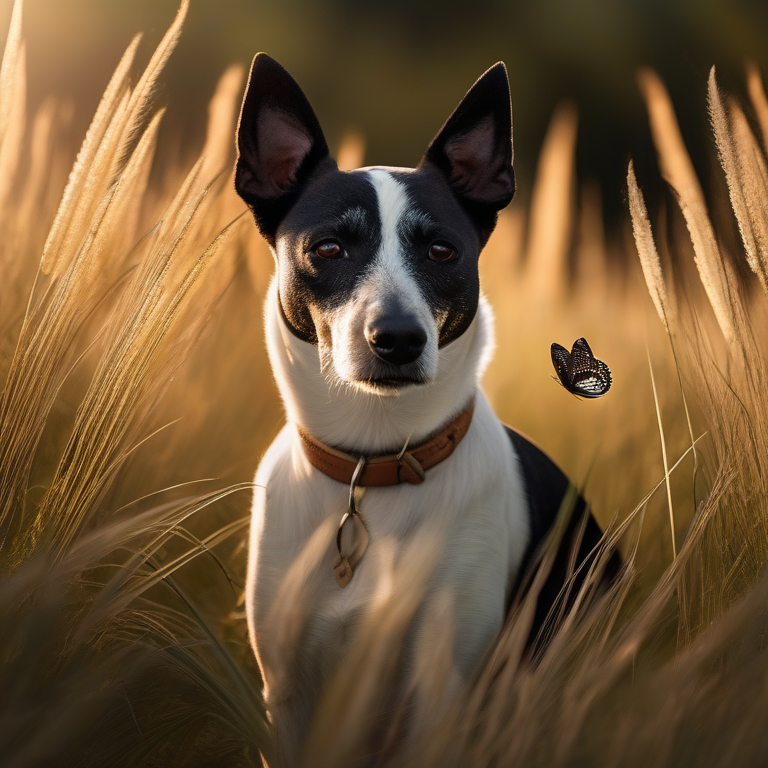
Brazilian Terrier
🐕 DogsCanis lupus familiaris
Brazilian Terrier
Small, lively terrier with short tricolor coat. Intelligent, alert, and excellent watchdog.
Breda
🐔 ChickensGallus gallus domesticus
Breda (Kraaikop)
A distinctive Dutch breed from the city of Breda in North Brabant, remarkable for being completely comb-less — a trait almost unheard of in chickens, giving it a smooth, rounded head that earned it the nickname Kraaikop ('crow's head'). The Breda is a large, upright dual-purpose bird with clean legs, a broad breast, and a calm disposition. Without a comb to worry about in freezing weather, Bredas are exceptionally cold-hardy — making them ideal for the northern European climate. The breed was developed in the 19th century from local Dutch stock and possibly Asian imports, creating a robust farm bird that excelled on small mixed farms. Now rare, the Breda is conserved by Dutch and Belgian breeders and is recognised by the EE Europastandard and BDRG.
Bresse Gauloise
🐔 ChickensGallus gallus domesticus
Bresse Gauloise
The most celebrated table chicken in the world and the only chicken to hold a Protected Designation of Origin (AOP), granted in 1957 — making it the avian equivalent of Champagne. The Bresse Gauloise is immediately recognisable by its vivid combination of pure white plumage, vivid blue-grey legs, and bright red single comb — the three colours of the French tricolore flag. Raised exclusively in a defined area around Bourg-en-Bresse in the Ain department, the Bresse must graze on minimum 10 m² of pasture per bird and is traditionally finished in a cloth sack (mitraillette) to concentrate flavour. No other chicken commands such respect in professional kitchens.
Briard
🐕 DogsCanis lupus familiaris
Briard
Large, muscular French herding dog with long flowing coat. Intelligent, courageous, and loyal with strong protective instincts.
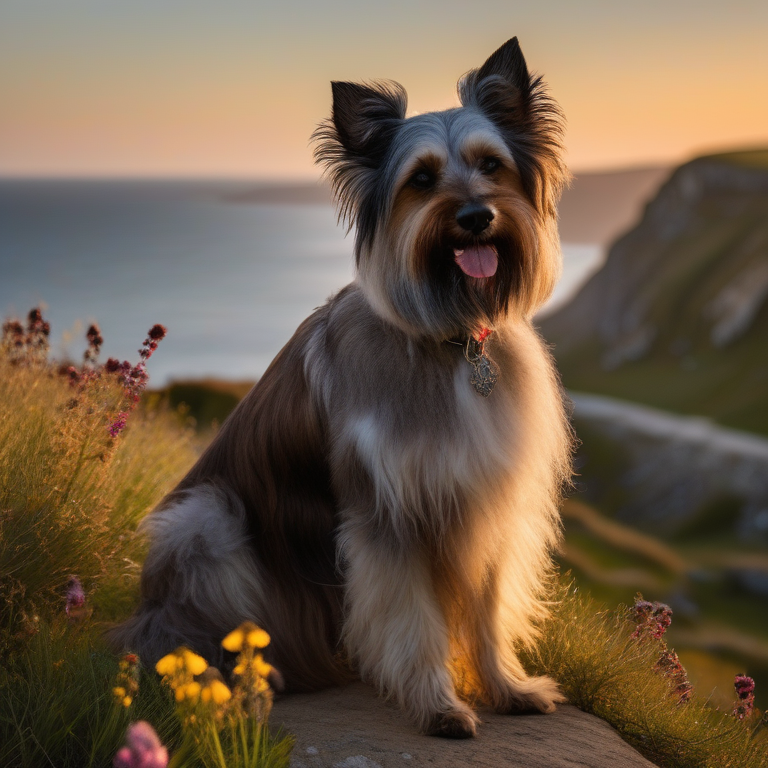
Briquet Griffon Vendéen
🐕 DogsCanis lupus familiaris
Briquet Griffon Vendéen
Medium-sized French rough-coated hound from the Vendée region. Energetic and intelligent, they are versatile hunters of small to medium game.
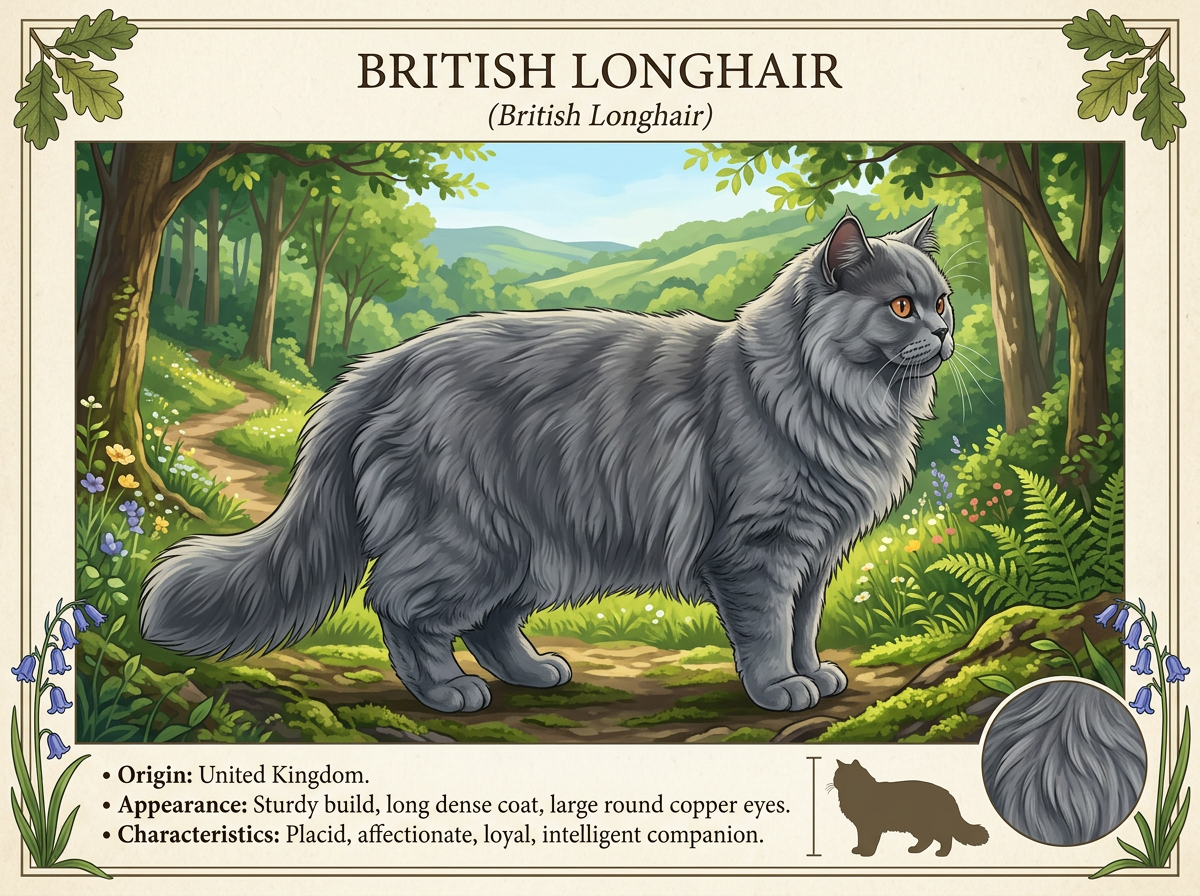
British Longhair
🐈 CatsFelis catus
British Longhair
The longhaired variant of the British Shorthair, with the same stocky, cobby body and plush, dense coat — but semi-long. Calm, dignified, and undemanding. Excellent family companions with a soft, gentle nature.
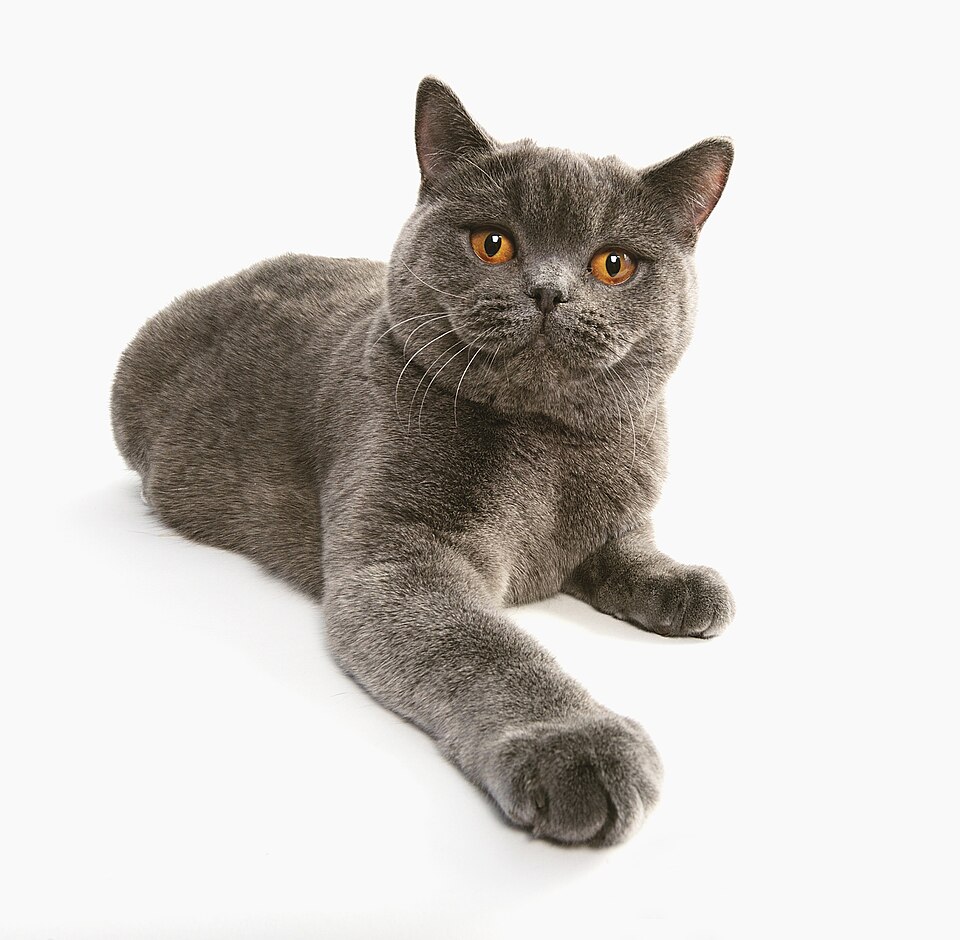
British Shorthair
🐈 CatsFelis catus
British Shorthair
One of the oldest English breeds with a stocky, cobby body, round head, and famously dense, plush 'teddy bear' coat. Calm, dignified, and easygoing. The blue (grey) British Shorthair is iconic, but they come in many colors.
Brittany
🐕 DogsCanis lupus familiaris
Brittany
Medium-sized, energetic gun dog with orange and white or liver and white coat. Agile, intelligent, and eager to please.
Brussels Griffon
🐕 DogsCanis lupus familiaris
Brussels Griffon
Small Belgian companion dog with a distinctive monkey-like face. Intelligent and alert, they are lively and affectionate dogs with a curious nature.
Brügger Kämpfer
🐔 ChickensGallus gallus domesticus
Brügger Kämpfer (Combattant de Bruges)
A Belgian fighting breed from the city of Bruges in West Flanders, one of several distinct Belgian gamefowl breeds developed for the cockpit in the 19th century. The Brügger Kämpfer is a tall, powerful, upright bird with a triple or pea comb, hard feathering, and a fierce, proud bearing. Its plumage is typically black-red or silver duckwing, and its muscular frame and long, strong legs give it the classic gamefowl silhouette. Although cockfighting is now illegal across Europe, these breeds are preserved as exhibition and conservation birds, valued for their historical significance and striking appearance. The Brügger Kämpfer is one of five Belgian fighting breeds standardised separately by the EE, each originating from a different Flemish city — a reflection of how intensely localised cockfighting culture once was in Belgium. Recognised by the EE Europastandard and BDRG.
Buckeye
🐔 ChickensGallus gallus domesticus
Buckeye
The only chicken breed in the world created by a woman — Nettie Metcalf of Warren, Ohio developed the Buckeye in the 1890s by crossing Buff Cochins, Barred Plymouth Rocks, and Black-Breasted Red Game birds, aiming to produce a practical, cold-hardy breed for Ohio winters. Named after Ohio's nickname 'The Buckeye State', the Buckeye has a distinctive pea comb — the only American breed with a pea comb outside Asian-derived breeds — rich mahogany-red plumage similar to the Rhode Island Red but with a broader build, and an exceptional temperament. Admitted to the APA Standard of Perfection in 1904.
Budgerigar
🐦 BirdsMelopsittacus undulatus
Budgerigar (Budgie/Parakeet)
Most popular pet bird in the world. Small, colorful parrots known for cheerful chirping and remarkable speech mimicry.
Bull Terrier
🐕 DogsCanis lupus familiaris
Bull Terrier
Medium-sized, muscular terrier with distinctive egg-shaped head. Playful, obedient, and devoted companion.
Bulldog
🐕 DogsCanis lupus familiaris
Bulldog
Medium-sized muscular dog with distinctive pushed-in face. Despite intimidating appearance, they are gentle, affectionate, and patient.
Bullmastiff
🐕 DogsCanis lupus familiaris
Bullmastiff
Large, powerful working dog bred by gamekeepers to guard estates. Fearless, loyal, and affectionate with family.
Burgos Pointing Dog
🐕 DogsCanis lupus familiaris
Burgos Pointing Dog
Medium-sized Spanish pointing dog from the Burgos region. Calm and intelligent, they are loyal and persistent hunting companions.
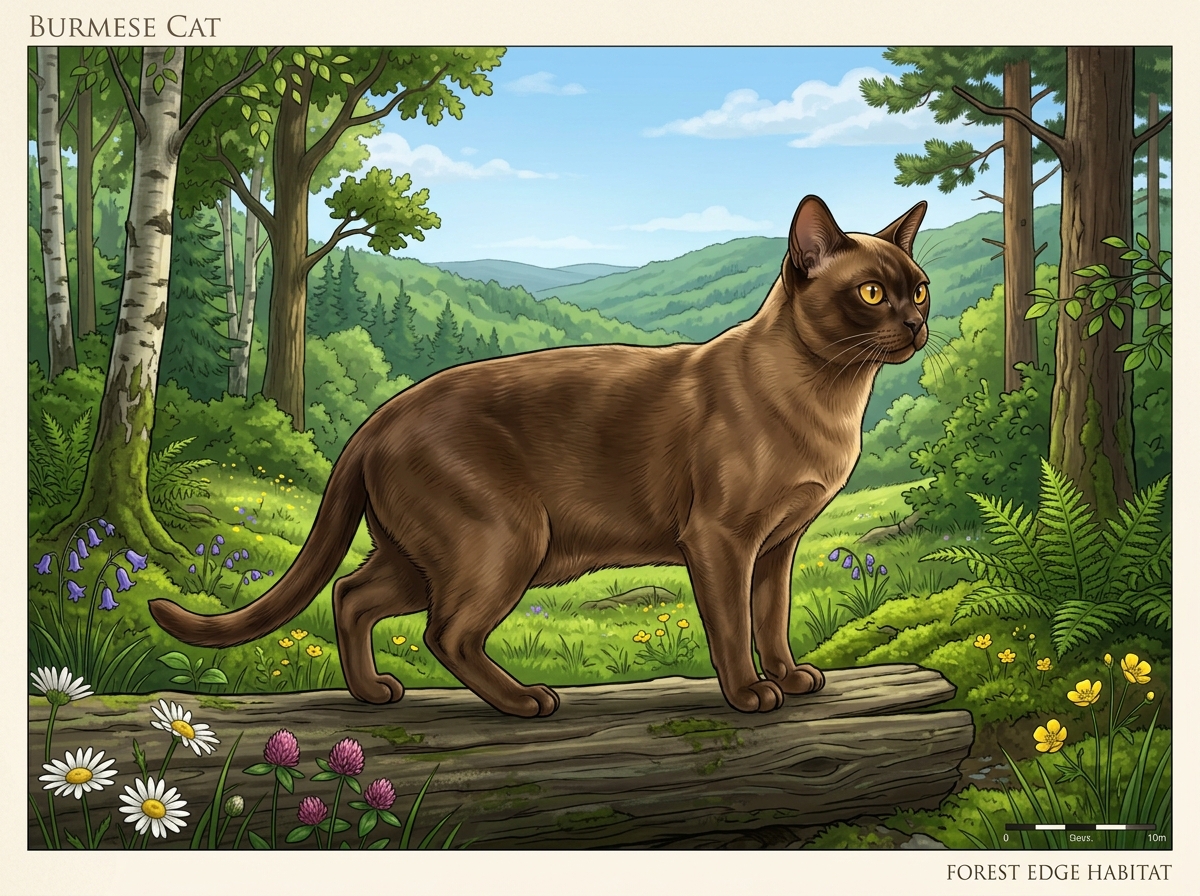
Burmese
🐈 CatsFelis catus
Burmese
A compact, muscular cat with a short, satin-like coat and expressive golden eyes. Two distinct types exist: the American Burmese (rounder, stockier) and the European/British Burmese (more moderate). Exceptionally people-oriented and dog-like in devotion.
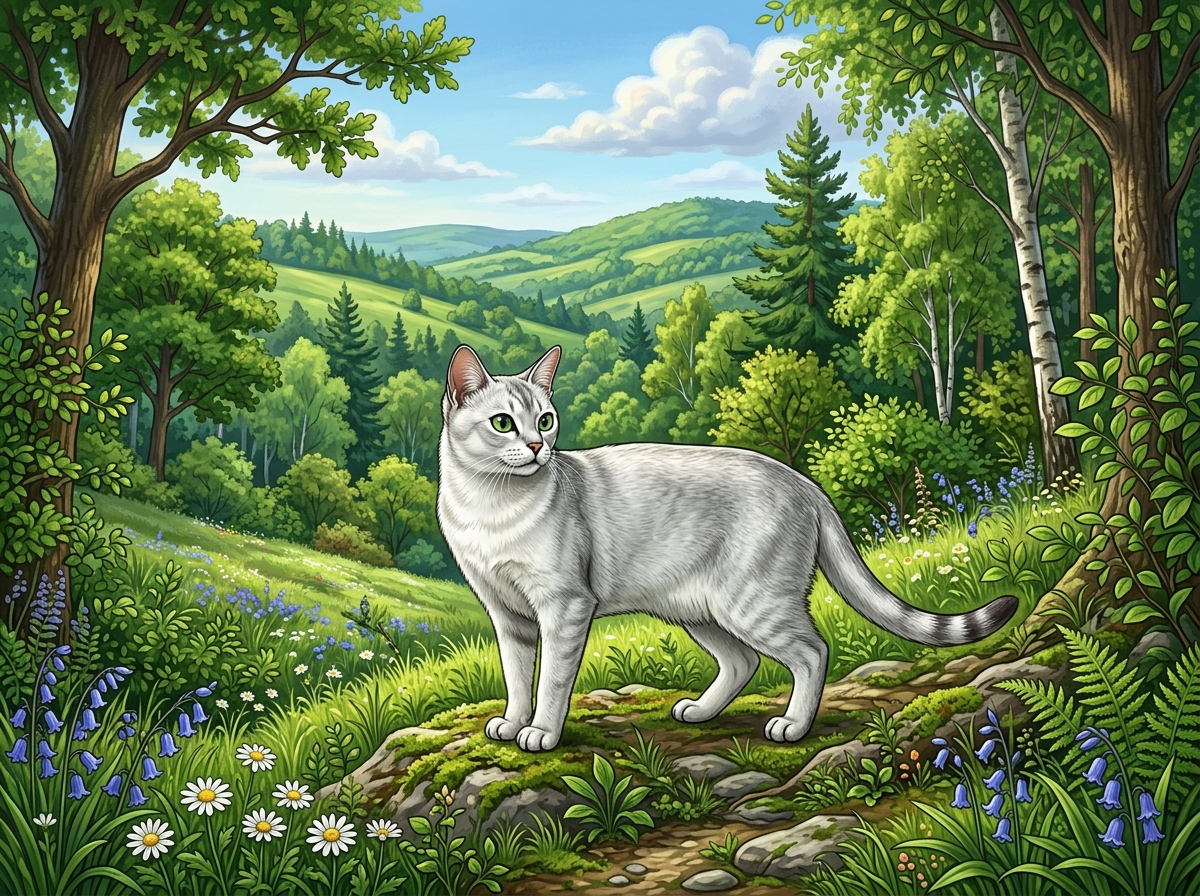
Burmilla
🐈 CatsFelis catus
Burmilla
A shimmering silver breed resulting from an accidental mating between a Chinchilla Persian and a Burmese. Medium-sized, muscular, with sparkling silver-tipped coat and distinctive 'makeup' lining eyes, nose, and lips. Playful and sociable.
Cairn Terrier
🐕 DogsCanis lupus familiaris
Cairn Terrier
Small, sturdy terrier with wiry coat. Courageous, alert, and affectionate family companion.
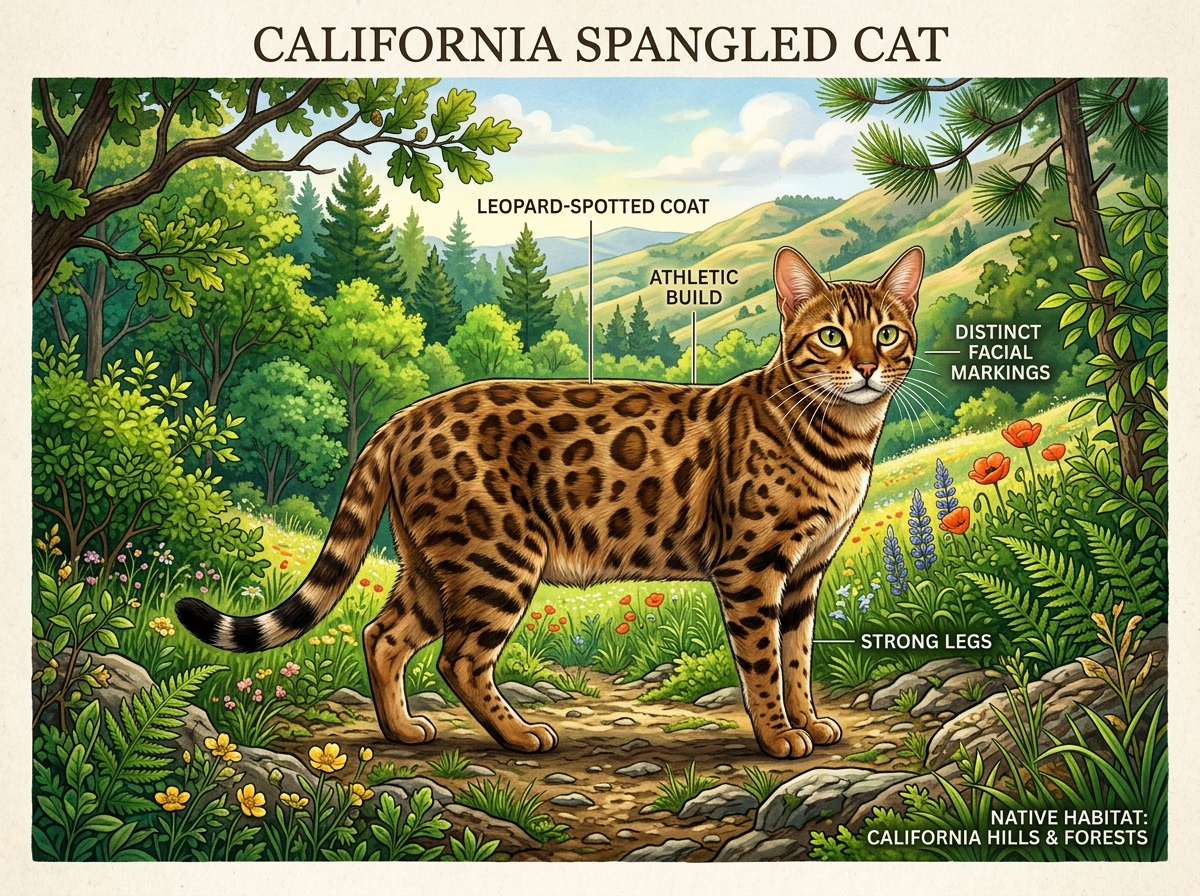
California Spangled
🐈 CatsFelis catus
California Spangled
Bred to resemble wild spotted cats like leopards and ocelots, this breed was created as a statement against the fur trade. Long, lean body with distinctive spotted coat. Extremely rare today — fewer than 60 registered cats exist.
Campine
🐔 ChickensGallus gallus domesticus
Campine
A slender, elegant Belgian breed from the Campine region (Kempen) of Antwerp and Limburg, noted for its striking silver or gold plumage with beetle-green barred pencilling. Campines are distinctive for being hen-feathered in cocks — the males carry the same pencilled plumage as the females, lacking the long curved sickle tail feathers typical of roosters. An active forager and productive layer of medium white eggs, the Campine is now a rare conservation breed.
Canaan Dog
🐕 DogsCanis lupus familiaris
Canaan Dog
Medium-sized primitive dog from Israel. Alert, intelligent, and loyal with strong survival instincts.
Canadian Eskimo Dog
🐕 DogsCanis lupus familiaris
Canadian Eskimo Dog
Large Arctic spitz-type dog from Canada with a powerful build. Loyal and courageous, they are ancient sled dogs adapted to extreme Arctic conditions.
Canary
🐦 BirdsSerinus canaria domestica
Canary
Small songbird beloved for beautiful, melodious singing. Historic use in coal mines as early warning for toxic gases.
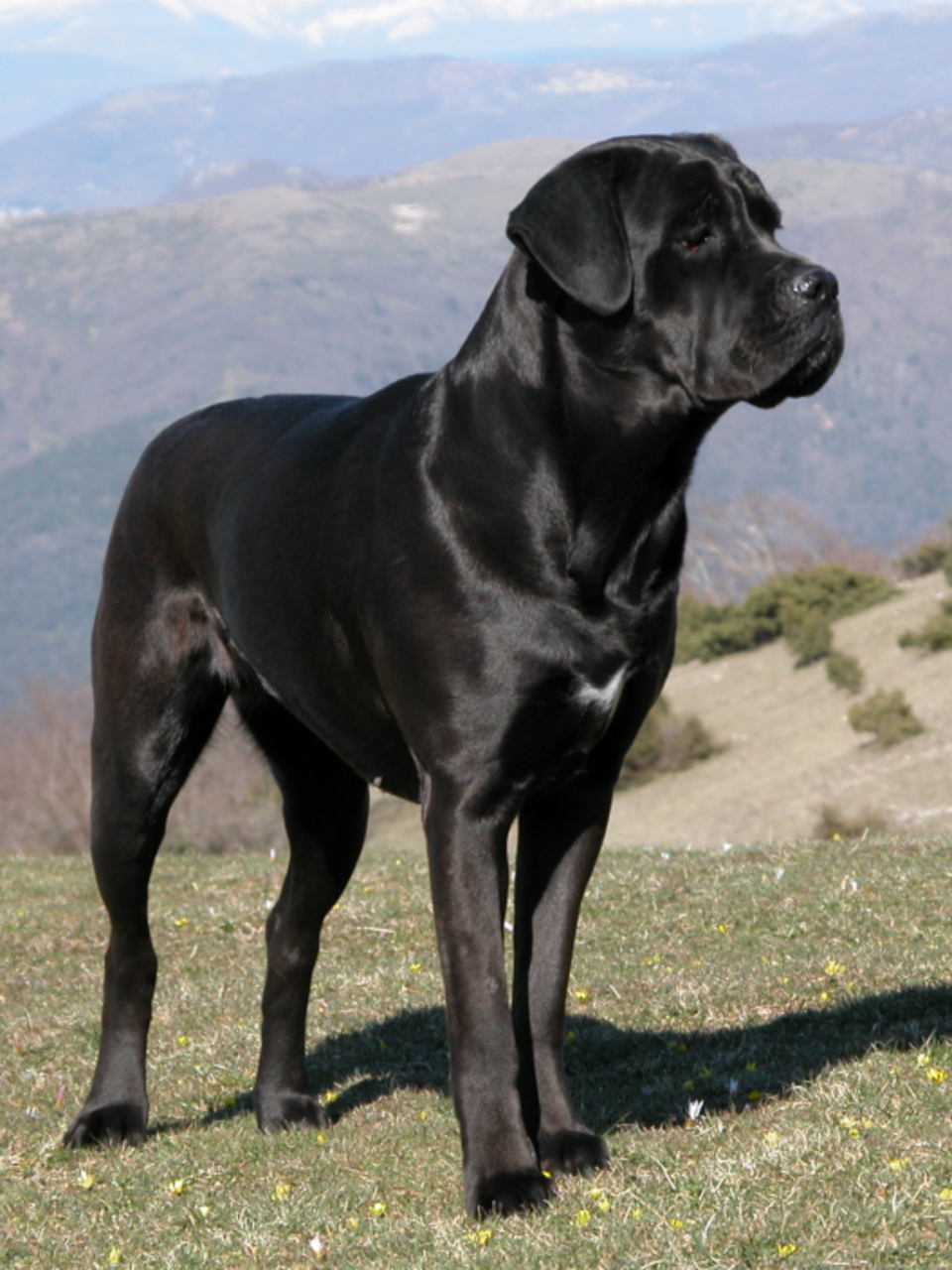
Cane Corso
🐕 DogsCanis lupus familiaris
Cane Corso
Large, powerful Italian mastiff breed. Confident, loyal, and protective with a calm and steady temperament.
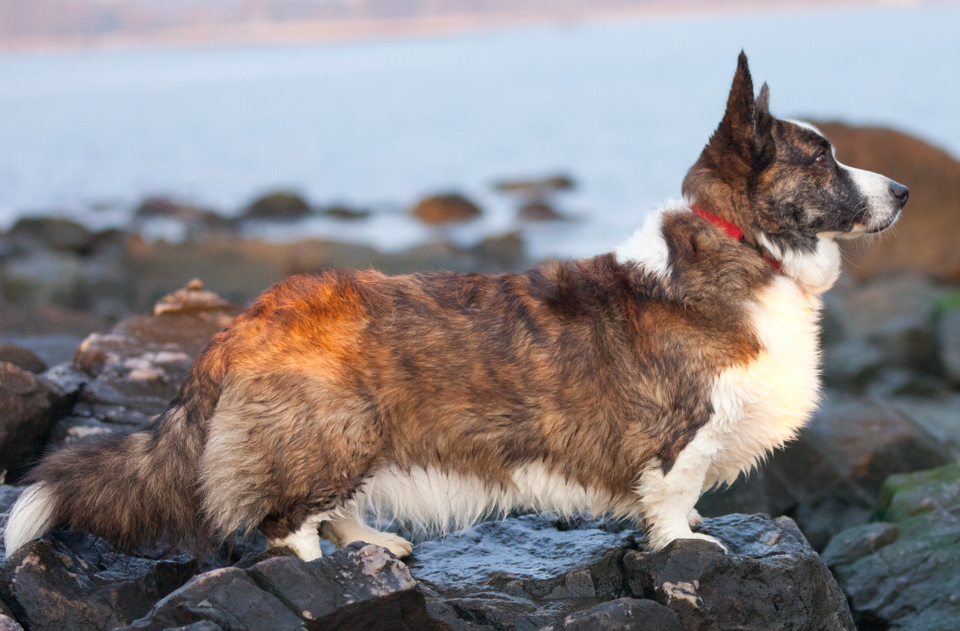
Cardigan Welsh Corgi
🐕 DogsCanis lupus familiaris
Cardigan Welsh Corgi
Small herding dog with long tail and rounded ears. Older than the Pembroke variety, known for intelligence and loyalty.
Carlisle Old English Game
🐔 ChickensGallus gallus domesticus
Carlisle Old English Game
One of two distinct standardised types of Old English Game recognised by the Poultry Club of Great Britain (alongside the Oxford type), the Carlisle Old English Game is characterised by a more compact, rounded build and a slightly shorter back compared to the taller Oxford type. Developed by fanciers in the Carlisle area of Cumbria in northern England during the 19th century, the Carlisle type was bred both for the cockpit and the show bench. It has a single comb, clean legs, hard feathering, and the characteristic gamefowl carriage. After cockfighting was banned in Britain in 1835 (effectively 1849), the breed transitioned to a pure exhibition bird, and the Carlisle-Oxford rift became formalised as two separate standards within PCGB. The Carlisle type is valued for its neat, balanced proportions and rich colour varieties. Not yet recognised separately by the EE Europastandard, which treats Old English Game as a single breed.
Catalana del Prat
🐔 ChickensGallus gallus domesticus
Catalana del Prat
An ancient Catalan dual-purpose breed from the Prat del Llobregat municipality near Barcelona, documented from the 14th century and once the primary farmyard chicken of the Catalonian coast. The Catalana del Prat is a large, robust bird with distinctive buff-wheat plumage and blue-grey shanks — a combination exclusive to this breed. It was once the standard table and egg bird of Barcelona's markets and supplied the city's restaurants for centuries. Recognised by the EE Europastandard, it remains an important conservation breed in Catalonia today.
Caucasian Shepherd Dog
🐕 DogsCanis lupus familiaris
Caucasian Shepherd Dog
Large, powerful livestock guardian dog from the Caucasus Mountains. Fearless, independent, and fiercely protective.
Caumont
🐔 ChickensGallus gallus domesticus
Caumont
A rare French dual-purpose breed from the town of Caumont-l'Éventé in Normandy, developed in the early 20th century from local Norman farm chickens. The Caumont is a medium-large bird with striking black plumage that shows beetle-green iridescence in sunlight — a classic feature of breeds with Langshan ancestry. It has a single comb, clean legs, and an upright, confident bearing. Caumonts were bred to be versatile farm chickens producing brown eggs and quality meat, and they thrived on small Norman farms before World War II. After the war, breed numbers collapsed as rural Normandy depopulated and traditional poultry keeping declined. Recognition by SCAF and the EE Europastandard has helped preserve the breed, though it remains critically rare with only a handful of dedicated breeders keeping the line alive.
Cavalier King Charles Spaniel
🐕 DogsCanis lupus familiaris
Cavalier King Charles Spaniel
Small, elegant spaniel with long, silky ears. Affectionate, gentle, and excellent family companion.
Central Asian Shepherd Dog
🐕 DogsCanis lupus familiaris
Central Asian Shepherd Dog
Giant livestock guardian dog from Central Asia with a massive build and thick coat. Independent and courageous, they are calm protectors with ancient lineage.
Cesky Terrier
🐕 DogsCanis lupus familiaris
Cesky Terrier
Small terrier with soft, wavy coat and short legs. Gentle, intelligent, and good-natured companion.
Chantecler
🐔 ChickensGallus gallus domesticus
Chantecler
The first chicken breed developed in Canada, created at the Cistercian Abbey of Notre-Dame du Lac in Quebec by Brother Wilfrid Chatelain between 1908 and 1918. Brother Wilfrid crossed White Wyandotte, White Plymouth Rock, White Leghorn, Cornish, and Dark Cornish birds to produce a breed specifically adapted to survive Canadian winters — where temperatures can fall to -40°C. The Chantecler's most striking feature is its virtually non-existent comb and wattles, reduced to a tiny cushion comb and almost no wattles, making it uniquely resistant to frostbite. Admitted to the APA Standard of Perfection in 1921.
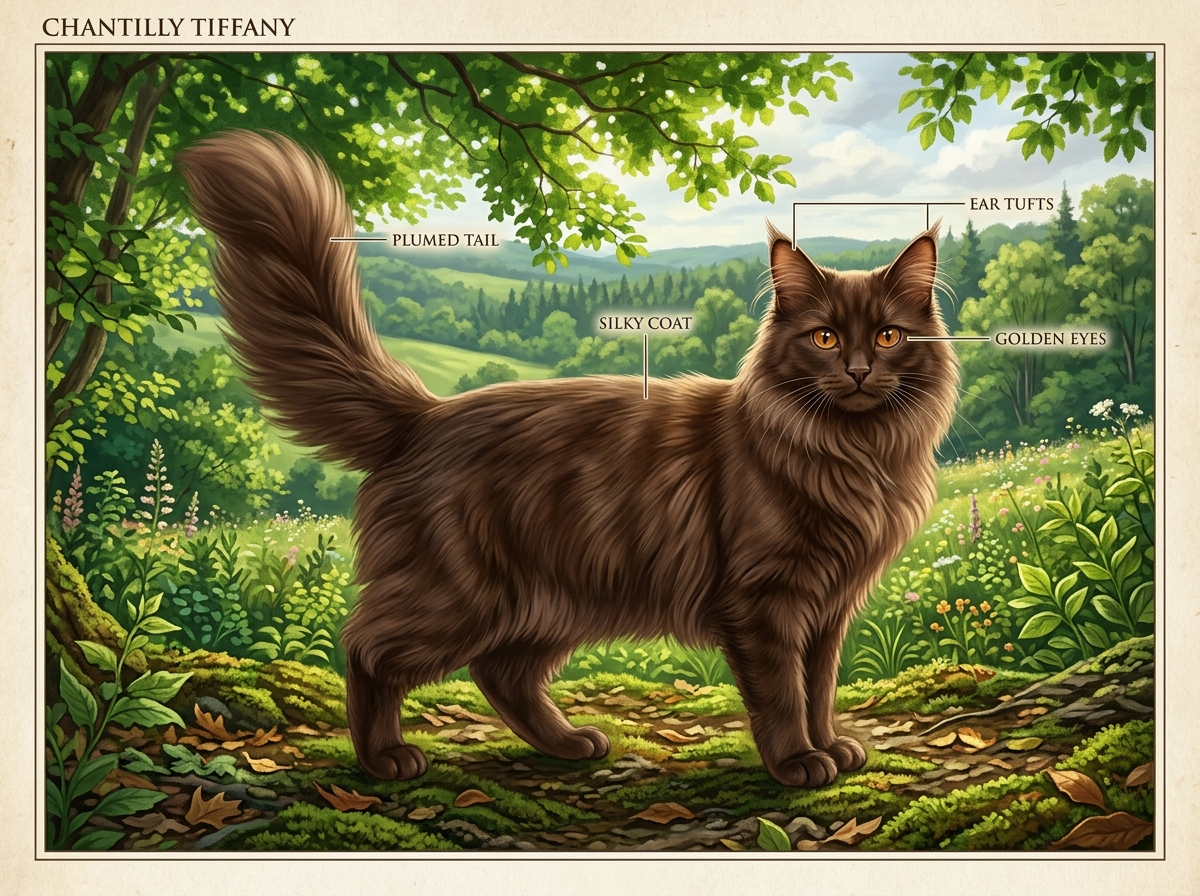
Chantilly-Tiffany
🐈 CatsFelis catus
Chantilly-Tiffany
A semi-longhaired breed with a rich chocolate brown coat and golden eyes. Once thought extinct, rediscovered in the 1960s. Gentle, quiet, and devoted. Also known as the Foreign Longhair in some registries. Rare breed.
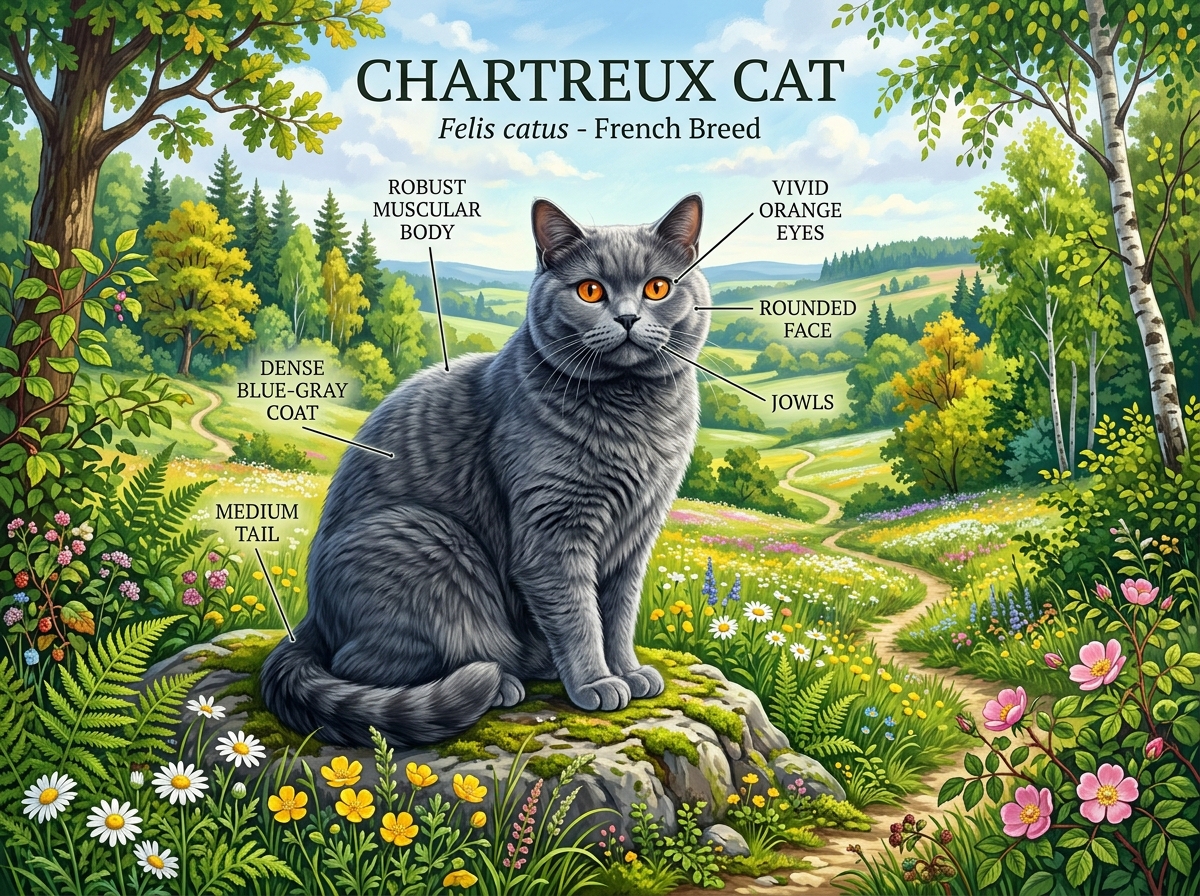
Chartreux
🐈 CatsFelis catus
Chartreux
A rare French breed with a blue-grey woolly double coat, copper-orange eyes, and a distinctive smiling expression. Muscular, sturdy, with refined bone structure. Quiet, observant, and excellent mousers. Legends tie them to Carthusian monks.
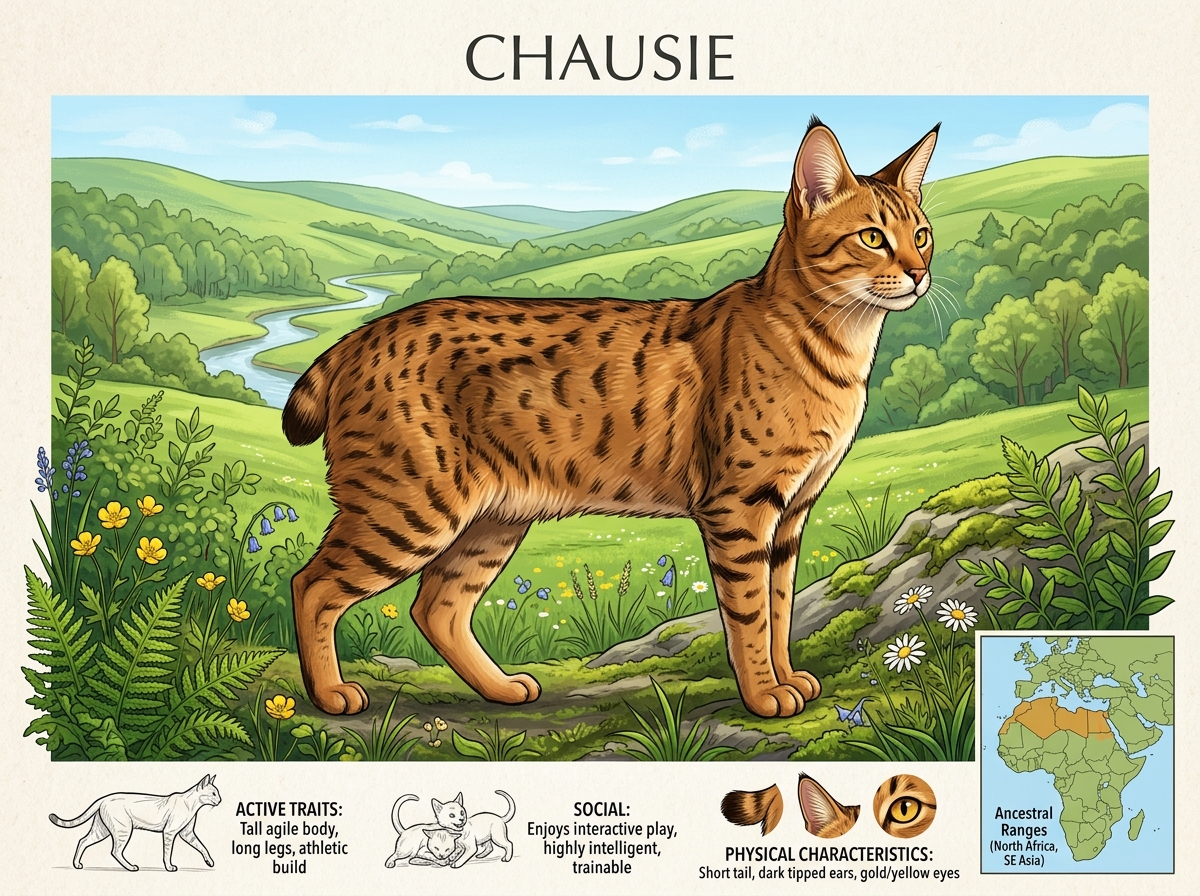
Chausie
🐈 CatsFelis catus × Felis chaus
Chausie
A hybrid breed between domestic cats and the Jungle Cat (Felis chaus). Large, athletic, with a wild look reminiscent of a small jungle cat. Long legs, deep chest, and a short tail. Extremely intelligent and needs significant activity.
Chesapeake Bay Retriever
🐕 DogsCanis lupus familiaris
Chesapeake Bay Retriever
Large, powerful retriever with thick, wavy waterproof coat. Loyal, protective, and excellent waterfowl retriever.
Chihuahua
🐕 DogsCanis lupus familiaris
Chihuahua
The smallest dog breed in the world. Confident, alert, and fiercely loyal despite tiny size.
Chinese Crested Dog
🐕 DogsCanis lupus familiaris
Chinese Crested Dog
Small toy breed available in hairless and powderpuff varieties. Affectionate, lively, and alert companion.
Chow Chow
🐕 DogsCanis lupus familiaris
Chow Chow
Large, fluffy dog with distinctive lion-like appearance and blue-black tongue. Independent, aloof, but deeply loyal.
Cirneco dell'Etna
🐕 DogsCanis lupus familiaris
Cirneco dell'Etna
Medium-sized primitive hound from Sicily with large erect ears. Agile, independent, and gentle.
Clumber Spaniel
🐕 DogsCanis lupus familiaris
Clumber Spaniel
Large, heavy-set spaniel with dense white and lemon coat. Gentle, loyal, and dignified with a calm temperament.
Cochin
🐔 ChickensGallus gallus domesticus
Cochin
A spectacularly fluffy Chinese breed introduced to Europe in the 1840s that single-handedly created the 'Hen Fever' craze of the Victorian era. Cochins have an extraordinary abundance of soft, loose plumage covering every part of their body including their feet and legs, making them look twice their actual size. Though poor egg layers and slow growers by modern standards, their visual magnificence and docile nature made them the most sought-after breed in 19th-century Britain and America. Queen Victoria's enthusiasm for them drove the hen fever to its peak.
Cockatiel
🐦 BirdsNymphicus hollandicus
Cockatiel
Small parrot from Australia with distinctive crest. Known for whistling ability, gentle disposition, and affection.
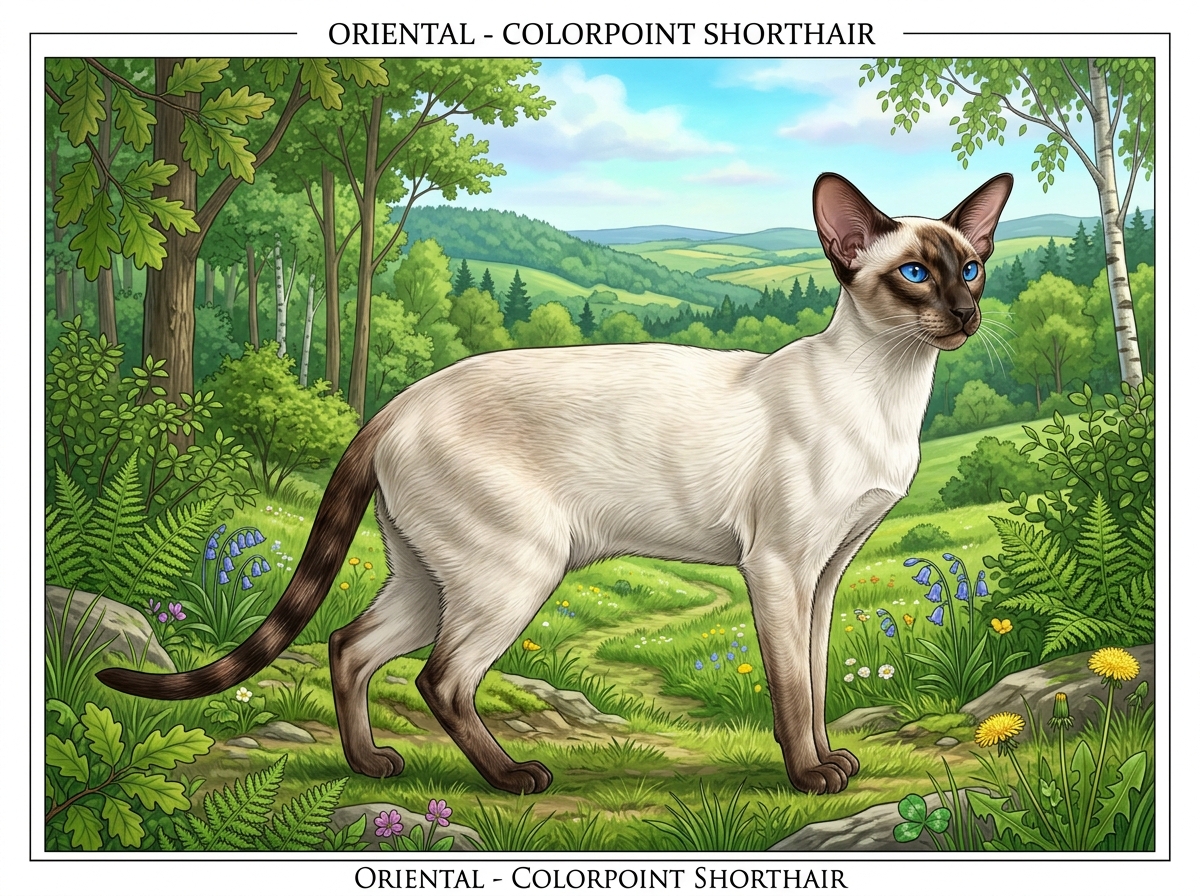
Colorpoint Shorthair
🐈 CatsFelis catus
Colorpoint Shorthair
A colorpointed version of the Siamese in non-traditional colors including red, cream, tortie, and lynx/tabby points. Same elegant, svelte body and vivid blue eyes. Created by crossing Siamese with American Shorthairs and Abyssinians.
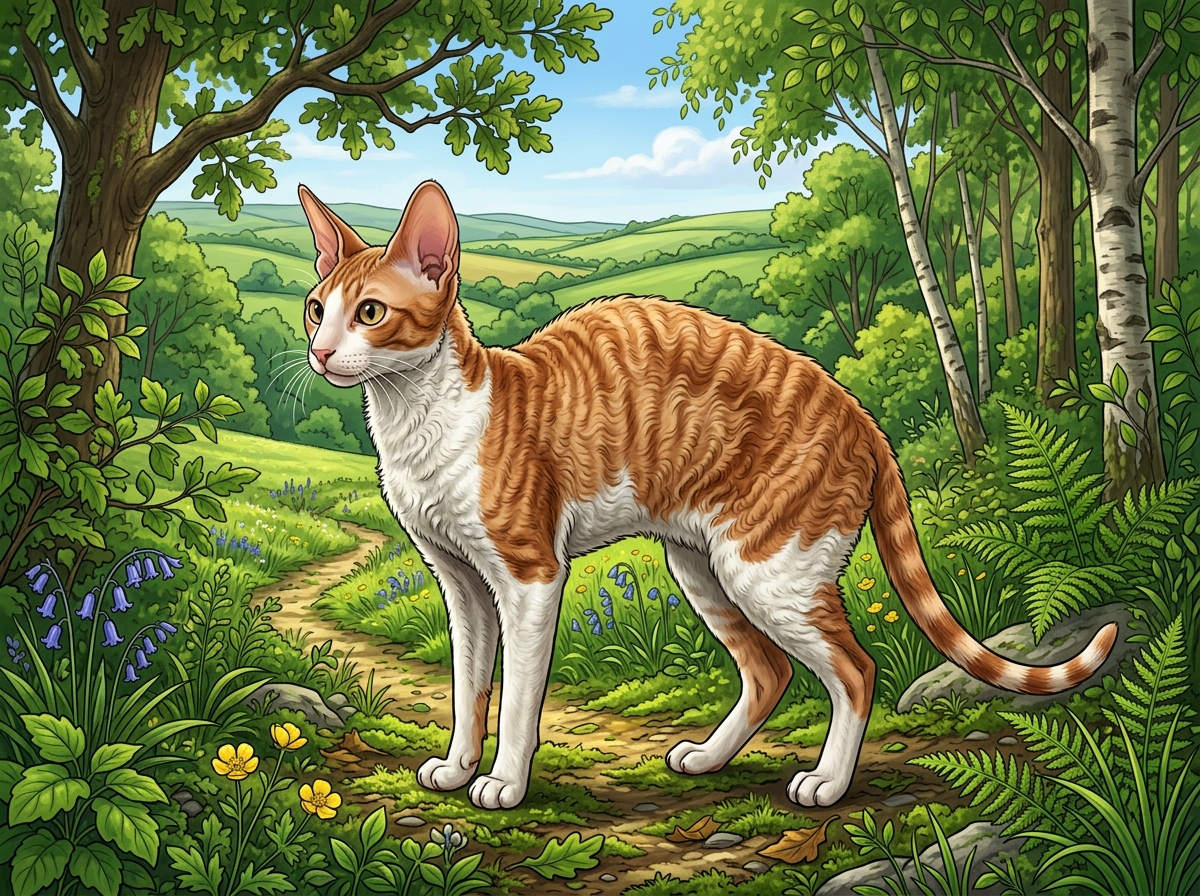
Cornish Rex
🐈 CatsFelis catus
Cornish Rex
A breed defined by its soft, wavy, down-only coat with no guard hairs — often compared to velvet, karakul lamb, or crushed silk. Slender, whippy body with large ears, high cheekbones, and an egg-shaped head. Extremely playful and acrobatic.
Coton de Tuléar
🐕 DogsCanis lupus familiaris
Coton de Tuléar
Small, fluffy white dog with cotton-like coat. Happy, affectionate, and intelligent companion.
Coucou d'Izegem
🐔 ChickensGallus gallus domesticus
Coucou d'Izegem
A Belgian dual-purpose breed from the town of Izegem in West Flanders, developed in the late 19th and early 20th centuries by crossing local Flemish farm chickens with imported Asian breeds such as the Brahma and Langshan. The result was a large, heavily built bird with striking cuckoo (barred) plumage — hence the name 'Coucou', meaning cuckoo in French. Coucou d'Izegem hens are excellent layers of brown eggs and good mothers, while the cockerels grow into substantial table birds. The breed was once the dominant farm chicken across West Flanders, supplying eggs and meat to Flemish cities and markets. Industrial farming nearly eliminated it, but conservation efforts by Belgian breeders have stabilised the population. Recognised by the EE Europastandard.
Coucou de Rennes
🐔 ChickensGallus gallus domesticus
Coucou de Rennes
A French auto-sexing dual-purpose breed from Rennes in Brittany, developed in the early 20th century as a practical cuckoo-barred farmyard bird with the commercially valuable trait of auto-sexing — male and female chicks can be told apart by down colour at hatch. The Coucou de Rennes combines the cuckoo plumage pattern (grey-black barring throughout) with good egg production and respectable table weight. Recognised by the Société Centrale Avicole de France (SCAF) and the EE Europastandard, it is maintained today by French conservation breeders in Brittany.
Coucou des Flandres
🐔 ChickensGallus gallus domesticus
Coucou des Flandres
A rare Flemish dual-purpose breed from the French-Belgian border region, distinguished by its handsome cuckoo-barred plumage and impressive size. Developed by crossing local Flemish farmyard hens with Brahmas and Langshans in the early 20th century, the Coucou des Flandres is a robust, heavy bird well-suited to free-range systems on the flat, damp Flemish lowlands. Hens are good layers of large brown eggs, and cockerels produce generous, well-textured meat. The breed was extremely popular between the two World Wars but was decimated by industrial poultry farming after 1945, when the Flemish agricultural sector pivoted to intensive systems that favoured hybrid layers. Now critically rare, the Coucou des Flandres is maintained by a handful of Belgian and French conservation breeders. Recognised by the EE Europastandard.
Cream Legbar
🐔 ChickensGallus gallus domesticus
Cream Legbar
A British auto-sexing laying breed created at Cambridge University in the 1930s by geneticists Michael Pease and Reginald Crundall Punnett by crossing Leghorns with Barred Plymouth Rocks and introducing Araucana blood for the blue-egg gene. Cream Legbars are auto-sexing — male and female chicks have distinctly different down patterns at hatch, making vent sexing unnecessary. Most importantly, they lay distinctly blue to blue-green eggs — a highly unusual characteristic in a productive commercial-style layer. Recognised by the Poultry Club of Great Britain (PCGB) and enormously popular with British backyard keepers.
Croad Langshan
🐔 ChickensGallus gallus domesticus
Croad Langshan
The original Langshan breed imported from China by Major Croad in 1872, the Croad Langshan is the foundational strain that all Western Langshan varieties descend from. Unlike the general 'Langshan' category already in the database, the Croad Langshan is specifically the original tall, leggy bird with greenish-black plumage, a single comb, and feathered legs — Major Croad brought these from the Langshan district near Nantong in Jiangsu Province to his Sussex estate. The Croad Langshan was one of three great Asian breeds (along with Brahmas and Cochins) that transformed Western poultry keeping in the 19th century. It became immensely popular as an exhibition and dual-purpose breed in Britain, valued for large brown eggs and fine meat. After Major Croad's death, the original strain was maintained by the Croad Langshan Club, preserving the taller, more elegant original type distinct from the stockier German Langshan. Recognised by the EE Europastandard and PCGB.
Croatian Sheepdog
🐕 DogsCanis lupus familiaris
Croatian Sheepdog
Small to medium herding dog from Croatia with curly black coat. Agile, intelligent, and excellent working dog.
Crèvecoeur
🐔 ChickensGallus gallus domesticus
Crèvecoeur
France's oldest documented breed, originating from the Norman village of Crèvecoeur-en-Auge in Calvados. A striking all-black bird with a full rounded crest, V-comb, beard, and muffled cheeks, the Crèvecoeur was a celebrated table bird in mediaeval Normandy and was described in texts as early as the 14th century. Though once a staple of Norman markets, the breed is now critically rare and maintained by conservation breeders across France, Belgium, and Germany.
Cubalaya
🐔 ChickensGallus gallus domesticus
Cubalaya
Cuba's only recognised chicken breed, developed in the late 19th century by crossing Oriental game breeds brought to Cuba — primarily Malay, Sumatra, and other Asian fighting breeds — with European stock, to create a productive, heat-adapted dual-purpose bird. The Cubalaya is distinctive for its lobster tail (drooping tail held low and sweeping downward rather than erect), pea comb, and graceful carriage. Admitted to the APA Standard of Perfection in 1939, the Cubalaya is kept both for egg production and as an exhibition breed, and is well-adapted to hot, humid climates. It remains relatively rare outside of Cuba and the southern United States.
Curly-Coated Retriever
🐕 DogsCanis lupus familiaris
Curly-Coated Retriever
Large retriever with distinctive tight, curly coat. Independent, intelligent, and dignified working dog.
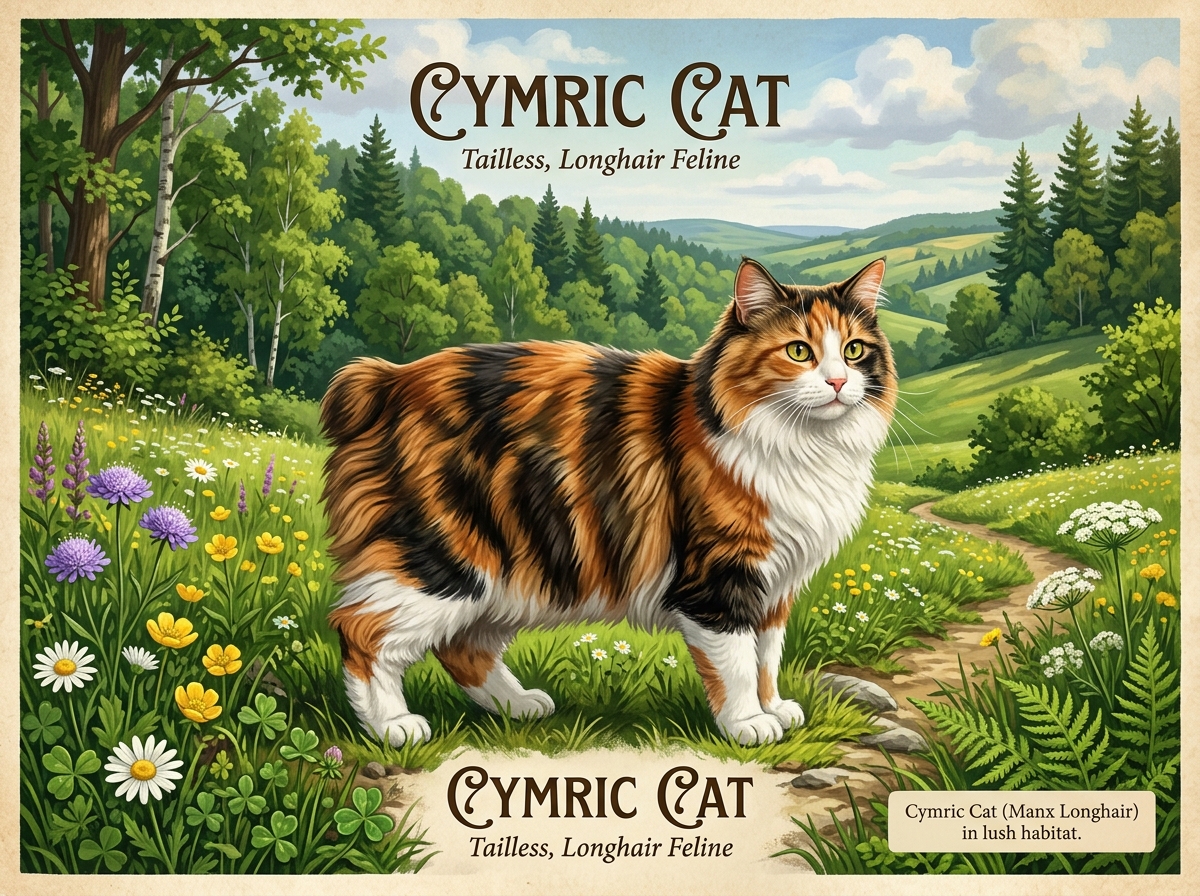
Cymric (Longhaired Manx)
🐈 CatsFelis catus
Cymric
The longhaired version of the Manx, sharing the same tailless or short-tailed mutation and rounded, sturdy body. Plush, medium-length double coat. Sweet-natured and devoted. The name 'Cymric' comes from Cymru, the Welsh word for Wales.
Czechoslovakian Wolfdog
🐕 DogsCanis lupus familiaris
Czechoslovakian Wolfdog
Large wolf-like breed created by crossing German Shepherds with Carpathian wolves. Energetic, loyal, and highly trainable.
Cão de Castro Laboreiro
🐕 DogsCanis lupus familiaris
Cão de Castro Laboreiro
Large Portuguese livestock guardian dog with a wolf-like appearance. Loyal, courageous, and intelligent, they are exceptional protectors of livestock.
Cão de Gado Transmontano
🐕 DogsCanis lupus familiaris
Cão de Gado Transmontano
Giant Portuguese livestock guardian dog with a powerful build. Calm and loyal with family, but fearless when protecting livestock from predators.
Dachshund
🐕 DogsCanis lupus familiaris
Dachshund
Small dog with distinctive long body and short legs. Originally bred to hunt badgers and rabbits.
Dalmatian
🐕 DogsCanis lupus familiaris
Dalmatian
Medium-sized, muscular dog with distinctive black or liver spotted coat. Energetic, intelligent, and loyal companion.
Dandie Dinmont Terrier
🐕 DogsCanis lupus familiaris
Dandie Dinmont Terrier
Small terrier with long, low body and distinctive topknot. Dignified, determined, and affectionate companion.
Danish Broholmer
🐕 DogsCanis lupus familiaris
Danish Broholmer
Large, powerful mastiff-type dog from Denmark. Calm, friendly, and loyal family companion.
Danish-Swedish Farmdog
🐕 DogsCanis lupus familiaris
Danish-Swedish Farmdog
Small farm dog from Denmark and Sweden with a short white and brown coat. Friendly and intelligent, they are energetic and playful working dogs.
Dansk Landrace
🐔 ChickensGallus gallus domesticus
Dansk Landhøne (Danish Landrace)
Denmark's indigenous farmyard chicken, the Dansk Landhøne (Danish Country Hen) is a conservation breed maintained by Danmarks Fjerkræavlerforening for Raceavl (DFfR) as part of Denmark's national agricultural genetic heritage. A robust, self-sufficient bird developed from centuries of Danish farmyard selection rather than formal breed standardisation, the Dansk Landrace produces tinted eggs and reasonable table weight in a hardy, cold-adapted frame suited to Danish conditions. Listed in Denmark's national gene bank and kept by conservation breeders dedicated to preserving the country's pre-industrial poultry heritage.
Delaware
🐔 ChickensGallus gallus domesticus
Delaware
An American dual-purpose breed developed in 1940 by George Ellis of Delaware by crossing Barred Plymouth Rock males with New Hampshire Red females, selecting offspring with fast early feathering and a clean white plumage with limited black barring. Delawares are white chickens with distinctive black barring restricted to the neck hackle, tail, and primary wing feathers — a clean, attractive pattern that camouflages well in farmyard conditions. Originally developed for the commercial broiler industry of the Delmarva Peninsula, Delawares produced most of America's commercial chicken meat throughout the 1940s before being almost entirely replaced by the Cornish Cross hybrid in the early 1960s.
Derbyshire Redcap
🐔 ChickensGallus gallus domesticus
Derbyshire Redcap
One of Britain's rarest and most distinctive breeds, the Derbyshire Redcap is named for its spectacular rose comb — an enormous, flat, beefy structure covered in fine points that spreads broadly across the top of the head like a cap. Developed in Derbyshire and neighbouring counties in the early 19th century, the Redcap was a productive laying breed kept by small farmers in the Peak District who valued its hardiness, foraging ability, and consistent egg production on minimal feed. The breed nearly vanished in the 20th century and remains critically rare, but it is preserved as a living piece of English agricultural heritage.
Deutsches Lachshuhn
🐔 ChickensGallus gallus domesticus
Deutsches Lachshuhn (German Faverolles)
The German variant of the French Faverolles breed, standardised separately by the BDRG and recognised by the EE Europastandard as a distinct breed. The Deutsches Lachshuhn was developed from French Faverolles imported into Germany in the late 19th century, selectively bred by German fanciers for slightly different conformation — generally larger, heavier, and with a stronger emphasis on meat production. The name 'Lachshuhn' means 'salmon chicken', referring to the unique salmon-pink tinge in the plumage of hens, a colour trait inherited from the original French Faverolles. Like its French ancestor, the Deutsches Lachshuhn is a bearded, feather-legged dual-purpose breed with five toes. It is calm, cold-hardy, and well-suited to free-range systems in northern Europe. The breed produces tinted eggs and good table birds.
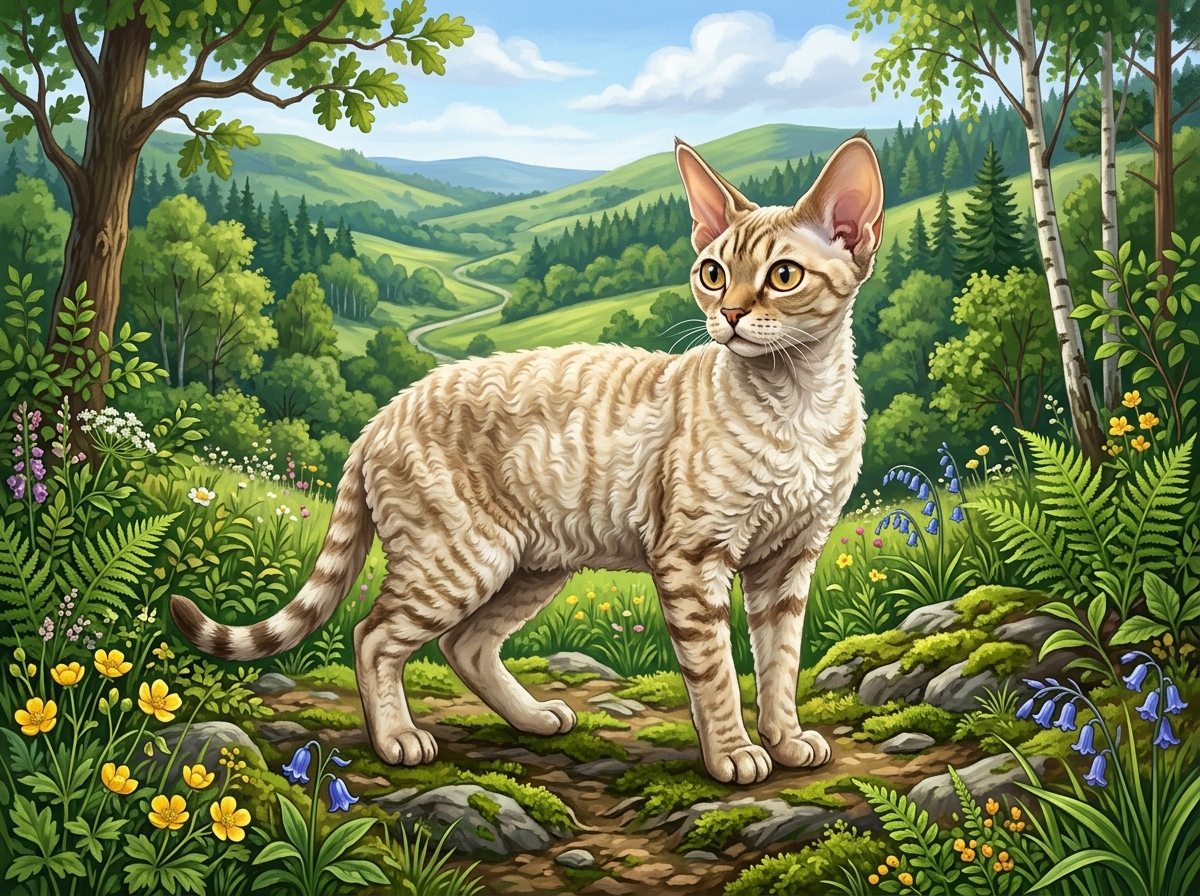
Devon Rex
🐈 CatsFelis catus
Devon Rex
A breed with an elfin face, huge low-set ears, and a soft, wavy, rippled coat. Slender body with long, fine legs. Mischievous, highly intelligent, and eager to be involved in everything. Their coat is fragile and sparse in places.
Dobermann
🐕 DogsCanis lupus familiaris
Dobermann
Medium to large working dog with sleek, muscular build. Loyal, fearless, and intelligent, they excel as guard dogs and companions.
Dogo Argentino
🐕 DogsCanis lupus familiaris
Dogo Argentino
Large, powerful white working dog bred for big game hunting. Loyal, protective, and courageous.
Dogo Canario
🐕 DogsCanis lupus familiaris
Dogo Canario (Presa Canario)
Large, powerful molosser-type dog from the Canary Islands. Calm, confident, and protective with a steady temperament.
Dogue de Bordeaux
🐕 DogsCanis lupus familiaris
Dogue de Bordeaux
Large, powerful French mastiff with distinctive wrinkled face. Loyal, protective, and affectionate with family.
Dominique
🐔 ChickensGallus gallus domesticus
Dominique
America's oldest breed and first native chicken, developed by early colonists from unknown European stock and documented in the USA from the early 18th century. Dominiques are compact, cuckoo-patterned birds with a low rose comb and a quiet, self-sufficient temperament that made them ideal pioneer farmyard birds. Their cuckoo barring — softer and less crisp than the Barred Plymouth Rock's — gives them a warm dove-grey appearance. Nearly extinct by 1970, the breed was rescued by dedicated conservationists.
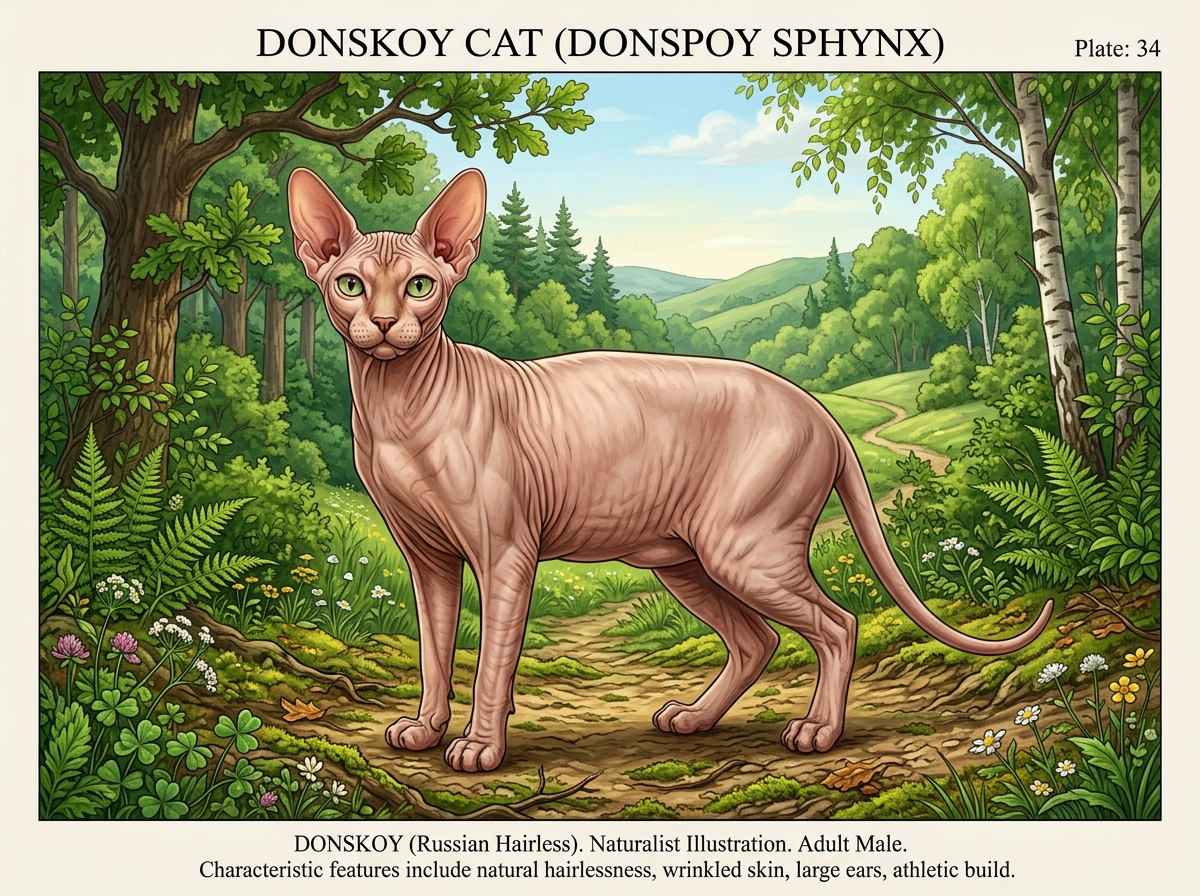
Donskoy (Don Sphynx)
🐈 CatsFelis catus
Donskoy
A hairless breed from Russia, distinct from the Sphynx (different hairlessness gene — dominant vs. recessive). Wrinkled skin, large ears, and webbed toes. Can present in four coat types: completely bald, flocked, velour, and brush.
Dorking
🐔 ChickensGallus gallus domesticus
Dorking
Possibly England's oldest breed, with a Roman-era origin story supported by Julius Caesar's description of five-toed British fowl in 54 BC. The Dorking is named for the Surrey market town that was once famous for its outstanding table chickens. A rectangular, low-set bird with the characteristic five toes shared with Faverolles and Silkies, it produces white-fleshed meat of exceptional quality and tenderness. Once the premier British table bird, it is now a conservation breed of great historical importance.
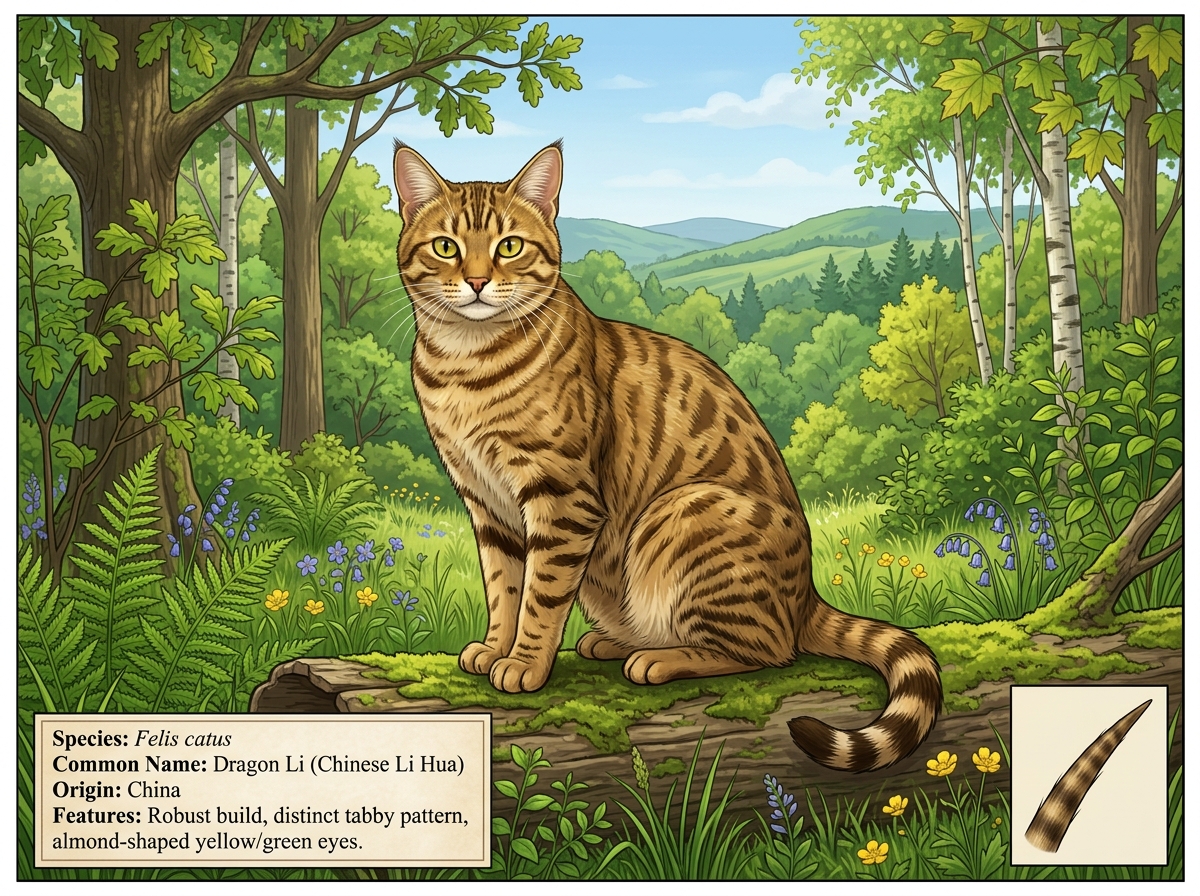
Dragon Li (Chinese Li Hua)
🐈 CatsFelis catus
Dragon Li
A natural breed from China, recognized by its distinctive brown mackerel tabby pattern and golden-green eyes. Medium-sized, muscular, with a strong hunting instinct. One of the world's oldest naturally occurring domestic breeds.
Drentsche Patrijshond
🐕 DogsCanis lupus familiaris
Drentsche Patrijshond
Medium-sized Dutch pointing dog from the Drenthe province. Intelligent and calm, they are versatile hunting dogs and devoted family companions.
Dresdner
🐔 ChickensGallus gallus domesticus
Dresdner
A large, calm German dual-purpose breed developed in Dresden, Saxony in the early 20th century, combining the size and laying capacity needed for productive Saxon farmsteads. Dresdners are full-bodied birds with warm buff-yellow plumage and a practical, even temperament suited to both farmyard and backyard keeping. Recognised by the BDRG and the EE Europastandard, the Dresdner was a common farm bird across Saxony in the mid-20th century but declined sharply with agricultural industrialisation and is now a conservation breed maintained by dedicated German breeders.
Drever
🐕 DogsCanis lupus familiaris
Drever
Small, short-legged scent hound from Sweden. Friendly, energetic, and excellent tracking dog.
Dunker (Norwegian Hound)
🐕 DogsCanis lupus familiaris
Dunker (Norwegian Hound)
Medium-sized Norwegian scent hound with a black and tan coat. Intelligent and persistent, they are excellent trackers adapted to Nordic winters.
Dutch Bantam
🐔 ChickensGallus gallus domesticus
Hollandse Kriel (Dutch Bantam)
One of the oldest true bantams in existence and the breed whose name gave all small chickens their collective title, the Dutch Bantam (Hollandse Kriel) originates from the Netherlands. The name 'bantam' derives from Bantam, a port city on the north-west coast of Java where Dutch East India Company traders first encountered small local chickens in the 17th century and brought them back to the Netherlands. Despite their tiny size — cocks weigh around 550 grams — Dutch Bantams carry an upright, proud carriage, sport a large upright single comb, and lay a surprising number of small cream eggs relative to their weight. They are vigorous, bold, and confident birds with strong personalities.
Dutch Shepherd Dog
🐕 DogsCanis lupus familiaris
Dutch Shepherd Dog
Medium-sized herding dog from the Netherlands, known for its brindle coat and versatile working ability. Highly trainable and loyal.
East Siberian Laika
🐕 DogsCanis lupus familiaris
East Siberian Laika
Medium-sized spitz-type hunting dog from Siberia. Intelligent, loyal, and energetic, they are versatile hunters and devoted companions.
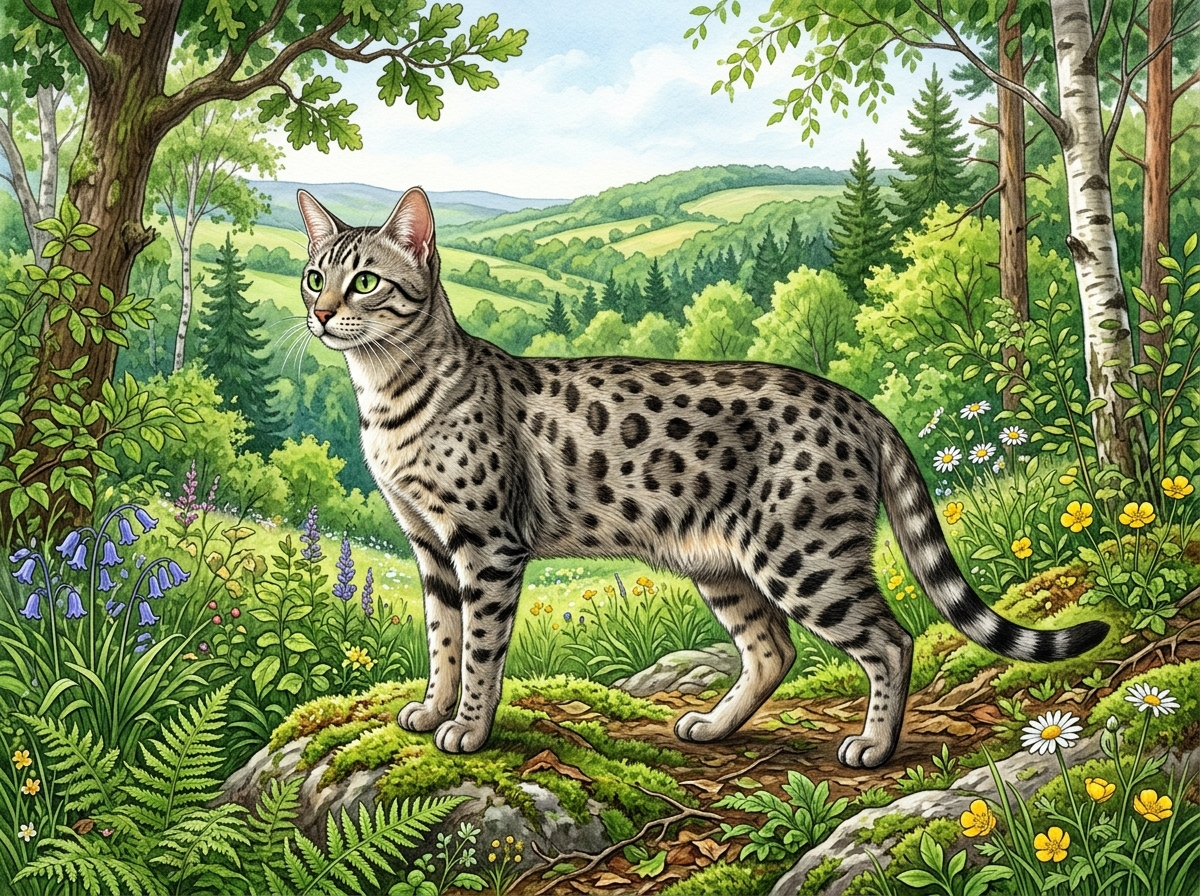
Egyptian Mau
🐈 CatsFelis catus
Egyptian Mau
The only naturally spotted domestic breed, with a striking spotted coat, gooseberry green eyes, and a distinctive 'scarab beetle' mark on the forehead. Known for incredible speed — they're the fastest domestic cat breed.
English Cocker Spaniel
🐕 DogsCanis lupus familiaris
English Cocker Spaniel
Medium-sized, cheerful sporting dog with long, silky ears. Friendly, affectionate, and excellent family companion.
English Pointer
🐕 DogsCanis lupus familiaris
English Pointer
Medium-sized, elegant hunting dog known for its distinctive pointing stance. Athletic, friendly, and loyal.
English Setter
🐕 DogsCanis lupus familiaris
English Setter
Medium to large elegant gun dog with long, silky coat. Gentle, friendly, and excellent family companion.
English Springer Spaniel
🐕 DogsCanis lupus familiaris
English Springer Spaniel
Medium-sized, muscular flushing spaniel with long, silky coat. Friendly, energetic, and eager to please.
English Toy Terrier
🐕 DogsCanis lupus familiaris
English Toy Terrier
Small, elegant toy terrier with sleek black and tan coat. Alert, intelligent, and lively companion.
Entlebuch Mountain Dog
🐕 DogsCanis lupus familiaris
Entlebuch Mountain Dog
Small to medium Swiss herding dog with tricolor coat. Alert, loyal, and energetic family companion.
Estaires
🐔 ChickensGallus gallus domesticus
Estaires
A critically rare French dual-purpose breed from the town of Estaires in the Nord department of French Flanders. Developed in the early 20th century, the Estaires is a large, well-fleshed white bird with a single comb and clean legs, bred to produce both a good number of white eggs and a generous table carcass. The breed shares ancestry with other great Flemish-French dual-purpose breeds of the era, such as the Bourbourg and Coucou des Flandres, all developed to serve the mixed farming economy of the Franco-Belgian borderlands. Like its regional cousins, the Estaires was nearly wiped out by the shift to intensive poultry farming after 1945. A small number of dedicated French breeders, supported by SCAF and the EE Europastandard, maintain the breed today as a living link to the traditional agriculture of the Lys River valley.
Estonian Hound
🐕 DogsCanis lupus familiaris
Estonian Hound
Medium-sized Estonian scent hound with a short coat. Intelligent and friendly, they are persistent hunters adapted to Nordic forest conditions.
Estrela Mountain Dog
🐕 DogsCanis lupus familiaris
Estrela Mountain Dog
Large livestock guardian dog from Portugal with a thick coat. Loyal, courageous, and intelligent, they are devoted protectors of both livestock and family.
Eurasier
🐕 DogsCanis lupus familiaris
Eurasier
Medium-sized Spitz-type dog with thick coat. Calm, even-tempered, and loyal with strong family bonds.
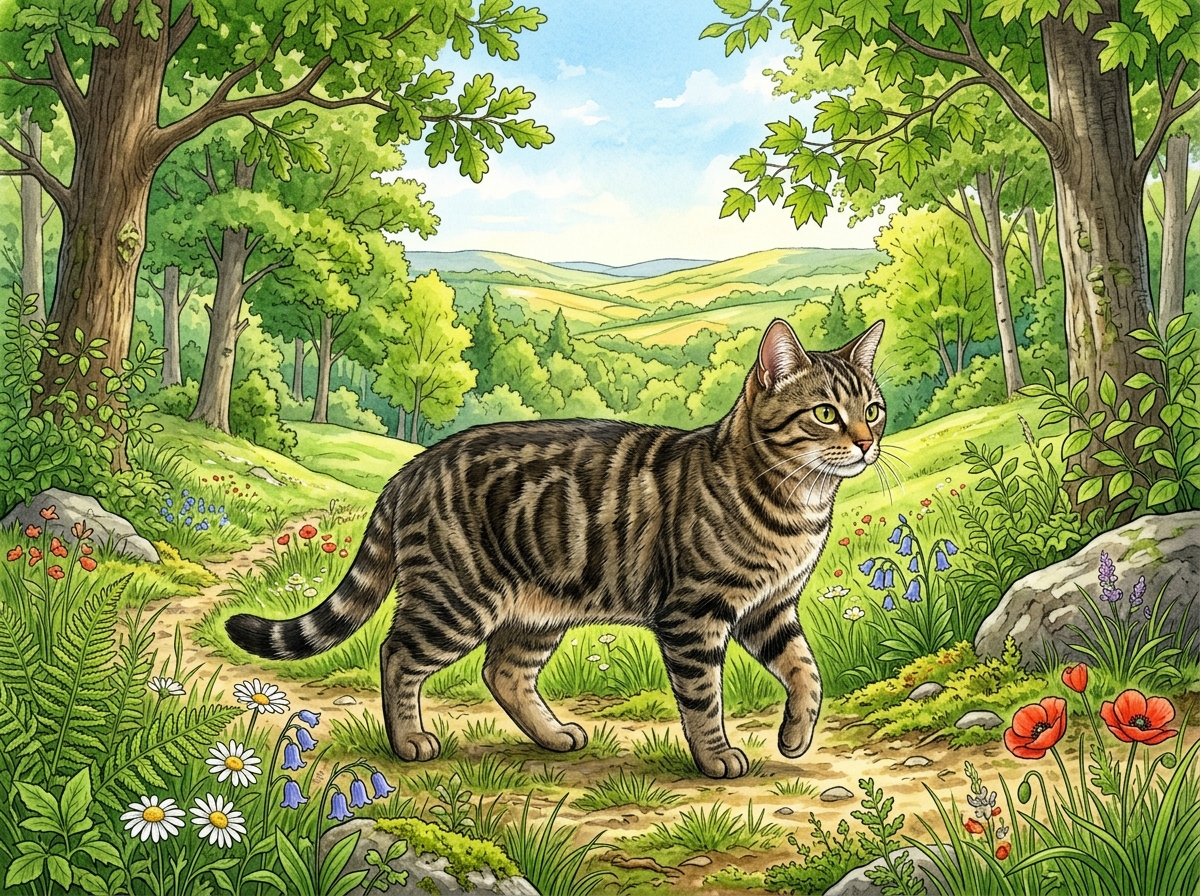
European Shorthair
🐈 CatsFelis catus
European Shorthair
The native domestic cat of continental Europe, very similar in appearance to ordinary European house cats. Medium to large, muscular, with a dense short coat. Bred to preserve the type of the original European working farm cat.
Euskal Oiloa
🐔 ChickensGallus gallus domesticus
Euskal Oiloa (Basque Hen)
The traditional farmyard chicken of the Basque Country (Euskadi) in northern Spain and south-west France, recognised in four distinct varieties by the EE Europastandard: Marraduna (cuckoo-buff, the most common), Gorria (red-partridge), Lepasoila (naked-neck), and Beltza (solid black). Euskal Oiloa means 'Basque Hen' in the Basque language, and the breed has been part of Basque agricultural life for centuries. A robust, active dual-purpose bird, it was the everyday chicken of traditional Basque caseríos (farmsteads) and is now promoted as a regional heritage food animal with Protected Geographical Indication status for its eggs.
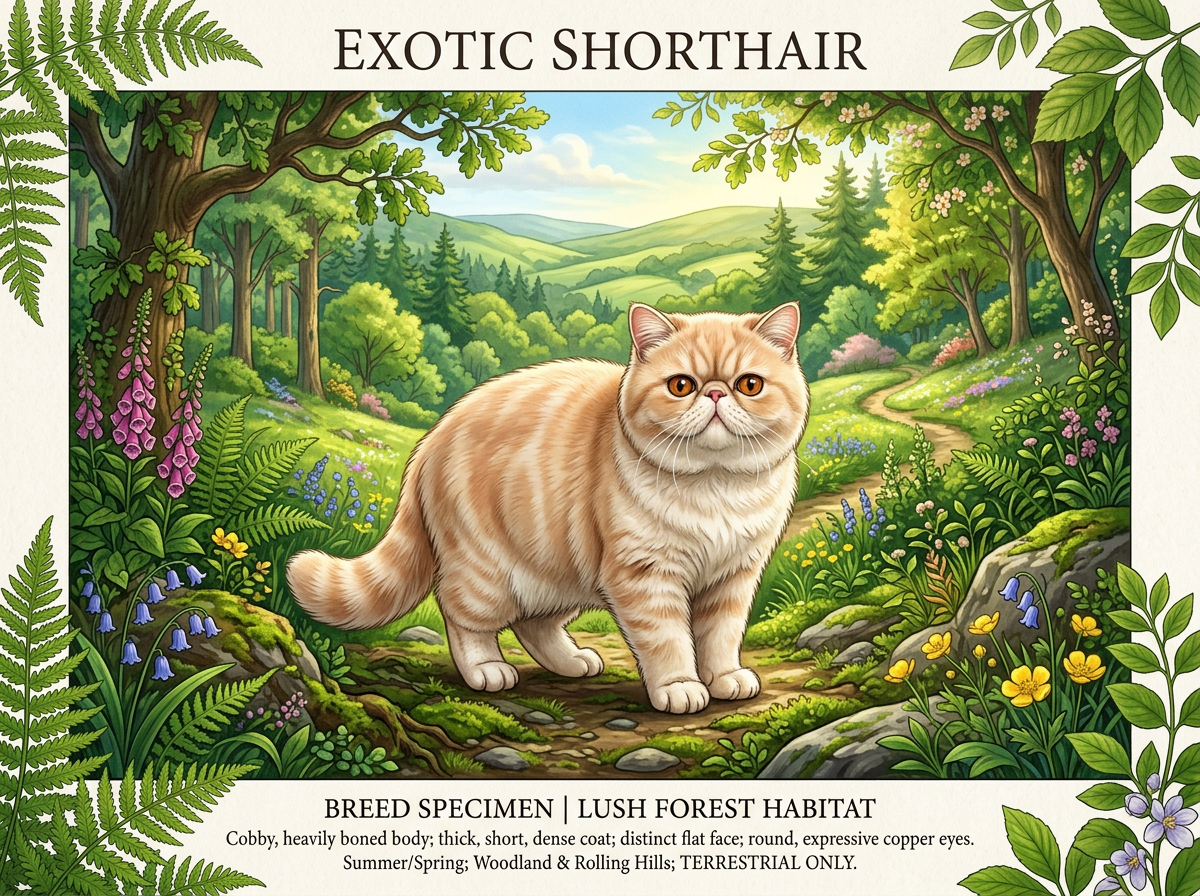
Exotic Shorthair
🐈 CatsFelis catus
Exotic Shorthair
Essentially a shorthaired Persian — same round face, cobby body, and sweet temperament, but with a dense, plush, easy-care short coat. Known as the 'lazy man's Persian.' Playful and gentle, with a quiet, loving nature.
Famennoise
🐔 ChickensGallus gallus domesticus
Famennoise (Famennehoen)
A critically rare Belgian dual-purpose breed from the Famenne region of Wallonia, an area of limestone valleys and rolling farmland between the Ardennes and the Sambre-Meuse industrial belt. The Famennoise is a medium-large bird developed through crossing local Walloon farm chickens with Brahma and Langshan bloodlines in the late 19th century, producing a calm, productive farmyard breed with excellent dual-purpose characteristics. Hens lay tinted eggs and are reliable sitters, and the cockerels produce well-fleshed table birds. The breed was common on Walloon farms until World War II but was virtually eliminated by post-war agricultural modernisation. A small network of Belgian conservation breeders has worked to recover the Famennoise from near-extinction. Recognised by the EE Europastandard.
Fauve de Hesbaye
🐔 ChickensGallus gallus domesticus
Fauve de Hesbaye
A rare Belgian dual-purpose breed from the Hesbaye region (Haspengouw), a fertile agricultural plateau spanning Liège and Limburg provinces. The Fauve de Hesbaye is named for its distinctive fauve (fawn/tawny) plumage, a warm reddish-brown colour unique among Belgian farm breeds. Developed in the early 20th century from local mixed-breed farm chickens, it was selected for good egg numbers, robust health, and ability to thrive on the heavy clay loam soils of the Hesbaye wheat belt. The breed declined catastrophically after the 1950s when Belgian farmers abandoned traditional chickens for commercial hybrids, and by the 1990s it was considered functionally extinct. A handful of surviving birds were used by Belgian conservation breeders to reconstruct the breed. Recognised by the EE Europastandard.
Fauve de Mehaigne
🐔 ChickensGallus gallus domesticus
Fauve de Mehaigne
A critically rare Belgian true bantam from the Mehaigne region of Wallonia, named for its distinctive fauve (fawn/tawny) plumage — the same warm reddish-brown colouration found in the Fauve de Hesbaye large fowl breed. The Fauve de Mehaigne is a tiny, clean-legged true bantam with a single comb, full beard and muffs, and a neat, compact body. It is one of the smallest true bantams in existence. Developed in the early to mid-20th century by Walloon bantam specialists, it was one of several colour-variant true bantams created to expand the Belgian bantam palette. The breed is extraordinarily rare — even among Belgian poultry circles, the Fauve de Mehaigne is seen as a specialist's specialist breed. Recognised by the EE Europastandard, its continued existence depends entirely on a tiny group of dedicated Belgian breeders who maintain it as a living piece of Walloon heritage.
Faverolles
🐔 ChickensGallus gallus domesticus
Salmon Faverolles
A gentle, fluffy French farmyard breed from the village of Faverolles in the Eure-et-Loir, developed in the 1860s for the Parisian market. Faverolles are instantly recognisable by their muffled beard, feathered feet, and fifth toe — unusual traits resulting from their Dorking, Houdan, and Asian Cochin heritage. Salmon Faverolles hens display a beautiful salmon-buff plumage with white-and-wheat hackle, while cocks are dramatically multi-coloured. Calm and friendly, they are beloved as family birds.
Field Spaniel
🐕 DogsCanis lupus familiaris
Field Spaniel
Medium-sized spaniel with long, silky coat. Independent, gentle, and loyal with a dignified demeanor.
Fila Brasileiro
🐕 DogsCanis lupus familiaris
Fila Brasileiro
Large, powerful Brazilian mastiff with loose skin and distinctive 'cat's step' gait. Fearless, loyal, and protective.
Finnish Hound
🐕 DogsCanis lupus familiaris
Finnish Hound
Medium-sized scent hound with tricolor coat. Friendly, energetic, and excellent tracking dog for hunting hare and fox.
Finnish Landrace Chicken
🐔 ChickensGallus gallus domesticus
Suomalainen maatiaiskana
The indigenous landrace chicken of Finland, developed over centuries from chickens brought by settlers to the harsh Finnish climate. The Finnish Landrace chicken (Suomalainen maatiaiskana) is a medium-sized, exceptionally cold-hardy bird with a single comb and clean legs, adapted to survive Finland's long, dark winters where temperatures routinely drop below -20°C. Plumage is highly variable — birds can be almost any colour or pattern, reflecting true landrace diversity where no colour selection has been applied. Finnish Landrace chickens are outstanding foragers, capable of extracting a living from the thin soils and short growing season of the boreal landscape. They produce tinted to light brown eggs and have excellent disease resistance. The breed was nearly wiped out by commercial poultry in the 20th century but was saved by Finland's national gene bank programme. Registered in DAD-IS and maintained by Finnish conservation breeders and MTT Agrifood Research Finland.
Finnish Lapphund
🐕 DogsCanis lupus familiaris
Finnish Lapphund
Medium-sized Spitz-type dog with thick double coat. Friendly, loyal, and excellent with families and children.
Finnish Spitz
🐕 DogsCanis lupus familiaris
Finnish Spitz
Medium-sized Spitz-type dog with red-gold coat and pointed ears. Alert, intelligent, and independent hunter known for distinctive barking.
Flat-Coated Retriever
🐕 DogsCanis lupus familiaris
Flat-Coated Retriever
Medium to large retriever with sleek, flat-lying coat. Friendly, optimistic, and energetic with a 'forever puppy' personality.
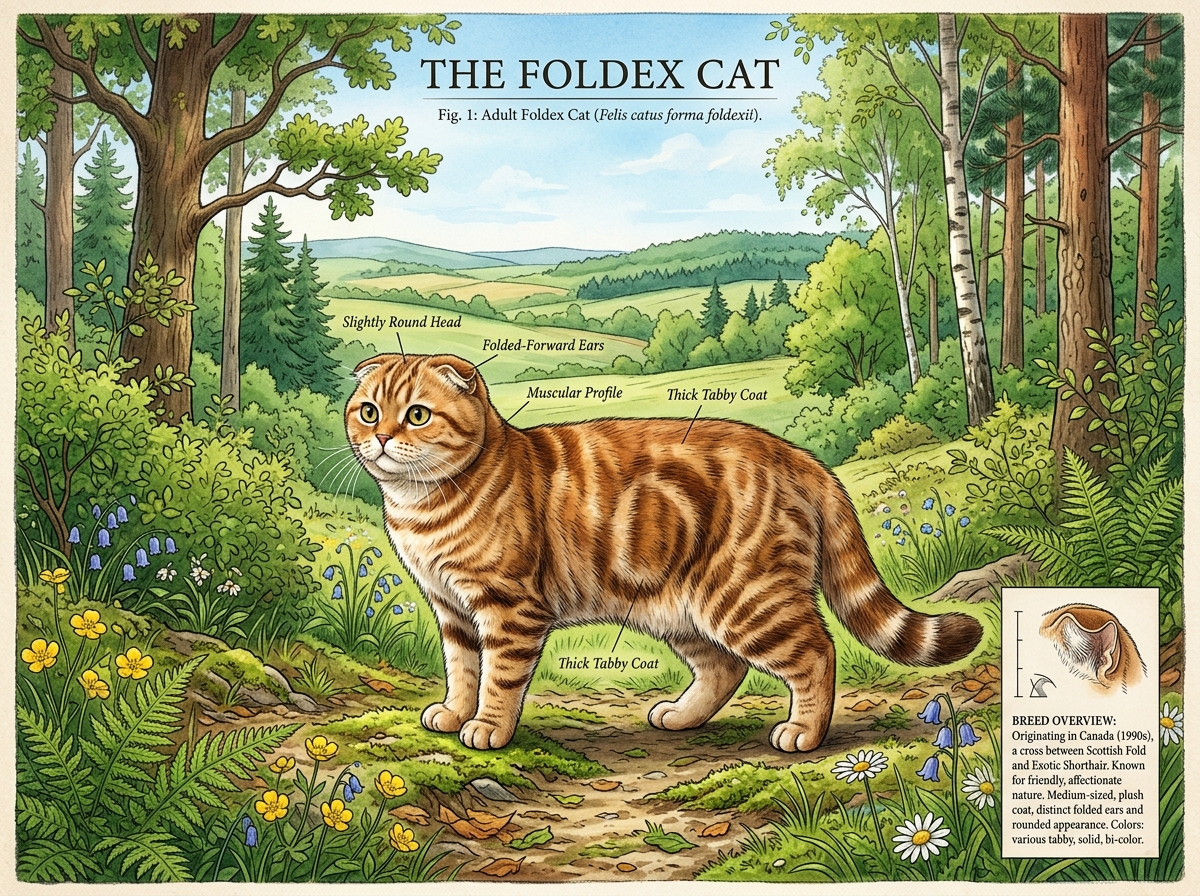
Foldex
🐈 CatsFelis catus
Foldex
A Canadian breed combining the folded ears of the Scottish Fold with the round, cobby body and short coat of the Exotic Shorthair. Medium-sized, sturdy, with a sweet expression. Recognized only in Canada.
Foxhound (English)
🐕 DogsCanis lupus familiaris
English Foxhound
Medium to large scent hound bred for fox hunting. Energetic, friendly, and determined with excellent stamina.
French Bulldog
🐕 DogsCanis lupus familiaris
French Bulldog
Small, muscular dog with distinctive bat-like ears. Despite glum expression, incredibly affectionate and playful.
French Spaniel
🐕 DogsCanis lupus familiaris
French Spaniel
Medium to large pointing dog with long, silky coat. Gentle, intelligent, and excellent hunting companion.
Frisian
🐔 ChickensGallus gallus domesticus
Frisian
An ancient Dutch laying breed from the coastal province of Friesland, with a history stretching back several centuries as a productive village and farmstead hen. Frisians are pencilled birds — each feather carries fine, parallel, transverse bars of colour — and come in gold and silver-pencilled varieties. They are active, alert, flighty birds that lay a good number of white eggs and historically kept themselves largely on farmyard scraps and field-gleaned grain, making them economical to keep.
Frizzle
🐔 ChickensGallus gallus domesticus
Frizzle
The Frizzle is defined not by geographical origin but by its unique feather mutation — each feather curls outward and forward rather than lying flat, giving the bird a permanently ruffled, windswept appearance as if it has just stepped out of a storm. Recognised as a distinct breed by the EE and many national poultry clubs, the Frizzle can come in several sizes and body types, but the defining feature is always the frizzling gene (F), which is semi-dominant. Frizzles have appeared in European poultry literature since the 1600s and are kept today almost entirely as exhibition and ornamental birds, though they lay a reasonable number of eggs. The feather structure provides less insulation than normal plumage, so they are more sensitive to cold and wet conditions.
Garafian Shepherd
🐕 DogsCanis lupus familiaris
Garafian Shepherd
Medium to large shepherd dog from the Canary Islands with a rustic appearance. Loyal, intelligent, and protective, they excel as livestock guardians and family companions.
Gascon Saintongeois
🐕 DogsCanis lupus familiaris
Gascon Saintongeois
Large French hound from Gascony and Saintonge with a blue-mottled coat. Intelligent and persistent, they are friendly and sociable hunters.
Gauloise Dorée
🐔 ChickensGallus gallus domesticus
Gauloise Dorée
One of France's oldest and most active laying breeds, the Gauloise (Gallic Hen) comes in several colour varieties of which the Dorée — golden — is the most celebrated. The Gauloise is a lean, vigorous, Mediterranean-influenced breed with a large upright single comb, close plumage, and an alert, independent character that makes it an outstanding free-range forager. Recognised by the Société Centrale Avicole de France (SCAF) and the EE Europastandard, the Gauloise was once the archetypal French farmyard chicken before commercial breeds replaced it, and is now a conservation breed representing pre-industrial French poultry culture.
Gelderse
🐔 ChickensGallus gallus domesticus
Gelderse (Guelders Fowl)
A Dutch dual-purpose landrace from the Gelderland province in the eastern Netherlands, one of several distinctly Dutch farmyard breeds recognised by the EE Europastandard. The Gelderse is a medium-large, active bird with characteristic salmon-partridge plumage — hens carry warm salmon-buff breast with pencilled wings, while cocks have richly coloured red-orange hackle and saddle. A traditional farmyard bird that supplied eggs and table birds to the towns of Gelderland for centuries, the Gelderse is now a conservation breed maintained by Dutch breeders affiliated with the Dutch poultry fancy.
German Longhaired Pointer
🐕 DogsCanis lupus familiaris
German Longhaired Pointer
Medium to large versatile hunting dog with long, silky coat. Intelligent, gentle, and excellent retriever.
German Pinscher
🐕 DogsCanis lupus familiaris
German Pinscher
Medium-sized, sleek working dog with elegant build. Alert, intelligent, and spirited with strong prey drive.
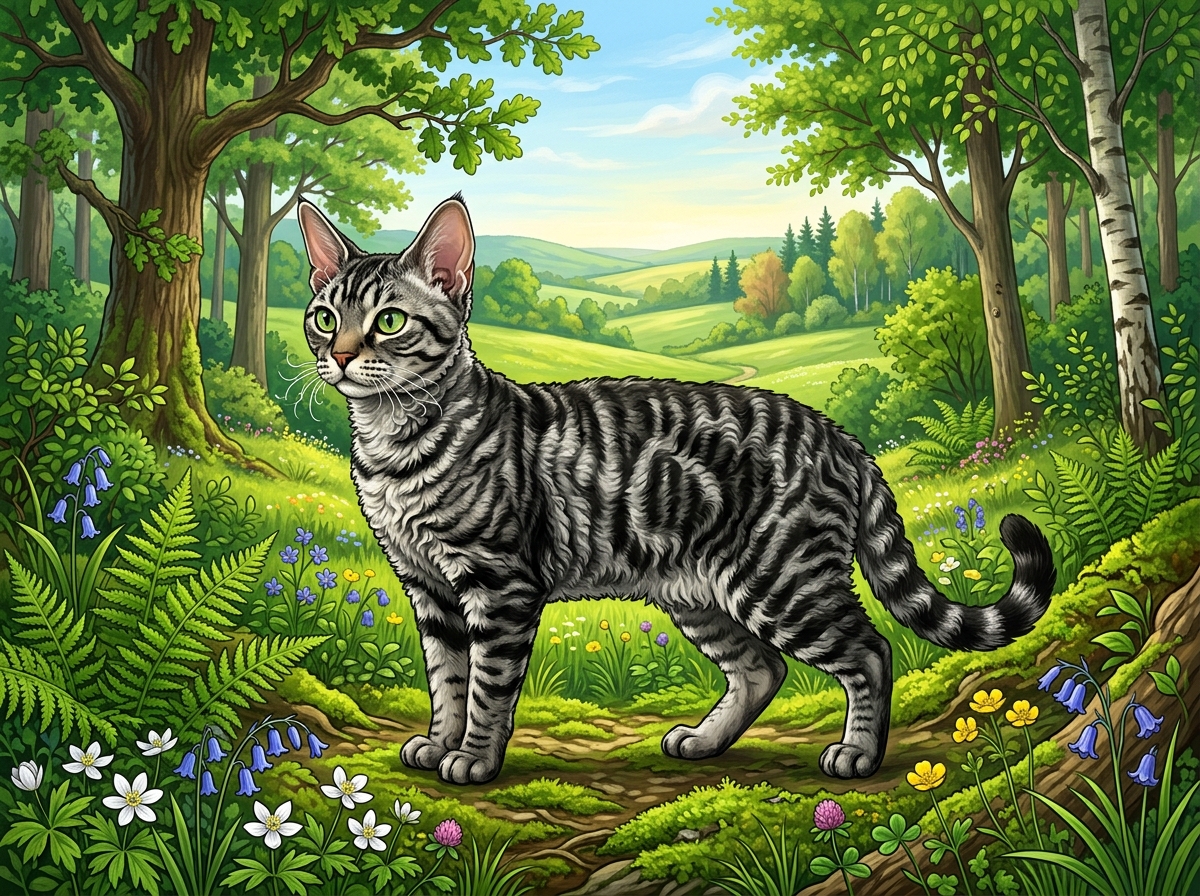
German Rex
🐈 CatsFelis catus
German Rex
The first curly-coated breed, discovered in post-war East Berlin. Medium-sized with a rounded head, well-developed cheeks, and a soft, silky, wavy/short curly coat. Gentle, patient, and very devoted to their families.
German Shepherd Dog
🐕 DogsCanis lupus familiaris
German Shepherd Dog
A large, intelligent, and versatile working dog renowned for loyalty, courage, and trainability. German Shepherds serve as police dogs, guide dogs, and devoted family protectors worldwide.
German Shorthaired Pointer
🐕 DogsCanis lupus familiaris
German Shorthaired Pointer
Medium to large versatile hunting dog with short, dense coat. Intelligent, energetic, and eager to please.
German Spaniel (Wachtelhund)
🐕 DogsCanis lupus familiaris
German Spaniel (Wachtelhund)
Medium-sized German flushing dog with a wavy coat. Intelligent and energetic, they are versatile hunters skilled at working in dense cover.
German Spitz
🐕 DogsCanis lupus familiaris
German Spitz
Small to medium Spitz-type dog with fluffy coat and alert expression. Intelligent, affectionate, and good-natured companion.
German Wirehaired Pointer
🐕 DogsCanis lupus familiaris
German Wirehaired Pointer
Medium to large hunting dog with distinctive wiry coat and beard. Intelligent, energetic, and determined worker.
Giant Schnauzer
🐕 DogsCanis lupus familiaris
Giant Schnauzer
Large, powerful working dog with distinctive beard. Intelligent, courageous, and loyal with strong protective instincts.
Glen of Imaal Terrier
🐕 DogsCanis lupus familiaris
Glen of Imaal Terrier
Small, sturdy terrier with short legs and wheaten coat. Courageous, gentle, and loyal companion.
Golden Retriever
🐕 DogsCanis lupus familiaris
Golden Retriever
One of the most popular dog breeds worldwide. Known for their lustrous golden coat, friendly expression, and eager-to-please attitude.
Gordon Setter
🐕 DogsCanis lupus familiaris
Gordon Setter
Large, muscular setter with distinctive black and tan coat. Loyal, confident, and energetic hunting companion.
Gotlandshöna
🐔 ChickensGallus gallus domesticus
Gotlandshöna
A Swedish landrace chicken from the island of Gotland in the Baltic Sea, one of Sweden's most isolated and culturally distinct regions. The Gotlandshöna is a medium-sized, active bird with a single comb and clean legs, developed over centuries on Gotland where geographic isolation allowed it to evolve without influence from mainland breeds. Its plumage is highly variable — individual birds can be black, white, blue, red, speckled, or any combination, reflecting its landrace status where colour uniformity was never selected for. Gotlandshönas are exceptional foragers, adapted to the island's windswept, limestone-rich landscape where vegetation is sparse and shelter scarce. They produce brown eggs and are hardy to a remarkable degree. The breed was 'found' in the 1990s after being presumed extinct and is now maintained by the Swedish gene bank programme. Registered in DAD-IS and recognised by the Scandinavian Poultry Standard.
Gournay
🐔 ChickensGallus gallus domesticus
Gournay
A traditional Norman dual-purpose breed from the town of Gournay-en-Bray in Upper Normandy, developed in the 19th century as a practical farm chicken for the Bray country. The Gournay is a medium-large bird recognised in two colour varieties: cuckoo (barred) and black, both with a single comb, clean legs, and white skin valued by the French market. Hens are good layers of white eggs and reliable sitters, making the breed well-suited to small-scale sustainable farming. Gournay chickens were the standard farmyard bird across the Bray region until the 1950s, when the Normandy countryside was transformed by agricultural consolidation and depopulation. Saved from extinction by SCAF conservation programmes in the 1980s, the Gournay is now maintained by a network of French breeders. Recognised by the EE Europastandard.
Grand Anglo-Français Blanc et Noir
🐕 DogsCanis lupus familiaris
Grand Anglo-Français Blanc et Noir
Large French-English hound with a white and black coat. Energetic and intelligent, they are persistent hunters bred for speed and endurance.
Grand Anglo-Français Blanc et Orange
🐕 DogsCanis lupus familiaris
Grand Anglo-Français Blanc et Orange
Large French-English hound with a distinctive white and orange coat. Energetic and intelligent, they are excellent pack hunters.
Grand Anglo-Français Tricolore
🐕 DogsCanis lupus familiaris
Grand Anglo-Français Tricolore
Large French-English hound with a classic tri-color coat. Energetic and intelligent, they are powerful hunters of large game.
Grand Basset Griffon Vendéen
🐕 DogsCanis lupus familiaris
Grand Basset Griffon Vendéen
Medium-sized rough-coated scent hound with longer legs than the Petit. Energetic, determined, and friendly.
Grand Bleu de Gascogne
🐕 DogsCanis lupus familiaris
Grand Bleu de Gascogne
Large, powerful scent hound from France with distinctive blue-mottled coat. Determined, gentle, and excellent tracking dog.
Grand Griffon Vendéen
🐕 DogsCanis lupus familiaris
Grand Griffon Vendéen
Large French rough-coated hound from the Vendée region. Energetic and intelligent, they are persistent hunters of large game.
Great Dane
🐕 DogsCanis lupus familiaris
Great Dane
Giant, elegant dog breed known as the 'Apollo of dogs.' Despite enormous size, they are gentle, friendly, and affectionate.
Great Swiss Mountain Dog
🐕 DogsCanis lupus familiaris
Great Swiss Mountain Dog
Large, powerful Swiss mountain dog with striking tri-color coat. Gentle, loyal, and confident, they are excellent family companions and working dogs.
Greek Hound
🐕 DogsCanis lupus familiaris
Greek Hound
Medium-sized Greek scent hound with a short coat. Intelligent and energetic, they are persistent hunters with ancient lineage.
Greenland Dog
🐕 DogsCanis lupus familiaris
Greenland Dog
Large Arctic spitz-type dog from Greenland with a thick double coat. Loyal and courageous, they are powerful sled dogs with remarkable endurance.
Greyhound
🐕 DogsCanis lupus familiaris
Greyhound
Tall, slender sighthound built for speed. The fastest dog breed, reaching speeds up to 45 mph. Gentle and affectionate at home.
Griffon Bleu de Gascogne
🐕 DogsCanis lupus familiaris
Griffon Bleu de Gascogne
Medium-sized French rough-coated hound from Gascony with a blue-mottled coat. Intelligent and persistent, they are friendly and sociable hunters.
Griffon Bruxellois
🐕 DogsCanis lupus familiaris
Griffon Bruxellois
Small, wiry-coated toy breed with distinctive monkey-like face. Alert, curious, and full of personality.
Griffon Fauve de Bretagne
🐕 DogsCanis lupus familiaris
Griffon Fauve de Bretagne
Medium-sized French rough-coated hound from Brittany with a distinctive fawn coat. Energetic and intelligent, they are persistent hunters.
Griffon Nivernais
🐕 DogsCanis lupus familiaris
Griffon Nivernais
Medium-sized French rough-coated hound from the Nivernais region. Intelligent and persistent, they are courageous hunters with ancient lineage.
Groninger Meeuw
🐔 ChickensGallus gallus domesticus
Groninger Meeuw
A striking Dutch egg-laying breed from the Groningen province in the far north of the Netherlands, whose name translates as 'Groningen Gull' — a reference to the breed's dramatic plumage pattern that mimics the colouring of a herring gull: pure white body with a jet-black head and upper neck hackle. This gull-marked pattern is unique to the Groninger Meeuw among Dutch breeds and makes it one of the most visually distinctive European laying breeds. An active, productive white-egg layer, it was once a common farmyard bird across the Groningen clay-plain farmsteads and is now a conservation breed.
Gâtinaise
🐔 ChickensGallus gallus domesticus
Gâtinaise
An ancient French white table breed from the Gâtinais region, a fertile plain straddling the Loiret and Seine-et-Marne departments south of Paris, documented as a premium market chicken from the 16th century. The Gâtinaise was one of the most prized table birds supplying the Parisian poultry market alongside the Houdan and Le Mans capons, valued for its white, fine-boned meat. Now critically rare and listed as endangered by the SCAF and EE, it survives in very small numbers maintained by French conservation breeders committed to preserving France's pre-industrial poultry heritage.
Halden Hound
🐕 DogsCanis lupus familiaris
Halden Hound
Medium-sized Norwegian scent hound from the Halden region. Friendly and intelligent, they are calm yet persistent hunters.
Hamburg
🐔 ChickensGallus gallus domesticus
Hamburg
One of the oldest and most elegant European breeds, known for centuries across northern Europe as 'Everyday Layers' for their consistent production of small, bright white eggs. Hamburgs are compact and beautifully marked birds — the spangled varieties carry perfectly round, beetle-green black moon-shaped spangles on every feather. They are active, alert, and superb foragers but prefer an open range lifestyle and can be flighty if confined. William Makepeace Thackeray was a noted admirer.
Hamiltonstövare
🐕 DogsCanis lupus familiaris
Hamiltonstövare
Medium-sized Swedish scent hound with tricolor coat. Friendly, determined, and excellent tracking dog.
Hanoverian Scent Hound
🐕 DogsCanis lupus familiaris
Hanoverian Scent Hound
Medium-sized German scent hound with a powerful build. Calm and intelligent, they are renowned for their exceptional tracking abilities.
Harrier
🐕 DogsCanis lupus familiaris
Harrier
Medium-sized scent hound resembling a smaller English Foxhound. Energetic, friendly, and excellent pack hunter.
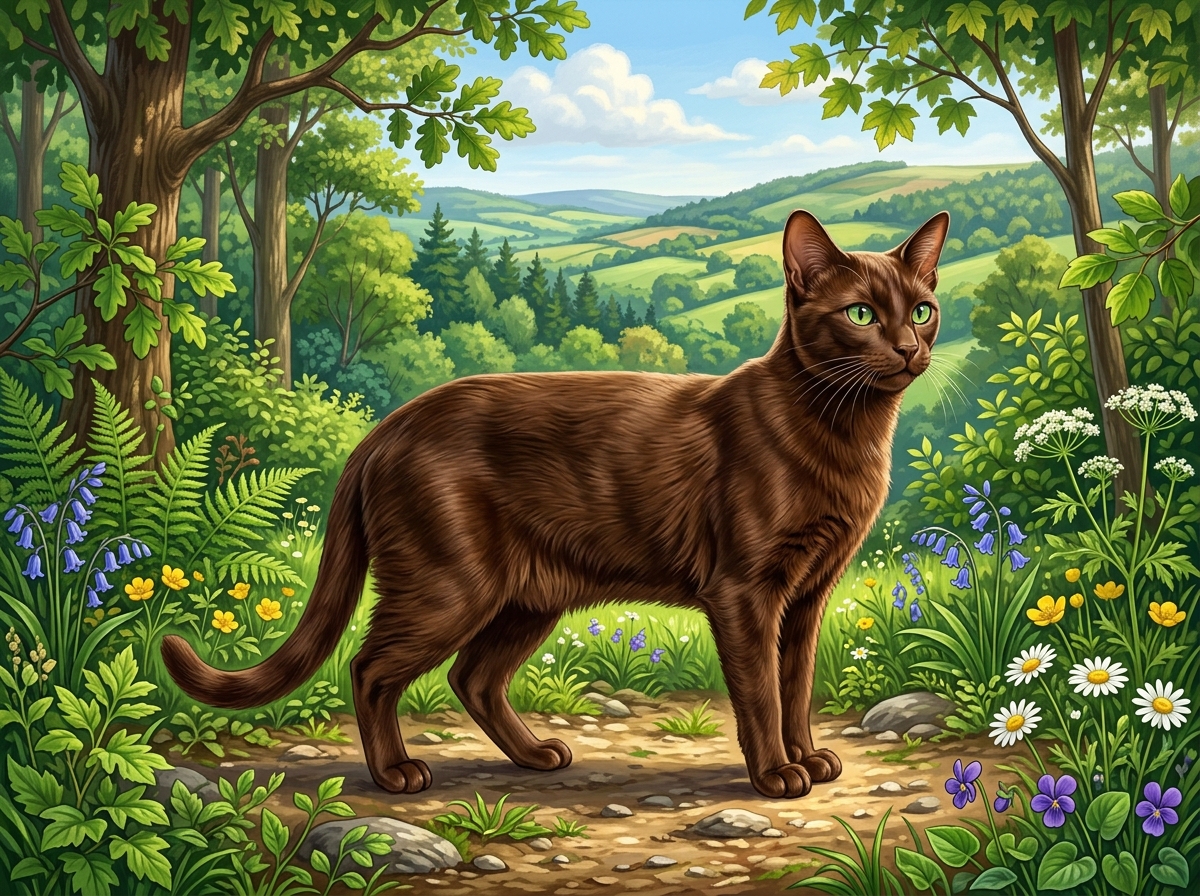
Havana Brown
🐈 CatsFelis catus
Havana Brown
A rich, warm chocolate-brown breed with vivid green eyes and a distinctive 'corncob' muzzle that's unique among cats. Sleek, muscular, medium-sized body. They reach out with their paws to touch their owners — very interactive.
Havanese
🐕 DogsCanis lupus familiaris
Havanese
Small, sturdy toy breed with long, silky coat. Playful, affectionate, and intelligent family companion.
Hedemorahöna
🐔 ChickensGallus gallus domesticus
Hedemorahöna (Hedemora Hen)
One of Sweden's most extraordinary and genetically remarkable native breeds, originating from the town of Hedemora in Dalarna county — a region of deep forests and harsh winters in central Sweden. The Hedemorahöna is uniquely adapted to extreme cold; some individuals develop a silky-feathered variant (sometimes called 'ull-höna' or wool-hen) with the same barbicle-free soft plumage as a Silkie, which provides exceptional insulation in sub-zero temperatures. The breed appears in Swedish agricultural records from the 17th century and is listed by the DAD-IS database as a critical genetic resource and by the Scandinavian Poultry Standard as a priority conservation breed.
Herve
🐔 ChickensGallus gallus domesticus
Herve (Hervehoen)
A Belgian dual-purpose breed from the Pays de Herve region of Liège province, an area of rolling dairy pastures and hedgerows east of the city. The Hervehoen is a medium-large bird developed from local Walloon farmyard stock, valued for brown eggs and good table qualities. Named after the region famous for its pungent Herve cheese, this chicken shares the same terroir as one of Belgium's most distinctive food products. The breed was once the standard farm chicken of the Pays de Herve, but fell into steep decline after World War II as small mixed farms consolidated into larger dairy operations that no longer kept chickens. Belgian conservation breeders have worked to preserve the remaining population. Recognised by the EE Europastandard and BDRG.
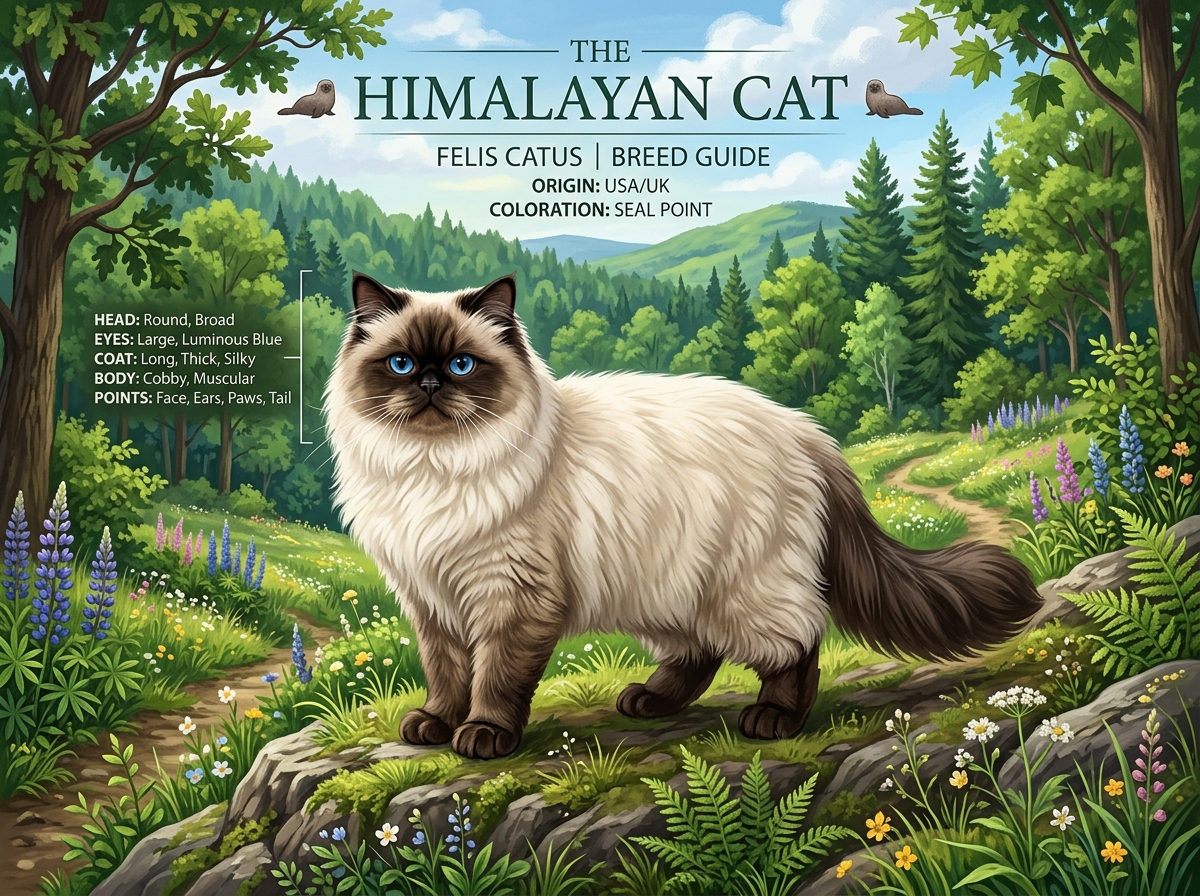
Himalayan
🐈 CatsFelis catus
Himalayan
A colorpointed Persian — same round face, cobby body, and long plush coat as the Persian, but with vivid blue eyes and Siamese-style points (ears, face, paws, tail). Sweet, docile, and calm. Some registries classify as a Persian variety, others as separate breed.
Hokkaido Dog
🐕 DogsCanis lupus familiaris
Hokkaido Dog
Medium-sized Japanese Spitz-type dog with thick coat. Loyal, courageous, and resilient in cold climates.
Houdan
🐔 ChickensGallus gallus domesticus
Houdan
A distinguished French breed from the village of Houdan in the Île-de-France, famous since the 17th century as the premier table bird of the Paris market. The Houdan is immediately recognisable by its large butterfly-shaped V comb, full crest, muffled beard, and five toes — a combination of unique features found together in no other breed. Their mottled black-and-white plumage (called 'Houdan pattern') was once so prized that the town of Houdan held weekly poultry markets supplying Parisian restaurants.
Hovawart
🐕 DogsCanis lupus familiaris
Hovawart
Medium to large working dog with long, wavy coat. Intelligent, versatile, and loyal with strong protective instincts.
Hrvatica
🐔 ChickensGallus gallus domesticus
Hrvatica (Croatian Hen)
The national chicken breed of Croatia, developed in the early 20th century from indigenous landrace chickens of the Adriatic coastal region and inland Croatia. The Hrvatica is a medium-sized dual-purpose bird with a single comb and clean legs, known for white eggs and decent meat production. It was created through systematic crossing of local Croatian farm chickens with imported Mediterranean and Continental breeds, producing a versatile bird suited to Croatia's diverse climate — from Mediterranean coastal heat to cold continental winters in the interior. The Hrvatica was formalised as a breed in the 1930s by Croatian agricultural scientists and was once widespread across Croatian farms. After World War II, the Yugoslav agricultural policy pushed uniformity, and the breed declined. Since Croatian independence in 1991, there has been a strong revival of interest in the Hrvatica as a national heritage breed. Recognised by the EE Europastandard.
Hungarian Greyhound
🐕 DogsCanis lupus familiaris
Hungarian Greyhound (Magyar Agar)
Medium to large sighthound from Hungary with sleek build. Friendly, gentle, and excellent family companion.
Hungarian Kuvasz
🐕 DogsCanis lupus familiaris
Hungarian Kuvasz
Large, powerful livestock guardian dog with pure white coat. Loyal, courageous, and protective with a gentle nature toward family.
Hungarian Wirehaired Vizsla
🐕 DogsCanis lupus familiaris
Hungarian Wirehaired Vizsla
Medium-sized hunting dog with wiry coat and distinctive beard. Energetic, loyal, and versatile worker.
Hyacinth Macaw
🐦 BirdsAnodorhynchus hyacinthinus
Hyacinth Macaw
Largest flying parrot reaching nearly a meter in length. Stunning cobalt-blue plumage with gentle giant personality.
Hygen Hound
🐕 DogsCanis lupus familiaris
Hygen Hound
Medium-sized Norwegian scent hound with a thick coat. Friendly and intelligent, they are persistent hunters adapted to cold Scandinavian winters.
Hällefors Elkhound
🐕 DogsCanis lupus familiaris
Hällefors Elkhound
Medium-sized Swedish spitz-type dog bred for moose hunting. Intelligent and courageous, they are loyal and energetic hunting companions.
Ibizan Hound
🐕 DogsCanis lupus familiaris
Ibizan Hound
Medium-sized primitive hound from Ibiza with large erect ears and a sleek body. Intelligent and energetic, they are elegant hunters with a playful nature.
Icelandic Chicken
🐔 ChickensGallus gallus domesticus
Íslenska hænan (Icelandic Chicken)
One of the world's most genetically isolated and historically significant chicken breeds, descended from birds brought to Iceland by Norse settlers around 874 AD. Having developed in near-complete isolation for over 1,100 years on an island far from mainland poultry populations, Icelandic Chickens possess a unique gene pool found nowhere else on Earth. They come in an extraordinary variety of plumage colours, comb types, and body sizes, reflecting the natural mutations accumulated over more than a millennium without human standardisation. Classified as a critical genetic resource by the FAO's Domestic Animal Diversity Information System (DAD-IS) and protected under Icelandic national law.
Icelandic Sheepdog
🐕 DogsCanis lupus familiaris
Icelandic Sheepdog
Small to medium Spitz-type herding dog from Iceland. Friendly, cheerful, and eager to work.
Indian Game
🐔 ChickensGallus gallus domesticus
Indian Game (Cornish)
A massively muscled British meat breed developed in Cornwall in the 1820s–1840s by crossing Asil and Old English Game with Malay, producing a compact, broad-breasted bird of extraordinary muscle density. Despite its name, Indian Game has no Indian origin — 'Indian' was Victorian-era shorthand for anything from Southeast Asia. The modern commercial broiler chicken is primarily an Indian Game cross — when crossed with the White Plymouth Rock in the 1950s, it became the template for virtually every supermarket chicken sold today. The most economically important chicken breed ever developed.
Irish Red and White Setter
🐕 DogsCanis lupus familiaris
Irish Red and White Setter
Large Irish setter with a striking red and white coat. Friendly and energetic, they are affectionate hunting dogs with a playful nature.
Irish Setter
🐕 DogsCanis lupus familiaris
Irish Setter
Medium to large elegant gun dog with rich mahogany-red coat. Energetic, friendly, and affectionate family companion.
Irish Terrier
🐕 DogsCanis lupus familiaris
Irish Terrier
Medium-sized, wiry-coated terrier with daring personality. Alert, courageous, and affectionate companion.
Irish Water Spaniel
🐕 DogsCanis lupus familiaris
Irish Water Spaniel
Large, curly-coated water spaniel with distinctive 'rat tail.' Intelligent, energetic, and excellent swimmer.
Irish Wolfhound
🐕 DogsCanis lupus familiaris
Irish Wolfhound
The tallest dog breed in the world. Gentle, loyal, and courageous despite its enormous size.
Istrian Hound
🐕 DogsCanis lupus familiaris
Istrian Hound
Medium-sized Croatian scent hound from the Istria Peninsula. Intelligent and energetic, they are excellent hunters with a distinctive musical bark.
Istrian Shorthaired Hound
🐕 DogsCanis lupus familiaris
Istrian Shorthaired Hound
Medium-sized Croatian scent hound with a short, dense coat. Intelligent and energetic, they are versatile hunters adapted to Mediterranean terrain.
Italian Greyhound
🐕 DogsCanis lupus familiaris
Italian Greyhound
Small, elegant sighthound, the miniature version of the Greyhound. Affectionate, sensitive, and playful.
Italian Hound
🐕 DogsCanis lupus familiaris
Italian Hound
Medium-sized Italian scent hound with ancient lineage. Intelligent and energetic, they are persistent hunters with a friendly disposition.
Italian Rough-haired Hound
🐕 DogsCanis lupus familiaris
Italian Rough-haired Hound
Medium-sized Italian scent hound with a rough, wiry coat. Intelligent and persistent, they are well-protected for hunting in dense vegetation.
Ixworth
🐔 ChickensGallus gallus domesticus
Ixworth
A rarely-seen British dual-purpose breed developed in the 1930s by Reginald Appleyard in the village of Ixworth, Suffolk, by crossing White Sussex, White Orpington, White Minorca, White Leghorn, and Jubilee Indian Game. Appleyard's goal was a fast-growing, all-white table bird that could also lay well — an attempt to create an ideal small farm chicken at a time when intensive farming was still decades away. The Ixworth is pure white with a pea comb (unusual for a British breed), produces a good carcass with well-set flesh, and lays cream to tinted eggs. It is now a rare breed on the RBST critical list.
Jack Russell Terrier
🐕 DogsCanis lupus familiaris
Jack Russell Terrier
Small, energetic terrier with intense personality. Courageous, playful, and loyal companion.
Japanese Bantam
🐔 ChickensGallus gallus domesticus
Japanese Bantam
An ancient true bantam that has been kept in Japan for over 350 years, featuring a uniquely short-legged, upright-tailed silhouette unlike any other bantam. The tail of the Japanese Bantam is carried nearly vertically — touching or almost touching the back of the head — giving it a distinctive 'letter J' profile. Short legs are caused by a gene that is lethal in homozygous form, meaning every breeding produces approximately one third of chicks that do not survive — a genetic characteristic unique to this breed.
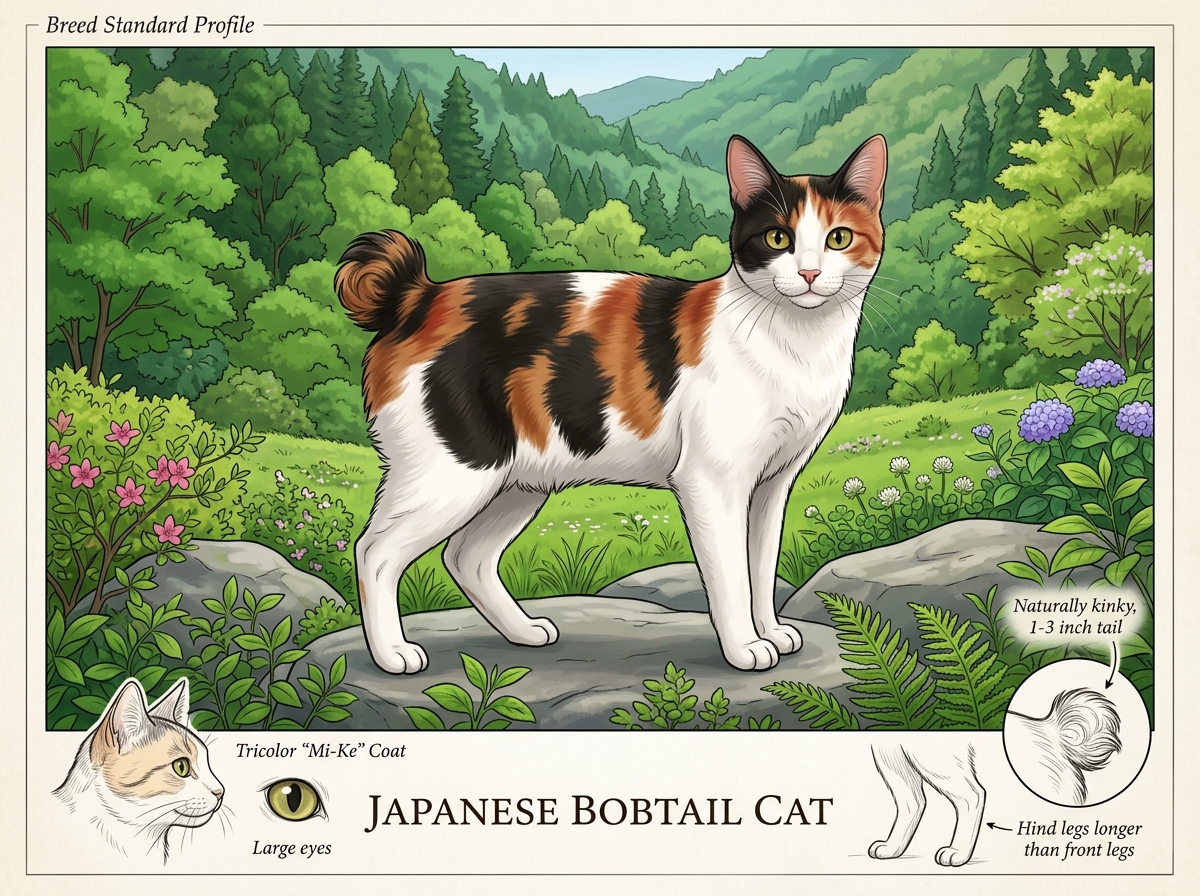
Japanese Bobtail
🐈 CatsFelis catus
Japanese Bobtail
A naturally occurring Japanese breed with a distinctive short, pom-pom tail caused by a recessive gene (different from Manx). Elegant, medium-sized with high cheekbones, large ears, and a lean body. Highly intelligent and vocal.
Japanese Chin
🐕 DogsCanis lupus familiaris
Japanese Chin
Small, elegant toy breed with distinctive flat face and long, silky coat. Graceful, affectionate, and cat-like.
Japanese Spitz
🐕 DogsCanis lupus familiaris
Japanese Spitz
Small, fluffy Spitz-type dog with pure white coat. Intelligent, alert, and devoted companion.
Java
🐔 ChickensGallus gallus domesticus
Java
One of the oldest American breeds and the second breed developed entirely in the United States, the Java has roots going back to the early 19th century, where it was bred from Asian birds imported to the eastern seaboard. The Java was enormously important as the foundation stock for many later American breeds — the Barred Plymouth Rock, Jersey Giant, and others all have Java ancestry. By the early 20th century, the Java had been superseded by its own descendants and fell into critical rarity. Today it is one of the rarest breeds in North America, preserved by dedicated heritage breeders who recognise its historical importance as the genetic cornerstone of the American fancy.
Jersey Giant
🐔 ChickensGallus gallus domesticus
Jersey Giant
The largest standard chicken breed in the world, developed in Burlington County, New Jersey in the 1870s–1880s by brothers John and Thomas Black with the explicit goal of replacing the turkey as America's Thanksgiving table bird. Roosters commonly reach 5–6 kg and stand exceptionally tall, with hens also reaching impressive market weights. Despite their enormous size, Jersey Giants are notably gentle, calm, and good-natured. Admitted to the APA Standard in 1922. Their slow growth rate (6+ months to reach full size) means they are kept primarily as heritage and exhibition birds today rather than for commercial production.
Jämthund (Swedish Moose Dog)
🐕 DogsCanis lupus familiaris
Jämthund (Swedish Moose Dog)
Large Swedish spitz-type dog from the Jämtland region. Intelligent and courageous, they are loyal hunting dogs with a calm and steady temperament.
Kai Ken
🐕 DogsCanis lupus familiaris
Kai Ken
Medium-sized Japanese dog with distinctive brindle coat. Agile, intelligent, and loyal with strong hunting instincts.
Kangal Shepherd Dog
🐕 DogsCanis lupus familiaris
Kangal Shepherd Dog
Giant Turkish livestock guardian dog with a distinctive black mask. Loyal and courageous, they are calm protectors with an unmatched bite force.
Karelian Bear Dog
🐕 DogsCanis lupus familiaris
Karelian Bear Dog
Medium-sized Spitz-type dog with black and white coat. Courageous, independent, and tenacious hunter of large game.
Keeshond
🐕 DogsCanis lupus familiaris
Keeshond
Medium Spitz-type dog with distinctive grey coat and markings resembling spectacles. Alert, intelligent, and good-natured companion.
Kerry Blue Terrier
🐕 DogsCanis lupus familiaris
Kerry Blue Terrier
Medium-sized terrier with distinctive soft blue-grey coat. Courageous, confident, and devoted companion.
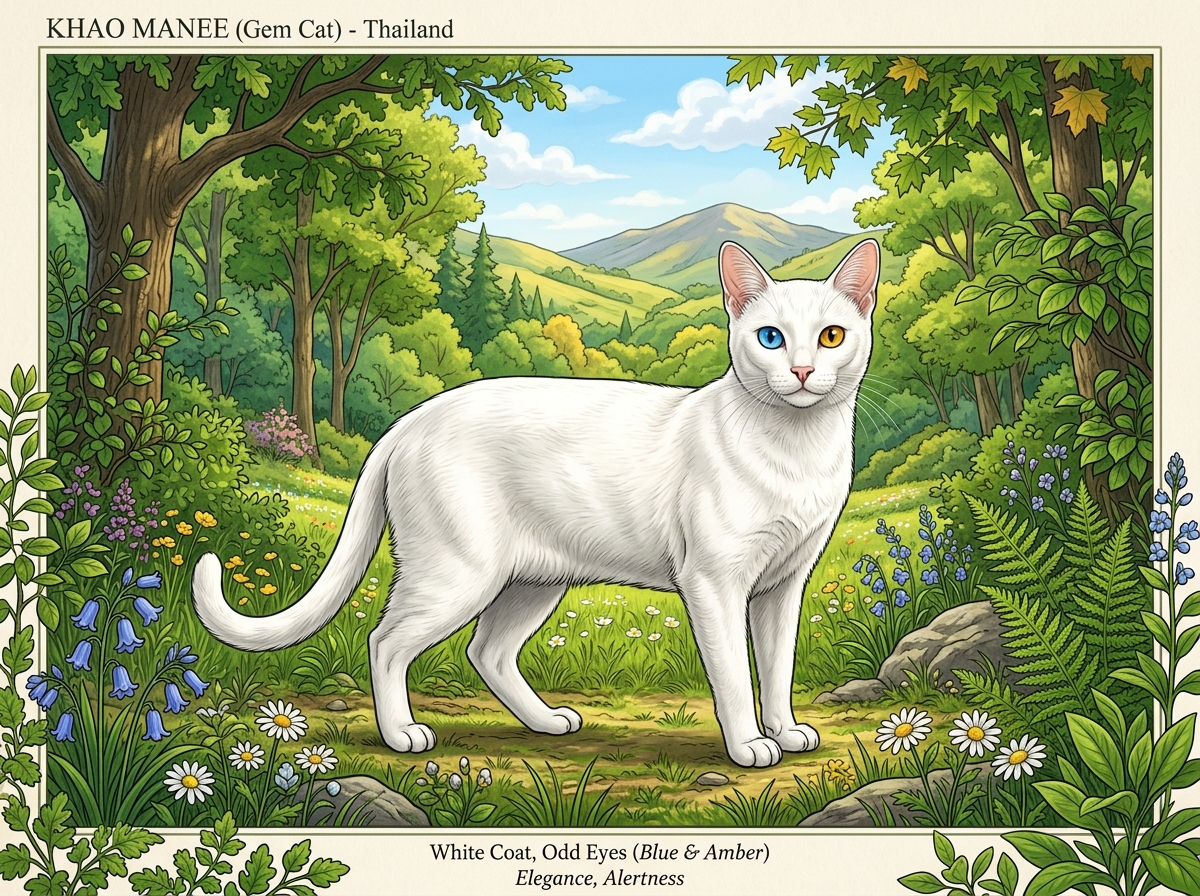
Khao Manee
🐈 CatsFelis catus
Khao Manee
An ancient Thai breed known as the 'White Gem' — pure white coat with striking jewel-toned eyes that can be blue, gold, green, or odd-eyed. Medium-sized, muscular, and elegant. Considered sacred in Thailand for centuries.
Kindahöna
🐔 ChickensGallus gallus domesticus
Kindahöna
A rare Swedish landrace chicken from the Kinda region of Östergötland province in southern Sweden, an area of mixed forest, lakes, and small farms. The Kindahöna is a medium-sized, hardy bird with a single comb and clean legs, developed from the traditional farm chickens of the Kinda district where it survived as an unimproved landrace into the late 20th century. Plumage colour is variable: individual birds can be white, black, red, speckled, or any mix, reflecting the landrace tradition where productivity and survival mattered more than uniform colour. Kindahönas are calm, good foragers, and well-adapted to the cool, variable Swedish climate. The breed was identified during Swedish landrace poultry surveys in the 1980s–1990s and has been stabilised through the national gene bank programme. Registered in DAD-IS and maintained by Swedish conservation breeders, the Kindahöna is valued as part of Sweden's agricultural heritage.
King Charles Spaniel
🐕 DogsCanis lupus familiaris
King Charles Spaniel
Small English companion spaniel with a silky coat. Affectionate and gentle, they are playful and loyal lap dogs with a calm temperament.
Kishu
🐕 DogsCanis lupus familiaris
Kishu
Medium-sized Japanese spitz-type dog from the Kishu region. Loyal and calm, they are courageous hunters with a strong bond to their family.
Ko Shamo
🐔 ChickensGallus gallus domesticus
Ko Shamo
A Japanese true bantam derived from the larger Shamo fighting breed, the Ko Shamo ('Ko' meaning small) is a miniature version of one of Japan's most ancient game breeds. Like its large counterpart, the Ko Shamo has an upright, forward-leaning posture, extremely hard and sparse feathering that leaves parts of the breast bare, a broad flat skull, and strong legs. It is kept entirely as an ornamental and exhibition bird in Europe, where it was introduced by Japanese poultry enthusiasts. The EE recognises the Ko Shamo as a true bantam breed. Despite its small size — cocks weigh only around 700–900 grams — it carries itself with the authority and presence of a much larger bird.
Komondor
🐕 DogsCanis lupus familiaris
Komondor
Large Hungarian livestock guardian with distinctive corded white coat resembling dreadlocks. Independent, confident, and protective.
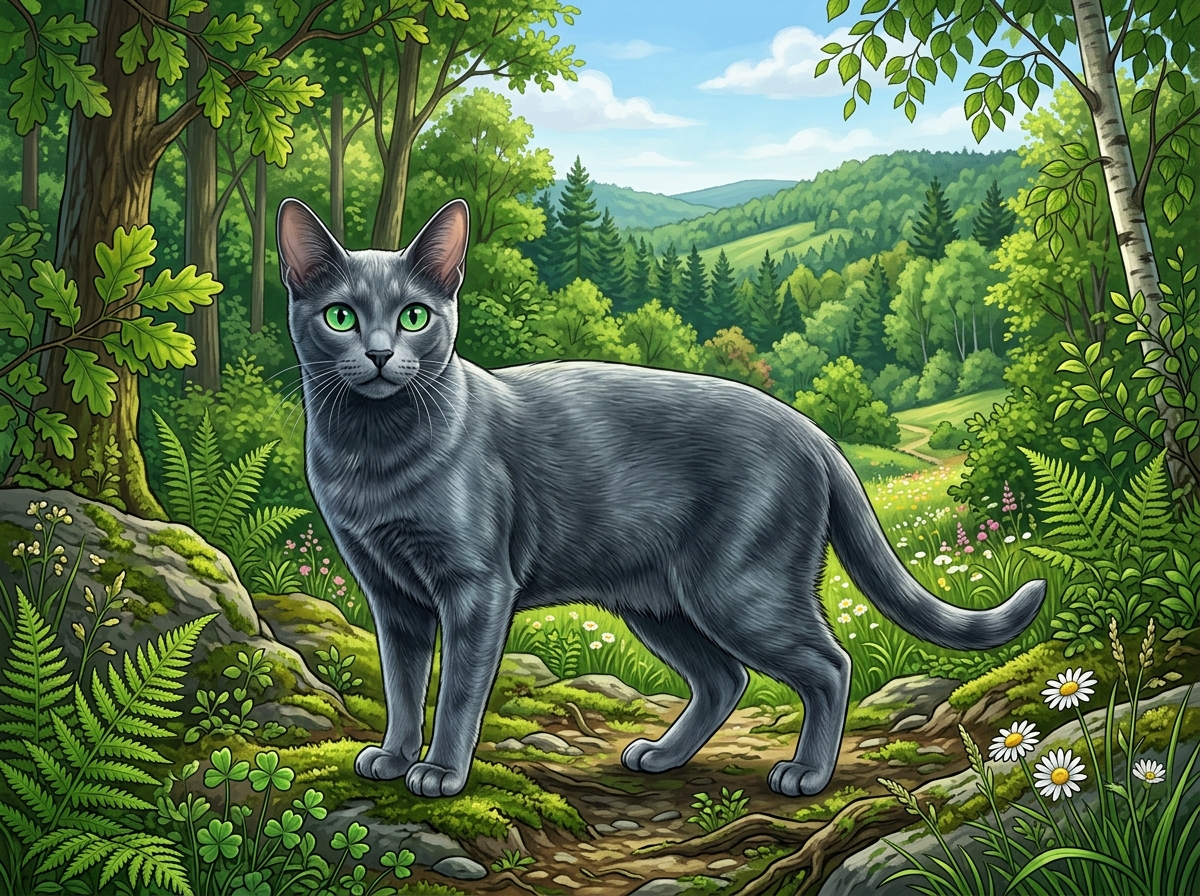
Korat
🐈 CatsFelis catus
Korat
An ancient Thai breed with a silver-tipped blue coat, heart-shaped face, and luminous green eyes. One of the oldest stable breeds, documented in the 14th-century 'Cat-Book Poems.' Playful but more reserved than the Siamese. Considered a good-luck cat.
Korean Jindo Dog
🐕 DogsCanis lupus familiaris
Korean Jindo Dog
Medium-sized Spitz-type dog from Korea with thick coat and curled tail. Loyal, intelligent, and courageous hunter.
Kraienköppe
🐔 ChickensGallus gallus domesticus
Kraienköppe (Kraienköpfe)
A Dutch-German fighting breed developed in the border region between the Netherlands (Twente) and Germany (Westphalia), the Kraienköppe — literally 'Crow's Heads' in the local dialect — is one of the most respected European gamefowl breeds. It is a large, upright bird with a walnut comb, hard feathering, and a fierce, intelligent expression. The breed was developed from Old English Game and local Dutch-German farm chickens in the 19th century, producing a gamefowl that combined the courage and musculature of the English fighter with the hardiness and foraging ability of continental farm stock. Although cockfighting is now banned, Kraienköppe are kept as exhibition and conservation breeds by dedicated fanciers on both sides of the Dutch-German border. The breed is recognised by the EE Europastandard and BDRG, and remains highly prized in poultry show circles.
Kromfohrländer
🐕 DogsCanis lupus familiaris
Kromfohrländer
Small German companion dog from the Siegerland region. Friendly and intelligent, they are playful and loyal family companions.
Krüper
🐔 ChickensGallus gallus domesticus
Krüper
A rare German dual-purpose breed with an unusual genetic trait: the Krüper gene causes severely shortened legs, producing a bird that stands low to the ground with a horizontal carriage — the Krüper is the German equivalent of the Scots Dumpy or the Japanese 'creeper' breeds. Originating in Westphalia and the Rhineland region of western Germany, Krüpers were developed in the 19th century as practical farm chickens. Their low-to-ground posture made them easier to keep in small enclosures and surprisingly good foragers in low vegetation. The Krüper gene is a dominant lethal — embryos with two copies of the gene die in the shell, so breeding requires careful planning. Now extremely rare, the Krüper is maintained by a small group of German breeders and is recognised by the EE Europastandard and BDRG.
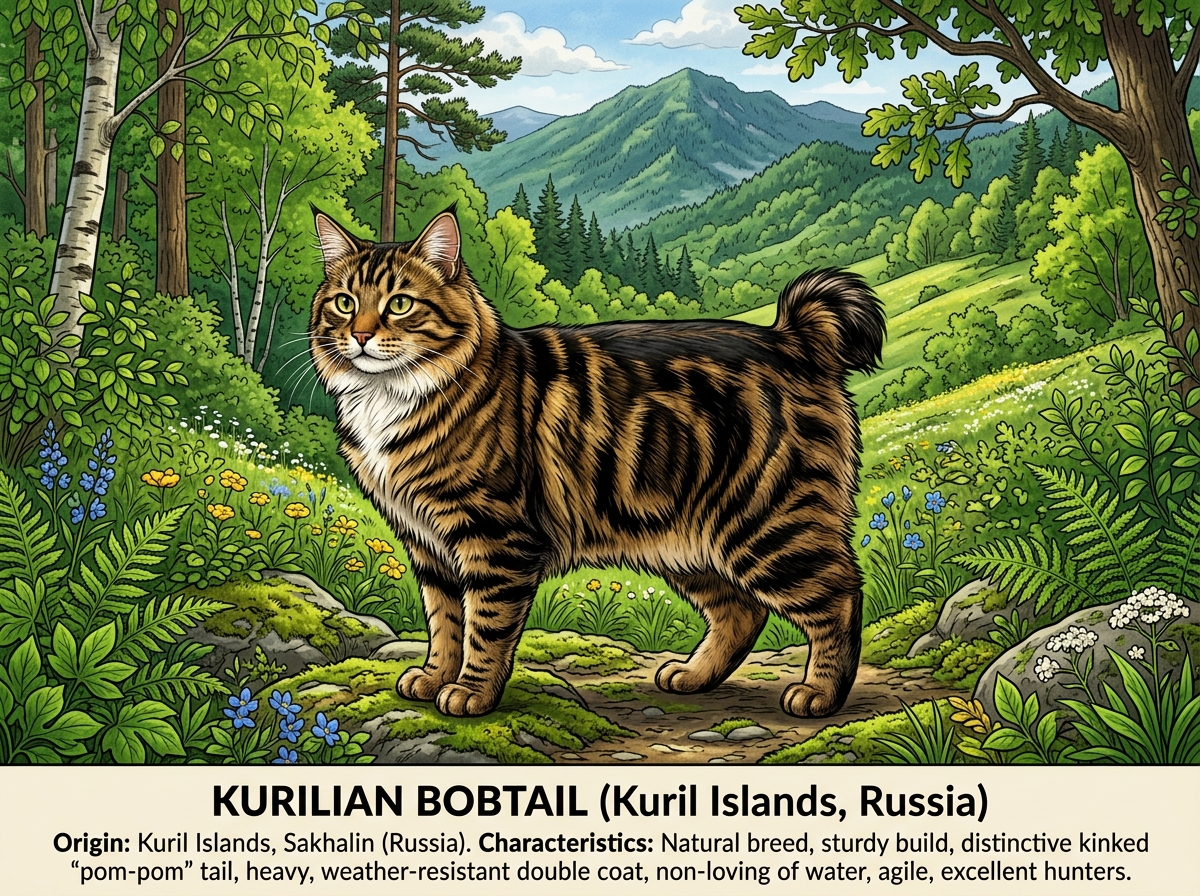
Kurilian Bobtail
🐈 CatsFelis catus
Kurilian Bobtail
A naturally occurring breed from the Kuril Islands between Russia and Japan, with a distinctive pom-pom bobbed tail. Strong, muscular, with a wild appearance. Known for exceptional fishing ability — they're excellent swimmers and hunters.
La Flèche
🐔 ChickensGallus gallus domesticus
La Flèche
An ancient and imposing French meat breed from the town of La Flèche in the Sarthe department, once considered the finest table fowl in France and supplied to royal banquets. La Flèche is distinguished by its unusual V-shaped horn comb — two straight points rising like devil's horns — and its entirely jet-black plumage with a strong beetle-green iridescence. A large, active bird, it was the backbone of the famous Le Mans capons (castrated males raised for the French luxury table).
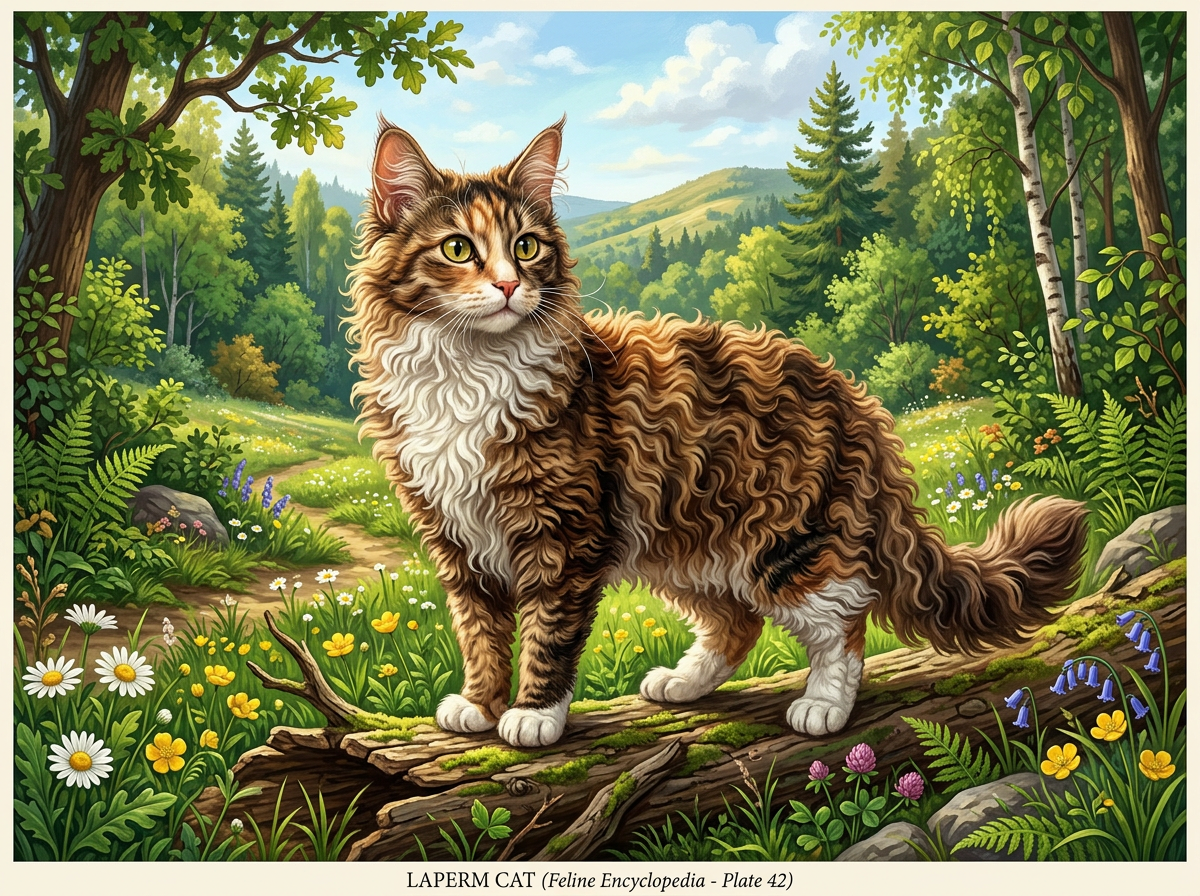
LaPerm
🐈 CatsFelis catus
LaPerm
A curly-coated breed distinguished by its soft, springy, rippled coat that forms loose ringlets and waves. Longhair and shorthair varieties. Affectionate, gentle, and playful. Some kittens are born bald and grow curls later.
Labrador Retriever
🐕 DogsCanis lupus familiaris
Labrador Retriever
America's most popular dog breed. Outgoing, high-spirited, and friendly with excellent family companion qualities.
Lagotto Romagnolo
🐕 DogsCanis lupus familiaris
Lagotto Romagnolo
Medium-sized water dog with thick, curly woolly coat. The only dog breed specialized for truffle hunting. Affectionate and intelligent.
Lakeland Terrier
🐕 DogsCanis lupus familiaris
Lakeland Terrier
Small to medium terrier with wiry coat. Alert, confident, and friendly companion.
Lakenvelder
🐔 ChickensGallus gallus domesticus
Lakenvelder
A sharply two-toned breed from the border region between the Netherlands and Germany, with pure white body plumage contrasting with jet-black head, neck hackle, and tail — described as 'shadow on a sheet' (shadow on a linen cloth). Lakenvelders are active, light-bodied layers of medium white eggs and impressive free-range foragers. The breed nearly disappeared in the 20th century and remains rare today, maintained by dedicated breeders across continental Europe.
Lamona
🐔 ChickensGallus gallus domesticus
Lamona
A rare American dual-purpose breed developed by Harry S. Lamon at the USDA experimental station in Beltsville, Maryland, between 1912 and 1933. The Lamona was created by crossing Silver-Grey Dorkings, White Plymouth Rocks, and Single-Comb White Leghorns — an unusual combination that produced a bird with white plumage, yellow skin, a single comb, and red earlobes that nevertheless lays white-shelled eggs. This is significant because red earlobes typically indicate brown eggs — the Lamona breaks the earlobe-egg colour rule. The breed was designed to be the ideal American farm chicken: excellent egg production, good meat quality, calm temperament, and reliable autosexing at hatch. The Lamona was recognised by the APA in 1933 and briefly seemed poised to become America's dominant farm breed, but was overtaken by industrial hybrids and is now critically endangered. The EE does not yet formally recognise the Lamona.
Lancashire Heeler
🐕 DogsCanis lupus familiaris
Lancashire Heeler
Small herding dog with short legs and a sturdy build. Intelligent, alert, and affectionate companion.
Landseer
🐕 DogsCanis lupus familiaris
Landseer
Large, black and white working dog closely related to the Newfoundland. Known for water rescue and gentle temperament.
Langshan
🐔 ChickensGallus gallus domesticus
Croad Langshan
A tall, stately Chinese breed imported to Britain by Major A.C. Croad in 1872 from the Langshan district of Jiangsu province. Croad Langshans are distinguished by their graceful U-shaped body silhouette (when viewed from the side), black plumage with beetle-green iridescence, and lightly feathered feet. They are dual-purpose birds laying dark plum-brown eggs and growing to a decent table weight. Langshans contributed dark egg colour to the Barnevelder and Marans through crossbreeding.
Lapponian Herder
🐕 DogsCanis lupus familiaris
Lapponian Herder
Medium-sized Finnish spitz-type dog from Lapland with a thick double coat. Intelligent and friendly, they are loyal reindeer herders adapted to Arctic conditions.
Large Munsterlander
🐕 DogsCanis lupus familiaris
Large Munsterlander
Large versatile hunting dog with long black and white coat. Intelligent, gentle, and excellent pointing and retrieving dog.
Le Merlerault
🐔 ChickensGallus gallus domesticus
Le Merlerault
An exceptionally rare French dual-purpose breed from the town of Le Merlerault in the Orne department of Normandy. Developed in the 19th century, Le Merlerault is a large, upright white bird with a single comb, clean legs, and white skin — the classic profile of a Norman farm butcher's chicken. The breed was prized in Normandy's horse-breeding country, where stud farms kept large poultry flocks and Le Merlerault was the chicken of choice. Hens lay white eggs and are good sitters, and the breed produces a notably fine-textured meat. The collapse of traditional farming in rural Normandy after 1950 nearly drove the breed extinct, and by the 1980s only a handful of birds survived. Recovery efforts by SCAF have slowly rebuilt the population, but Le Merlerault remains one of France's rarest chicken breeds. Recognised by the EE Europastandard.
Leghorn
🐔 ChickensGallus gallus domesticus
Leghorn
The world's premier white-egg layer, originating from the port of Livorno in Tuscany. Leghorns are lean, alert, and relentlessly productive — a single hen regularly lays 280–320 large white eggs per year. Their lightweight frame means almost all feed energy goes into egg production rather than body mass, making them the foundation of the commercial egg industry worldwide. Active and independent, they thrive in free-range systems.
Leonberger
🐕 DogsCanis lupus familiaris
Leonberger
Large, majestic working dog with lion-like mane. Gentle, loyal, and excellent family companion despite imposing size.
Lhasa Apso
🐕 DogsCanis lupus familiaris
Lhasa Apso
Small, long-haired toy breed from Tibet. Alert, confident, and independent with a keen watchdog instinct.
Lincolnshire Buff
🐔 ChickensGallus gallus domesticus
Lincolnshire Buff
A large, buff-coloured table breed that was once widely kept in Lincolnshire and surrounding English counties as a premium meat bird for the London market, the Lincolnshire Buff was effectively extinct by the mid-20th century. The original breed disappeared when commercial poultry farming took over, but a reconstruction programme beginning in the 1980s and 1990s used surviving Lincolnshire Buff-type birds crossed with Buff Orpington, Buff Sussex, and Buff Cochin to rebuild a breed that resembles historical descriptions. The reconstructed Lincolnshire Buff is a slow-growing, large-framed, calm bird with good foraging ability.
Lovebird
🐦 BirdsAgapornis
Lovebird
Small, colorful parrot named for their strong pair bonds. Bonded pairs spend hours grooming and sitting close.
Luttehøns
🐔 ChickensGallus gallus domesticus
Luttehøns
An extremely rare Danish landrace chicken, the Luttehøns is one of Denmark's smallest native chicken breeds — the name roughly translates to 'little hen' in Danish dialect. Originating from small farms on the island of Lolland and the surrounding southern Danish archipelago, Luttehøns are tiny bantam-like birds though technically classified as small large fowl. They have a single comb, clean legs, and a compact, rounded body. Plumage is variable — white, brown, black, speckled, or mixed — reflecting their landrace origin where uniform colour was never a priority. Luttehøns were the traditional chicken of Danish smallholders who valued a bird that could forage for itself on minimal feed and still produce a respectable number of small tinted eggs. The breed nearly disappeared with the industrialisation of Danish agriculture after 1950 but has been rescued by Danish conservation breeders. Registered in DAD-IS and maintained by DFfR (Dansk Fjerkræ Forum) as a national heritage breed.
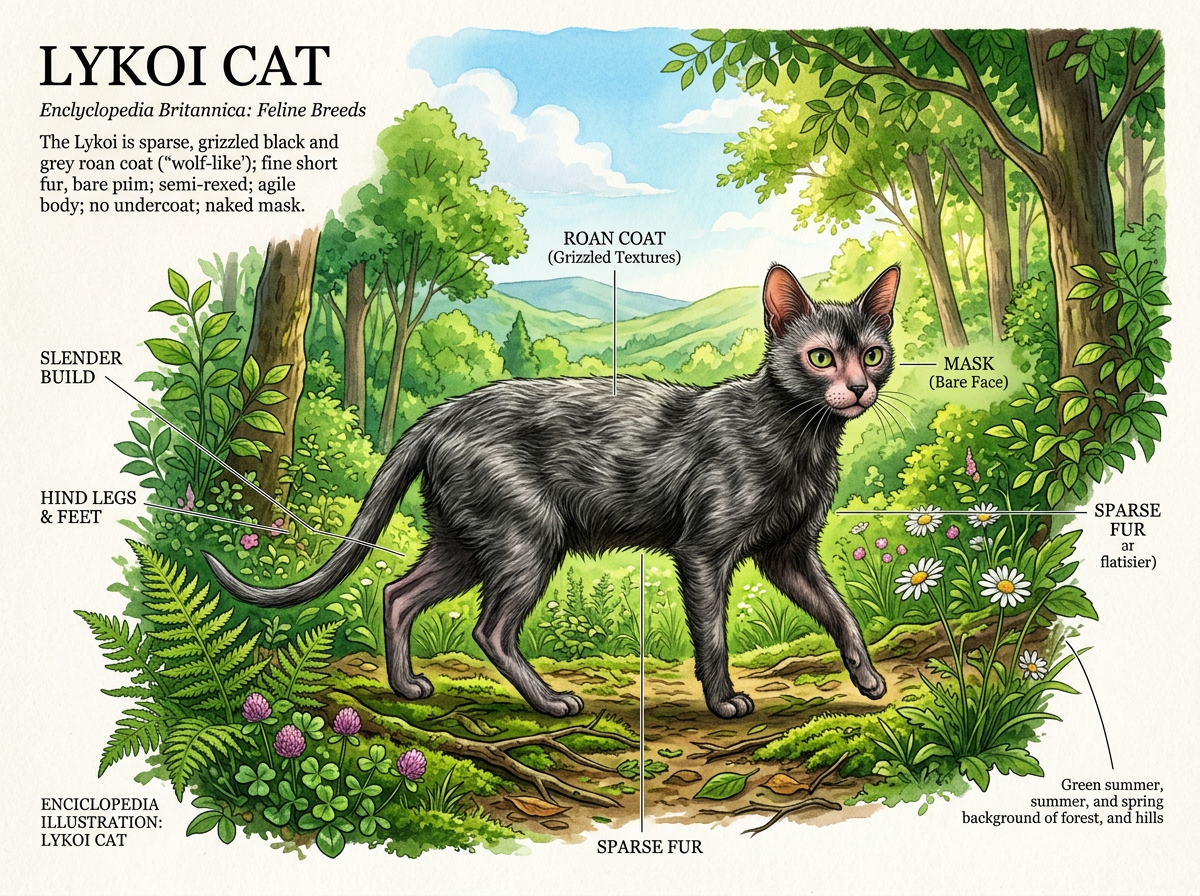
Lykoi (Werewolf Cat)
🐈 CatsFelis catus
Lykoi
A partially hairless breed with a unique werewolf-like appearance caused by a natural mutation. Sparse coat with a roan pattern, hairless patches around eyes, nose, and chin. Despite the scary name, they're affectionate, loyal, and playful.
Löwchen (Little Lion Dog)
🐕 DogsCanis lupus familiaris
Löwchen (Little Lion Dog)
Small companion dog with a distinctive lion-like clip. Friendly and intelligent, they are playful and affectionate lap dogs with a cheerful disposition.
Lütticher Kämpfer
🐔 ChickensGallus gallus domesticus
Lütticher Kämpfer (Combattant de Liège)
The most famous and formidable of the Belgian fighting breeds, developed in and around the city of Liège in Wallonia. The Lütticher Kämpfer (Combattant de Liège in French) is an enormous gamefowl, among the tallest and heaviest fighting chickens in the world, with a triple comb, exceptionally hard feathering, and a long, powerful neck and legs. It was bred for the Walloon cockpit over centuries, and Liège was the epicentre of Belgian cockfighting culture. The breed's size and fearsome reputation made it one of the most valuable fighting cocks in Europe during the 19th century. Although cockfighting in Belgium was banned in 1929 (earlier than in most European countries), the breed was preserved by fanciers who valued its majestic appearance and historical importance. Now kept purely as an exhibition and conservation breed, it is recognised by the EE Europastandard and BDRG.

Maine Coon
🐈 CatsFelis catus
Maine Coon
One of the largest domestic cat breeds — a natural breed from Maine, USA with a muscular build, tufted ears, bushy tail, and water-resistant shaggy coat. Despite their size, they're famously gentle and sociable. Known as 'gentle giants.'
Majorca Mastiff
🐕 DogsCanis lupus familiaris
Majorca Mastiff
Large molosser breed from Majorca with a muscular build. Courageous and loyal, they are calm family companions with strong protective instincts.
Majorca Shepherd Dog
🐕 DogsCanis lupus familiaris
Majorca Shepherd Dog
Large shepherd dog from Majorca with a powerful build. Intelligent, loyal, and protective, they are excellent working dogs and devoted family guardians.
Malay
🐔 ChickensGallus gallus domesticus
Malay
One of the tallest and most ancient chicken breeds in the world, brought to Europe from Southeast Asia in the 1830s. Malays stand nearly a metre tall with an extremely upright carriage, powerful muscular build, hard tight feathering, and a walnut comb flat to the skull. Historically used across Asia in cockfighting, Malays contributed size and athletic build to many Western breeds including the Cornish (Indian Game) and Brahma. A proud, hard-feathered exhibition breed today with a notably stern expression.
Maltese
🐕 DogsCanis lupus familiaris
Maltese
Small toy breed with long, silky white coat. Gentle, playful, and affectionate companion with a charming personality.
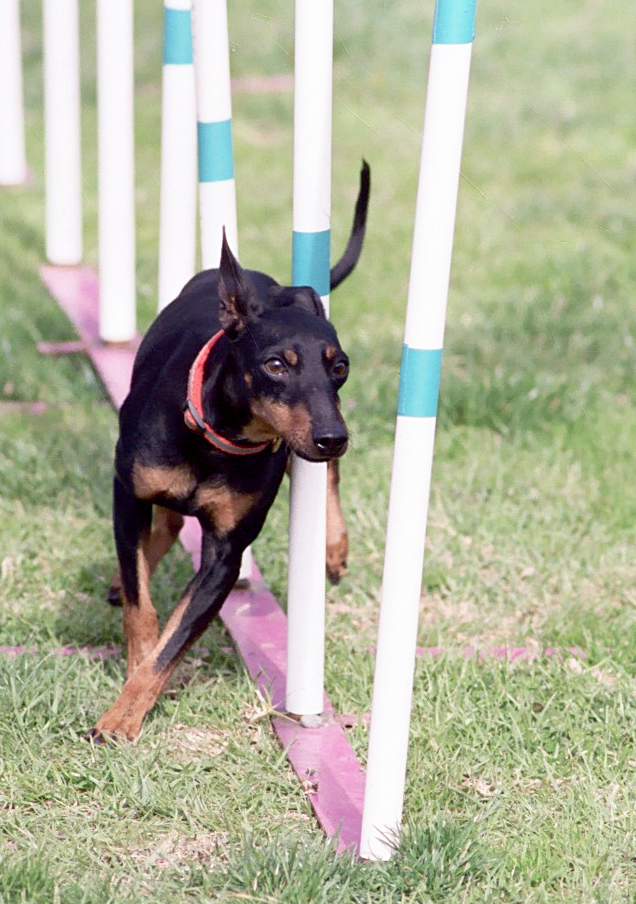
Manchester Terrier
🐕 DogsCanis lupus familiaris
Manchester Terrier
Small, sleek terrier with glossy black and tan coat. Alert, loyal, and keen hunter.
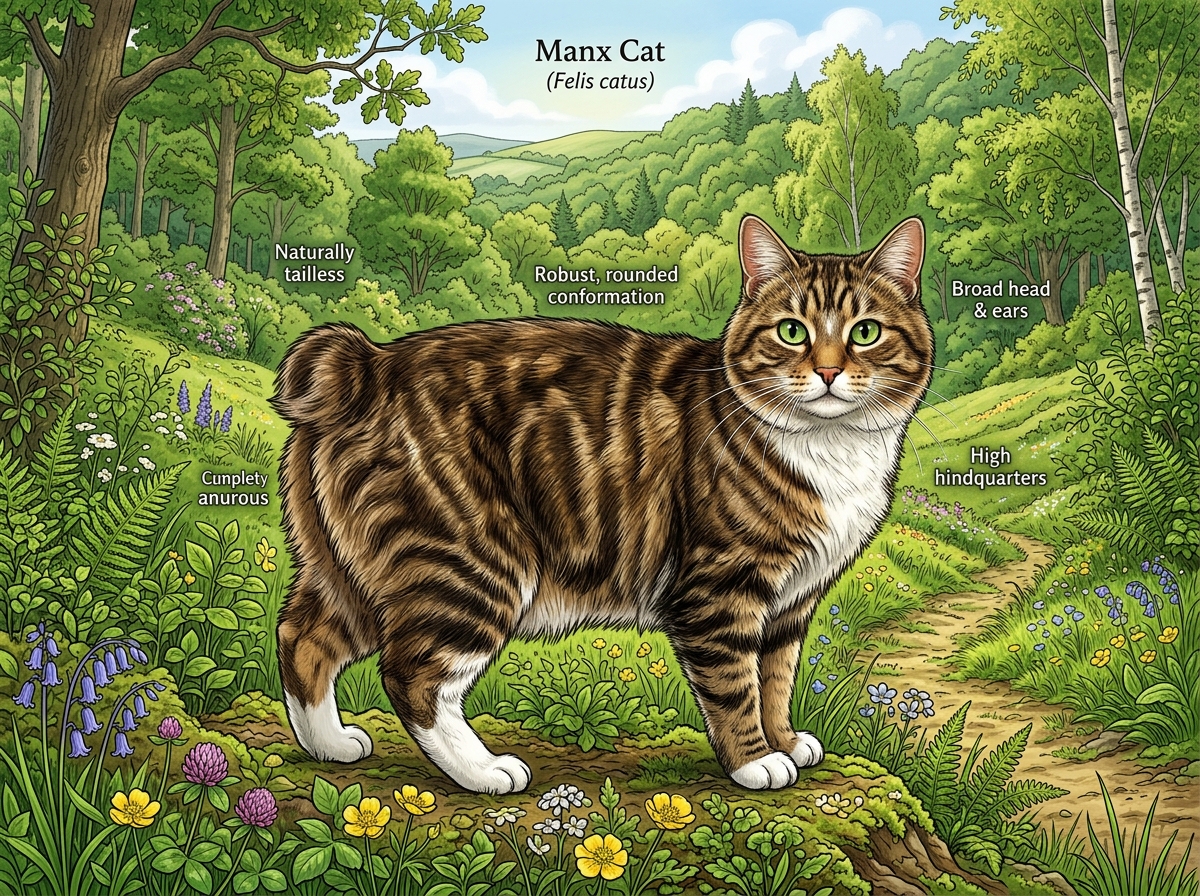
Manx
🐈 CatsFelis catus
Manx
Famous for being tailless or having only a stub, the Manx originated on the Isle of Man. Rounded body, deep flank, and hind legs longer than front — giving a rabbit-like hop. Extremely loyal and playful with a quiet voice.
Marans
🐔 ChickensGallus gallus domesticus
Marans
A French dual-purpose breed from the port town of Marans in the Charente-Maritime, celebrated for producing the darkest eggs of any breed — deep chocolate-brown shells so dark they look almost mahogany. Marans were developed through crosses of local marsh hens with fighting cocks brought by English sailors and later with Langshans. The French standard requires feathered legs in most colour varieties. Marans eggs are coveted by chefs and gourmets across Europe.
Maremma Sheepdog
🐕 DogsCanis lupus familiaris
Maremma Sheepdog
Large, powerful livestock guardian dog with thick white coat. Independent, courageous, and devoted to its flock.
Marsh Daisy
🐔 ChickensGallus gallus domesticus
Marsh Daisy
A rare British breed with a complex ancestry, the Marsh Daisy was developed in Lancashire in the late 19th century by John Wright using Old English Game, Malay, White Leghorn, Sicilian Buttercup, and Cinnamon Malay — one of the most diverse foundation crosses of any British breed. The resulting bird is a medium-sized, willow-legged, rose-combed fowl that comes in several colours and is adapted to damp, marshy ground — reflected in its name. Marsh Daisies are alert foragers, hardy, and productive on free range, but critically rare today with only a few hundred birds in existence.
Mastiff
🐕 DogsCanis lupus familiaris
Mastiff
Giant, powerful dog with massive head and muscular build. Despite size, gentle, loyal, and protective with family.
Mechelen
🐔 ChickensGallus gallus domesticus
Mechelen (Malines)
Belgium's premier table breed, originating from the city of Mechelen (Malines in French) in Antwerp province. The Mechelen is a large, heavily built cuckoo-patterned bird — each black and white barred feather giving the breed a steely grey appearance — developed for its exceptional meat quality and impressive market weight. Méchelse Koekoek (Mechelen Cuckoo) was the centrepiece of the Belgian Christmas poultry market and was exported across Europe as a luxury table bird.
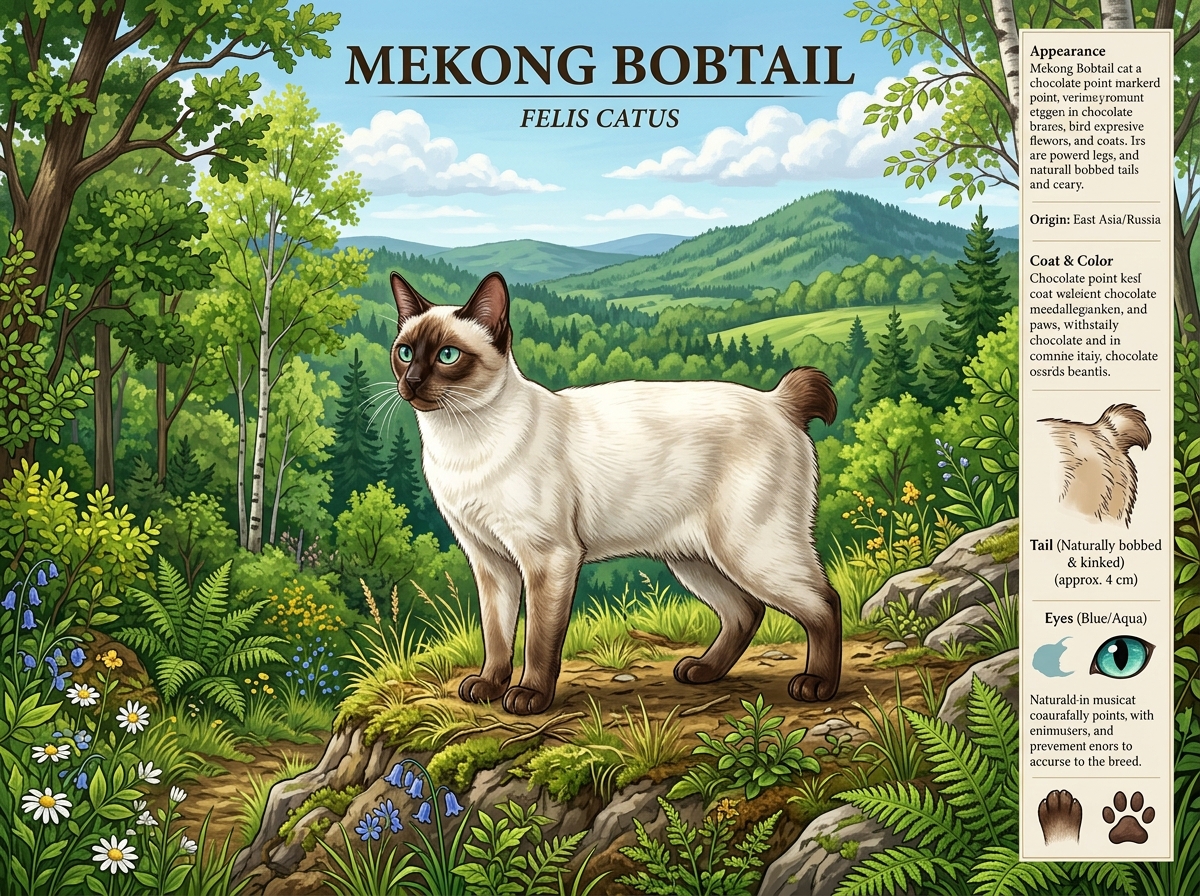
Mekong Bobtail
🐈 CatsFelis catus
Mekong Bobtail
A naturally occurring colorpoint breed from Southeast Asia with a short, kinked bobtail. Descended from royal Siamese cats given to Russian nobility. Medium-sized, elegant, with vivid blue eyes and a unique multi-kinked tail.
Miniature American Shepherd
🐕 DogsCanis lupus familiaris
Miniature American Shepherd
Small herding dog resembling a miniature Australian Shepherd. Intelligent, energetic, and eager to please.
Miniature Bull Terrier
🐕 DogsCanis lupus familiaris
Miniature Bull Terrier
Small, muscular terrier resembling a miniature Bull Terrier. Playful, obedient, and devoted companion.
Miniature Dachshund
🐕 DogsCanis lupus familiaris
Miniature Dachshund
Smaller version of the standard Dachshund with the same long body and short legs. Bred to hunt rabbits and smaller burrow-dwelling animals.
Miniature Pinscher
🐕 DogsCanis lupus familiaris
Miniature Pinscher
Small but spirited working dog with confident attitude. Alert, intelligent, and fearless despite tiny size.
Miniature Poodle
🐕 DogsCanis lupus familiaris
Miniature Poodle
Smaller version of the Standard Poodle with the same intelligence and elegant appearance. Lively, trainable, and affectionate.
Miniature Schnauzer
🐕 DogsCanis lupus familiaris
Miniature Schnauzer
Small working dog with distinctive beard and eyebrows. Alert, intelligent, and spirited companion.
Minorca
🐔 ChickensGallus gallus domesticus
Minorca
The largest of the Mediterranean breeds and a celebrated exhibition bird, known for its dramatic oversized single comb and enormous white earlobes — a striking badge of Mediterranean ancestry. Minorcas are superb white-egg layers whose large, chalk-white eggs were once premium market sellers in Britain. Heat-tolerant and active, they were once one of Britain's most popular farm breeds before Leghorns eclipsed them commercially.
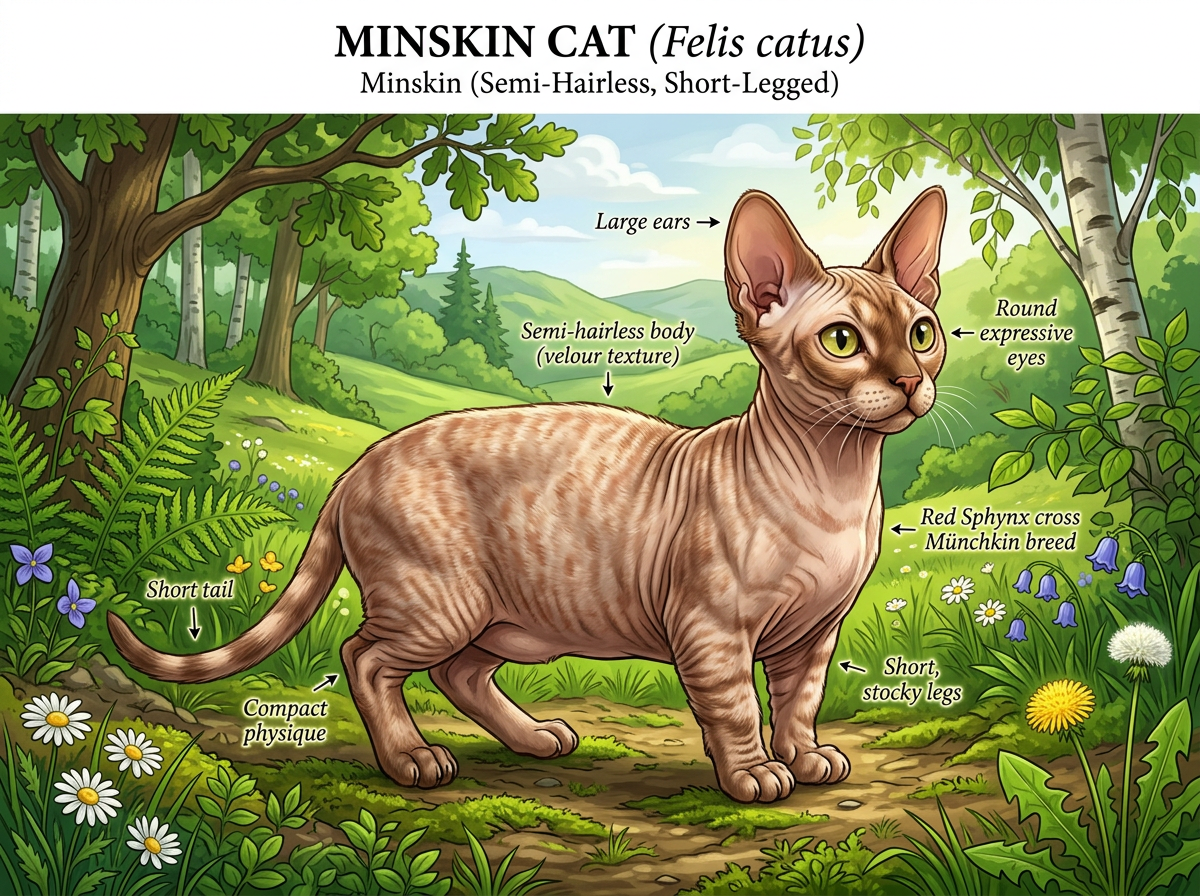
Minskin
🐈 CatsFelis catus
Minskin
A dwarf breed combining short legs (Munchkin), hairlessness points (Sphynx), with fur on extremities (nose, ears, legs, tail). Small body with big personality. Friendly, outgoing, and loves to cuddle.
Modern Game
🐔 ChickensGallus gallus domesticus
Modern Game
A tall, slender exhibition breed developed in Britain after cock-fighting was banned in 1849, by crossing Old English Game birds with Malay to create an athletic, sculpted show bird rather than a fighting or utility animal. Modern Games are bred purely for their extreme upright posture, tight feathering, very long legs, and small head — a silhouette unlike any other chicken breed. They lay very few eggs and carry almost no meat, existing entirely as living art in the show world.
Montenegrin Mountain Hound
🐕 DogsCanis lupus familiaris
Montenegrin Mountain Hound
Medium-sized Montenegrin scent hound built for mountain terrain. Intelligent and persistent, they are courageous hunters in alpine conditions.
Mudi
🐕 DogsCanis lupus familiaris
Mudi
Medium-sized Hungarian herding dog with a wavy or curly coat. Intelligent and versatile, they are energetic working dogs with a courageous spirit.
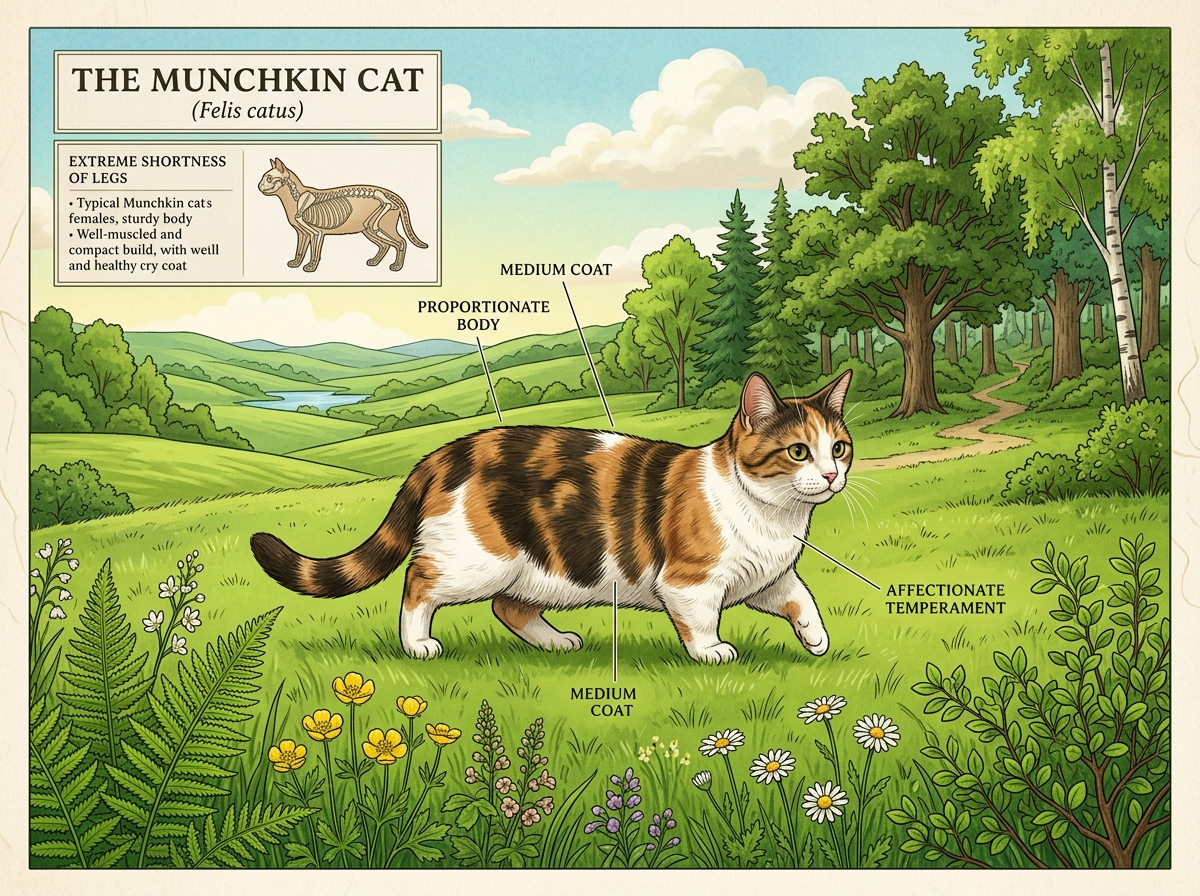
Munchkin
🐈 CatsFelis catus
Munchkin
The founding dwarf breed — naturally occurring short legs caused by a dominant gene (like Dachshunds). Normal-sized body on short legs. Confident, outgoing, and surprisingly fast despite low stature. Controversial due to health concerns.
Naine belge
🐔 ChickensGallus gallus domesticus
Naine belge (Belgische kriel)
A Belgian true bantam breed representing a specific type of clean-legged, single-combed Belgian bantam standardised separately from the more famous d'Anvers and d'Uccle breeds. The Naine belge (literally 'Belgian Dwarf') is a small, neat bantam with a single comb, clean legs, and a rounded, compact body. Its beard and muffs are well-developed, and it comes in multiple colour varieties including black, white, cuckoo, and blue. The breed was developed alongside the other great Belgian bantams in the late 19th and early 20th centuries, as Belgian fanciers systematically created and standardised dozens of distinct bantam breeds — a unique flowering of poultry diversity. The Naine belge is less well-known internationally than the d'Anvers or d'Uccle but is an important part of the complete Belgian bantam family. Recognised by the EE Europastandard.
Naine de Waes
🐔 ChickensGallus gallus domesticus
Naine de Waes (Waasse kriel)
A Belgian true bantam from the Waasland (Pays de Waes) region of East Flanders, the fertile polder area between Antwerp and Ghent. The Naine de Waes is a small, clean-legged true bantam with a single comb, rounded body, and full beard and muffs — the classic Belgian bantam silhouette. Its plumage typically appears in cuckoo (barred) and other colour varieties. The breed was developed by Flemish poultry fanciers in the Waasland area in the early 20th century, as the Belgian bantam craze spread from Brussels out into the provinces. Waasland was and remains an intensely agricultural region, producing vegetables, potatoes, and livestock on some of Belgium's richest farmland. The Naine de Waes reflects this deep agricultural heritage — a tiny, ornamental bird bred for beauty by farmers whose working animals were horses and cows, but whose pride was in their exhibition poultry. Recognised by the EE Europastandard.
Naine du Tournaisis
🐔 ChickensGallus gallus domesticus
Naine du Tournaisis (Doornikse kriel)
A Belgian true bantam from the Tournaisis region around the city of Tournai (Doornik) in Hainaut province, Wallonia — one of Belgium's oldest cities with roots going back to Roman times. The Naine du Tournaisis is a small, clean-legged true bantam with a single comb, rounded body, and the characteristic Belgian bantam beard and muffs. Its plumage varieties include cuckoo, black, white, and blue, and the breed has a particularly neat, refined appearance that reflects its origin in a region known for craftsmanship and art. The Tournaisis area has a distinct cultural identity within Wallonia, and the Naine du Tournaisis was developed by local poultry fanciers who wanted their own recognised breed to distinguish their fanciers' club from those in neighbouring regions. Like all Belgian true bantams, it is purely ornamental and was created for the show bench. Recognised by the EE Europastandard.
Nankin Bantam
🐔 ChickensGallus gallus domesticus
Nankin Bantam
One of the oldest true bantam breeds in the Western world, the Nankin Bantam is thought to have been brought to Europe from Southeast Asia — possibly via Nanking (Nanjing), China, hence the name — by trade ships of the East India Companies in the 17th century. It is among the few true bantam breeds with no large-fowl counterpart, making it a genuinely miniature original breed rather than a miniaturised version of an existing large breed. The Nankin is buff-orange in colour, carries a single or rose comb depending on the variety, and is one of the most reliably broody of all bantam breeds — historically used by poultry keepers as surrogate mothers for other species' eggs and chicks. Critically endangered.
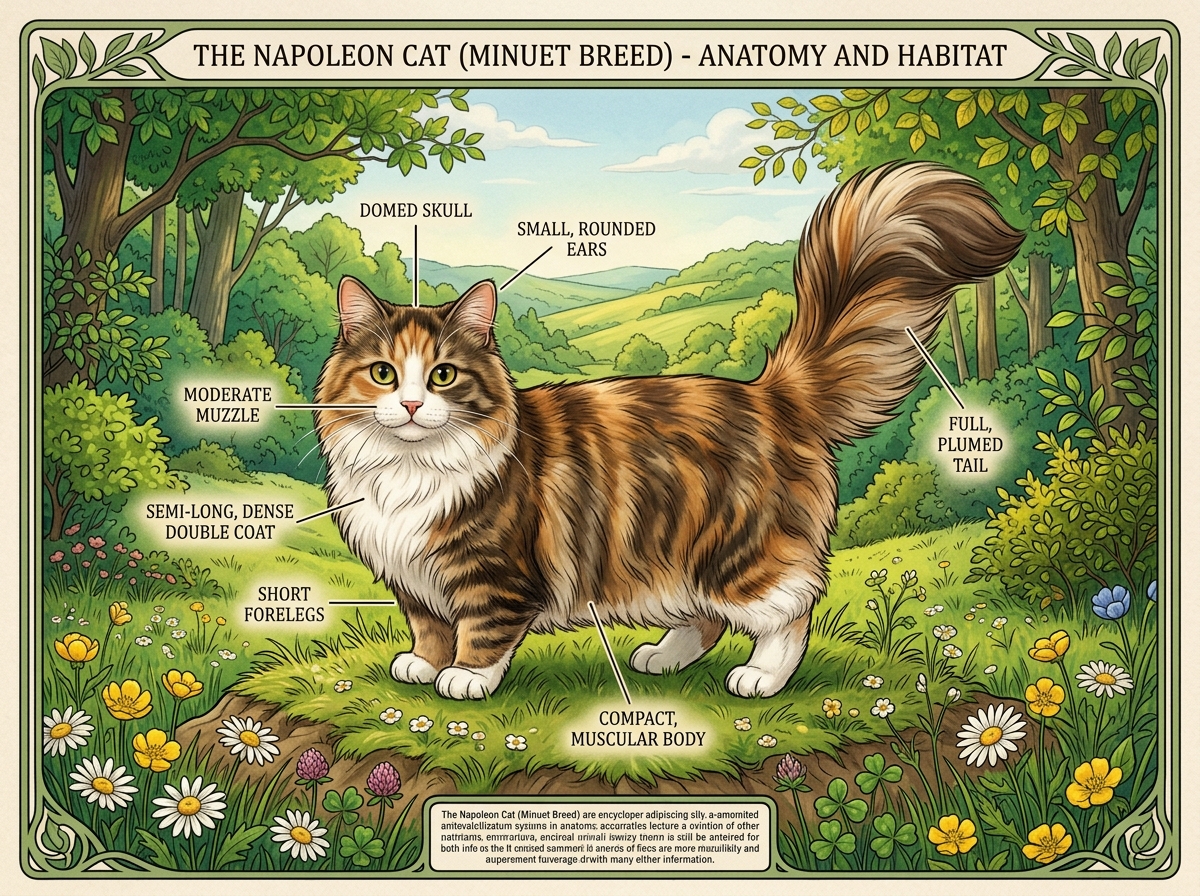
Napoleon (Minuet)
🐈 CatsFelis catus
Napoleon
A dwarf breed created by crossing Munchkins with Persians or Exotics. Round face, cobby body, short legs, and a plush coat. Sweet-natured and affectionate. Known as the Minuet in TICA for its graceful, doll-like appearance.
Neapolitan Mastiff
🐕 DogsCanis lupus familiaris
Neapolitan Mastiff
Giant, massive dog with loose, wrinkled skin and imposing presence. Protective, loyal, and steady guardian.
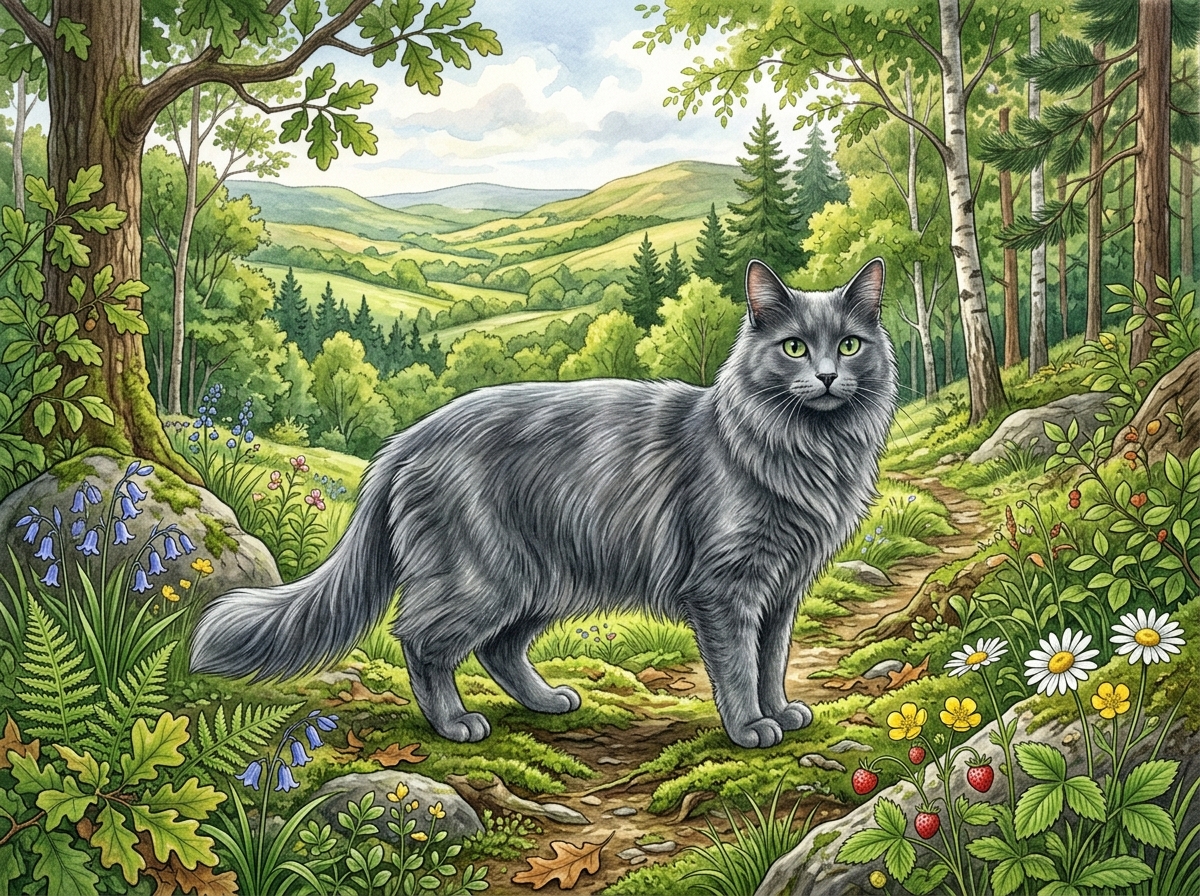
Nebelung
🐈 CatsFelis catus
Nebelung
A longhaired Russian Blue — medium blue-grey coat with silver tipping, vivid green eyes, and a graceful build. Their name means 'creature of the mist' in German. Shy with strangers, deeply devoted to family. Rare breed.
Nenets Herding Laika
🐕 DogsCanis lupus familiaris
Nenets Herding Laika
Medium-sized Russian spitz-type dog from the Siberian Arctic. Intelligent and friendly, they are versatile reindeer herders and sled dogs.
New Hampshire
🐔 ChickensGallus gallus domesticus
New Hampshire
Developed in the state of New Hampshire from selected Rhode Island Red stock in the early 20th century, with breeders emphasising faster feathering, earlier maturity, and heavier body weight. New Hampshires are a warm chestnut-red — slightly lighter than Rhode Island Reds — and are productive layers of brown eggs that also reach table weight faster than most heritage breeds. Their rapid growth made them an important component of early broiler (meat chicken) industry development in the USA.
Newfoundland
🐕 DogsCanis lupus familiaris
Newfoundland
Giant, powerful working dog with water-resistant coat. Known for lifesaving water rescue abilities and gentle temperament.
Niederrheiner
🐔 ChickensGallus gallus domesticus
Niederrheiner
A robust German dual-purpose breed developed in the Lower Rhine region (Niederrhein) of North Rhine-Westphalia in the early 20th century. Created to provide productive, self-sufficient farmyard chickens suited to the cold, damp climate of the Rhine valley, Niederrheiners combine good egg production with a decent table weight. They are calm, hardy, and easy to manage, making them popular with smallholders and hobby farmers across Germany and the Netherlands.
Norbottenspets
🐕 DogsCanis lupus familiaris
Norbottenspets
Small Spitz-type dog from Sweden with thick coat and curled tail. Alert, intelligent, and excellent hunting dog.
Nordholländisches Huhn
🐔 ChickensGallus gallus domesticus
Noord-Hollands Hoen
A traditional Dutch egg-laying breed from the province of North Holland, specifically the Waterland and Zaanstreek regions north of Amsterdam. The Noord-Hollands Hoen (often called the North Holland Blue in English despite its official name) is actually most recognised in its cuckoo-barred blue-grey plumage, though it also appears in white and black. It is a medium-sized, active bird bred for reliable white-egg production in the early 20th century, developed by crossing local Dutch farm chickens with imported American breeds such as the Barred Plymouth Rock. The result was a hardy, productive layer well-suited to the damp, windy polder landscape. By the 1970s the breed was near extinction, but Dutch poultry conservationists rescued it. Now recognised by the EE Europastandard and kept by a growing number of Dutch and Belgian enthusiasts.
Norfolk Grey
🐔 ChickensGallus gallus domesticus
Norfolk Grey
A rare British dual-purpose conservation breed created in Norfolk during World War I by Fred Myhill of Norwich, by crossing Birchen English Game with Silver Duckwing Leghorns. Myhill aimed to produce a self-sufficient farmyard bird suited to East Anglian conditions — and the result was a handsome, upright bird with striking silver-birchen plumage. Cocks carry silver hackle, black body and breast with silver lacing; hens display silver-grey pencilled plumage. Once popular across East Anglian farmyards, they are now critically rare and maintained by Poultry Club of Great Britain (PCGB) conservation breeders.
Norfolk Terrier
🐕 DogsCanis lupus familiaris
Norfolk Terrier
Small, sturdy terrier with affectionate nature. Alert, loyal, and good-natured companion.
Norwegian Buhund
🐕 DogsCanis lupus familiaris
Norwegian Buhund
Medium-sized Spitz-type herding dog with thick coat and curled tail. Intelligent, energetic, and loyal.
Norwegian Elkhound
🐕 DogsCanis lupus familiaris
Norwegian Elkhound
Medium-sized Spitz-type dog with thick grey coat. Courageous, loyal, and excellent hunting and guard dog.
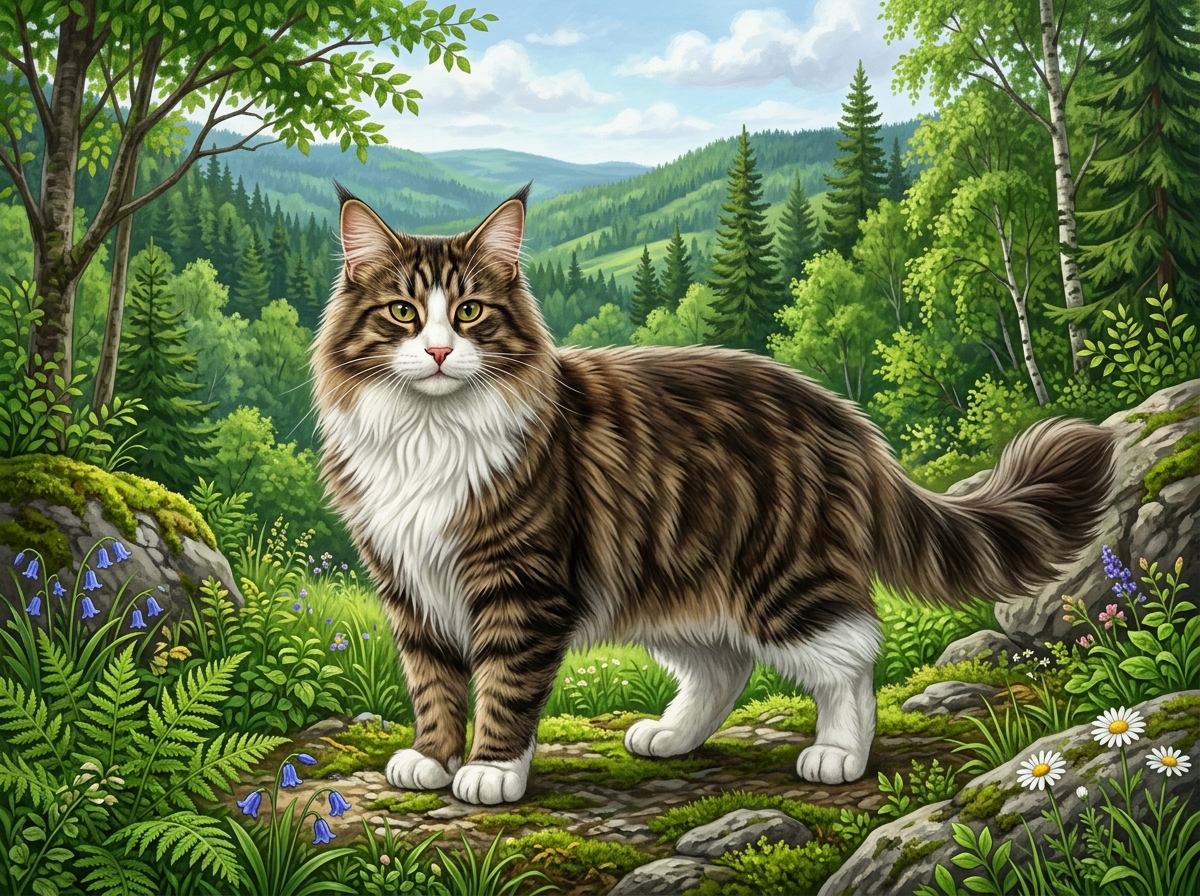
Norwegian Forest Cat
🐈 CatsFelis catus
Norwegian Forest Cat
A large, natural breed from Scandinavia with a thick, water-resistant double coat, tufted ears, and bushy tail — adaptations for harsh winters. Muscular, excellent climbers, and deeply bonded to their families. Featured in Norse mythology.
Norwegian Jaerhon
🐔 ChickensGallus gallus domesticus
Jærhøne (Norwegian Jaerhon)
Norway's only indigenous chicken breed and the most productive layer of any Scandinavian native breed, originating from the Jæren region of Rogaland county in south-west Norway — a flat, exposed coastal landscape swept by Atlantic winds. Developed from Norwegian farmyard landraces and standardised in the early 20th century, the Jærhøne is compact, active, and extremely cold-hardy. It is an auto-sexing breed — male and female chicks have distinctly different down colours at hatch. Recognised by the Norwegian Poultry Association and the Scandinavian Poultry Standard, the Jærhøne is a national agricultural heritage breed listed in Norway's gene bank.
Norwegian Lundehund
🐕 DogsCanis lupus familiaris
Norwegian Lundehund
Small Spitz-type dog with unique six-toed feet and extreme flexibility. Bred to hunt puffins on Norwegian cliffs.
Norwich Terrier
🐕 DogsCanis lupus familiaris
Norwich Terrier
Small, sturdy terrier with prick ears. Alert, loyal, and good-natured companion.
Nova Scotia Duck Tolling Retriever
🐕 DogsCanis lupus familiaris
Nova Scotia Duck Tolling Retriever
Medium-sized retriever known for unique 'tolling' technique to lure waterfowl. Intelligent, energetic, and playful.
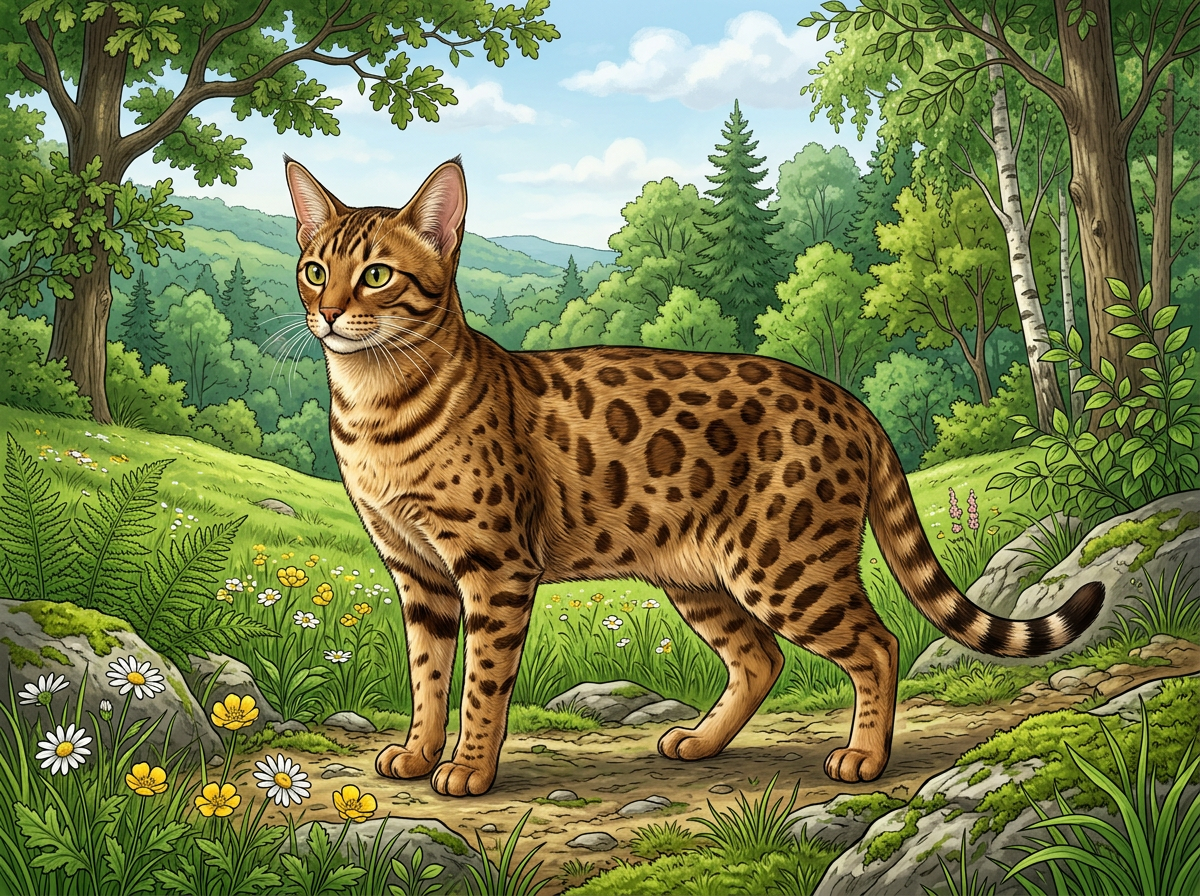
Ocicat
🐈 CatsFelis catus
Ocicat
A spotted breed that looks like a wild ocelot but has no wild DNA — entirely domestic. Muscular, athletic, with spots on a warm agouti background. Large, generous personality; intelligent, trainable, and loves water. Created accidentally from Siamese-Abyssinian crosses.
Ohiki
🐔 ChickensGallus gallus domesticus
Ohiki
A rare Japanese ornamental breed developed on Shikoku Island, specifically in Kochi Prefecture, as one of Japan's long-tailed fowl. The Ohiki is a small to medium-sized bird known for its extraordinarily long saddle feathers and tail coverts — though not as extreme as the Onagadori, the Ohiki's tail feathers can still reach impressive lengths and require careful management. The breed has a single comb, clean legs, and a proud, upright posture typical of Japanese ornamental breeds. The name 'Ohiki' translates roughly to 'tail dragger', describing the way the long feathers sweep the ground. Developed during the Edo period (1603–1868) by Japanese poultry fanciers who valued long-tailed breeds as living art forms, the Ohiki is now rare even in Japan and even rarer outside it. The EE has recognised the Ohiki as a standardised breed under the Europastandard, and a small number of European breeders maintain it as a highly specialised conservation project.
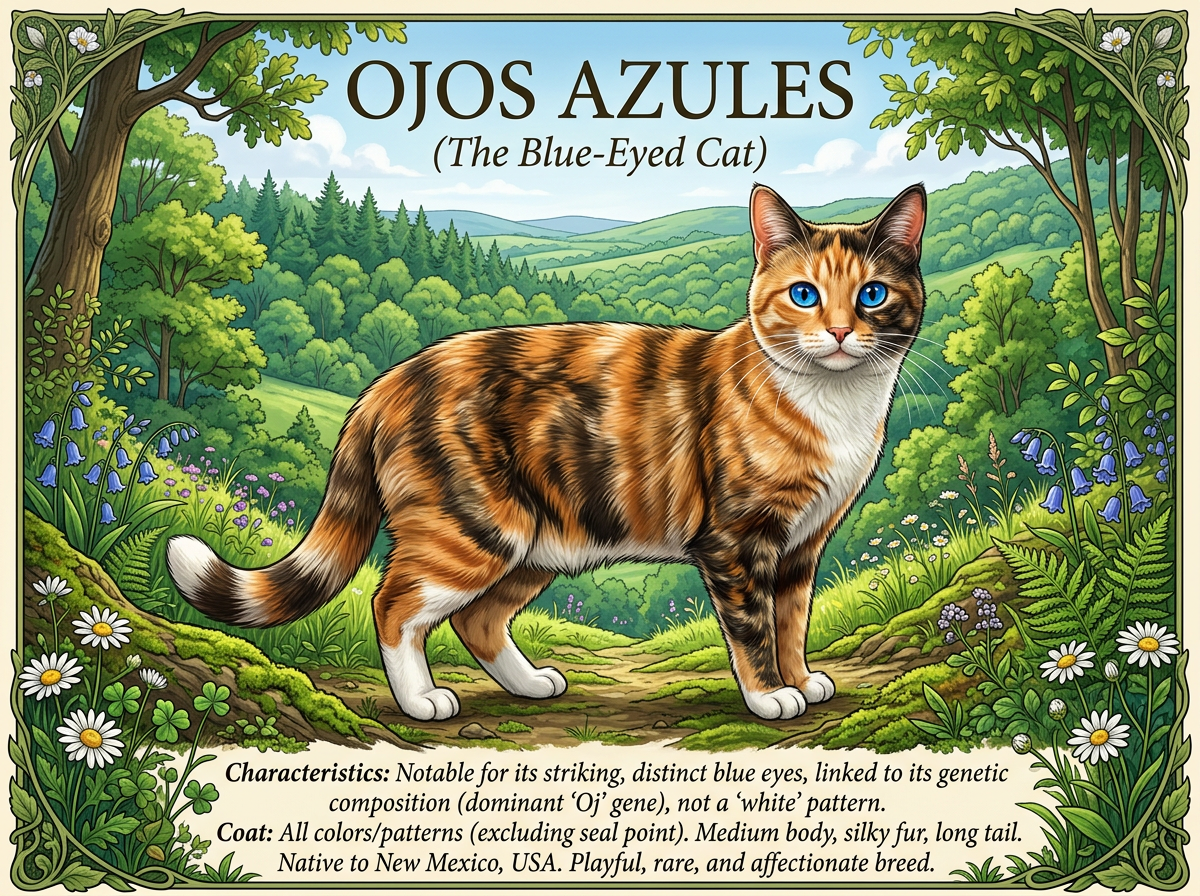
Ojos Azules
🐈 CatsFelis catus
Ojos Azules
Named for their 'blue eyes' in Spanish, this breed was discovered as a feral mutation in New Mexico. A dominant gene produces intense blue eyes even in non-white cats. Extremely rare — breeding was suspended due to cranial defects linked to the gene.
Old Danish Pointing Dog
🐕 DogsCanis lupus familiaris
Old Danish Pointing Dog
Medium-sized Danish pointing dog with a white and brown coat. Calm and intelligent, they are loyal and friendly hunting companions.
Old English Game
🐔 ChickensGallus gallus domesticus
Old English Game
Britain's oldest breed type and one of the most historically significant chickens in the world, descended directly from the fighting birds that were kept in Britain before and during the Roman period. After cock-fighting was outlawed in 1849, Old English Game birds were redirected into the show world, where dozens of colour varieties were standardised. They are compact, muscular, and bold — naturally aggressive between males but manageable in single-pair or free-range systems.
Old English Sheepdog
🐕 DogsCanis lupus familiaris
Old English Sheepdog
Large, muscular sheepdog with distinctive shaggy coat covering eyes. Friendly, playful, and adaptable, these gentle giants are excellent family companions.
Onagadori
🐔 ChickensGallus gallus domesticus
Onagadori
The most extraordinary long-tailed chicken breed in the world, the Onagadori is a Japanese national treasure developed in Kochi Prefecture on Shikoku Island during the Edo period. Unlike all other chickens, the Onagadori possesses a genetic mutation that prevents its tail feathers from moulting — they grow continuously for the bird's entire life, reaching lengths of 6 to 10 metres (20–33 feet) or more in exceptional specimens. The record tail feather length exceeds 13 metres. In Japan, Onagadori are kept in specialised tall, narrow cages where the magnificent tails are carefully draped and protected from damage. The breed has a walnut comb and clean legs, and is kept purely as an ornamental and cultural treasure — roosters are among the most valuable single chickens in the world, with top specimens valued at tens of thousands of euros. The EE recognises the Onagadori under the Europastandard, though very few exist outside Japan.
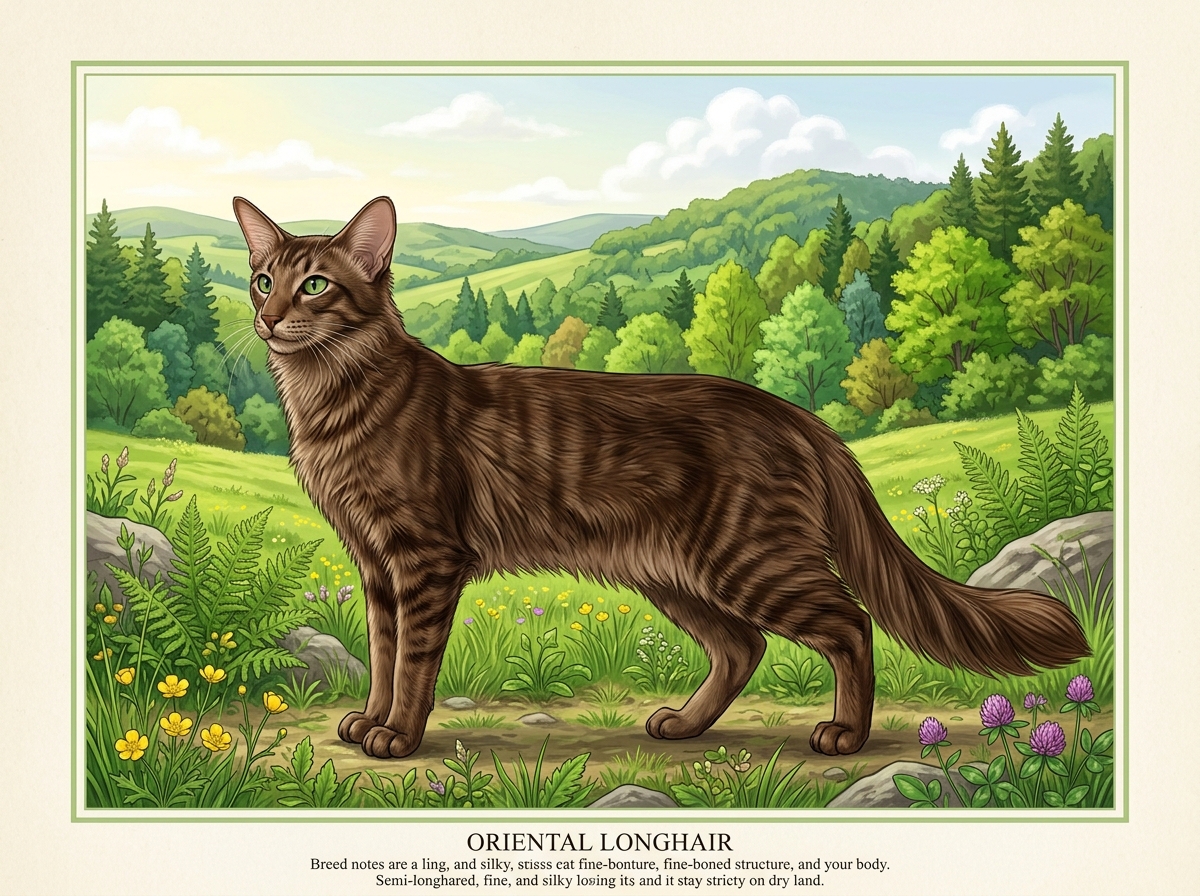
Oriental Longhair
🐈 CatsFelis catus
Oriental Longhair
The longhaired version of the Oriental Shorthair — sleek, svelte, and elegant with a silky, close-lying semi-long coat and large bat-like ears. Comes in all colors and patterns without points. Vocal, affectionate, and very social.
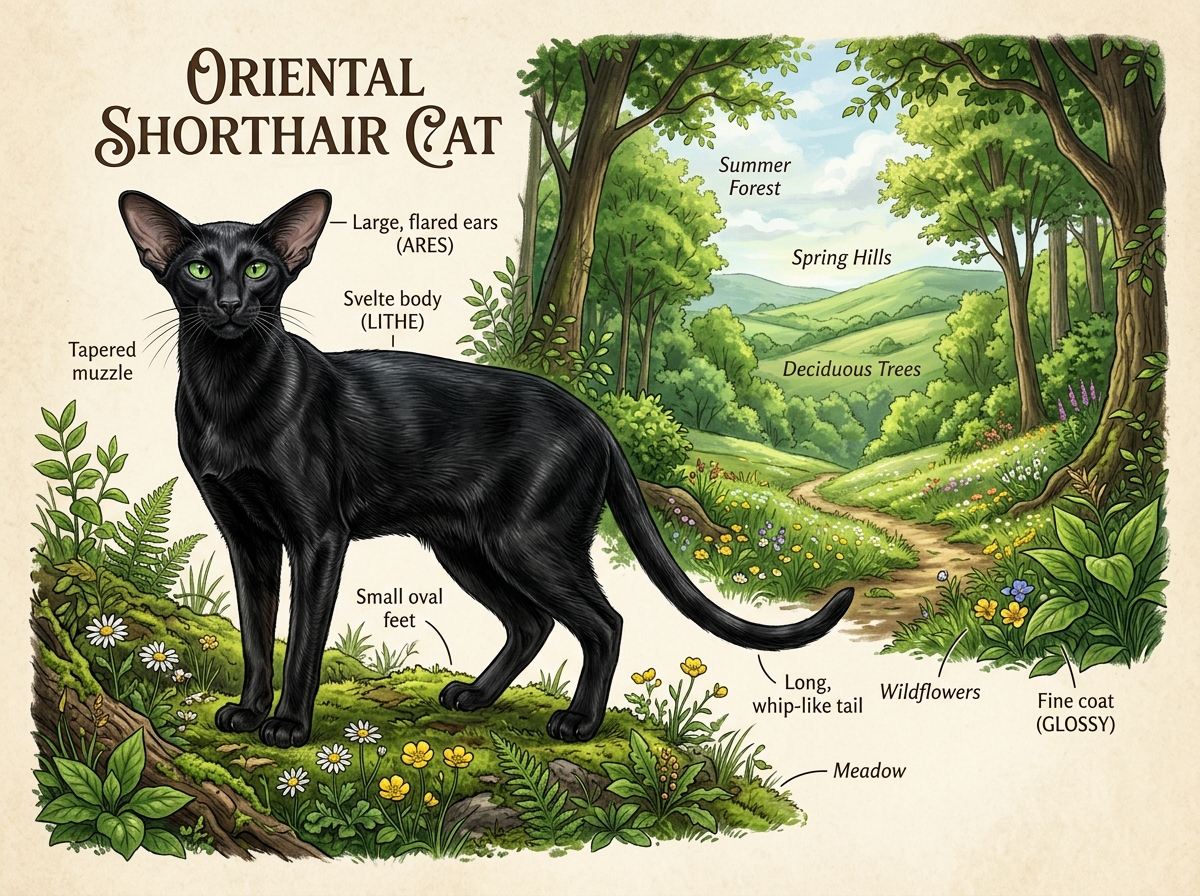
Oriental Shorthair
🐈 CatsFelis catus
Oriental Shorthair
A Siamese without colorpoints — same elegant, svelte body, wedge-shaped head, and large ears, but in every solid color, tabby, tortie, and smoke pattern imaginable. Highly vocal, intelligent, and emotionally demanding. Over 300 color/pattern combinations.
Orloff
🐔 ChickensGallus gallus domesticus
Orloff
A cold-hardy breed of debated origin — named after Count Orloff-Tschesmensky of Russia who popularised it in Europe in the 18th century, though the type likely originated in Persia (Iran) and arrived in Russia via the Caucasus. Orloffs are powerfully built birds with a small walnut comb, very dense plumage, and feathered muffs and beard, features that make them exceptionally resistant to freezing temperatures. They lay a moderate number of brown eggs and have a dignified, upright carriage.
Orpington
🐔 ChickensGallus gallus domesticus
Orpington
A large, fluffy, gentle British breed created by William Cook of Orpington, Kent in 1886, by crossing Minorcas, Langshans, and Plymouth Rocks to produce a handsome black bird that would impress at shows while remaining productive on the farm. The later Buff Orpington — golden and plush-feathered — became Victoria's favourite hen and sparked the 'hen fever' craze in Britain. Orpingtons are calm, heavy-feathered birds that bear cold winters well and make exceptional family pets.
Orusthöna
🐔 ChickensGallus gallus domesticus
Orusthöna
A Swedish landrace chicken from the island of Orust on the west coast of Sweden, north of Gothenburg. Orust is Sweden's fourth-largest island, and its relative isolation allowed a distinct local chicken type to develop over centuries. The Orusthöna is a medium-sized, robust bird with a single comb and clean legs, adapted to the damp, windy coastal conditions of the Bohuslän archipelago. Its plumage is variable — birds can be white, black, grey, speckled, or patched — reflecting its unimproved landrace heritage. Orusthönas are excellent foragers, able to survive on the thin, rocky soils of the Bohuslän coast where vegetation is sparse and the weather unforgiving. The breed was rediscovered in the 1980s by Swedish poultry conservationists and has since been stabilised through the national gene bank. Registered in DAD-IS and maintained by a small group of Swedish breeders.
Ostfriesische Möwe
🐔 ChickensGallus gallus domesticus
Ostfriesische Möwe (East Frisian Gull)
A striking German dual-purpose breed from East Frisia (Ostfriesland), the coastal region of Lower Saxony bordering the North Sea. The Ostfriesische Möwe — literally 'East Frisian Gull' — is named for its gull-like colouring: predominantly white body with black tail feathers and sometimes black wing markings, resembling the herring gulls that follow fishing boats along the Frisian coast. Developed in the early 20th century from local East Frisian farm chickens, it was selected for good egg production and decent meat quality in a hardy, wind-resistant package. Ostfriesische Möwen were common on small mixed farms across the Frisian marshes but declined when the region's agriculture shifted toward large-scale dairy and arable farming after 1950. Rescued by German conservation breeders, the breed is recognised by the EE Europastandard and BDRG.
Otterhound
🐕 DogsCanis lupus familiaris
Otterhound
Large, shaggy scent hound with webbed feet. Bred for otter hunting, now one of the rarest dog breeds.
Oxford Old English Game
🐔 ChickensGallus gallus domesticus
Oxford Old English Game
The second of two distinct standardised types of Old English Game recognised by the Poultry Club of Great Britain, the Oxford type is characterised by a taller, more upright build, longer back, and more rangy appearance compared to the compact Carlisle type. Developed by fanciers in the Oxford area and the English Midlands during the 19th century, the Oxford type was selected for a more elegant, longer silhouette that some argue is closer to the original fighting type of Old English Game. It has a single comb, clean legs, hard feathering, and is bred in an enormous range of colour varieties — OEG is said to have more recognised colour varieties than any other breed in the PCGB standard. After cockfighting was banned in Britain, the Oxford type became a pure exhibition breed. The Oxford-Carlisle divide is one of the oldest and most enduring splits in British poultry history. Not yet recognised separately by the EE Europastandard.
Padovana
🐔 ChickensGallus gallus domesticus
Padovana
An ornamental Italian crested breed from the city of Padova (Padua) in the Veneto region, with a history stretching back several centuries in northern Italian noble gardens and farmyards. The Padovana is recognised by its large, rounded full crest that hangs forward over the face, completely obscuring the V-comb beneath, a full beard, and muffled cheeks. Its appearance strongly resembles the Polish breed, and the two may share a common ancestor. Recognised by the EE Europastandard and maintained by Italian conservation breeders, the Padovana is a rare and historically significant Italian heritage breed.
Papillon
🐕 DogsCanis lupus familiaris
Papillon
Small, elegant toy breed with distinctive butterfly-like ears. Intelligent, energetic, and friendly companion.
Parson Russell Terrier
🐕 DogsCanis lupus familiaris
Parson Russell Terrier
Small, energetic terrier with longer legs than the Jack Russell. Intelligent, fearless, and loyal.
Pavilly
🐔 ChickensGallus gallus domesticus
Pavilly
A rare French dual-purpose breed from the town of Pavilly in Seine-Maritime, Upper Normandy. The Pavilly is a medium-large bird developed in the early 20th century, characterised by solid black plumage, a single comb, clean legs, and white skin. It was bred as a farm chicken for the small mixed holdings of the Caux region, producing white eggs and decent meat. The breed's black colour was deliberately selected — black feathers were easier to keep clean-looking in the damp, muddy conditions of Norman farmyards, and black pinfeathers are less visible on a dressed carcass, making the Pavilly a practical market bird. After 1950, Normandy's farm structure changed dramatically, and the Pavilly nearly vanished. SCAF and the EE Europastandard recognise it, and a small group of Norman breeders keep the breed alive today.
Pekin Bantam
🐔 ChickensGallus gallus domesticus
Pekin Bantam
The quintessential ornamental bantam and Britain's most popular garden chicken, the Pekin (called Cochin Bantam in the USA) is a small, round, fluffy bird so thickly feathered on its feet and legs that it appears to have no legs at all — it rocks forward as it walks, giving it a characteristic 'rocking horse' gait. Pekins are the ideal beginner's chicken: tame, friendly, quiet, easily handled by children, and content in a small garden. Their temperament is as plush and soft as their feathering.
Pekingese
🐕 DogsCanis lupus familiaris
Pekingese
Small, compact toy breed with distinctive flat face and lion-like mane. Dignified, independent, and loyal.
Pembroke Welsh Corgi
🐕 DogsCanis lupus familiaris
Pembroke Welsh Corgi
Small, sturdy herding dog with short legs and pointed ears. Intelligent, affectionate, and famously beloved by British royalty.
Penedesenca
🐔 ChickensGallus gallus domesticus
Penedesenca
A rare Catalan breed from the Penedès wine region of Catalonia, best known for producing some of the darkest brown eggs of any breed — deep chocolate-brown shells that rival even the Marans. Penedesencas are immediately distinguished by their extraordinary carnation comb, a flat ring of multiple points resembling the petals of a carnation flower, found in no other breed in the world. An active, hardy Mediterranean layer, the Penedesenca was rescued from near-extinction in the 1980s by Catalan conservation breeders and is now recognised by both the EE Europastandard and the Société Centrale Avicole de France (SCAF).
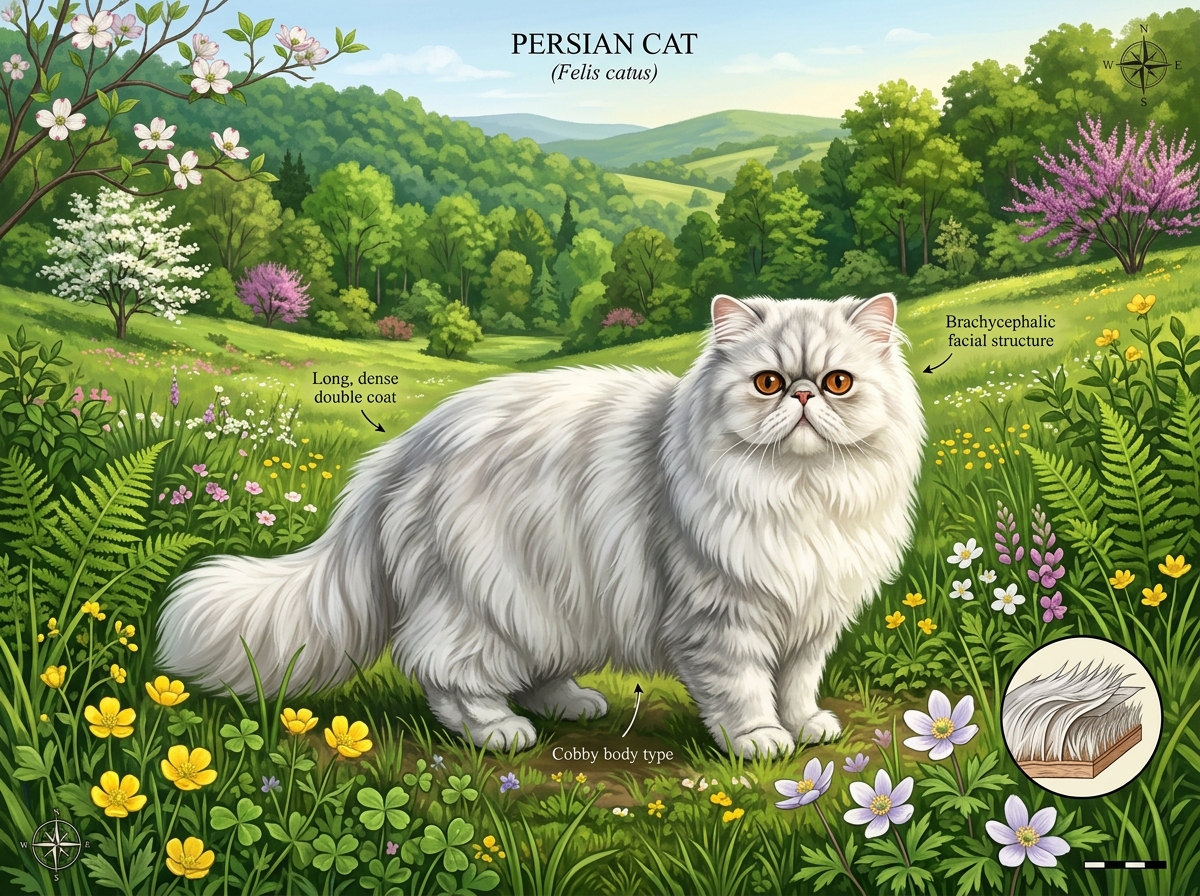
Persian
🐈 CatsFelis catus
Persian
The most recognized cat breed — a short, stocky, cobby cat with a round head, flat face (brachycephalic), large round eyes, and a long, flowing, plush coat. Calm, dignified, and deeply affectionate. Extensive grooming is essential. One of the oldest breeds.
Peruvian Inca Orchid
🐕 DogsCanis lupus familiaris
Peruvian Inca Orchid
Medium-sized hairless dog from Peru with elegant build. Affectionate, alert, and sensitive.
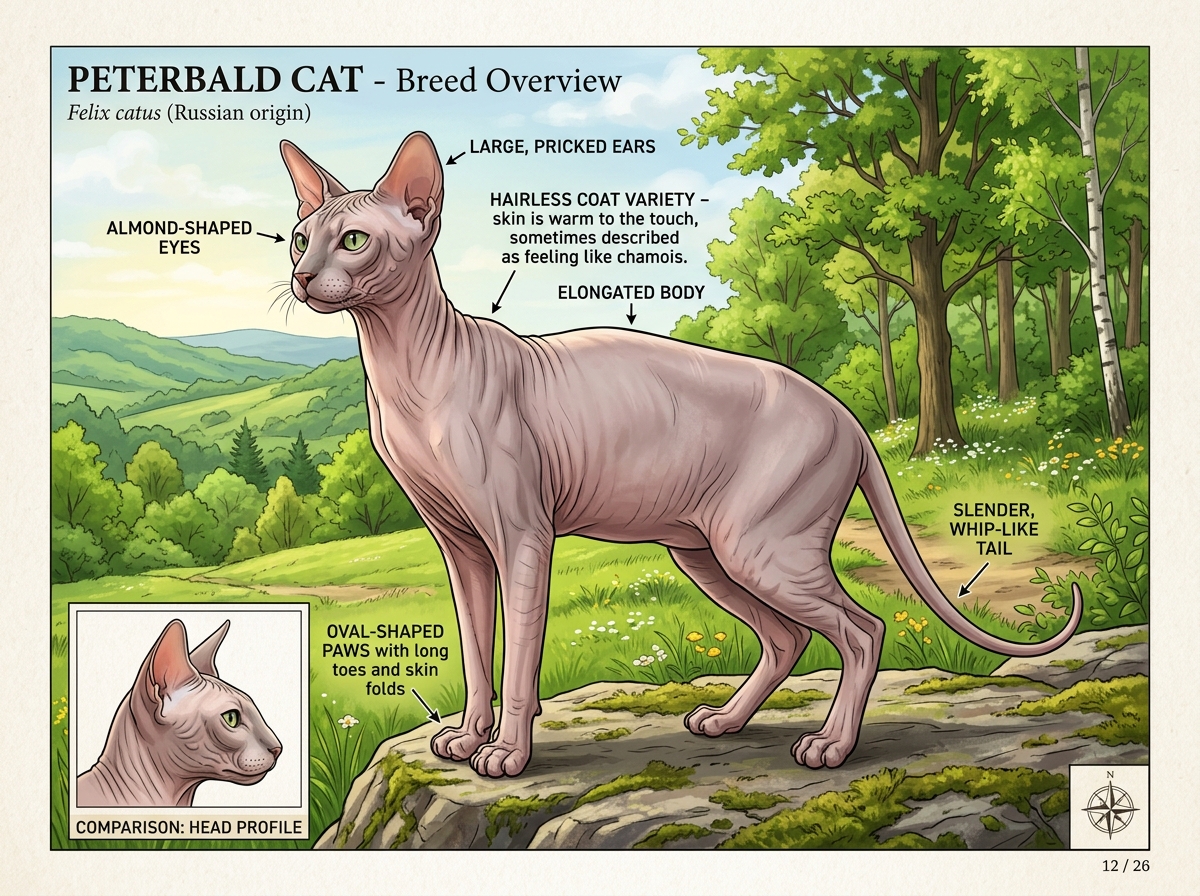
Peterbald
🐈 CatsFelis catus
Peterbald
A hairless breed from St. Petersburg, Russia, created by crossing the Donskoy with Oriental Shorthairs and Siamese. Can be completely bald, flocked, velour, or brush-coated. Elegant, Oriental-type body. Highly intelligent and affectionate.
Petit Basset Griffon Vendéen
🐕 DogsCanis lupus familiaris
Petit Basset Griffon Vendéen
Small, rough-coated scent hound with short legs and long body. Energetic, friendly, and determined hunter.
Petit Bleu de Gascogne
🐕 DogsCanis lupus familiaris
Petit Bleu de Gascogne
Medium-sized French hound from Gascony with a blue-mottled coat. Friendly and intelligent, they are persistent hunters of small game.
Petit Brabancon
🐕 DogsCanis lupus familiaris
Petit Brabancon
Small Belgian companion dog with a smooth short coat. Intelligent and alert, they are lively and affectionate dogs with a cheerful disposition.
Pharaoh Hound
🐕 DogsCanis lupus familiaris
Pharaoh Hound
Medium-sized elegant sighthound with striking amber eyes. Known for 'blushing' when excited — ears and nose turn pink.
Phoenix
🐔 ChickensGallus gallus domesticus
Phoenix
A spectacular German-developed ornamental breed bred from Japanese long-tailed fowl — primarily Onagadori, Minohiki, and Yokohama-type birds — that German breeder Hugo du Roi imported and standardised in the 1880s. Unlike the Yokohama (which focuses on saddle feather length), the Phoenix is specifically bred to achieve extraordinary total tail length — in ideal breeding and housing conditions, the saddle and tail feathers of cocks can grow continuously for years without moulting. The EE standard recognises the Phoenix as the definitive European long-tailed breed. Kept purely for exhibition, the Phoenix requires specialised tall housing and careful management to protect its plumage.
Picardy Spaniel
🐕 DogsCanis lupus familiaris
Picardy Spaniel
Medium-sized French spaniel from Picardy with a brown and white coat. Friendly and intelligent, they are calm and affectionate hunting companions.
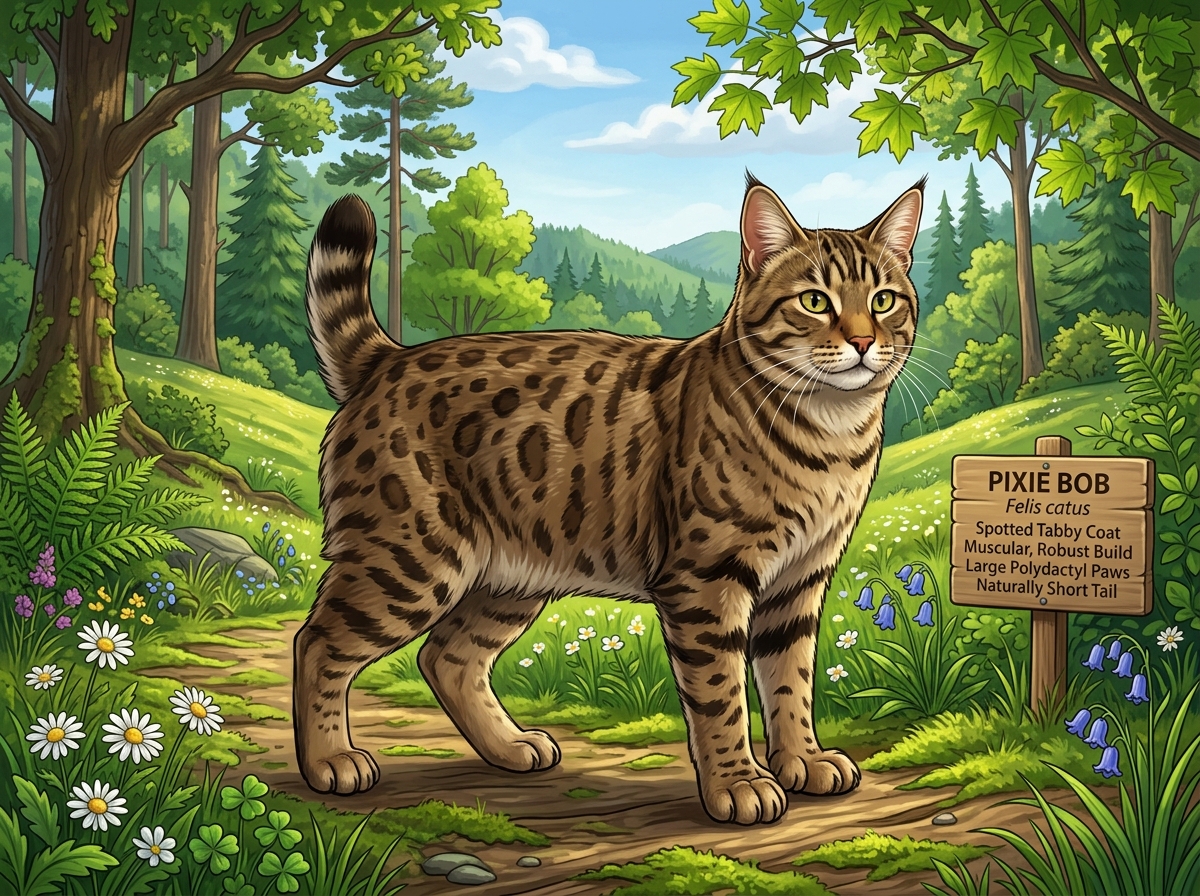
Pixie-bob
🐈 CatsFelis catus
Pixie-bob
A breed developed to resemble a bobcat — spotted or ticked coat, short bobbed tail, tufted ears, and heavy brow. Large, muscular, with polydactyl paws common. Despite wild looks, DNA testing confirms they're fully domestic. Highly intelligent and dog-like.
Plymouth Rock
🐔 ChickensGallus gallus domesticus
Plymouth Rock
America's most famous dual-purpose breed, developed in New England in the 1860s and named after Plymouth Rock, Massachusetts. The Barred Plymouth Rock — with its crisp black-and-white barring on every feather — became the foundation of the American poultry industry for a century. Rocks are calm, productive layers of brown eggs that also grow to a good table weight, and their large size and easy temperament make them among the most popular heritage breeds for backyard flocks worldwide.
Poitevin
🐕 DogsCanis lupus familiaris
Poitevin
Large French hound from the Poitou region with a lean, athletic build. Energetic and intelligent, they are fast and enduring hunters.
Polbar
🐔 ChickensGallus gallus domesticus
Polbar
A Polish auto-sexing egg-laying breed developed at the University of Life Sciences in Lublin in the mid-20th century by Professor Laura Kaufman. The Polbar was created by crossing Polish Greenleg Partridge chickens with Plymouth Rocks, producing a breed where male and female chicks can be distinguished at day-old by down colour — making vent sexing unnecessary. This was a deliberate effort to create a Polish equivalent to the British auto-sexing breeds developed at Cambridge University. The Polbar is a medium-sized, active bird with barred plumage reminiscent of the Plymouth Rock, laying white-shelled eggs. It is cold-hardy and well-adapted to Polish free-range conditions. Though developed as a practical farm breed, the Polbar is now kept primarily for conservation and by enthusiasts who value its auto-sexing capability. Recognised by the EE Europastandard.
Polish
🐔 ChickensGallus gallus domesticus
Polish (Poland)
One of the most visually dramatic of all chicken breeds, instantly recognisable by its enormous pom-pom crest of feathers that completely covers the top of the head. Despite the name, Polish chickens likely originated in the Netherlands — the name may derive from the Dutch word 'pol' meaning head. Their large round crests can obstruct vision, making them docile and easy to handle but vulnerable to predators. They lay white eggs regularly and are primarily kept as exhibition and ornamental birds.
Polish Greyhound
🐕 DogsCanis lupus familiaris
Polish Greyhound (Chart Polski)
Large, powerful sighthound from Poland with thick coat. Courageous, loyal, and excellent hunter.
Polish Hound
🐕 DogsCanis lupus familiaris
Polish Hound
Large, powerful scent hound with deep bark. Calm, loyal, and determined tracking dog.
Polish Lowland Sheepdog
🐕 DogsCanis lupus familiaris
Polish Lowland Sheepdog
Medium-sized herding dog with long, thick coat covering eyes. Intelligent, confident, and independent with strong protective instincts.
Polish Tatra Sheepdog
🐕 DogsCanis lupus familiaris
Polish Tatra Sheepdog
Large, powerful livestock guardian dog from Poland with thick white coat. Calm, loyal, and protective.
Pomeranian
🐕 DogsCanis lupus familiaris
Pomeranian
Small, fluffy Spitz-type dog with fox-like face. Intelligent, lively, and confident despite tiny size.
Pont-Audemer Spaniel
🐕 DogsCanis lupus familiaris
Pont-Audemer Spaniel
Medium-sized French spaniel from Pont-Audemer with a curly coat. Friendly and intelligent, they are energetic and affectionate hunting dogs.
Poodle (Standard)
🐕 DogsCanis lupus familiaris
Poodle (Standard)
Large, elegant dog with distinctive curly coat. One of the most intelligent breeds, excelling in obedience and agility.
Porcelaine
🐕 DogsCanis lupus familiaris
Porcelaine
Medium-sized scent hound from France with fine white coat and orange patches. Elegant, gentle, and excellent tracking dog.
Portuguese Podengo
🐕 DogsCanis lupus familiaris
Portuguese Podengo
Medium-sized primitive hound from Portugal with large erect ears. Independent, intelligent, and lively.
Portuguese Pointer
🐕 DogsCanis lupus familiaris
Portuguese Pointer
Medium-sized Portuguese pointing dog with a short coat. Intelligent and loyal, they are calm and affectionate hunting companions.
Portuguese Sheepdog
🐕 DogsCanis lupus familiaris
Portuguese Sheepdog
Medium-sized herding dog from Portugal with long, goat-like coat. Intelligent, loyal, and excellent working dog.
Portuguese Water Dog
🐕 DogsCanis lupus familiaris
Portuguese Water Dog
Medium-sized working dog with curly or wavy waterproof coat. Intelligent, energetic, and excellent swimmer.
Posavatz Hound
🐕 DogsCanis lupus familiaris
Posavatz Hound
Medium-sized Croatian scent hound from the Posavina region. Intelligent and friendly, they are persistent hunters adapted to marshy environments.
Poule de Zottegem
🐔 ChickensGallus gallus domesticus
Poule de Zottegem
A Belgian egg-laying breed from the town of Zottegem in East Flanders, developed in the late 19th century as a productive white-egg layer for the Flemish market. The Poule de Zottegem is a medium-sized, active bird with a single comb, clean legs, and predominantly black or cuckoo plumage. It was created by crossing local Flemish farm chickens with imported Italian Leghorns — a familiar pattern in late 19th-century European poultry development where Leghorn blood was used to boost egg production in many traditional breeds. Zottegem chickens were once common across East Flanders but declined when commercial hybrid layers dominated after 1950. Conservation breeding in Belgium has kept the breed alive, and it is recognised by the EE Europastandard as a distinct Belgian breed.
Prague Ratter
🐕 DogsCanis lupus familiaris
Prague Ratter
Small Czech companion dog from Prague, one of the smallest breeds in the world. Intelligent and lively, they are loyal and affectionate companions.
Pug
🐕 DogsCanis lupus familiaris
Pug
Small, compact dog with distinctive wrinkled face. Playful, affectionate, and excellent family companion.
Puli
🐕 DogsCanis lupus familiaris
Puli
Medium-sized Hungarian herding dog with a distinctive corded coat. Intelligent and lively, they are loyal working dogs with a playful nature.
Pumi
🐕 DogsCanis lupus familiaris
Pumi
Medium-sized Hungarian herding dog with a curly coat and distinctive ears. Intelligent and lively, they are alert and courageous working dogs.
Pyrenean Mastiff
🐕 DogsCanis lupus familiaris
Pyrenean Mastiff
Giant livestock guardian dog from the Spanish Pyrenees with a thick white coat. Gentle and loyal with family, yet formidable when protecting livestock.
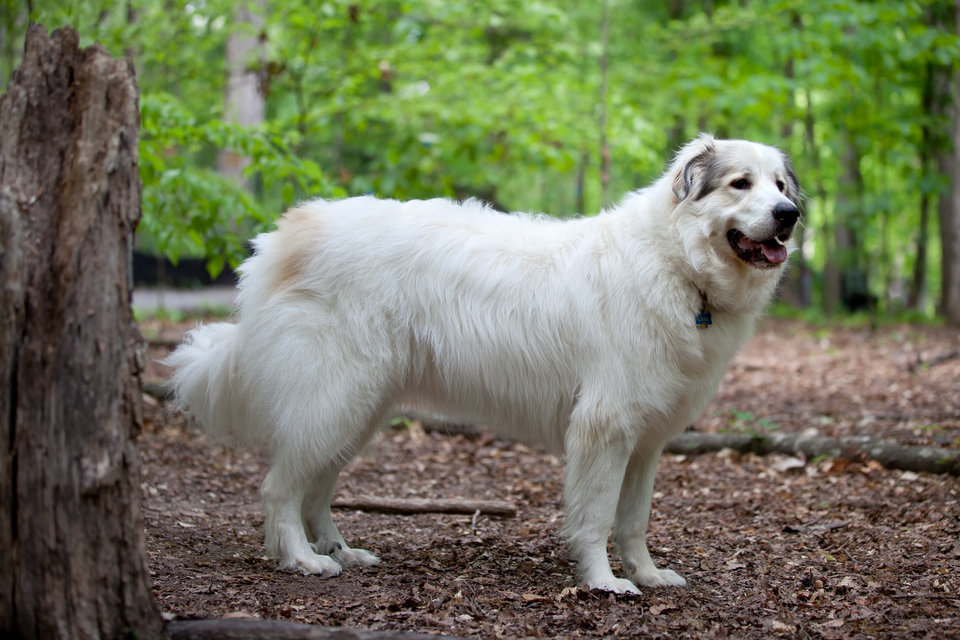
Pyrenean Mountain Dog
🐕 DogsCanis lupus familiaris
Pyrenean Mountain Dog
Large, majestic livestock guardian dog with thick white coat. Gentle, patient, and protective with a calm demeanor.
Pyrenean Shepherd
🐕 DogsCanis lupus familiaris
Pyrenean Shepherd
Small to medium herding dog from the Pyrenees mountains. Agile, energetic, and intelligent with a rustic appearance.
Rabbit Dachshund
🐕 DogsCanis lupus familiaris
Rabbit Dachshund (Kaninchenteckel)
The smallest Dachshund variety, bred specifically for hunting rabbits. Compact, courageous, and determined.
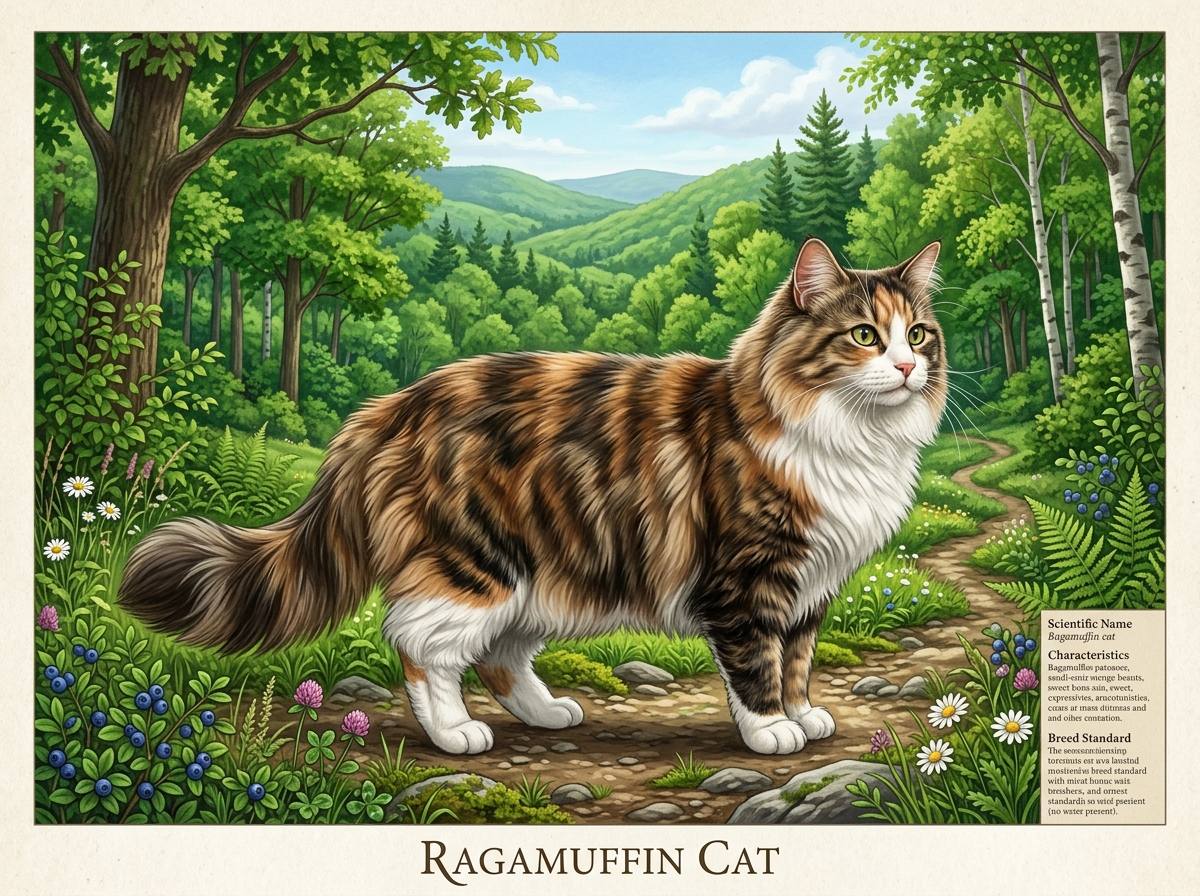
Ragamuffin
🐈 CatsFelis catus
Ragamuffin
A large, plush teddy bear of a cat — similar to the Ragdoll but come in all colors and patterns. Known for their exceptionally docile, trusting nature and tendency to go limp when held. Sweet, patient, excellent with children and other pets.
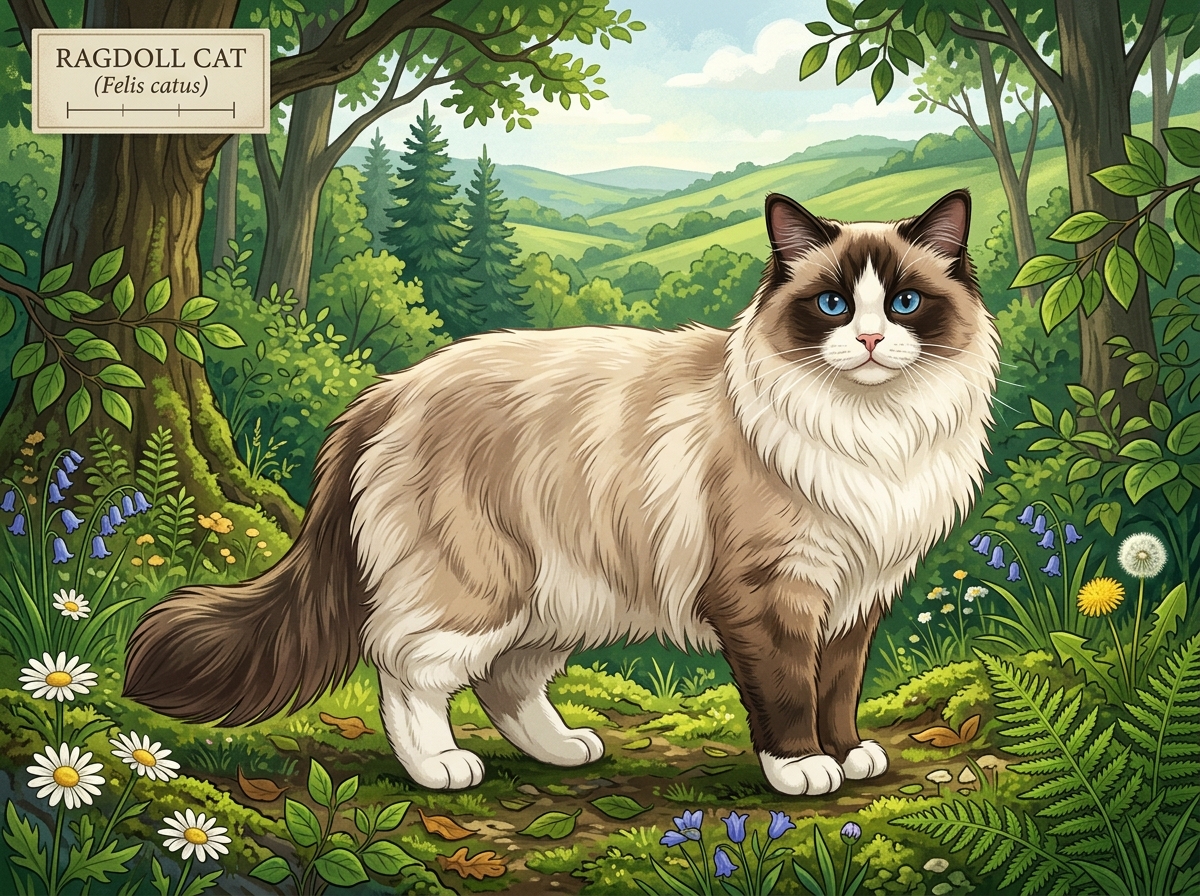
Ragdoll
🐈 CatsFelis catus
Ragdoll
A large, colorpointed breed famous for going limp and relaxed when held — hence the name. Semi-longhaired, plush coat with striking blue eyes. Gentle, docile, and affectionate. One of the world's most popular breeds. Bred for temperament above all.
Ramelsloher
🐔 ChickensGallus gallus domesticus
Ramelsloher
One of Germany's oldest documented chicken breeds, originating from the village of Ramelsloh near Winsen an der Luhe in Lower Saxony, with written records confirming the breed's existence from the 17th century. A medium-large dual-purpose bird with warm buff-yellow plumage, the Ramelsloher was once common across the Hamburg and Lower Saxony region as a practical farmyard hen. It declined steeply in the 20th century and nearly vanished, saved only by a small number of BDRG-affiliated conservation breeders who maintained breeding records and pedigree lines.
Rheinländer Huhn
🐔 ChickensGallus gallus domesticus
Rheinländer Huhn
A German dual-purpose breed from the Rhineland region, developed in the early 20th century by crossing local Rhineland farm chickens with Brahma and Langshan bloodlines — a familiar formula for creating large, productive farm breeds in Germany during this period. The Rheinländer Huhn is a heavily built bird with a single comb and clean legs, recognised in several colour varieties including white, black, and cuckoo. It was designed to be the universal farm chicken of the Rhineland — producing white eggs in quantity and providing substantial table birds from the surplus cockerels. After World War II, the breed nearly disappeared as German agriculture modernised and hybrid layers replaced traditional breeds. Conservation efforts by BDRG breeders have recovered the Rheinländer Huhn, and it is recognised by the EE Europastandard as a distinct German heritage breed.
Rhode Island Red
🐔 ChickensGallus gallus domesticus
Rhode Island Red
Developed in the late 19th century in the US state of Rhode Island by crossing Malay, Shanghai, Java, and Italian birds, the Rhode Island Red is among the world's most successful dual-purpose breeds — a reliable layer of brown eggs that also provides a decent table bird. The deep mahogany-red plumage is immediately recognisable and iconic. Rhode Island Reds are the foundation stock for many commercial hybrid laying strains and have been exported to every corner of the globe. The state bird of Rhode Island.
Rhode Island White
🐔 ChickensGallus gallus domesticus
Rhode Island White
A distinct breed from the far more famous Rhode Island Red, the Rhode Island White was developed in 1888 by J. Alonzo Jocoy of Peacedale, Rhode Island, by crossing Partridge Cochins, White Wyandottes, and Rose Comb White Leghorns. Unlike the Rhode Island Red, the Rhode Island White carries a rose comb and is entirely white. It was admitted to the APA Standard of Perfection in 1922. The Rhode Island White is productive, calm, and capable in both egg production and meat quality, but has remained in the shadow of its red counterpart and is now considered a rare breed by the Livestock Conservancy.
Rhodesian Ridgeback
🐕 DogsCanis lupus familiaris
Rhodesian Ridgeback
Large, athletic hunting dog with distinctive ridge of hair along spine. Courageous, dignified, and loyal companion.
Rosecomb
🐔 ChickensGallus gallus domesticus
Rosecomb
One of England's oldest true bantams, kept at least since the reign of Richard III in the 15th century and documented in a royal record of 1483. Rosecombs are named for their distinctive, perfectly formed rose comb that must lie flat to the head and taper to a straight horizontal spike at the rear — a show standard that requires generations of careful breeding to achieve. They carry large round white earlobes, a feature also seen in Mediterranean breeds, and are primarily kept as exhibition birds.
Rottweiler
🐕 DogsCanis lupus familiaris
Rottweiler
Large, powerful working dog with distinctive black and tan coat. Confident, loyal, and protective with calm demeanor.
Rough Collie
🐕 DogsCanis lupus familiaris
Rough Collie
Large, elegant dog with long, flowing coat. Intelligent, loyal, and excellent with families. Made famous by the dog Lassie.
Russian Black Terrier
🐕 DogsCanis lupus familiaris
Russian Black Terrier
Large, powerful working dog with thick black coat and beard. Courageous, intelligent, and loyal.
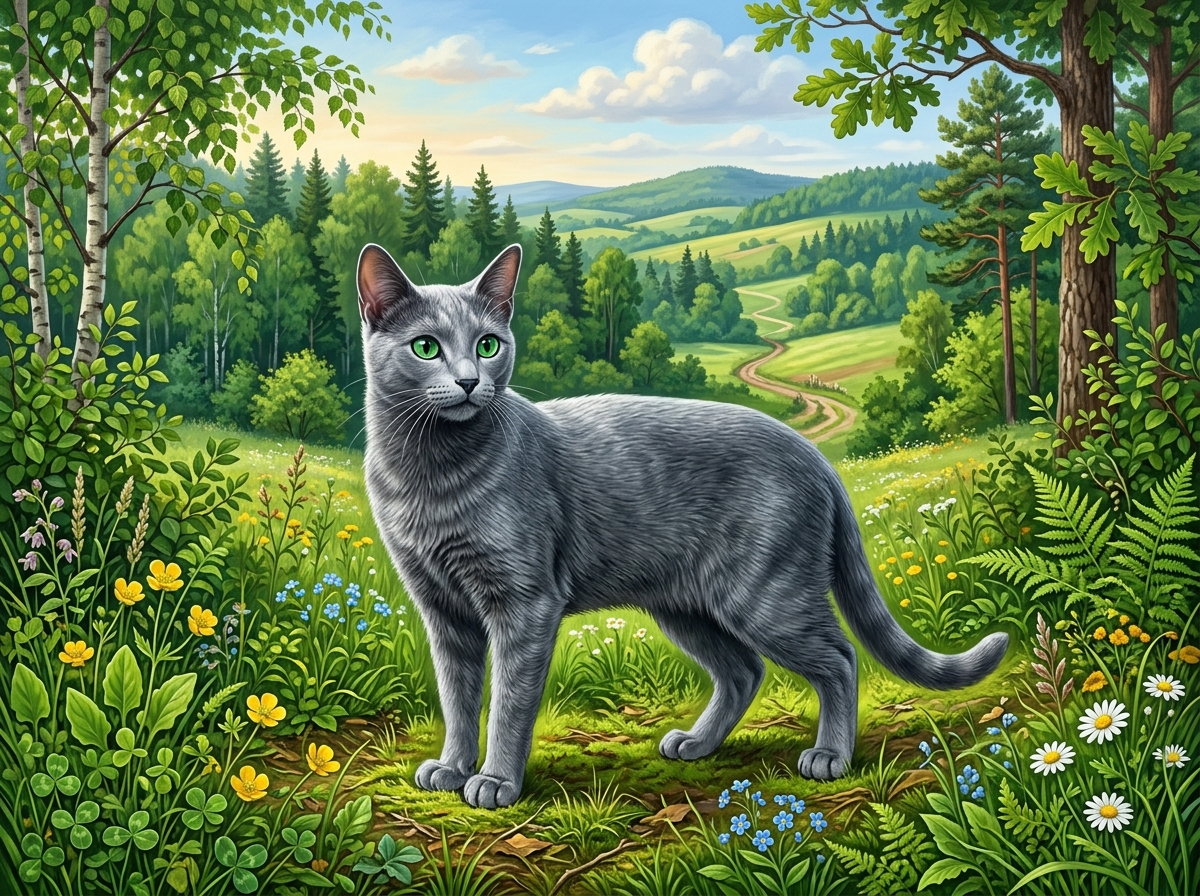
Russian Blue
🐈 CatsFelis catus
Russian Blue
A naturally occurring breed with a striking blue-grey double coat that shimmers with silver tips. Emerald green eyes, a wedge-shaped head, and a graceful, fine-boned body. Shy with strangers but deeply devoted to their chosen people.
Russian Toy
🐕 DogsCanis lupus familiaris
Russian Toy
Small Russian companion dog with a fine-boned build. Intelligent and lively, they are loyal and affectionate lap dogs with a big personality.
Russian-European Laika
🐕 DogsCanis lupus familiaris
Russian-European Laika
Medium-sized Spitz-type hunting dog from Russia with thick coat. Courageous, intelligent, and versatile hunter.
Saarloos Wolfhound
🐕 DogsCanis lupus familiaris
Saarloos Wolfhound
Large wolf-like dog bred from German Shepherds and wolves. Independent, loyal, and reserved with strangers.
Sachsenhuhn
🐔 ChickensGallus gallus domesticus
Sachsenhuhn
A German dual-purpose breed from Saxony, developed in the early 20th century by crossing local Saxon farm chickens with Minorca, Langshan, and Plymouth Rock bloodlines. The Sachsenhuhn is a medium-large bird with a single comb and clean legs, bred specifically for Saxony's small mixed farms to produce tinted eggs and quality meat. Its plumage is typically black or black with gold hackles, and the breed is known for good feed conversion and hardiness in central European conditions. The Sachsenhuhn was popular between the wars but suffered badly under the GDR regime, when private poultry breeding was discouraged and many regional breeds were abandoned. After reunification, conservation efforts by German breeders rescued the Sachsenhuhn from near-extinction. Recognised by the EE Europastandard and maintained by BDRG breeders.
Saint Bernard
🐕 DogsCanis lupus familiaris
Saint Bernard
Giant, powerful working dog famous for alpine rescue. Gentle, patient, and friendly despite imposing size.
Saluki
🐕 DogsCanis lupus familiaris
Saluki
Tall, slender sighthound with silky coat and feathered ears. One of the oldest known dog breeds, graceful and dignified.
Samoyed
🐕 DogsCanis lupus familiaris
Samoyed
Large, fluffy white Spitz-type dog with distinctive 'Samoyed smile.' Friendly, gentle, and devoted companion.
Satsumadori
🐔 ChickensGallus gallus domesticus
Satsumadori
A Japanese ornamental fighting breed from the Satsuma domain (modern Kagoshima Prefecture) on Kyushu Island, developed during the Edo period (1603–1868). The Satsumadori is a large, upright, noble-looking bird with a walnut comb, hard feathering, and a distinctive long, arched neck. Its plumage follows traditional Japanese gamefowl colour patterns — typically black-breasted red or white. The breed was developed by the samurai class of the Satsuma domain, who valued it for both the cockpit and its aesthetic qualities. Satsuma was one of Japan's most powerful feudal domains, and its warrior culture placed high value on courage and bearing in both men and animals. Today, the Satsumadori is kept as a conservation breed in Japan and by a small number of European fanciers. It is recognised by the EE Europastandard as a distinct Japanese ornamental breed.
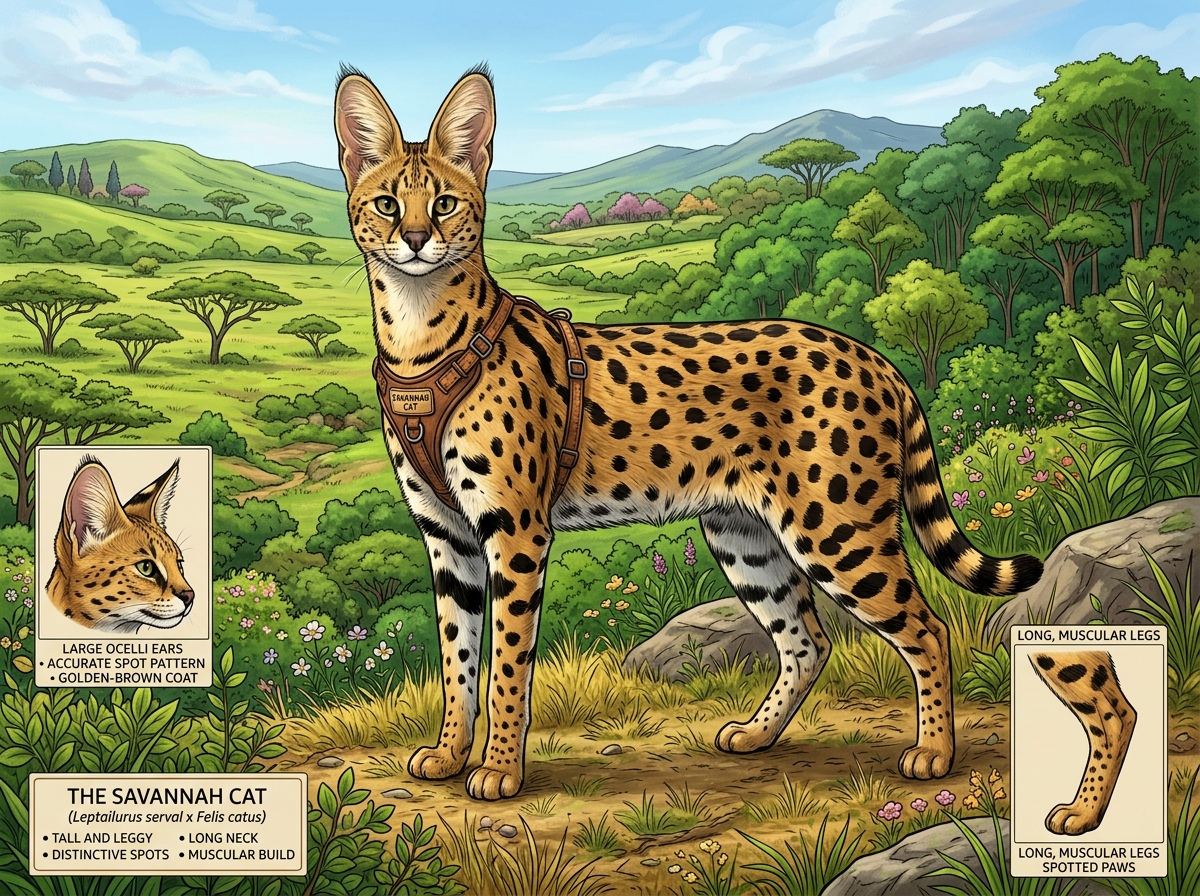
Savannah
🐈 CatsFelis catus × Leptailurus serval
Savannah
A striking hybrid between the African Serval and domestic cats, producing the tallest domestic breed — long legs, large ears, and bold spotted coat. Filial generations (F1-F5+) determine wild vs. domestic temperament. Highly intelligent, dog-like, and incredibly athletic.
Schapendoes
🐕 DogsCanis lupus familiaris
Schapendoes
Medium-sized Dutch herding dog with long, shaggy coat. Energetic, cheerful, and intelligent companion.
Schillerstövare
🐕 DogsCanis lupus familiaris
Schillerstövare
Medium-sized Swedish scent hound with a sleek coat. Intelligent and energetic, they are excellent hunting dogs for fox and hare.
Schipperke
🐕 DogsCanis lupus familiaris
Schipperke
Small, black Spitz-type dog with thick coat and no tail. Curious, energetic, and excellent watchdog.
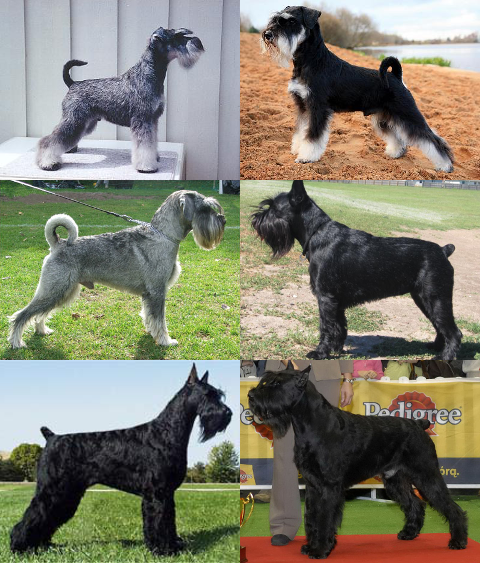
Schnauzer
🐕 DogsCanis lupus familiaris
Schnauzer
Medium-sized working dog with distinctive beard and bushy eyebrows. Alert, intelligent, and good-natured with strong protective instincts.
Scots Dumpy
🐔 ChickensGallus gallus domesticus
Scots Dumpy
A unique and ancient Scottish breed characterised by very short legs — the shortest of any standard chicken breed — giving it a waddling gait and extremely low profile. The name 'Dumpy' refers to their squat stature, and they were also known as 'Bakies', 'Creepies', and 'Crawlers' in different Scottish regions. Despite their unusual proportions, Scots Dumpies are hardy, good foragers, and lay a steady supply of tinted eggs. Now a rare conservation breed, DNA studies confirm their genetic distinctiveness.
Scots Grey
🐔 ChickensGallus gallus domesticus
Scots Grey
Scotland's own breed and one of the British Isles' rarest, the Scots Grey is a lean, upstanding bird with cuckoo barred plumage — sharp black and white barring on every feather — and clean (unfeathered) legs. It has been present in Scotland for centuries and was once a common farmyard hen across the Scottish Highlands and Lowlands, valued for hardiness and self-sufficiency in harsh Highland conditions. A good forager and moderate layer of tinted eggs, it is now critically rare.
Scottish Deerhound
🐕 DogsCanis lupus familiaris
Scottish Deerhound
Large, rough-coated sighthound bred for deer hunting. Gentle, dignified, and loyal with a calm temperament.
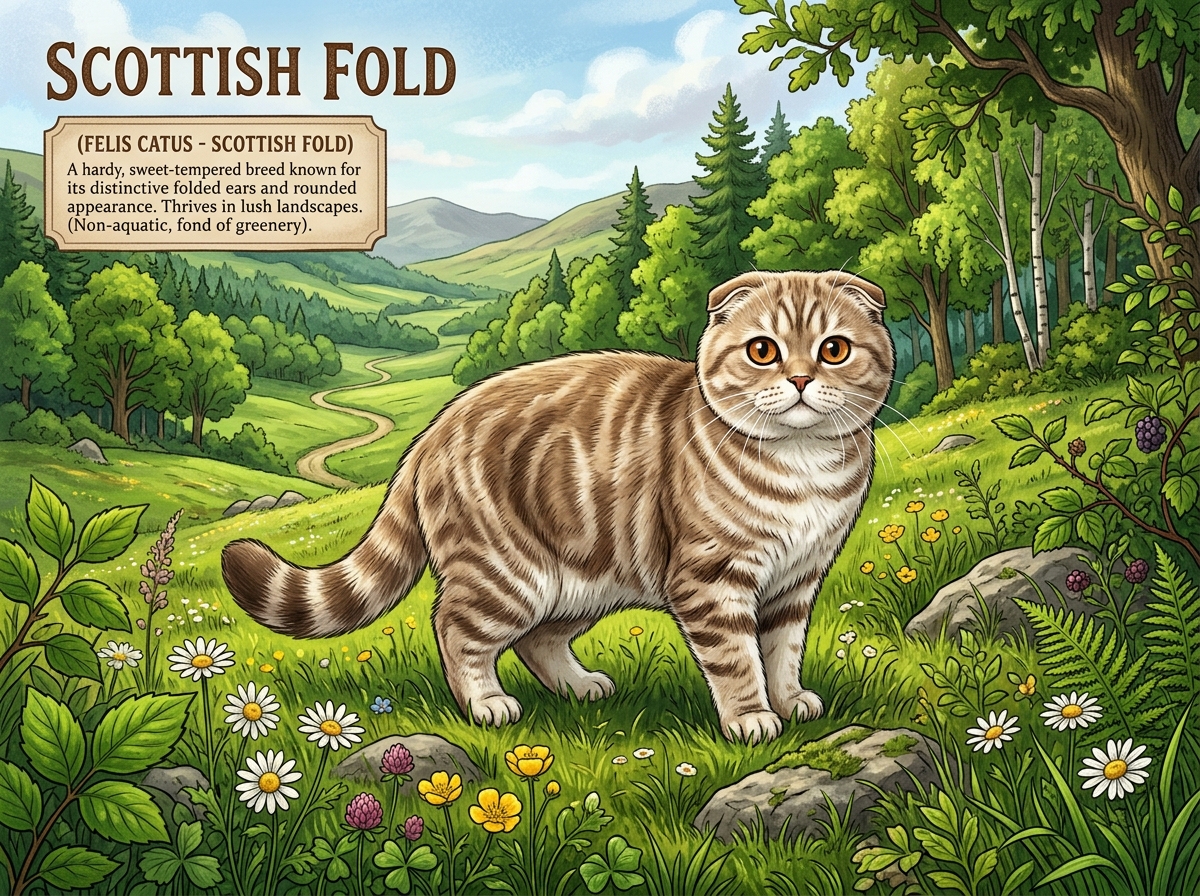
Scottish Fold
🐈 CatsFelis catus
Scottish Fold
Famous for its distinctive folded-forward ears caused by a cartilage mutation. Round head, round eyes, and a stocky, rounded body. Exceptionally sweet, quiet, and adaptable. Controversial — the fold gene causes osteochondrodysplasia affecting all joints. Shorthair and longhair (Highland Fold) varieties.
Scottish Terrier
🐕 DogsCanis lupus familiaris
Scottish Terrier
Small, sturdy terrier with distinctive beard and eyebrows. Courageous, independent, and determined companion.
Sealyham Terrier
🐕 DogsCanis lupus familiaris
Sealyham Terrier
Small, low-set terrier with long body and white coat. Courageous, good-natured, and determined companion.
Sebright
🐔 ChickensGallus gallus domesticus
Sebright
Britain's most famous true bantam and a masterpiece of selective breeding, created over 30 years by Sir John Saunders Sebright MP between 1800 and 1830. Sebright aimed to create a laced bantam of perfectly balanced beauty — each feather edged precisely in black on a gold or silver ground. Sebright cocks are hen-feathered, carrying no curved sickle feathers or pointed hackles. A difficult breed to maintain in show quality, Sebrights are the ultimate challenge breed for experienced exhibition bantam keepers.
Segugio Maremmano
🐕 DogsCanis lupus familiaris
Segugio Maremmano
Medium-sized Italian scent hound from the Maremma region. Intelligent and energetic, they are persistent hunters adapted to the Tuscan countryside.
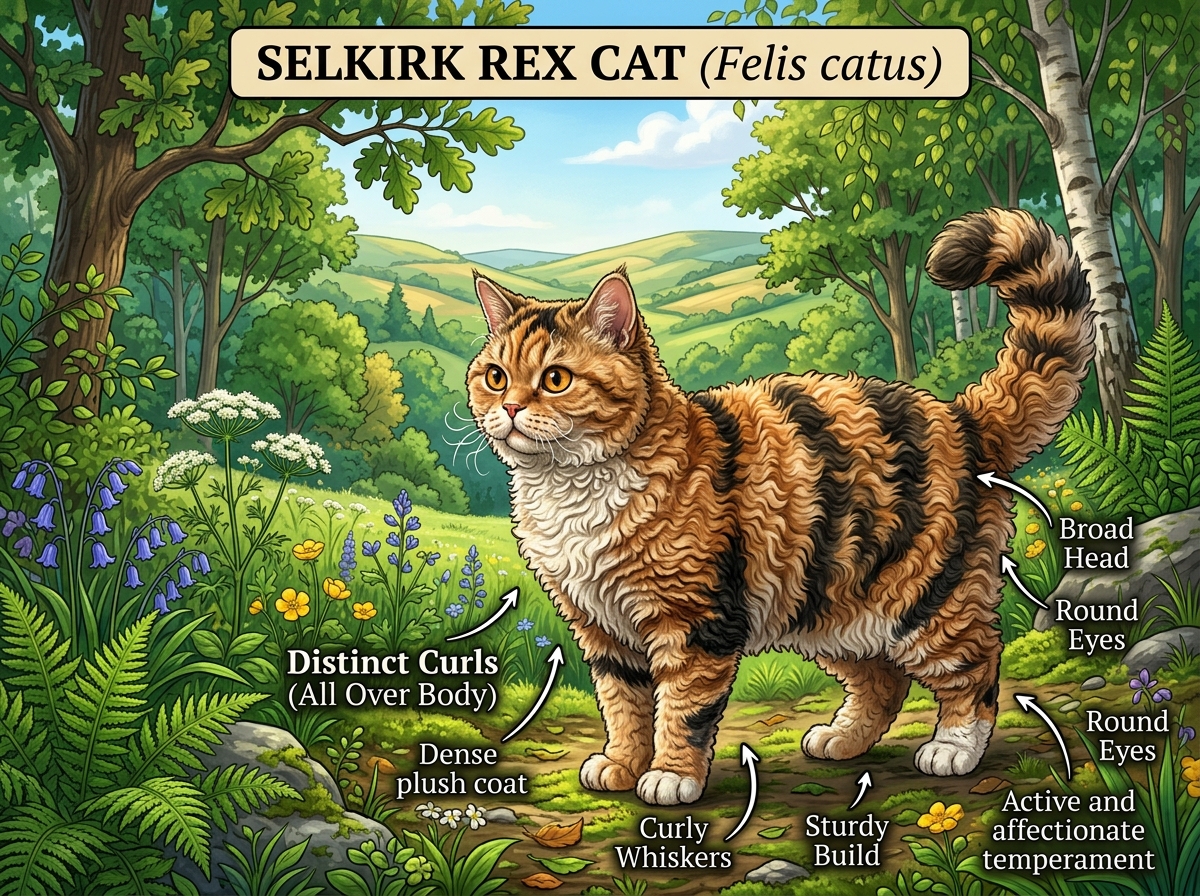
Selkirk Rex
🐈 CatsFelis catus
Selkirk Rex
The only curly-coated breed named after a person — and the only Rex with a plush, heavy-boned, stocky body. Their soft, curly coat comes in longhair and shorthair varieties. Patient, tolerant, and affectionate — nicknamed 'the cat in sheep's clothing.'
Serama
🐔 ChickensGallus gallus domesticus
Serama
The world's smallest chicken breed, originating from the state of Kelantan in Malaysia and developed by breeder Wee Yean Een in the 1970s from Japanese Bantam and local Malaysian small chickens. Seramas weigh as little as 250–350 grams — lighter than a can of soft drink — yet they carry themselves with an almost comically upright, proud posture with chest thrust forward and tail feathers raised nearly vertically. In Malaysia, Serama beauty contests and singing competitions draw huge crowds and the birds are kept as house pets.
Serbian Hound
🐕 DogsCanis lupus familiaris
Serbian Hound
Medium-sized Serbian scent hound with a short, dense coat. Intelligent and energetic, they are persistent hunters with remarkable stamina.
Serbian Tricolour Hound
🐕 DogsCanis lupus familiaris
Serbian Tricolour Hound
Medium-sized Serbian scent hound with a distinctive tri-color coat. Intelligent and energetic, they are excellent hunters in Balkan terrain.
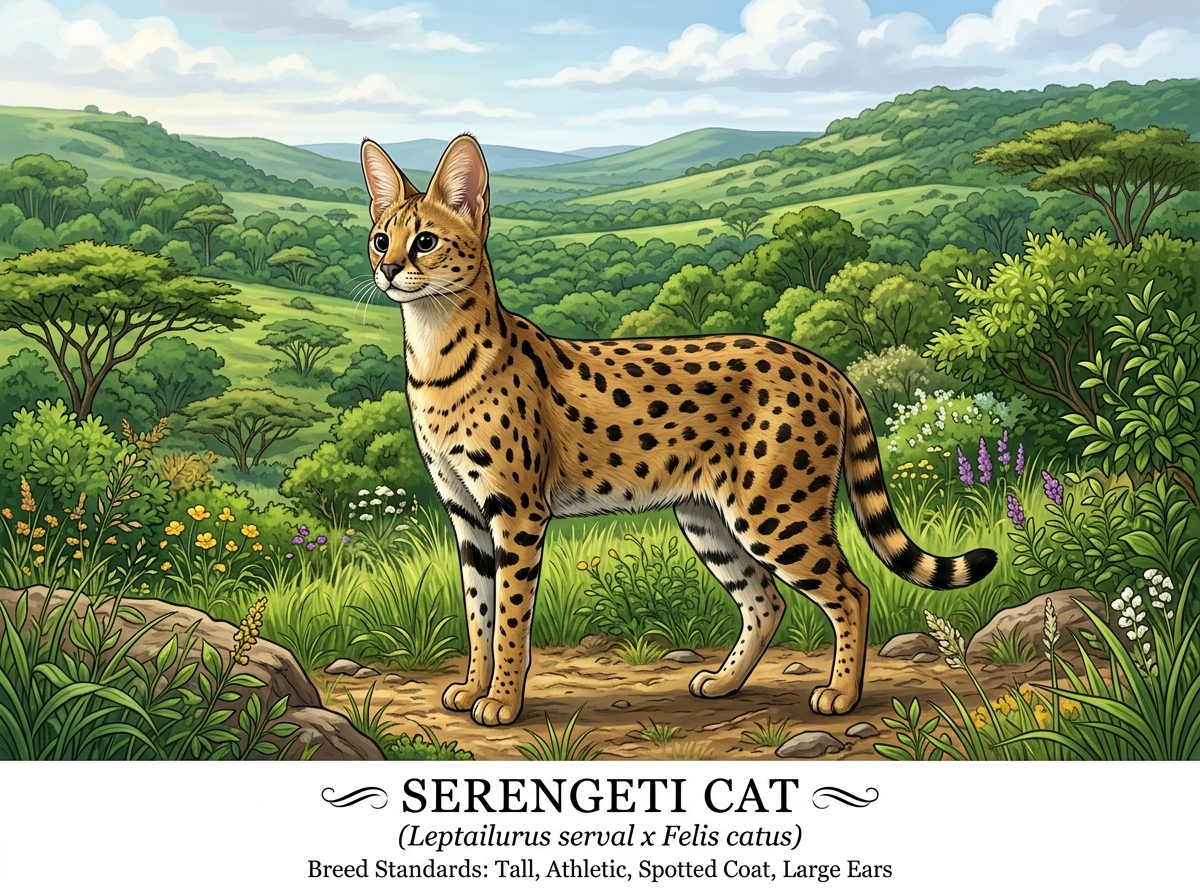
Serengeti
🐈 CatsFelis catus
Serengeti
Developed to look like the wild African Serval without any wild blood — spotted coat, long legs, and large round ears. Cross between Bengal and Oriental Shorthair. Active, vocal, and very people-oriented. Rare breed still in development.
Shamo
🐔 ChickensGallus gallus domesticus
Shamo
A Japanese hard-feathered breed of imposing stature developed from Malay fighting birds introduced to Japan from Thailand (Siam — hence 'Shamo') in the 17th century. Shamos are powerfully muscular birds with extremely tight feathering, an erect posture, and pearl-grey eyes that give them a fierce, hawk-like gaze. Historically a cockfighting breed in Japan, today Shamos are kept as exhibition birds. They are a National Natural Monument of Japan — one of only a handful of chicken breeds given government protection.
Shar Pei
🐕 DogsCanis lupus familiaris
Shar Pei
Medium-sized dog with distinctive deep wrinkles and blue-black tongue. Independent, loyal, and protective.
Shetland Sheepdog
🐕 DogsCanis lupus familiaris
Shetland Sheepdog
Small sheepdog resembling a miniature Rough Collie. Alert, intelligent, and eager to please, they excel in obedience competitions.
Shiba Inu
🐕 DogsCanis lupus familiaris
Shiba Inu
Small, sturdy Japanese dog with pointed ears and curled tail. Alert, confident, and good-natured companion.
Shih Tzu
🐕 DogsCanis lupus familiaris
Shih Tzu
Small, sturdy toy breed with long, flowing double coat. Friendly, affectionate, and lively companion.
Shikoku
🐕 DogsCanis lupus familiaris
Shikoku
Medium-sized Japanese spitz-type dog from Shikoku Island. Loyal and alert, they are intelligent hunters with a dignified and courageous temperament.
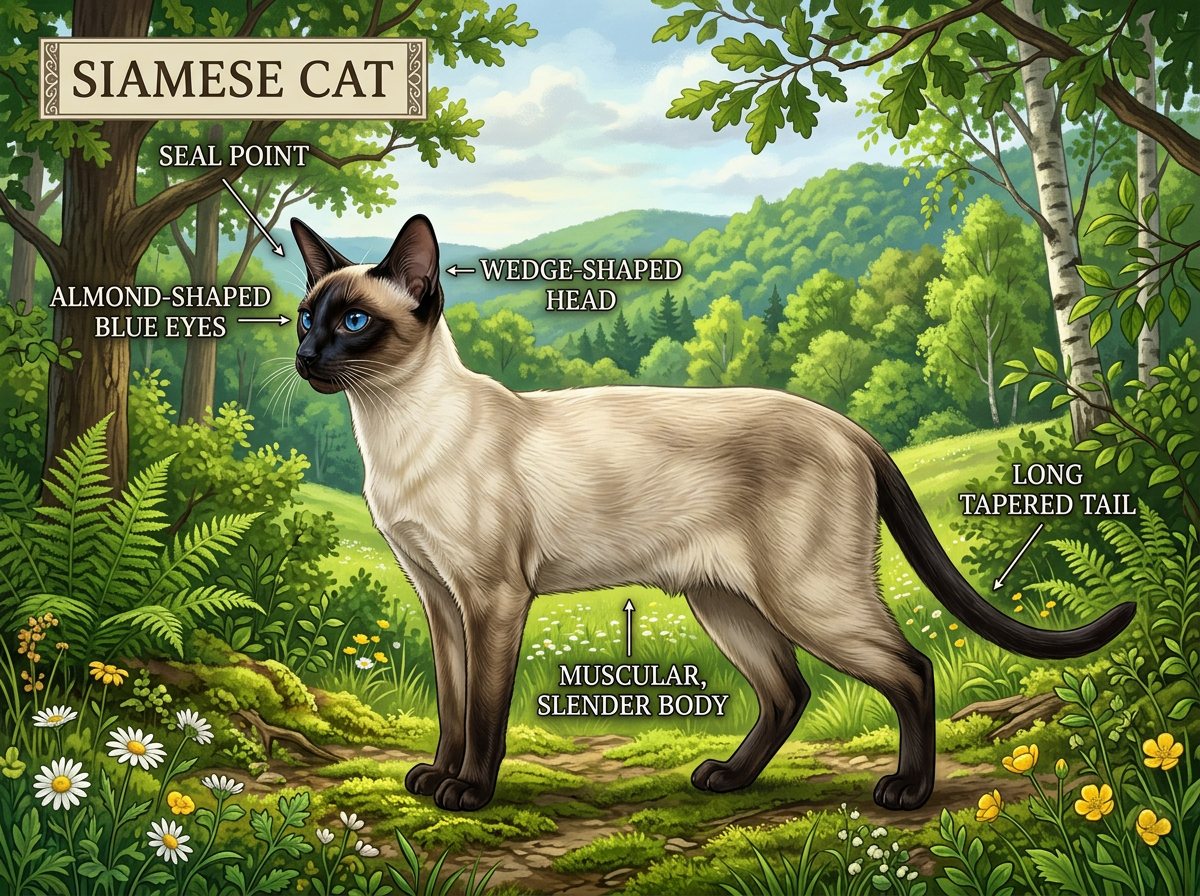
Siamese
🐈 CatsFelis catus
Siamese
One of the oldest and most recognizable breeds — colorpointed coat, vivid blue almond-shaped eyes, and a lean, elegant body. Highly vocal, intelligent, and emotionally demanding. Modern type is svelte; traditional 'apple-head' still exists in some registries. Known as the 'Royal Cat of Siam.'
Siberian
🐈 CatsFelis catus
Siberian
A large, powerful, natural breed from Russia with a thick, water-resistant triple coat suited for extreme cold. Muscular, agile, and excellent climbers. Known for their dog-like devotion and surprisingly low-allergen production compared to other breeds.
Siberian Husky
🐕 DogsCanis lupus familiaris
Siberian Husky
Medium-sized working dog bred as sled dog. Energetic, friendly, and athletic with striking blue eyes.
Sicilian Buttercup
🐔 ChickensGallus gallus domesticus
Sicilian Buttercup
A rare and visually spectacular Mediterranean breed from Sicily, uniquely identified by its crown-like buttercup comb — a complete circle of small points forming a cup shape found in no other breed. Sicilian Buttercups are active, good foragers, and produce a respectable number of white eggs. Their gold-spangled plumage in hens and rich red-orange plumage in cocks make them genuinely ornamental, yet they are primarily maintained as a conservation breed today.
Silkie
🐔 ChickensGallus gallus domesticus
Silkie
One of the most distinctive and beloved chicken breeds in the world, the Silkie has feathers that lack the interlocking barbicels found in normal plumage — each feather is soft, flowing, and silky to the touch, resembling fur rather than feathers. Uniquely, Silkies have black skin, black bones, black internal organs, and blue earlobes, plus five toes rather than the usual four. Originating in China and mentioned by Marco Polo around 1290, Silkies are among the world's most ancient recognised breeds. Their exceptionally docile nature and strong brooding instinct make them the foster mothers of the poultry world.
Silky Terrier
🐕 DogsCanis lupus familiaris
Silky Terrier
Small toy terrier with long, silky blue and tan coat. Confident, intelligent, and spirited companion.
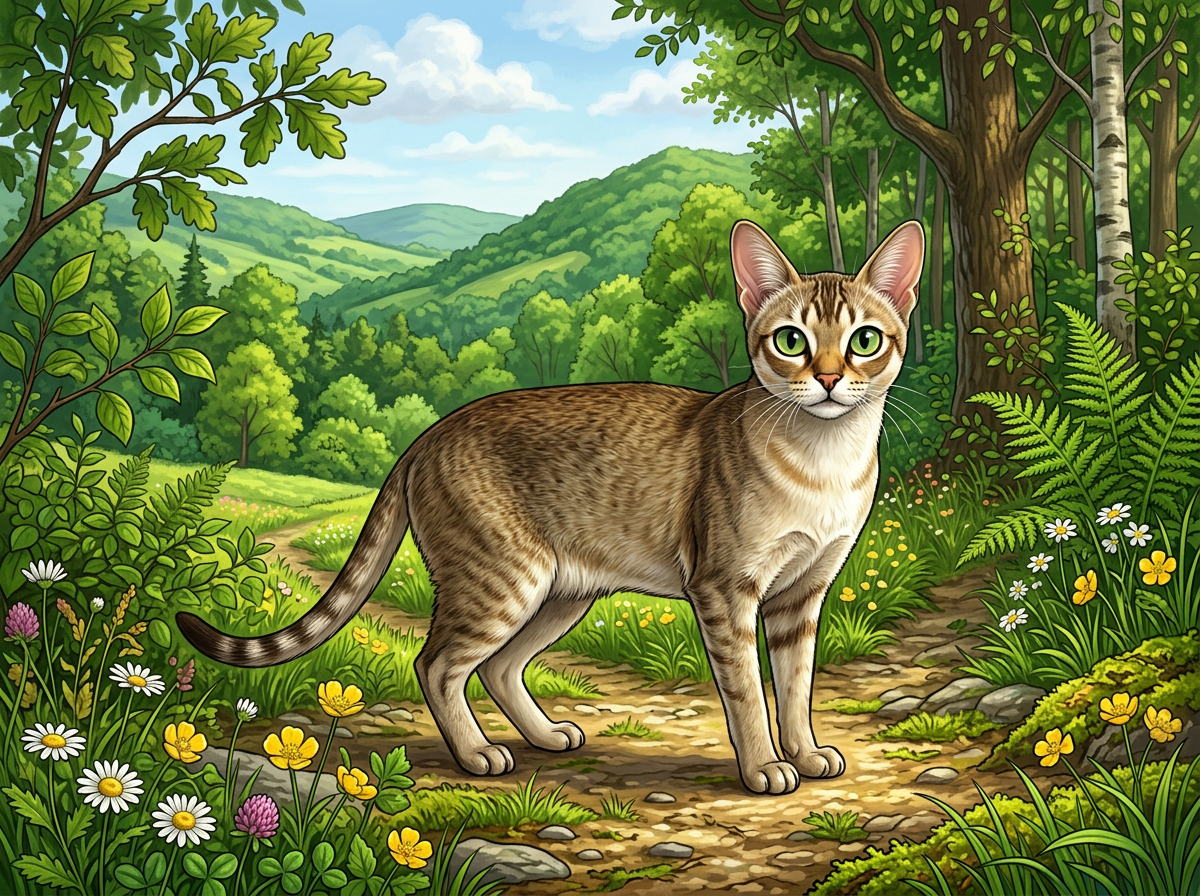
Singapura
🐈 CatsFelis catus
Singapura
One of the world's smallest cat breeds — from Singapore streets to international show halls. Large expressive eyes and ears on a tiny, muscular body with a warm sepia ticked coat. Extroverted, loving, and always wants to be the center of attention.
Skye Terrier
🐕 DogsCanis lupus familiaris
Skye Terrier
Small, long-bodied terrier with long coat and short legs. Courageous, loyal, and devoted companion.
Sloughi
🐕 DogsCanis lupus familiaris
Sloughi
Medium to large North African sighthound with short, smooth coat. Elegant, loyal, and sensitive companion.
Slovak Cuvac
🐕 DogsCanis lupus familiaris
Slovak Cuvac
Large, powerful livestock guardian dog from Slovakia with thick white coat. Loyal, courageous, and calm.
Slovak Hound
🐕 DogsCanis lupus familiaris
Slovak Hound
Medium-sized Slovak scent hound with a black and tan coat. Intelligent and persistent, they are excellent trackers in forested terrain.
Slovak Rough-haired Pointer
🐕 DogsCanis lupus familiaris
Slovak Rough-haired Pointer
Medium-sized Slovak pointing dog with a rough, wiry coat. Intelligent and loyal, they are versatile hunters adapted to harsh conditions.
Small Munsterlander
🐕 DogsCanis lupus familiaris
Small Munsterlander
Medium-sized versatile hunting dog with long brown and white coat. Intelligent, energetic, and excellent family companion.
Small Swiss Hound
🐕 DogsCanis lupus familiaris
Small Swiss Hound
Small Swiss scent hound with a short coat. Intelligent and energetic, they are persistent hunters adapted to the Swiss Alpine terrain.
Smooth Collie
🐕 DogsCanis lupus familiaris
Smooth Collie
Medium to large herding dog with short, dense coat. Intelligent, loyal, and excellent with families.
Smooth Fox Terrier
🐕 DogsCanis lupus familiaris
Smooth Fox Terrier
Small, sleek terrier with smooth coat. Alert, friendly, and energetic with strong hunting instincts.
Snowshoe
🐈 CatsFelis catus
Snowshoe
Created by crossing Siamese with bicolor American Shorthairs to produce a colorpointed cat with white 'snowshoes' on all four paws. Medium-sized with vivid blue eyes and a gentle, quieter voice than Siamese. Rare breed, sweet-natured and devoted.
Soft Coated Wheaten Terrier
🐕 DogsCanis lupus familiaris
Soft Coated Wheaten Terrier
Medium-sized terrier with silky wheaten coat. Happy, affectionate, and loyal companion with spirited nature.
Sokoke
🐈 CatsFelis catus
Sokoke
A rare natural breed from the Arabuko Sokoke Forest in Kenya — one of only a few naturally occurring cat breeds from Africa. Lean, muscular, with a unique ticked blotched tabby pattern resembling tree bark. Wild look but gentle temperament. Nearly extinct.
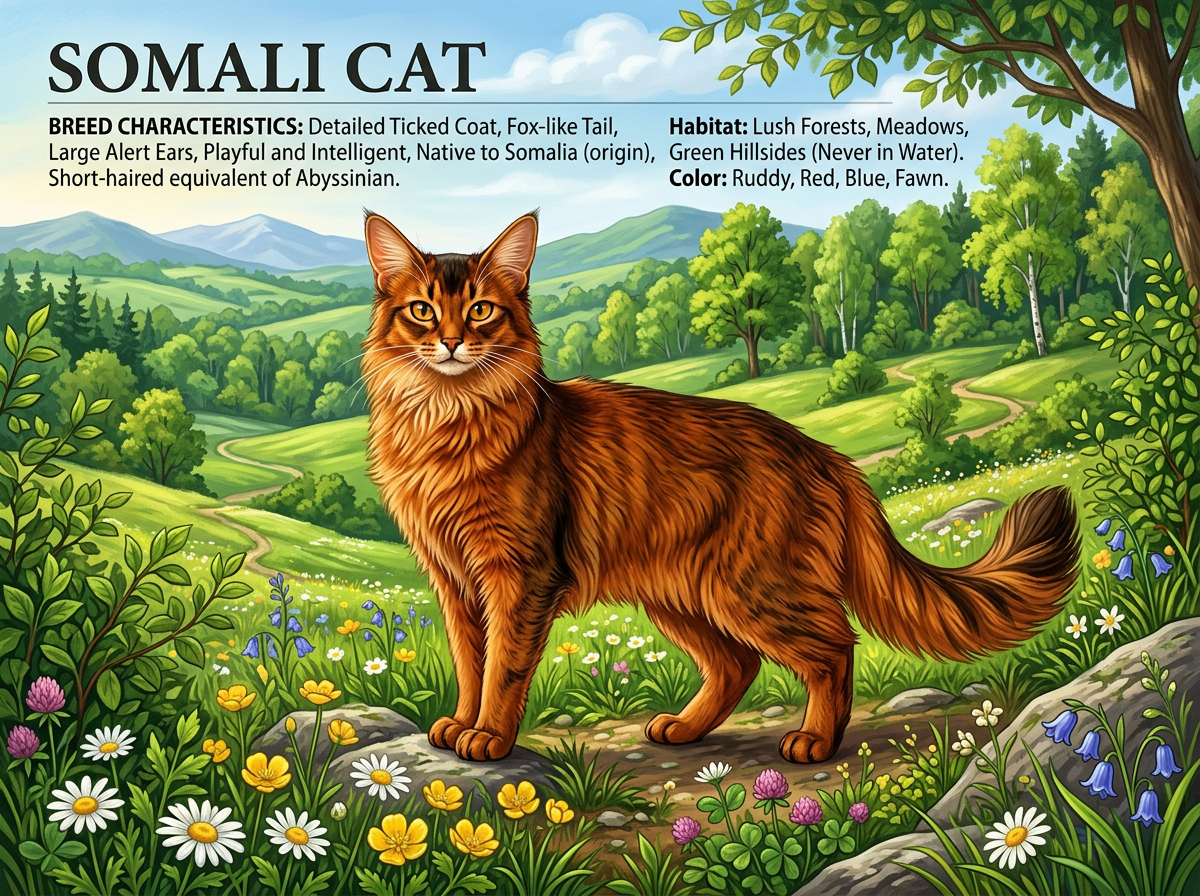
Somali
🐈 CatsFelis catus
Somali
The longhaired Abyssinian — a fox-like beauty with a plumed tail, tufted ears, and a warm, full ticked coat that shimmers with color bands. Playful, intelligent, and mischievous. The long coat gene was hidden in Abyssinian lines and emerged in the 1960s.
South Russian Shepherd Dog
🐕 DogsCanis lupus familiaris
South Russian Shepherd Dog
Large livestock guardian dog from the Russian and Ukrainian steppes with a thick white coat. Independent and courageous, they are loyal protectors of flocks.
Spanish
🐔 ChickensGallus gallus domesticus
White-Faced Black Spanish
One of the oldest pure breeds in existence, the White-Faced Black Spanish is instantly recognisable by its snow-white face skin contrasting against jet-black plumage — a combination found in no other breed. Historically prized as an egg layer in Britain and Spain, this ancient Mediterranean breed is now classed as rare and is kept primarily for conservation and exhibition. Its striking appearance made it a showstopper at early poultry exhibitions.
Spanish Greyhound
🐕 DogsCanis lupus familiaris
Spanish Greyhound (Galgo Español)
Tall, slender sighthound from Spain, similar to the Greyhound but with a more refined head. Gentle, loyal, and sensitive.
Spanish Hound
🐕 DogsCanis lupus familiaris
Spanish Hound
Medium-sized scent hound from Spain with short coat. Energetic, determined, and excellent tracking dog.
Spanish Mastiff
🐕 DogsCanis lupus familiaris
Spanish Mastiff
Giant livestock guardian dog from Spain with massive build and thick coat. Calm, loyal, and protective.
Spanish Water Dog
🐕 DogsCanis lupus familiaris
Spanish Water Dog
Medium-sized working dog with distinctive curly woolly coat. Intelligent, loyal, and versatile worker.
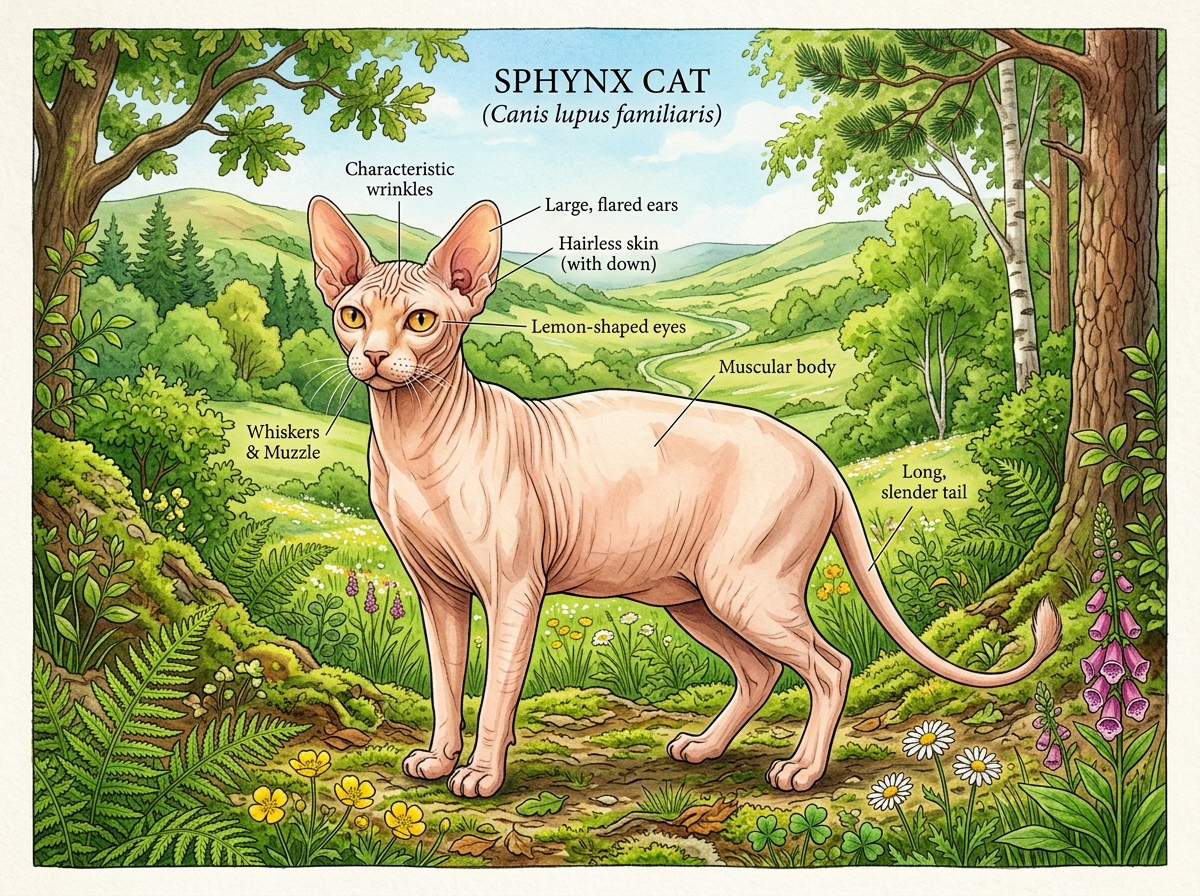
Sphynx
🐈 CatsFelis catus
Sphynx
The most famous hairless breed — warm, wrinkled skin covered in fine, peach-fuzz down. Large ears, lemon-shaped eyes, and a pot belly. Despite appearance, they're not from Egypt — they originated in Canada. Extremely affectionate, playful, and attention-seeking.
Spinone Italiano
🐕 DogsCanis lupus familiaris
Spinone Italiano
Large, rugged Italian pointing dog with wiry coat and distinctive beard. Gentle, patient, and loyal.
Stabyhoun
🐕 DogsCanis lupus familiaris
Stabyhoun
Medium-sized Dutch pointing dog from Friesland. Intelligent and friendly, they are calm and loyal hunting dogs with a gentle nature.
Staffordshire Bull Terrier
🐕 DogsCanis lupus familiaris
Staffordshire Bull Terrier
Medium-sized, muscular terrier with powerful jaw. Affectionate, playful, and loyal companion despite intimidating appearance.
Styrian Rough-haired Hound
🐕 DogsCanis lupus familiaris
Styrian Rough-haired Hound
Medium-sized Austrian scent hound from Styria with a rough, wiry coat. Intelligent and persistent, they are courageous hunters adapted to alpine terrain.
Sulmtaler
🐔 ChickensGallus gallus domesticus
Sulmtaler
An Austrian meat breed of outstanding quality from the Sulm valley (Sulmtal) in southern Styria, developed in the late 19th century to produce premium table birds for the Viennese market. Sulmtalers are heavily built birds with striking buff-wheaten plumage, a small walnut comb (inherited from Houdan ancestry), and a calm, tame disposition. Their slow growth produces well-marbled, flavourful meat that once commanded premium prices at Viennese poultry markets. The breed nearly disappeared and is now a conservation priority in Austria.
Sumatra
🐔 ChickensGallus gallus domesticus
Sumatra
An ancient and ornamental breed from the island of Sumatra, Indonesia, brought to Europe and America in the 1840s. Sumatras are wild-looking birds with jet-black plumage of intense beetle-green iridescence, a pea comb, and multiple spurs on some males — reflecting their proximity to jungle fowl ancestry. The tail is extraordinarily long and flowing in exhibition males, sweeping nearly to the ground. Primarily an exhibition breed, Sumatras retain more wild behaviours than most domestic chickens.
Sumavanka
🐔 ChickensGallus gallus domesticus
Sumavanka (Böhmerwaldhuhn)
A traditional dual-purpose breed from the Šumava region (Bohemian Forest) straddling the Czech Republic, Germany, and Austria. Known in German as the Böhmerwaldhuhn, the Sumavanka was developed from indigenous Bohemian forest chickens shaped by the cool, damp, densely forested environment of central Europe's largest continuous woodland. These are medium-sized, robust birds with tight feathering, a single comb, and clean legs — adapted to foraging in forest undergrowth and tolerating long, wet Central European winters. Hens lay brown eggs and are excellent mothers, and the breed's meat is noted for its game-like flavour from extensive foraging. The Sumavanka nearly disappeared when commercial poultry displaced landrace breeds across Czechoslovakia after 1950. Czech conservation breeders have recovered it, and the breed is recognised by the EE Europastandard.
Sundheimer
🐔 ChickensGallus gallus domesticus
Sundheimer
A fine German dual-purpose breed from the town of Sundheim in Baden-Württemberg, developed in the late 19th century by crossing local Swabian farm chickens with Brahma and Langshan bloodlines. The Sundheimer is a large, handsome bird with predominantly white plumage and a single comb, known for producing brown eggs and excellent, finely textured white-skinned meat. The breed was particularly valued in the Baden region, where high culinary standards demanded a premium table chicken. Between the wars, Sundheimers were widely exported across Germany as an elite farm breed. After World War II, the breed collapsed along with many other German heritage breeds, but dedicated Baden breeders have kept it alive. The Sundheimer is recognised by the EE Europastandard and BDRG, and remains one of the most respected dual-purpose breeds for small-scale sustainable farming in southern Germany.
Sussex
🐔 ChickensGallus gallus domesticus
Sussex
One of England's oldest and most productive dual-purpose breeds, originating from the county of Sussex and documented at the first-ever poultry show in London in 1845. The Light Sussex — white body with black neck hackle and black tail — is the most iconic variety and was the backbone of the British commercial egg and poultry industry for over a century before modern hybrids replaced it. Sussex hens combine good egg production with a full table weight and a famously calm, curious temperament.
Sussex Spaniel
🐕 DogsCanis lupus familiaris
Sussex Spaniel
Medium-sized spaniel with rich golden liver coat. Calm, loyal, and dignified with a distinctive rolling gait.
Swedish Flower Hen
🐔 ChickensGallus gallus domesticus
Skånsk Blommehöna (Swedish Flower Hen)
Sweden's rarest and most visually striking native chicken breed, a landrace from the Skåne (Scania) region of southern Sweden that nearly vanished in the 1980s with fewer than 500 birds remaining. The Blommehöna (Flower Hen) is named for its unique plumage — every feather ends in a pale cream or white spangle resembling a small flower, giving the bird a spotted, blossoming appearance regardless of the base colour. Plumage varies wildly across individuals, reflecting a diverse landrace heritage with no enforced colour standard. Saved by Swedish conservation breeders and now recognised by the Scandinavian Poultry Standard and listed in the FAO's DAD-IS database.
Swedish Lapphund
🐕 DogsCanis lupus familiaris
Swedish Lapphund
Medium-sized Spitz-type dog with thick double coat. Friendly, loyal, and excellent family companion.
Swedish Vallhund
🐕 DogsCanis lupus familiaris
Swedish Vallhund
Small, sturdy spitz-type herding dog with short legs. Known as the 'Viking dog' for its ancient Scandinavian heritage.
Swedish White Elkhound
🐕 DogsCanis lupus familiaris
Swedish White Elkhound
Medium-sized Swedish spitz-type dog with a pure white coat. Intelligent and courageous, they are calm and loyal moose-hunting dogs.
Swiss Hound
🐕 DogsCanis lupus familiaris
Swiss Hound
Medium-sized scent hound with short, dense coat. Energetic, determined, and excellent tracking dog.
Taiwan Dog
🐕 DogsCanis lupus familiaris
Taiwan Dog
Medium-sized primitive dog from Taiwan with a short coat and agile build. Intelligent and loyal, they are alert and courageous hunting dogs.
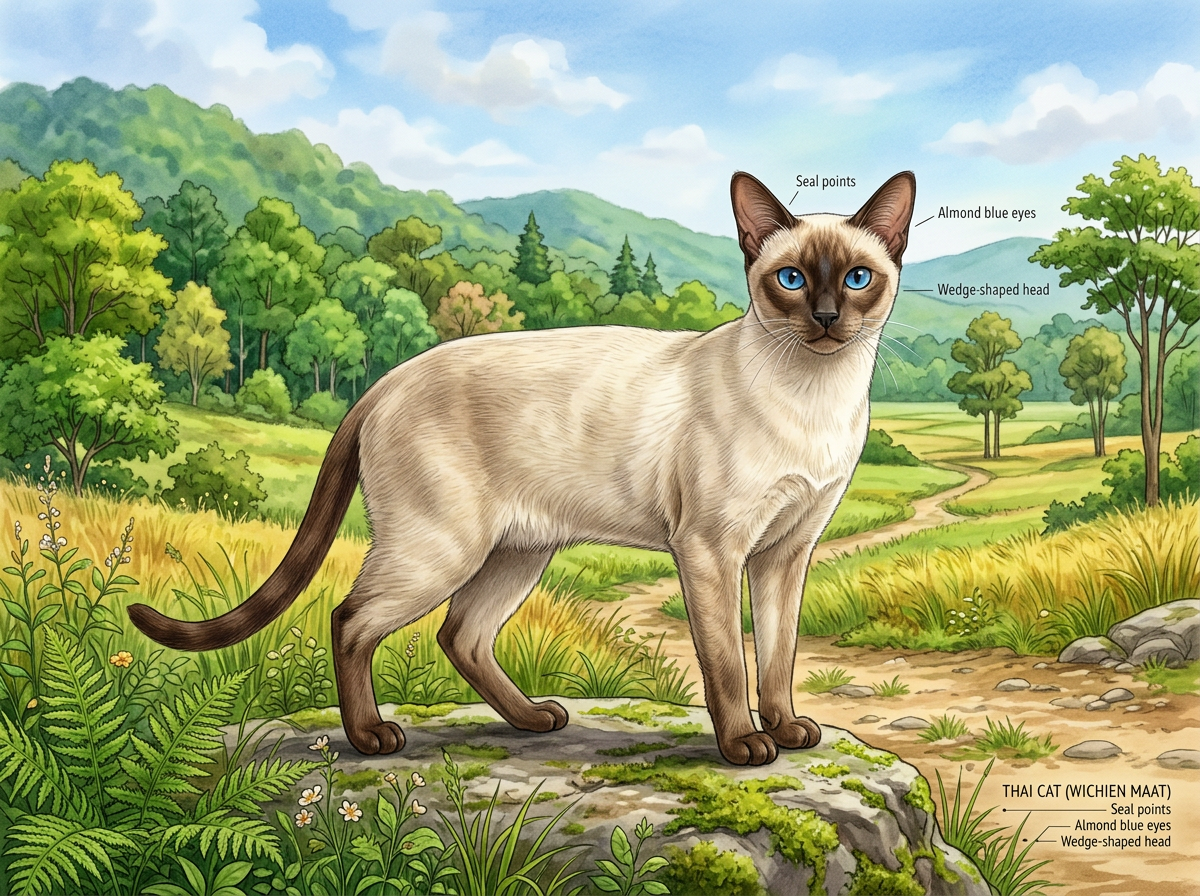
Thai (Traditional Siamese)
🐈 CatsFelis catus
Thai
The original, old-style Siamese — a rounder, more moderate body than the modern show Siamese. Colorpoint pattern with vivid blue eyes but a sturdier, less extreme build. Known for intelligence, vocal nature, and deep bonds with their people. The 'apple-head' Siamese.
Thai Bangkaew Dog
🐕 DogsCanis lupus familiaris
Thai Bangkaew Dog
Medium-sized spitz-type dog from Thailand with a thick double coat. Intelligent and loyal, they are protective guardians with a courageous nature.
Thai Ridgeback
🐕 DogsCanis lupus familiaris
Thai Ridgeback
Medium-sized primitive dog with distinctive ridge of hair along its back. Intelligent, loyal, and athletic.
Thüringer Barthuhn
🐔 ChickensGallus gallus domesticus
Thüringer Barthuhn
A distinctive German breed from Thuringia in central Germany, most notable for its full beard and muffs — facial feathering that gives it an owl-like or whiskered appearance. The name 'Barthuhn' literally means 'beard chicken', and the breed was developed in the late 19th and early 20th centuries by Thuringian poultry fanciers who wanted a bearded breed to rival the crested and bearded breeds of neighbouring regions. The Thüringer Barthuhn is a medium-sized dual-purpose bird with a single comb, clean legs, and white eggs. It is calm, cold-hardy, and well-suited to free-range systems in central Germany. The breed declined after World War II but has been recovered by BDRG conservation breeders. Recognised by the EE Europastandard as a distinct German heritage breed.
Tibetan Mastiff
🐕 DogsCanis lupus familiaris
Tibetan Mastiff
Large, powerful livestock guardian dog with thick double coat. Independent, protective, and noble with a commanding presence.
Tibetan Spaniel
🐕 DogsCanis lupus familiaris
Tibetan Spaniel
Small, intelligent toy breed with silky coat and lion-like mane. Independent, alert, and affectionate.
Tibetan Terrier
🐕 DogsCanis lupus familiaris
Tibetan Terrier
Medium-sized toy breed with long, thick double coat and large flat feet. Intelligent, affectionate, and lively companion.
Tiense Vechter
🐔 ChickensGallus gallus domesticus
Tiense Vechter (Combattant de Tirlemont)
A Belgian fighting breed from the city of Tienen (Tirlemont in French) in Flemish Brabant, one of the five distinct Belgian gamefowl breeds recognised by the EE. The Tiense Vechter is a large, powerful gamefowl with a triple comb, hard feathering, and a tall, imposing stance. It was developed in the 19th century for the Tienen cockpit, and it is distinguished from other Belgian gamefowl by its slightly more compact build and distinctive head shape. The Tiense Vechter shares ancestry with the other great Belgian fighting breeds — the Brügger Kämpfer, Lütticher Kämpfer, and Brugse Vechter — each standardised separately based on subtle regional differences in type and the fierce local pride of Flemish and Walloon cities. Cockfighting was banned in Belgium in 1929, and the Tiense Vechter has since been maintained purely as an exhibition and conservation breed. Recognised by the EE Europastandard and BDRG.
Tomaru
🐔 ChickensGallus gallus domesticus
Tomaru
A rare Japanese ornamental breed and one of the traditional long-crowing chickens of Japan, developed on Honshu Island. The Tomaru is a medium-sized bird with a single comb and clean legs, known primarily for its extraordinarily long crow — a single crow can last 15 to 20 seconds or more, compared to 3–5 seconds for a standard rooster. This trait was deliberately bred by Japanese fanciers during the Edo period (1603–1868), who valued the long crow as an aesthetic quality. The Tomaru's plumage is typically black or black-breasted red, and it has an upright, dignified bearing. Long-crowing breeds like the Tomaru were status symbols among the Japanese elite, and competitions to determine which rooster could sustain the longest crow were a recognised cultural activity. Now rare even in Japan, the Tomaru is recognised by the EE Europastandard and kept by a handful of European specialist breeders.
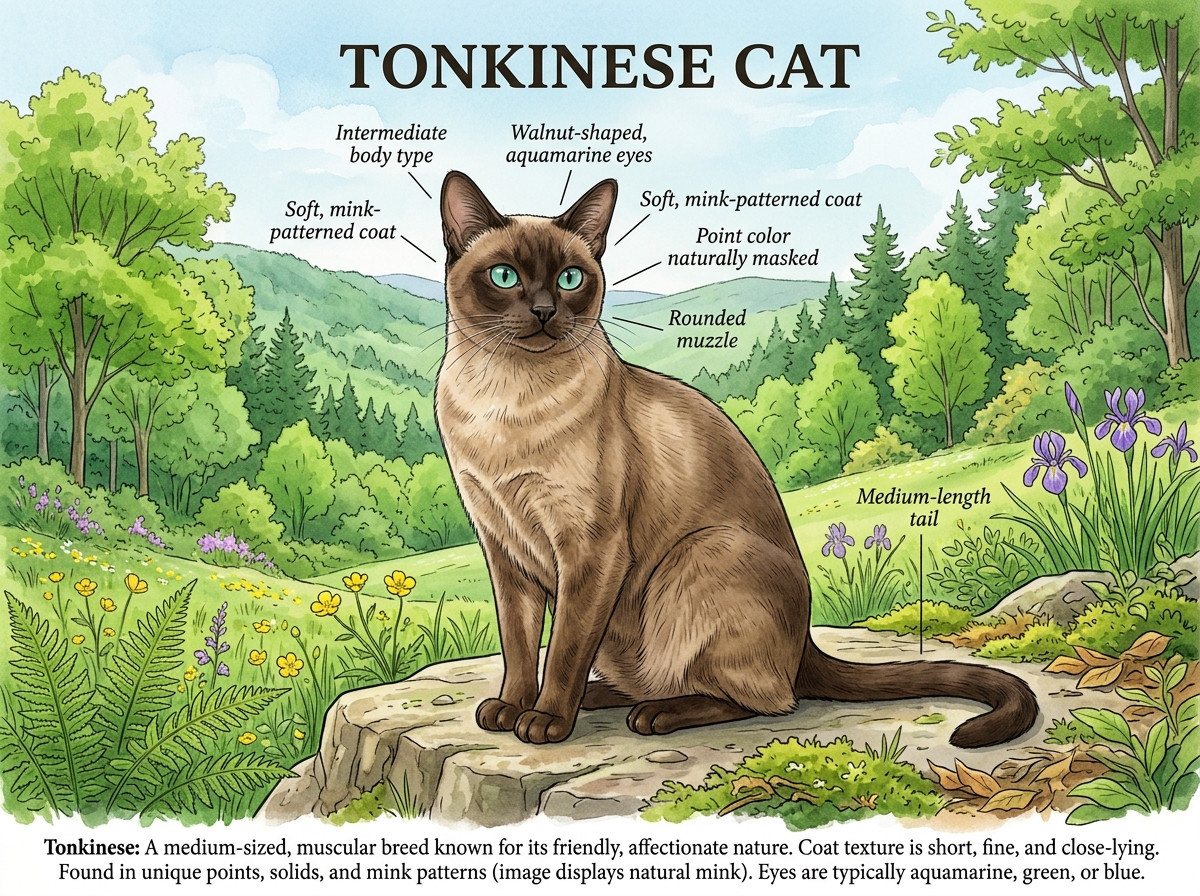
Tonkinese
🐈 CatsFelis catus
Tonkinese
A deliberate cross between Siamese and Burmese, combining Siamese colorpoints with Burmese's warm sepia tones into a unique 'mink' coat. Medium-sized, muscular, with aqua-colored eyes. Playful, affectionate, and intelligent — the best of both parent breeds.
Tornjak
🐕 DogsCanis lupus familiaris
Tornjak
Large, powerful livestock guardian dog from Bosnia and Croatia with thick, long coat. Calm, loyal, and protective.
Tosa Inu
🐕 DogsCanis lupus familiaris
Tosa Inu
Giant Japanese mastiff breed bred for sumo-style dog fighting. Calm, dignified, and loyal.
Totenko
🐔 ChickensGallus gallus domesticus
Totenko
A Japanese ornamental breed from Kochi Prefecture on Shikoku Island, known as one of the long-crowing chickens of Japan alongside the Tomaru and Koeyoshi. The Totenko is a medium-sized bird with a walnut comb and clean legs, developed during the Edo period for its sustained, melodic crow. Its name derives from the Japanese words for the distinctive call pattern: 'to-ten-ko', describing the three-note phrasing of the Totenko's crow. The breed's plumage includes black-breasted red, white, and several other colour varieties. Like other Japanese long-crowing breeds, Totenko were status symbols among the samurai and wealthy merchant classes, and crowing competitions were a popular pastime. The breed is now rare globally, recognised by the EE Europastandard, and maintained by a very small number of specialist European breeders who value it as a unique example of Japanese poultry culture.
Toy Fox Terrier
🐕 DogsCanis lupus familiaris
Toy Fox Terrier
Small, sleek toy breed with smooth white coat and black or tan markings. Intelligent, lively, and alert.
Toy Poodle
🐕 DogsCanis lupus familiaris
Toy Poodle
The smallest Poodle variety, combining intelligence and elegance in a tiny package. Affectionate, lively, and highly trainable.
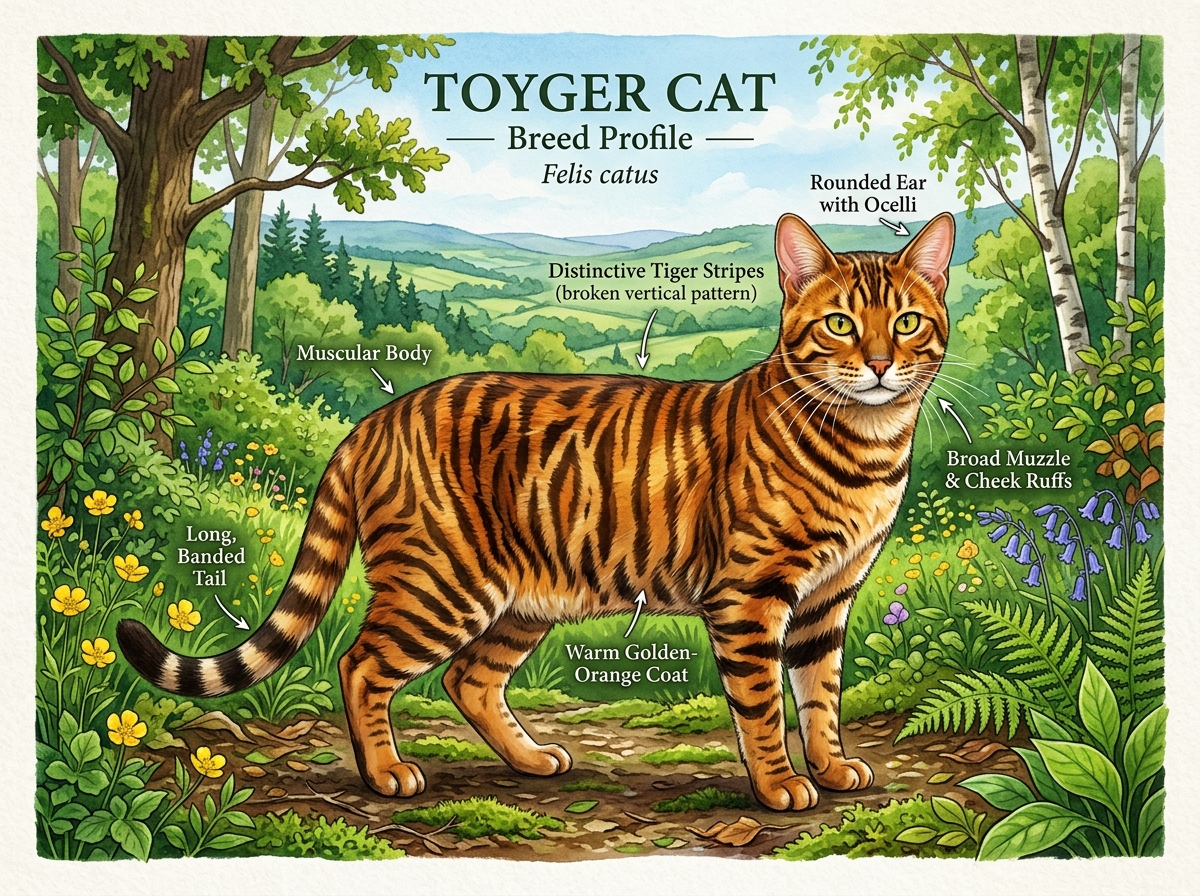
Toyger
🐈 CatsFelis catus
Toyger
A breed created to resemble a miniature tiger — bold, vertically-aligned stripes on a rich orange background with white belly and facial markings. Medium-sized, muscular, with a long, low body. Friendly, intelligent, and very people-oriented. Still in development.
Transylvanian Hound
🐕 DogsCanis lupus familiaris
Transylvanian Hound
Medium-sized Hungarian scent hound from Transylvania. Intelligent and courageous, they are persistent hunters with a calm and loyal temperament.
Transylvanian Naked Neck
🐔 ChickensGallus gallus domesticus
Transylvanian Naked Neck
One of the most unusual-looking domestic chickens, with a completely bare red neck caused by a dominant gene that also reduces total body feathering by roughly 40%. Originating in Transylvania (present-day Romania), Naked Necks — known in Germany as 'Turken' — are exceptionally heat-tolerant because less plumage means better heat dissipation. Despite their alien appearance, they are calm, productive, and hardy dual-purpose birds valued across Eastern Europe and tropical regions worldwide.
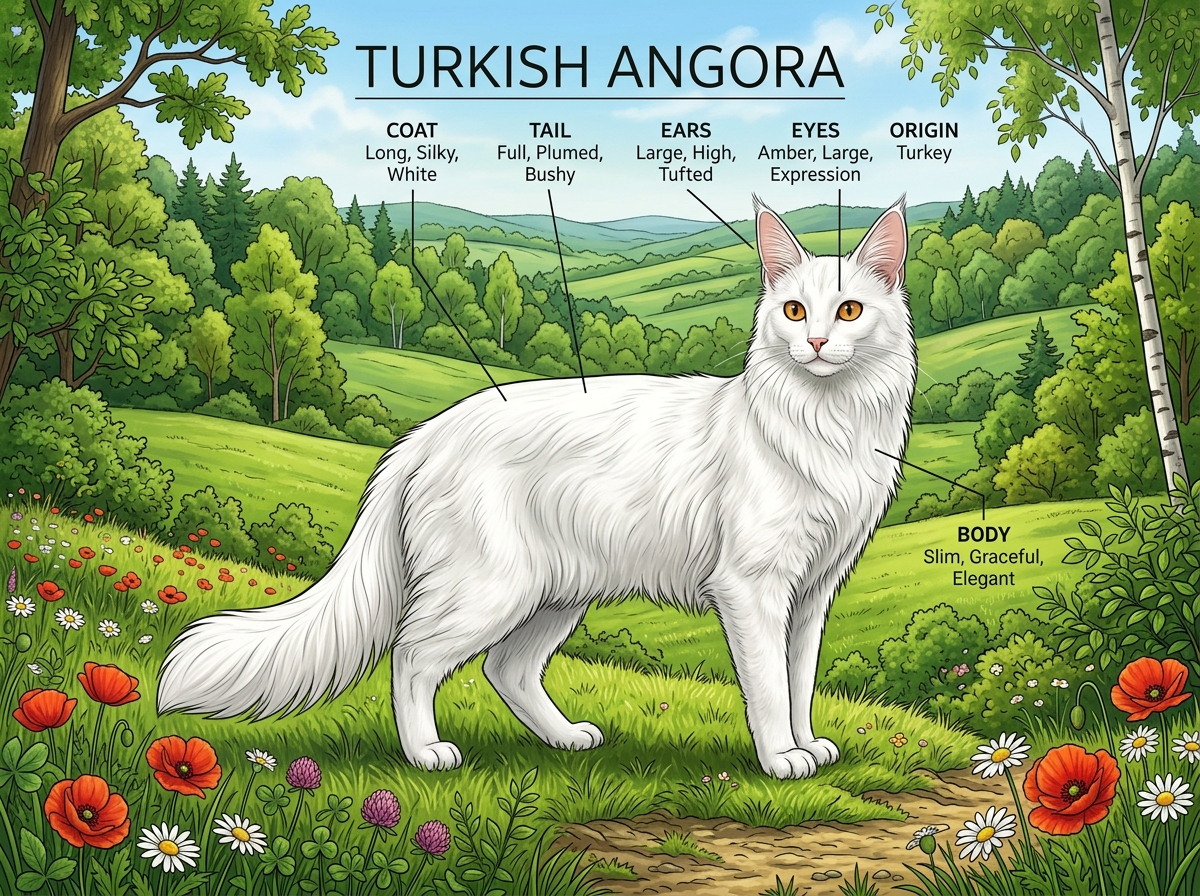
Turkish Angora
🐈 CatsFelis catus
Turkish Angora
An ancient natural breed from Turkey, prized for its silky, pure white coat and striking blue, green, or odd-colored eyes. Fine-boned, graceful, and elegant with a plumed tail. Playful, intelligent, and more assertive than Persians. Ankara Zoo maintains a pure breeding program.
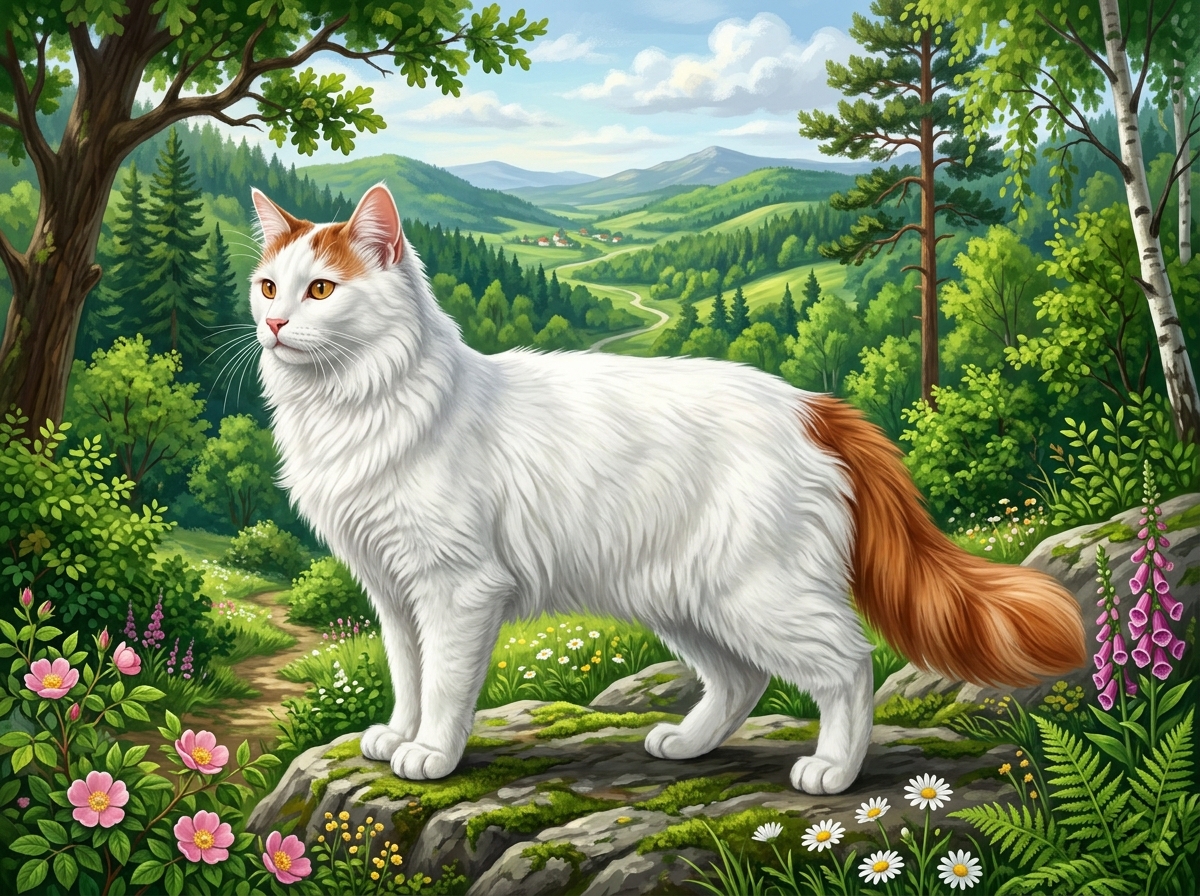
Turkish Van
🐈 CatsFelis catus
Turkish Van
A natural breed from the Lake Van region of Turkey, famous as the 'swimming cat' — they genuinely love water. Semi-longhaired, white body with colored tail and head markings only. Large, muscular, with a cashmere-soft coat that's water-resistant. Independent and adventurous.
Twents Hoen
🐔 ChickensGallus gallus domesticus
Twents Hoen
A Dutch dual-purpose landrace from the Twente region of Overijssel in the eastern Netherlands, a textile-manufacturing and farming area bordering Germany. The Twents Hoen (Twente Hen) is a medium-large cuckoo-barred farmyard breed that developed from local Dutch landraces and was the standard farmyard chicken of the Twente textile towns and surrounding farm villages. Recognised by the EE Europastandard, it is now a conservation breed maintained by Dutch breeders. Its survival reflects growing Dutch interest in preserving regional poultry diversity alongside better-known breeds like the Barnevelder and Brakel.
Tyrolean Hound
🐕 DogsCanis lupus familiaris
Tyrolean Hound
Medium-sized Austrian scent hound from the Tyrol region with a short, dense coat. Intelligent and persistent, they are courageous hunters in alpine conditions.
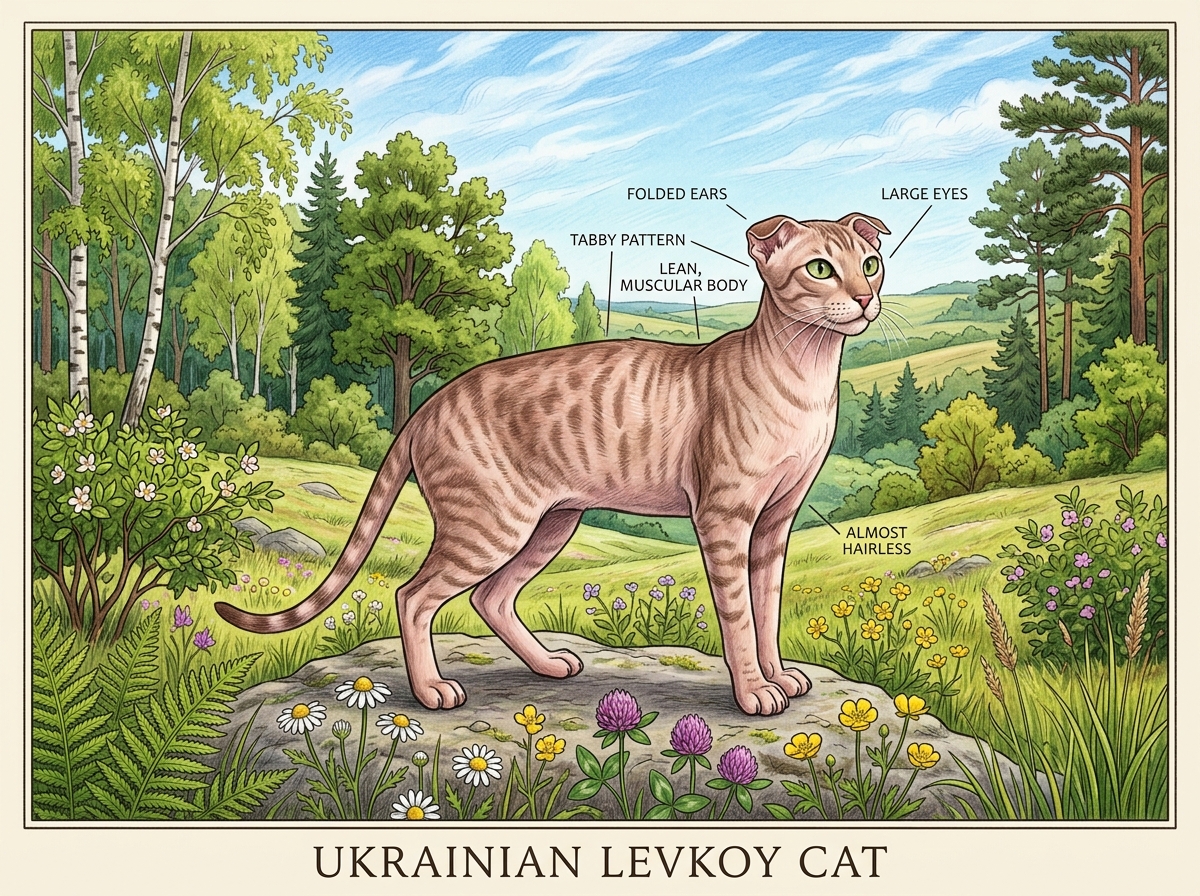
Ukrainian Levkoy
🐈 CatsFelis catus
Ukrainian Levkoy
A unique Ukrainian breed combining forward-folded ears (Scottish Fold-type) with a hairless body (Donskoy-type). Angular, elongated face with distinct wrinkles and folded leaves-like ears. Affectionate, intelligent, and gentle. Named after the Levkoy plant whose leaves resemble the folded ears.
Valdarnese
🐔 ChickensGallus gallus domesticus
Valdarnese
A rare Italian dual-purpose breed from the Valdarno (Arno Valley) in Tuscany, the same region that produced the Leghorn. But unlike its world-famous white-egg-laying cousin, the Valdarnese is a larger, calmer bird developed for both meat and eggs on Tuscan small farms. The Valdarnese has white plumage, a single comb, clean legs, and yellow skin — traits deliberately selected for the Italian market where yellow-skinned chickens were preferred. It originated from crosses between local Tuscan chickens and imported white breeds in the late 19th and early 20th centuries. The breed was once widespread in Tuscan farmyards but was virtually eliminated by the 1960s. A recovery programme by the University of Florence and Tuscan breeders has slowly rebuilt numbers. The Valdarnese is recognised by the EE Europastandard as a distinct Italian heritage breed.
Vizsla
🐕 DogsCanis lupus familiaris
Vizsla
Medium-sized hunting dog with distinctive golden-rust coat. Affectionate, energetic, and gentle family companion.
Vogtländer
🐔 ChickensGallus gallus domesticus
Vogtländer
A German dual-purpose breed from the Vogtland region of Saxony, developed in the early 20th century from local farm chickens crossed with Brahma and Langshan blood for size and productivity. The Vogtländer is a large, well-built bird with predominantly cuckoo-barred plumage, a single comb, and clean legs. It was bred for the specific conditions of the Vogtland — a cool, hilly region between Saxony, Thuringia, and Bohemia — where hardy, self-sufficient farm chickens were essential. Hens produce tinted eggs and are reliable sitters, while cockerels grow into substantial table birds. The Vogtländer was severely affected by the post-war division of Germany, as the Vogtland fell within the GDR and traditional poultry keeping was marginalised. After reunification, the breed was reconstructed from surviving birds. Recognised by the EE Europastandard and BDRG.
Volpino Italiano
🐕 DogsCanis lupus familiaris
Volpino Italiano
Small, fluffy Spitz-type dog with pure white coat. Alert, lively, and devoted companion.
Vorwerk
🐔 ChickensGallus gallus domesticus
Vorwerk
A purposefully designed German dual-purpose breed created by Oskar Vorwerk of Hamburg between 1900 and 1915, by crossing Lakenvelders, Buff Orpingtons, Andalusians, and Buff Sussex. The result is a visually distinctive bird with gold-buff body and black head, hackle, and tail — the inverse colour pattern of the Lakenvelder. Practical, hardy, and productive, Vorwerks are calm enough for backyard keeping and lay a reliable number of tinted eggs.
Weimaraner
🐕 DogsCanis lupus familiaris
Weimaraner
Large, sleek silver-grey hunting dog with striking amber eyes. Intelligent, energetic, and loyal companion.
Welsh Springer Spaniel
🐕 DogsCanis lupus familiaris
Welsh Springer Spaniel
Medium-sized flushing spaniel with rich red and white coat. Loyal, energetic, and affectionate family companion.
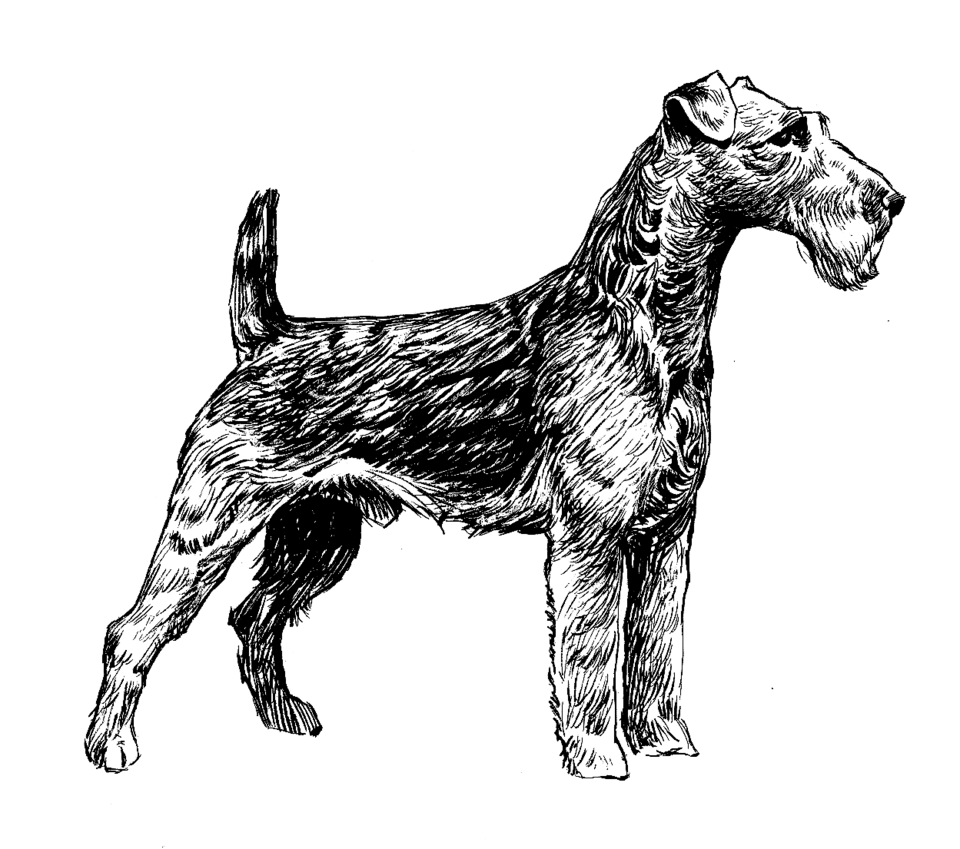
Welsh Terrier
🐕 DogsCanis lupus familiaris
Welsh Terrier
Small to medium terrier with wiry black and tan coat. Alert, friendly, and spirited companion.
Welsummer
🐔 ChickensGallus gallus domesticus
Welsummer
A beautiful Dutch breed from the village of Welsum on the IJssel river, renowned for producing large, dark terracotta-brown eggs often covered in dark speckles. Developed in the early 20th century from Partridge Cochins, Wyandottes, and local farmyard birds, the Welsummer has a rich, autumnal plumage — red-gold in hens with a warm partridge pattern, and a stunning red-orange and black cock. The breed famously inspired the Kellogg's Cornflakes rooster.
West Highland White Terrier
🐕 DogsCanis lupus familiaris
West Highland White Terrier
Small, sturdy terrier with pure white coat. Alert, confident, and good-natured companion.
West Siberian Laika
🐕 DogsCanis lupus familiaris
West Siberian Laika
Medium-sized spitz-type hunting dog from Western Siberia. Intelligent and energetic, they are renowned for their stamina and hunting prowess.
Westfälische Rotbrüst
🐔 ChickensGallus gallus domesticus
Westfälische Rotbrüst
A critically rare German dual-purpose breed from Westphalia, named for its distinctive red-breasted plumage. Developed in the early 20th century, the Westfälische Rotbrüst is a medium-large bird with a single comb and clean legs. Its colouration is unique among German farm breeds: the body is predominantly white or light grey, but the breast is a warm russet-red, creating a two-tone effect that makes the breed instantly recognisable. It was developed by Westphalian farmers who wanted a hardy, productive chicken well-suited to the mixed farming landscape of the Münsterland region. Like many German regional breeds, the Westfälische Rotbrüst crashed after 1950 and was nearly lost. A handful of Westphalian breeders reconstructed the breed and maintain the tiny surviving population. Recognised by the EE Europastandard and BDRG.
Westfälischer Totleger
🐔 ChickensGallus gallus domesticus
Westfälischer Totleger
A remarkable German laying breed from Westphalia, whose name translates as 'Dead Layer' — a reference to the breed's most unusual characteristic: it lays eggs continuously throughout the year without the seasonal laying break that virtually every other breed takes in winter. While most hens reduce or stop laying when days shorten in autumn, the Westfälischer Totleger continues producing white eggs year-round. This economically valuable trait was selected by Westphalian farmers over generations and led to the breed's striking name. Recognised by BDRG and EE, it is today a rare conservation breed.
Westphalian Dachsbracke
🐕 DogsCanis lupus familiaris
Westphalian Dachsbracke
Small German scent hound with short legs and a sturdy body. Intelligent and persistent, they are excellent trackers in dense forest terrain.
Wetterhoun (Dutch Spaniel)
🐕 DogsCanis lupus familiaris
Wetterhoun (Dutch Spaniel)
Medium-sized Dutch water dog from Friesland with a curly, oily coat. Intelligent and loyal, they are calm protectors with a natural affinity for water.
Whippet
🐕 DogsCanis lupus familiaris
Whippet
Medium-sized sighthound, essentially a smaller Greyhound. Fast, gentle, and affectionate family companion.
White Swiss Shepherd Dog
🐕 DogsCanis lupus familiaris
White Swiss Shepherd Dog
Medium to large herding dog with pure white coat. Descended from white German Shepherds, known for gentle temperament and trainability.
Wire Fox Terrier
🐕 DogsCanis lupus familiaris
Wire Fox Terrier
Small, energetic terrier with wiry coat and alert expression. Courageous, affectionate, and lively companion.
Wirehaired Pointing Griffon
🐕 DogsCanis lupus familiaris
Wirehaired Pointing Griffon
Medium-sized versatile hunting dog with distinctive wiry coat. Intelligent, energetic, and eager to please.
Wyandotte
🐔 ChickensGallus gallus domesticus
Wyandotte
An American breed developed in the 1870s, named after the Wyandot people of North America, and created for practical dual-purpose farming combined with exhibition quality. The Silver-Laced Wyandotte — with every feather edged in black lacing on a silver-white ground — was the founding variety and remains one of the most beautiful chickens in existence. Wyandottes carry a rose comb (resistant to frostbite), a broad body, and dense plumage that makes them cold-hardy reliable layers of brown eggs.
Xoloitzcuintle (Mexican Hairless)
🐕 DogsCanis lupus familiaris
Xoloitzcuintle (Mexican Hairless)
Ancient Mexican hairless breed available in three sizes. Intelligent and loyal, they are calm and affectionate companions with a warm body temperature.
Yakutian Laika
🐕 DogsCanis lupus familiaris
Yakutian Laika
Medium-sized spitz-type dog from Arctic Siberia with a thick double coat. Friendly and intelligent, they are excellent sled dogs and family companions.
Yokohama
🐔 ChickensGallus gallus domesticus
Yokohama
A German-developed ornamental breed created in the 1880s from Japanese long-tailed fowl (Onagadori and Minohiki) brought to Europe by German missionary Hugo du Roi. Despite the Japanese name, the Yokohama as standardised by the EE is a distinctly European breed. Males grow spectacular long, flowing saddle and tail feathers — in ideal conditions the saddle plumage can reach 1–2 metres in length. A walking work of art, the Yokohama is kept purely for exhibition and ornamental purposes.
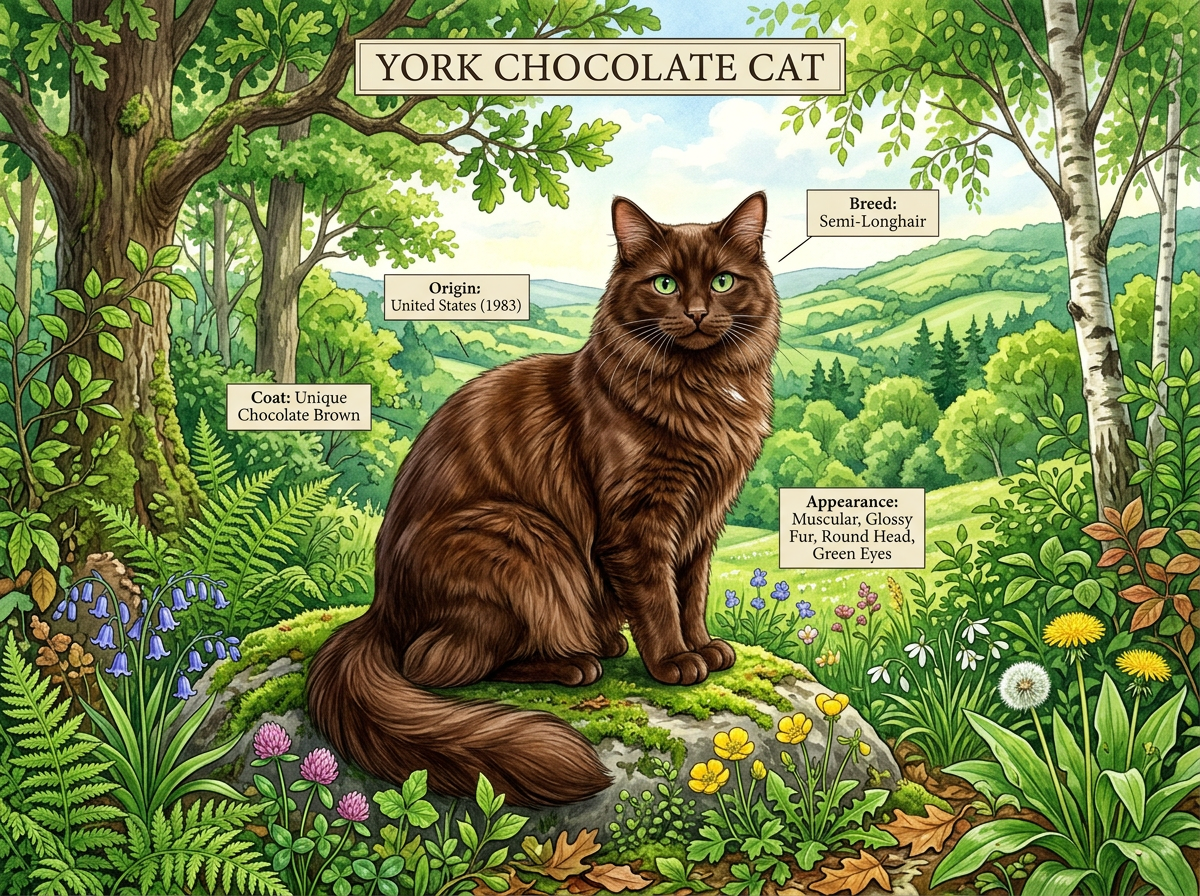
York Chocolate
🐈 CatsFelis catus
York Chocolate
A semi-longhaired breed with a rich chocolate brown coat and lavender or golden eyes. Developed from farm cats in New York state. Affectionate, playful, and gentle. Very rare — breeding programs are minimal.
Yorkshire Terrier
🐕 DogsCanis lupus familiaris
Yorkshire Terrier
Small toy terrier with long, silky blue and tan coat. Confident, intelligent, and courageous despite tiny size.
Åbohöna
🐔 ChickensGallus gallus domesticus
Åbohöna
A Swedish landrace chicken from the Åbo region of southern Sweden, likely originating from the area near Åbo in Scania (Skåne) or possibly the broader southern Swedish farmlands. The Åbohöna is a medium-sized, hardy bird with a single comb and clean legs, developed as the traditional farm chicken of southern Swedish smallholdings. Like many Swedish landrace breeds, its plumage is variable — white, black, grey, speckled, or mixed — reflecting generations of selection for practical farm qualities rather than uniform colour. Åbohönas are calm, good foragers, and well-adapted to the open, arable landscape of southern Sweden where mixed farming was the traditional pattern. The breed was identified by Swedish poultry conservation surveys in the late 20th century and has been included in the national gene bank. Registered in DAD-IS and maintained by a small number of Swedish conservation breeders.
Ölandshöna
🐔 ChickensGallus gallus domesticus
Ölandshöna
A Swedish landrace chicken from the island of Öland in the Baltic Sea, a narrow, limestone-rich island off Sweden's southeast coast with a unique alvar grassland ecosystem found nowhere else in the world. The Ölandshöna is a medium-sized, exceptionally hardy bird with a single comb and clean legs, evolved over centuries in Öland's sparse, windswept landscape where trees are rare and the ground is mostly bare limestone pavement. Its plumage is variable — commonly white, black, grey, or speckled — and its body is lean, active, and built for constant foraging. Ölandshönas are among the hardiest of all Swedish landrace chickens, capable of surviving outdoors in conditions that would kill less robust breeds. Rediscovered in the late 20th century and stabilised through the Swedish gene bank, the Ölandshöna is registered in DAD-IS and recognised by the Scandinavian Poultry Standard as a valuable conservation breed.